The wealth star was never a thing you own. It's a load rating — which is why the coin bowl on the windowsill fails and the chart keeps working anyway.
Start with the definition, because almost everything written about the wealth star skips it. In BaZi, the wealth star (cai xing) is the element your day master controls. Wood controls Earth, Fire controls Metal, Earth controls Water, Metal controls Wood, Water controls Fire. It names the material you work on, not the prize you receive.
Read that once more and the rest of the popular advice begins to come apart.
Nine brass coins in a shallow bowl on a southeast windowsill, tucked behind the curtain so a landlord would not ask questions. They stayed there for eight months in a 340-square-foot studio with one north-facing window and a desk jammed flat to the wall. Nothing moved. Not the income, not the low hum of worry about the income.
When the chart finally came out, the diagnosis was almost rude: the wealth star was already the heaviest thing in it. The day master sat thin and unrooted underneath, carrying a load it had no business carrying. Piling more wealth energy onto that chart is like wedging a second refrigerator into a studio where the door barely opens.
That failure mode gets almost no airtime, and it traces back a century of drift in what the star is even supposed to describe.
The short version, before the history
- It is a relationship. The wealth star names what your day master can command. Command is not possession.
- Its value is conditional. A large wealth star on a weak day master is a structural problem, not a windfall.
- It has neighbours. Output feeds wealth. Wealth feeds status. Status supplies a container for the whole arrangement. Pull the star out of that chain and it stops meaning anything useful.
How "what I control" became "money I don't have"
Open the old manuals, the Zi Ping Zhen Quan, the Di Tian Sui commentaries, and the tone reads as clinical. Cai is simply the element the day master overcomes. A verb dressed as a noun.
Because of that, the star is relational by construction. A day master too weak to overcome anything has a wealth star that functions as an opponent. The classical readers had a name for the configuration, wealth heavy and self weak, and they filed it under problems to solve rather than blessings to celebrate.
Then the definition flattened. Cheap printing made chart manuals common. Software made charts instant. Marketing made them sellable, and marketing has always preferred objects to relationships. "Your wealth element is Metal" fits on a graphic. "Your ability to administer Metal depends on whether your day master is rooted and whether your output star is feeding it" fits nowhere.
Most of what circulates online under bazi wealth star meaning is the flattened version: one element, one colour, one corner of one room.
Here is the comparison I keep returning to. Pre-modern builders described a room by its circulation, meaning where you step in, what you pass, what you can reach without turning sideways. A modern listing describes the same room by square footage. Both are accurate. One prints nicely in an advertisement. The other describes a body moving through space. Guess which survived.
If the mechanics are still fuzzy, begin with the fixed point: the day master is what every other star is measured against. Without it, wealth star readings are wallpaper.
Two stars, one load rating
BaZi splits the wealth star in half, and the split is older and stranger than modern write-ups suggest.
Direct wealth is contractual and steady: salary, retainer, lease, the number that lands on the same date each month. Indirect wealth is lumpy: ventures, speculation, side income, the deal that arrives sideways from a direction you did not plan for. The old texts also tied direct wealth to the wife and indirect wealth to the father in a male chart, which says a great deal about Song dynasty inheritance practice and very little about your bank balance. Keep the association if it earns its place. Discard it without guilt if it does not.
Now the part worth underlining twice. A wealth star is never scored alone. It is scored against the strength of the day master, which depends on season of birth, rooting in the branches, and the support it receives. Ten tons of cargo is a fortune for a freighter and a drowning for a canoe.
The chart does not care which one you would prefer to be.
People collect wealth-star readings the way they collect restaurant recommendations, hoping one of them says the thing they want to hear. The readers who get the most from a session ask a flatter question: what can I carry right now? The five elements chart supplies the proportions you need in order to answer that honestly instead of hopefully.
The star sits downstream, and almost nobody checks upstream
Every chart runs on a line of production. Output, the star of skill and expression and making, generates wealth. Wealth generates the officer star, meaning status and structure. The officer star then hands the whole system a container to sit inside.
Read the wealth star alone and you are staring at a middle node with both connections unplugged.
Two shapes of failure follow, and both get described as "my wealth star isn't working."
Nothing is producing it. A bright wealth star with a smothered output star usually describes someone with appetite and no engine. They spot opportunities, name them, want them, and never build the machinery that reaches them. Old readers called it wealth with no source.
Nothing is holding it. Money arrives and departs. Strong wealth, no officer, no rooting, and cash moves through like weather. Freelance charts show this more than any other kind: high turnover, decent income, no accumulation, and a stubborn sense of being robbed by circumstances that turn out, on inspection, to be arithmetic.
A building tells the same story. Storage capacity is not set by the size of the storeroom. It is set by door width, corridor, and whether goods can move in and out without colliding. A studio with an enormous closet and a twenty-four-inch entry cannot receive deliveries.
Wealth star without circulation is that closet.
The psychology sits directly on top of the architecture. People do not read a room object by object. They read it as a sequence: threshold, sightline, destination. Walk in and see the thing you are meant to use, and the space registers as available. Hide the cure behind a curtain and the brain files it as absent. That is exactly what happened to those nine coins.
Correct advice, followed correctly, still failing
This is the case that made me rewrite my own teaching notes.
A renter in a 380-square-foot apartment. One window, flat north light, no permission to alter anything. Strong wealth star, thin day master, no meaningful output. Following standard advice, they added wealth-element decor: metal objects, a tabletop fountain, coins, a gold-tone tray. Every item correct by the popular reading, every item set in the designated wealth position.
Six months later: a credit card balance, a speculative position that went the wrong way, and a sleep problem caused by a fountain pump switching on at two in the morning in a room the size of a parking bay.
Every instruction had been obeyed. The model behind the instructions was wrong. Piling wealth energy onto a chart that is already wealth-heavy does not create wealth; it raises the load. In a small flat it also raises the sensory load, because a fountain in a studio is not a subtle object. It is a machine that runs all night.
Light will tell you whether a room is working. In a well-arranged small space, light lands on the surfaces you actually use and the corners stay quiet. In a room crowded with cures, light hits eleven objects and settles on none of them. Attention does the same thing.
Timing compounds all of it. A wealth star that burdens one decade can serve the next, because the ten-year luck pillars change what the chart is being asked to carry. Advice that fits your thirties can be actively wrong at fifty-two. Popular wealth-star writing almost never mentions the variable.
Build the generator and the container, not the pile
Stop reinforcing the wealth star. Ask what should be feeding it and what should be holding it.
When the wealth star is a usable factor, meaning the day master is strong enough to carry it, the productive move is to strengthen output: craft, skill, visible work, the thing you make that other people can name. In practice that is almost never a decor decision. It is a finish-the-portfolio decision, and a career reading built on the same logic tends to confirm it within a session or two.
When wealth is already heavy and the day master is thin, the move inverts. You build the self: resource, rest, learning, support, the people who shore you up. Almost nobody wants this reading, because it sounds like "do less." It is not. It is "carry less while you get stronger."
Then bring it into the room, which for a renter means three changes and no renovation.
Clear the threshold. The first two feet inside the door should be open and lit. Not decorated. Open. Cheapest alteration available under any lease, and it does more for the felt quality of a small flat than anything you can buy.
Put the working surface in the sightline. If the desk, the tools, the thing that generates income cannot be seen from where you sit, it is behind a curtain. Move it into view. The coins on the windowsill are a metaphor you can physically correct.
Leave one surface empty. Proportion is the entire game in a studio. A room where every horizontal plane holds an object has no room left for the person in it, and the nervous system registers crowding long before the conscious mind catches up.
None of it requires owning the walls. That is the point. For the underlying mechanics, stems, branches, and how the stars get assigned in the first place, reading a chart from the pillars up is the honest starting place, and the beginner's path through the four pillars will save you a year of collecting contradictory readings.
The wealth star was never a thing you own. It measures what you can carry and what you can command. Fix the carrying capacity and the rest of the chart starts behaving like a system instead of a horoscope.
Frequently asked questions
Does a strong wealth star mean I will be rich?
Not on its own. Strength of the star says nothing until you compare it with the day master. Heavy wealth on a thin chart reads as appetite outrunning capacity, and the classical manuals listed that as a liability. Treat it as a load rating first, a forecast second.
What's the difference between direct and indirect wealth in BaZi?
Regular versus irregular. Direct wealth is contractual: salary, retainer, rent received. Indirect wealth is lumpy: a business, a speculation, a side venture, money arriving from an angle. Neither is superior. A chart that can carry only direct wealth tends to handle windfalls badly, and the reverse is also true.
My wealth element is Metal, so should I fill my home with metal objects?
That is the move most modern articles recommend, and it is usually the wrong one. Adding the wealth element strengthens the star. It does not strengthen your grip on it. If the chart is already wealth-heavy, you are loading a beam that is already deflecting. Ask first whether the day master needs support instead.
Where is my wealth corner?
Classical BaZi does not have one. Corners come from compass-school feng shui and were glued onto chart reading by marketing. In a small flat, the more useful question is which surface you see and touch every day, because attention follows use rather than geography.
Can my wealth star change over time?
The star does not change. Its effect does. Luck pillars rotate every ten years, and a wealth star that was a burden can become an asset once the decade supplies the support it lacked. Any reading without timing is a photograph of something moving.
How can I tell whether my day master is strong or weak?
Three checks, in order of weight. What season were you born into, since the month branch dominates. Is the day master rooted in any branch. How much support does it draw from the rest of the chart. Practitioners look at the month branch first. Most apps show it last.
Mei Chen
Traditionally informed guidance • Cross-referenced with classical Chinese source texts
Rooted in classical Chinese metaphysics and cross-referenced with original texts. Product recommendations are based on traditional symbolism, not guaranteed outcomes.
Practitioner-Selected Tools for This Topic
Items our team has tested and found effective for the principles discussed above. Individual results may vary.
 -29%
Karma and Luck March Birthstone Crystal Tree of Life, Aquamarine Gemstone Fen...
 -29%
Karma and Luck July Birthstone Crystal Tree of Life, Ruby Gemstone Feng Shui ...
 -29%
Karma and Luck February Birthstone Crystal Tree of Life, Amethyst Gemstone Fe...
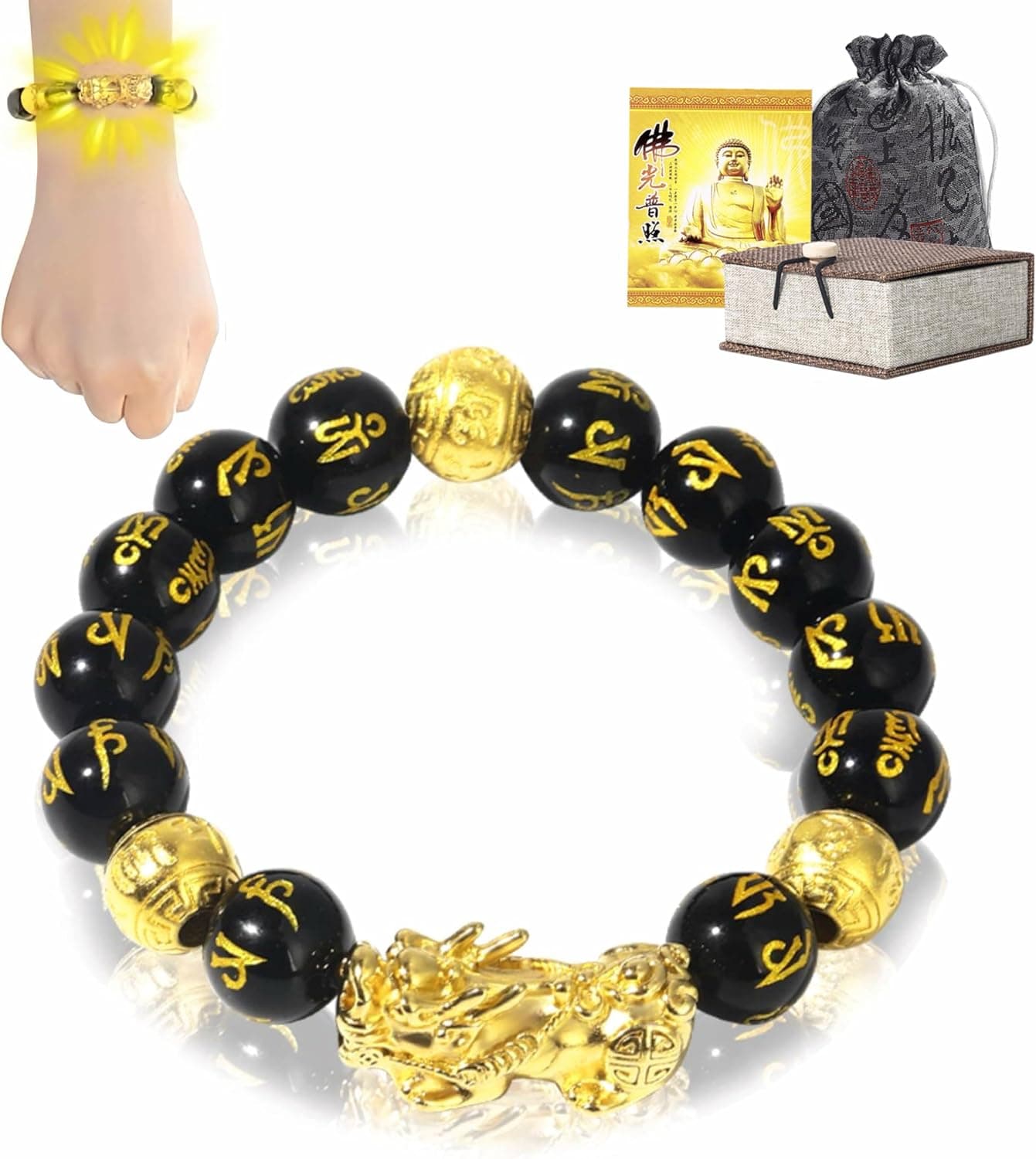 -50%
biuufish Feng Shui Black Obsidian Bracelet for Men Women, 24K Gold Plated Pix...
As an Amazon Associate, we earn from qualifying purchases. We only recommend items our practitioners have personally tested.
Continue Your Journey
Explore these related guides to deepen your understanding:
Ready for Deeper Guidance?
Try our free I Ching reading for personalized wisdom, or explore our curated Feng Shui essentials.