Feng Shui Guides
for the Modern Home
Authentic Feng Shui from original Chinese sources — not Pinterest tips. Bedroom layout, Bagua Map, Five Elements, front door Qi, and more. Every guide is practitioner-reviewed and cross-referenced against classical texts.
Where wind meets water, fortune follows. Start with the guides below, or use our Feng Shui Calculator to find your personal energy directions.
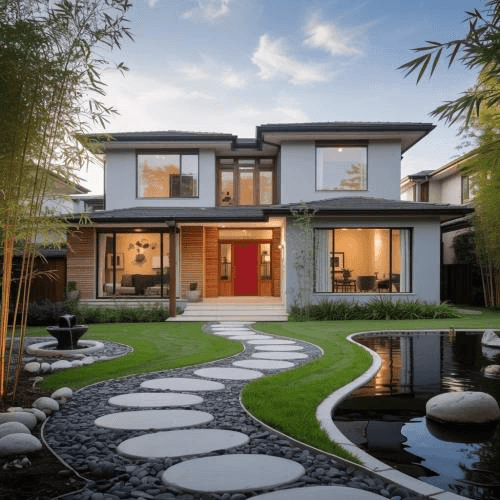
What Most Feng Shui Advice Gets Wrong
Here's what drives me crazy. You search "Feng Shui tips" and get a list of generic rules: put a plant here, hang a mirror there, buy a crystal. At first, this seems right. But it isn't.
Most advice online treats Feng Shui like interior decoration. It's not. Feng Shui is the physics of environmental energy — how wind carries Qi, how water collects it, how your bed position affects your nervous system. The Compass School uses magnetic orientation. The Form School reads physical shapes. Both matter. Ignore either one and you're flying blind.
I've seen people spend thousands on "Feng Shui cures" that do nothing. Why? Because they fixed the symptoms, not the source. A crystal won't save a bed facing the door. A water feature won't fix a blocked wealth corner. And that's where things go wrong.
The Three Principles
Qi Must Flow
Energy should circulate like a gentle stream — never rushing (long hallways, sharp corners) nor stagnating (clutter, blocked doors). Still water breeds illness; a rushing river sweeps you away.
Yin-Yang Balance
Every space needs both active (Yang) and restful (Yin) zones. A bedroom is Yin — cool, quiet, enclosed. A living room is Yang — warm, bright, open. Confuse them and life loses rhythm.
Five Elements Harmony
Wood, Fire, Earth, Metal, and Water must be balanced through color, shape, and material. An excess of Fire (red, triangular, electronics) in a bedroom destroys Yin rest. A missing Water element in the north blocks career Qi.
Guides by Topic
Bedroom
The most Yin room in your home. Command position, romance energy, and the secret of restful sleep.
Read GuideBagua Map
Nine life areas mapped onto your space. The foundational energy map every practitioner must master.
Read GuideFive Elements
Wood, Fire, Earth, Metal, Water — the five forces that generate and control all change. Balance them, transform your space.
Read GuidePlants & Living Qi
Living plants are the fastest way to activate stagnant Qi. Choose the right species and place them where energy needs to move.
Read GuideCrystals
Citrine for wealth, rose quartz for love, black tourmaline for protection. Earth's gifts, placed with intention.
Read GuideFront Door
The Mouth of Qi — where energy enters your life. 15 adjustments to invite fortune and deflect negativity.
Read GuideFeng Shui Calculator
Calculate your Kua Number, explore Five Elements relationships, and understand Flying Stars — the advanced systems behind authentic Feng Shui practice.
Calculate Your Kua Number
Your Kua Number (命卦数) determines your personal auspicious and inauspicious directions based on your birth year and gender. This ancient calculation reveals which directions support your wealth, health, relationships, and personal growth.
Enter your birth year and gender to discover your personal Kua Number and auspicious directions.
5 Feng Shui Shifts You Can Make Today
Small adjustments, significant shifts. Each one unblocks Qi in a specific area of your life.
Fix anything broken — broken objects create broken Qi
AllClear clutter from pathways — Qi follows the path you walk
EarthAdd a living plant to every room — activate stagnant energy
WoodPosition your bed in command — see the door, never face it directly
YinKeep your front door spotless — the Mouth of Qi must be clear
Water