The chart reads your relationship to structure, resources, and output. It has no field for your industry, your lease, or what you can actually do.
A BaZi chart will not tell you which job to take. It has no field for industry, no field for salary, and no way to see the lease you signed or the credential you never finished. What it does hold is a precise account of how you meet structure, how you handle resources, and what happens when somebody asks you to produce. That is a narrower thing than a career plan, and it lasts longer.
The four pillars describe a person under conditions.
The labor market is one set of conditions the chart has never met. Hold that split in mind for the rest of this page, because nearly every bad career reading comes from blurring it.
What you are actually asking when you ask about work
Nobody opens with a question about their Officer star. They ask whether to accept the promotion, whether to leave, whether the side project should stop being a side project. Risk, timing, and identity arrive in one sentence, bundled.
So start at the reference point. The day master is the fixed position everything else is measured against, and what your day master actually represents is a standing pattern rather than a personality sketch. From there, the chart reads relationships. Officer describes how structure registers on you: as backing, as grit, as pressure you perform well under, or as a weight that flattens you by Thursday. Wealth describes what you can command, which covers money and also the blunter question of whether an arrangement pays. Output describes production, meaning the craft, the performance, the thing that did not exist this morning.
Stack those three and you get a sentence. This person produces well under loose supervision, resists hierarchy without falling apart, and wants to see the money before committing. That is a filter. Filters are genuinely useful. A job title is not a filter, and the distance between those two things is where readings quietly fail.
The element-to-industry shortcut, and why it spread
Wood for publishing. Fire for entertainment. Earth for property. Metal for finance and law. Water for logistics. The list is memorable, fits on a card, and slides neatly into the vocabulary of Western career coaching, which is precisely why it travelled so far from the tradition that produced it.
Watch how a good interior designer works. She does not open with a colour. She asks what the room is for, who walks through it, where the light falls at four in the afternoon, which wall people will actually push furniture against. Colour comes last, as a consequence. Element-to-industry advice inverts that order. It picks the colour, then calls it a floor plan.
Yin and yang drift the same way. The pair is not good against bad, and it is not a fifty-fifty split to be balanced like a ledger. It describes two phases feeding each other, contraction and expansion, storage and release. A chart heavy on the receptive, structuring side does not need topping up with the expansive side. It needs an outlet sized to what the person can actually sustain. Twenty minutes of performance on a Sunday is an outlet. A career change is not.
Reality: the chart reads relationship, not job title
A strong Officer star does not mean you should manage people. It means structure lands as support instead of drag. That same configuration turns up in a compliance officer, a monastery administrator, a military logistics planner, and a freelance editor who keeps a merciless calendar and takes no calls before noon. The chart cannot separate those four, because in its own language they are one relationship wearing different materials.
This is why the five elements chart rewards being read as proportions rather than labels. You are hunting the ratio: how much is producing, how much is holding, how much is spending. Then you ask which real arrangements feed that ratio and which starve it.
I watched a person with an unusually clean output configuration spend six years in a role where nothing was ever finished at the end of a week.
Nothing was wrong with the chart. The chart was practically shouting. The job had no surface for the function to land on.
The month pillar is the career pillar, and it is the one people skip
Classical practice puts the heaviest career weight on the month pillar. It describes the season you were born into: the environment you grew up inside, the conditions you learned to operate in, and by extension the professional weather you read without effort.
Now the part casual readings miss. The month pillar is set by solar terms, not by the lunar new year. Someone born in the last week of January can belong to the previous solar year outright. Get that boundary wrong and the pillar shifts, which means the pillar governing career sits on a mistaken foundation. The reading will still sound completely assured.
Three places the reading breaks
The hour is wrong. Birth certificates round. Hospitals round more. Daylight saving was in force in places that have since dropped it, and longitude was almost never recorded. The hour pillar carries ambition, later life, and the inward-facing version of a career, the one nobody watches. Off by one hour and an Officer star appears to sit somewhere it does not, and the chart swings between "works well inside a system" and "works well outside one." That is not a rounding error. That is the answer to the question most people came to ask. The hour pillar is the one most often wrong, and the one most readings treat as a footnote.
The market has no field. A chart saying you handle resources well does not know that the resource-heavy sector in your city contracted last quarter. A chart saying you are built for structure does not know that the structured roles in your field now want a credential you do not have. BaZi models a person against conditions. It does not model the conditions. Confusing the two is the most common failure I see, and it is almost never the client's fault, because the reading arrives with enough confidence that the boundary simply disappears.
Constraints have nowhere to go. Square footage. Lease length. A parent two hours away. A visa tied to one employer. Advice to move and start over can be technically correct and practically unusable, and the practitioner usually has no idea which of your constraints are fixed and which reopen on a three-year horizon.
Affinity is not competence.
You can feel a real pull toward a kind of work and still be three years from anyone paying you for it. The chart describes the pull. The ten thousand hours are yours.
A north-facing studio, a lease, and a chart that said take the promotion
Thirty-eight square metres, one window, north side of the building. The desk sat flat against the wall between the bed and the closet, facing plaster, with the only power outlet on the far side of the room. Within a month the desk had become storage and the laptop lived on the kitchen counter.
The chart read strong Officer, thin output, month pillar in a season that rewards structure. So the reading was: take the structured role. Not wrong. It described an appetite accurately. What it could not see was that the same person had declined two structured roles in two years, and the reason was not temperament. The apartment had no door to close, and every structured job within reach required evening work.
North light is even and flat. Excellent for judging colour, poor for waking up, and inside that flatness the working day kept sliding later until the good hours ran from nine at night to midnight. That is a fine schedule for a freelancer and a disqualifying one for the role on offer.
The chart said structure. The room said no.
Design thinking helps here more than metaphysics does. A desk facing a wall is not a mistake; it is a decision about what you look at, and a blank wall produces one particular kind of concentration. The monk's cell and the writer's shed are both wall-facing rooms. A desk facing a window produces a wider, more distractible kind. Neither is right in the abstract. It depends on whether your problem is scatter or stall, and the chart answers that precisely if you ask it precisely.
The real fix is upstream
When a reading does not land, the answer is almost never a sharper interpretation of the same inputs. It is a change to the inputs. Four moves, in order.
Fix the birth time before you touch anything else. Pull the certificate. Ask about daylight saving. Give the city of birth rather than the city you grew up in. Then recast from scratch instead of patching the old reading. Casting the chart accurately is unglamorous work, and it prevents most of the errors downstream.
Turn the reading into three yes-or-no questions. Does this role put me inside a structure or outside one? Does it pay in resources or in autonomy? Does it ask me to produce on demand or to maintain? Answer those before you open a job listing and you will filter faster than any element list allows.
Audit the constraint you have been calling fate. Some are fixed. Most are fixed on a one-year horizon and open on a three-year one. Say the timeline out loud and watch what counts as advice change.
Change one thing in the room. One. If the reading says scatter, move the desk to the wall with the least foot traffic. If it says stall, put it where the door is visible. Give it four weeks before judging, because the first week is always worse. You are relearning a route your body already knew.
The chart is a hypothesis about fit. The room, the lease, and the calendar are where you test it. Treat the hypothesis as a verdict and you end up in the wrong job with a correct reading sitting in a drawer.
Questions I get asked most
Can a bazi chart really tell me what career to pick? Not a job title. It will tell you which conditions you tolerate and which ones grind you down over eighteen months, and that is the more useful half. Picking an actual career also needs a market, a skill set, and a geography, and none of those live in the pillars.
What does my Chinese zodiac animal say about my career? Very little, and it is the most oversold angle in the field. The animal is the year pillar. It describes the broad environment of your birth, not how you work. A reading that opens with your animal and closes there has not started.
I don't know my birth hour. Is my chart useless? Incomplete, not useless. Year, month, and day still stand, and the month pillar carries the heaviest career weight anyway. What you lose is the pillar holding ambition and later-life direction, which is usually what the question was really about. If you can find the hour on any document at all, find it.
Should I put a money plant or a water fountain in my home office for career luck? Handle the room before the symbolism. Light, desk position, and which way the door faces will change how you work more than any object on a shelf, and that effect is real whether or not you assign it an element. Add the elemental layer afterward if you want it. Never before.
How accurate is bazi at predicting promotions? The luck pillars time your readiness, not the vacancy. A strong year opens a window and you still have to climb through it, and your employer's hiring cycle is nowhere in your chart. Use it to decide when to ask, not when to expect.
Do I need a practitioner, or is a free calculator enough? For a first pass the calculator is fine. You will get the pillars and the element counts. What it cannot give you is judgment about what those counts mean for your particular bind, and that judgment is what a reading is actually paid for. Run the free chart first, then decide whether the question is still open.
Mei Chen
Traditionally informed guidance • Cross-referenced with classical Chinese source texts
Rooted in classical Chinese metaphysics and cross-referenced with original texts. Product recommendations are based on traditional symbolism, not guaranteed outcomes.
Practitioner-Selected Tools for This Topic
Items our team has tested and found effective for the principles discussed above. Individual results may vary.
 -29%
Karma and Luck March Birthstone Crystal Tree of Life, Aquamarine Gemstone Fen...
 -29%
Karma and Luck July Birthstone Crystal Tree of Life, Ruby Gemstone Feng Shui ...
 -29%
Karma and Luck February Birthstone Crystal Tree of Life, Amethyst Gemstone Fe...
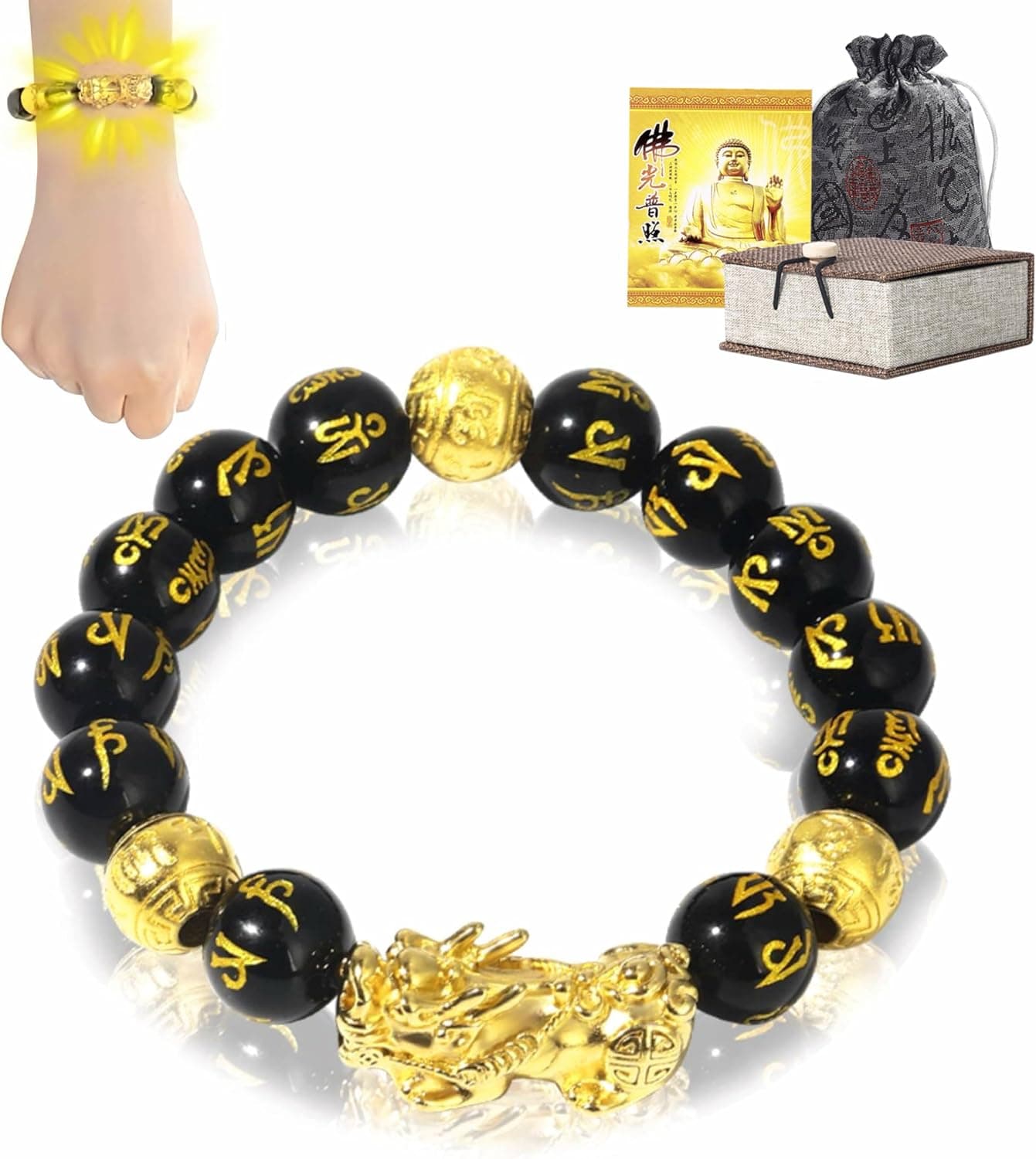 -50%
biuufish Feng Shui Black Obsidian Bracelet for Men Women, 24K Gold Plated Pix...
As an Amazon Associate, we earn from qualifying purchases. We only recommend items our practitioners have personally tested.
Continue Your Journey
Explore these related guides to deepen your understanding:
Ready for Deeper Guidance?
Try our free I Ching reading for personalized wisdom, or explore our curated Feng Shui essentials.