The health rule in your chart is usually a strained relationship between phases, not a missing element you can shop for.
Your health element in a bazi chart is almost never the one you are missing. It is the one being drained by whatever runs in excess, and because that drain usually sits two steps around the generating cycle from the obvious culprit, the intuitive fix (feed the missing phase) tends to add load to the exact point that is already failing.
That contradicts a good deal of what gets sold as element-based wellness advice, and it is not a matter of interpretation. It comes down to which book you are reading. Most English-language material is reading a commentary on the book rather than the book.
The Short Version, Then the Evidence
Four claims, each unpacked below.
- The five phases name processes: rising, blooming, settling, contracting, storing. Never five tins of paint.
- Classical practice strengthens a deficient phase through its source and eases an excess phase through its output. "Buy more of the missing one" is not part of that protocol.
- The Inner Canon warns that excess of a flavour injures the organ that flavour belongs to. Popular writing inverts the warning and sells it back as a prescription.
- Your room sits inside the reading. Direction, light and colour feed the same system, and they push a chart further out as easily as pull it back.
How a Scholar's Footnote Became a Shopping Instruction
Chinese classical texts never travelled alone. They travelled with commentary, and by the Tang dynasty the commentary had become inseparable from the text. A line in the Suwen arrives with centuries of explanation wrapped around it.
Wang Bing's notes on the Inner Canon are not an appendix. For most later readers they were the book.
Unremarkable inside the Chinese scholarly tradition. Highly remarkable in translation. As these texts moved into English across the twentieth century, the commentary was trimmed for readability, and what survived was the practical maxim with all its conditions detached.
Take the concrete case. The Suwen runs five flavours against five organs, and its emphasis falls almost entirely on excess. Too much salt and the vessels stiffen. Too much sour and the flesh hardens and the lips peel. Read the passage whole and it is a warning about overdoing a flavour. Somewhere in transit the warning flipped into an instruction: low Water, so eat salty, dark things.
The calendrical side of the tradition took the same hit. Those chapters of the Suwen that map phases onto years, the five movements and six qi, were used to anticipate what kinds of illness a season would favour across a population. Epidemiology. Not a personal supplement plan. Read as the latter, the chapters produce advice that sounds confident, specific, and answers to nothing the text actually claims.
The twentieth century finished the job. Translations arrived first for practitioners, then for a general readership, then as raw material for software. Every step kept the vocabulary and discarded the method.
The method was never the correspondences.
It was pattern differentiation: find what stands out of relation with what, in which season, before deciding anything at all.
What the Chart Is Actually Measuring
Here is where most bazi health element writing loses the thread. It treats the five phases as five substances. The tradition treats them as five modes of change.
Wood is not a tree. It is expansion under pressure: sinew, eye, plan, and the anger that rises when a plan is blocked. Fire is not flame. It is the peak of transformation and the moment a thing becomes visible. Metal is contraction and boundary, skin and breath and grief, the capacity to let something be finished. Water is storage and depth: marrow, rest, fear, whatever happens when nothing appears to be happening. Earth is the pivot between them, digestion in the widest sense, the power to convert one thing into another.
None of those descriptions is a quantity. You cannot have more Metal the way you can have more iron in your blood. What you can have is a relationship under strain, one phase pressing on another, or one phase failing to receive from its source.
Yin and yang slice across it again. The same phase carries a yin and a yang expression, and 甲 and 乙 are both Wood while behaving nothing alike, so "add Wood" is not yet an instruction. Not until you know which Wood, in which pillar, in which season. The counting mechanics sit in the five phases chart explained if you want that layer first.
The Two Rules Nobody Quotes
Classical Chinese medicine has a compact algorithm for exactly this question, and it lives in the Nanjing, the Classic of Difficult Issues, not in the popular summaries.
Deficiency: tonify the mother. Excess: drain the child.
Both rules run on the generating cycle. Both point away from the phase in question. Water genuinely low? You support Metal, which produces Water, rather than pouring in Water. Fire genuinely excessive? You support Earth, which Fire produces and therefore spends itself on, rather than smothering it. That second rule gets dropped constantly, and it is the one that decides outcomes in charts born in summer.
Then there is the corollary that explains a great many failed interventions. In the generating cycle the child consumes the mother. 子盜母氣, the child robs the mother's qi. Flood a chart with Water and Metal must keep spending itself to produce more. A chart already thin in Metal gets thinner. The symptom that follows looks like a Metal deficiency, so the next round of advice adds Metal, and the whole arrangement oscillates for a year.
A North-Facing Bedroom, a Black Fountain, and the Waking at Three
I have watched this play out in a specific room more than once. The version I keep returning to: a rented flat with a north-facing bedroom, headboard against the wall it shared with the bathroom, navy accent wall behind the pillow, blackout curtains that stayed shut, and a small black ceramic tabletop fountain on the nightstand, roughly twenty centimetres from where the sleeper's head rested.
The chart underneath it was born in July, 丙 as day master, three Fire characters among the eight, Metal the thinnest of the five. An app had labelled it "Water deficient," and the occupant had done exactly what the label suggested. Navy wall. Black bedding. Blackout curtains. Fountain. A salt lamp for good measure. A run of salty, dark, seaweed-heavy meals.
Over about eleven weeks the sleep got worse.
Waking at three, awake until four. A dry cough arriving each night around the same hour. Skin flaking at the hairline. One cold that lasted the better part of a month.
The three-to-four window is the part that interests me. On the classical organ clock the Lung network peaks between three and five in the morning, and the Lung network belongs to Metal. Her Metal was already the thinnest phase in the chart. Fire was pressing on it. Then she set Water beside her head, which meant Metal had to produce Water all night long. The navy wall and the northern orientation stacked a third layer of the same phase into the one room that governs rest.
Nothing in that sequence is mysterious. You simply have to stop counting characters and start reading relationships.
The fix was not to add Metal.
It was to stop draining it, and to drain the Fire instead. The fountain went first. The navy wall was repainted a warm off-white, which changed the light in the room more than it changed the colour. Blackout curtains gave way to a linen that let the seven o'clock light through, because morning light is the strongest signal the body has for ending the night. Salt lamp out. Room cooled to eighteen degrees. The reading lamp with the orange bulb, which she had worked under until midnight with the laptop propped on her knees, moved to the kitchen table, which had the side effect of stopping the bed from being an office.
That last change is the one people resist.
It is also the one that matters. A bed used as a desk stops reading as a place to stop.
The One Case Where the Missing Phase Is the Right Answer
Sometimes it is. A chart born in the depth of winter with almost no Fire behaves nothing like the one above, and the person usually knows before the chart confirms it: hands that never warm, no appetite in the morning, a flatness coffee does not touch.
Even then, the classical move is not to dump Fire on the situation. You support Wood, Fire's source, and let the season carry the rest. Fire added directly to a cold chart tends to surface as heat in the wrong places: flushed face, insomnia, irritability, the sense of running hot and worn out at the same time.
That distinction is the whole difference between a schedule and a shopping list.
Why the Modern Reading Went Sideways
Substance thinking is less a translation accident than a philosophical one. Chinese phase thought is relational and seasonal: the question is always what this is doing to that, and in which season. Western wellness culture is inventory-based: the question is what do I have too little of. Inventory produces shopping lists. Relation produces schedules, directions, and changes to things already in the house.
The inventory version sells better. That is how it spread.
It is also how you end up with a person who owns a black bowl, sleeps behind a navy wall, and coughs every night at three.
One further loss worth naming. The medical tradition never separated diagnosis from pattern differentiation. 辨證 comes first; treatment follows from it. No pattern, no treatment. An app that counts characters has taken a census, and a census is not a diagnosis. A full reading of the chart as a whole folds in season, day master strength and the relations between pillars, and health sits in that layer, not in the tally.
Checking Your Own Chart Without Repeating the Error
Start with the day master, because everything else is filtered through it. The day master is the self in the chart, and how strong it is in the birth season tells you whether you are treating a deficiency at all.
Then read the month pillar before you read the counts. Winter-born and July-born charts with identical characters are not the same chart, because season changes what a phase is doing, not how much of it there is. The four pillars explain why the month carries more weight than almost anyone expects on first reading.
Then ask the question the apps skip. What is in excess, and what is it pressing on? The phase being pressed is usually where the symptom shows up, and it is almost never the phase that gets supplemented.
Cross-check against the hour pillar and the organ clock. A symptom with a fixed time of day has handed you information for free. Waking between one and three points at Liver. Three and five, Lung. Five and seven, Large Intestine. Not proof. Corroboration, and it costs nothing.
Change the environment in the direction of the fix, not the direction of the missing phase. One change at a time, three to four weeks, and watch sleep first, because sleep moves before anything else does.
Finally, get the chart right before you act on it. A calculator will hand you four pillars, but a chart cast without your birth longitude and time can drop the hour pillar into the wrong slot, and the hour pillar is exactly the one I just told you to check.
FAQ
My chart says Water deficient. Should I eat more salt and wear black?
That is the exact inversion this article is about. The Suwen treats excess salt as damage to the vessels, not as medicine for a low Water phase. Dark colours and salt are the popular reading of a warning passage, and if Metal is thin in your chart, piling on Water gives Metal a bill it has to pay all night.
Is my missing element the one making me sick?
Usually not. A missing phase describes the chart, not the body. People with no Fire anywhere among the eight characters often report no Fire-type symptoms at all, while a perfectly even tally can still produce trouble in whatever phase an excess is leaning on.
How do I work out which element is actually the problem?
Go at it from timing and location before you touch the counts. If a symptom arrives at a fixed hour, or settles into one system such as skin, digestion or sleep, you have a phase to test. Then look for what is pressing on that phase.
Do the five element correspondences still have any use?
Drop them and you lose the best diagnostic map in the system. Just read them as relations rather than inventory. A correspondence tells you which network is involved. It never tells you what to buy.
Can repainting a room really change anything?
The room does not rewrite the chart. What it changes is what the chart is asked to do every night for eight hours, which is frequently enough to matter. Direction, light and temperature are continuous inputs, and continuous inputs move slow systems. Two conditions: one change at a time, and give it three weeks before you judge it.
How soon will I notice a difference?
Sleep is the fastest mover, often ten to fourteen days. Skin and digestion lag behind, six to eight weeks typically, and they arrive unevenly. Judge the trend across a month rather than one bad night.
Mei Chen
Traditionally informed guidance • Cross-referenced with classical Chinese source texts
Rooted in classical Chinese metaphysics and cross-referenced with original texts. Product recommendations are based on traditional symbolism, not guaranteed outcomes.
Practitioner-Selected Tools for This Topic
Items our team has tested and found effective for the principles discussed above. Individual results may vary.
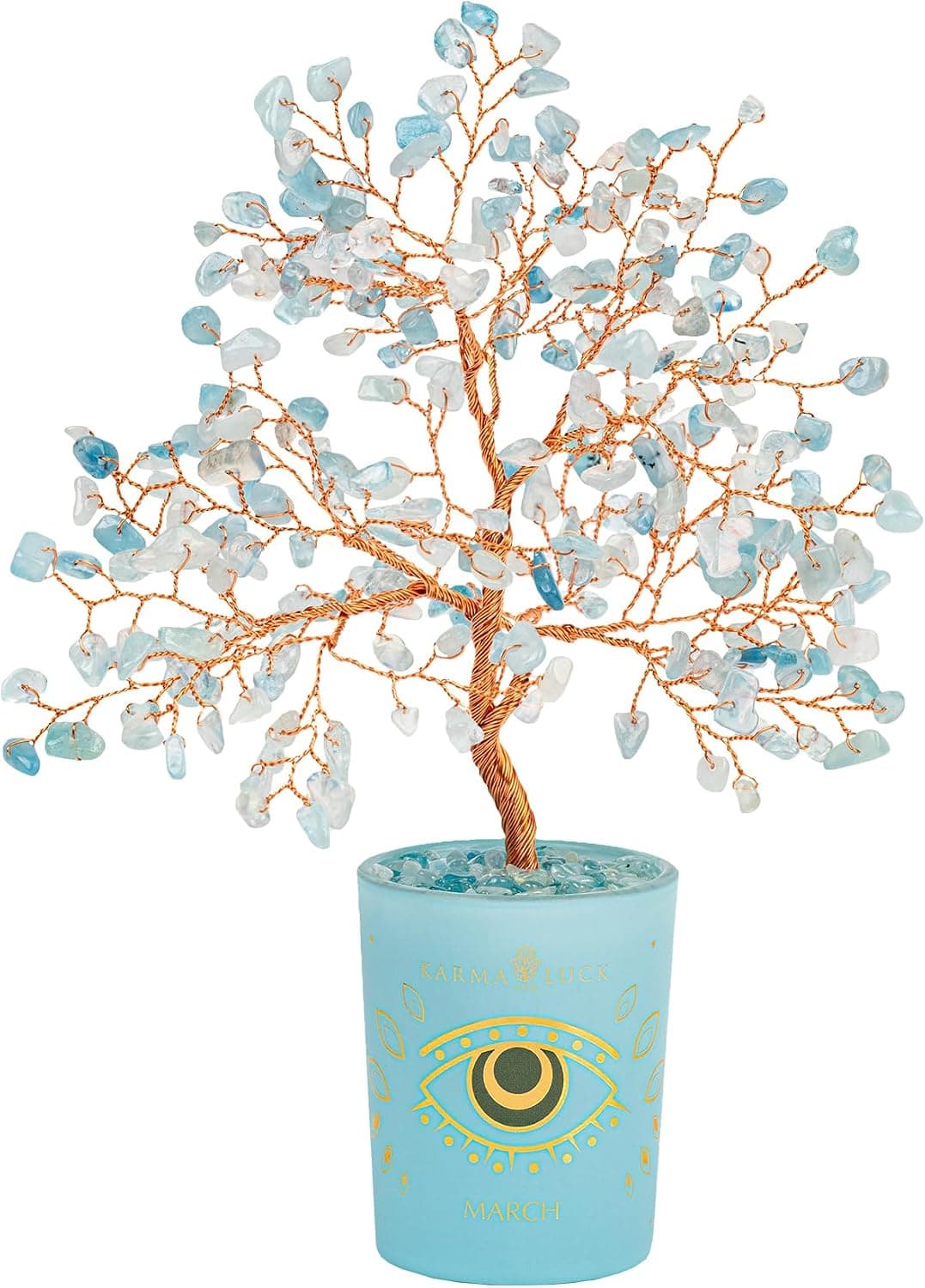 -29%
Karma and Luck March Birthstone Crystal Tree of Life, Aquamarine Gemstone Fen...
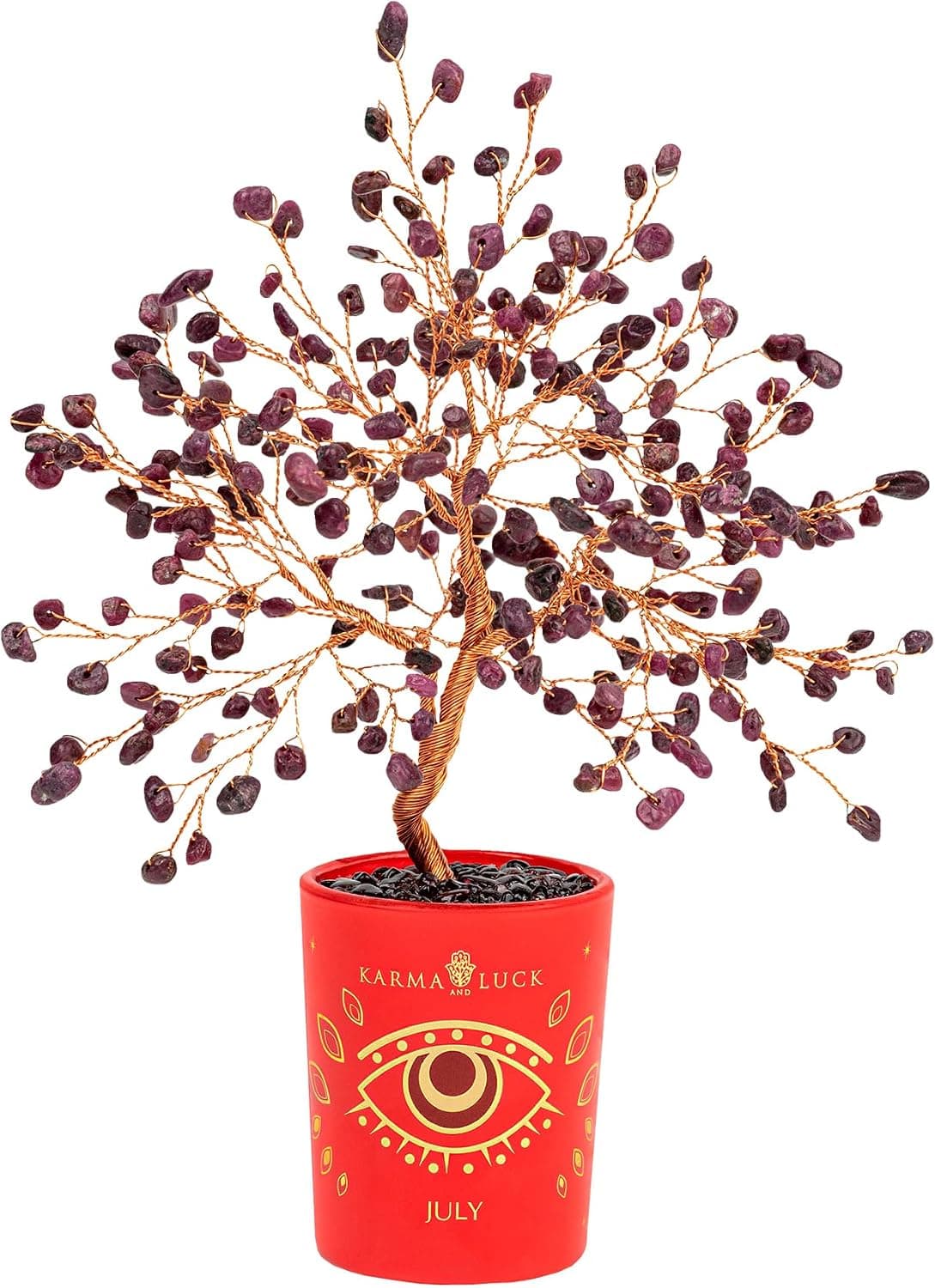 -29%
Karma and Luck July Birthstone Crystal Tree of Life, Ruby Gemstone Feng Shui ...
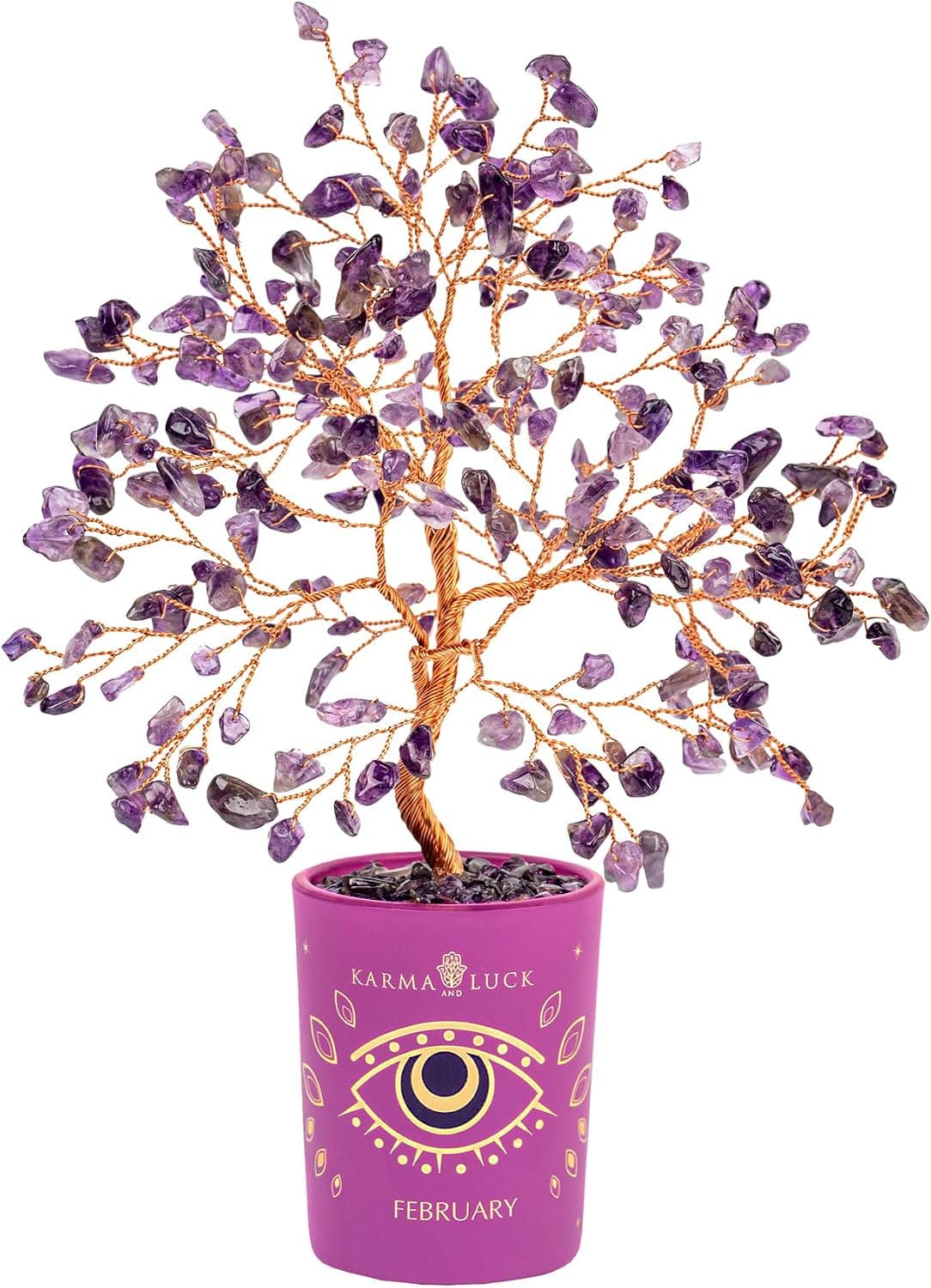 -29%
Karma and Luck February Birthstone Crystal Tree of Life, Amethyst Gemstone Fe...
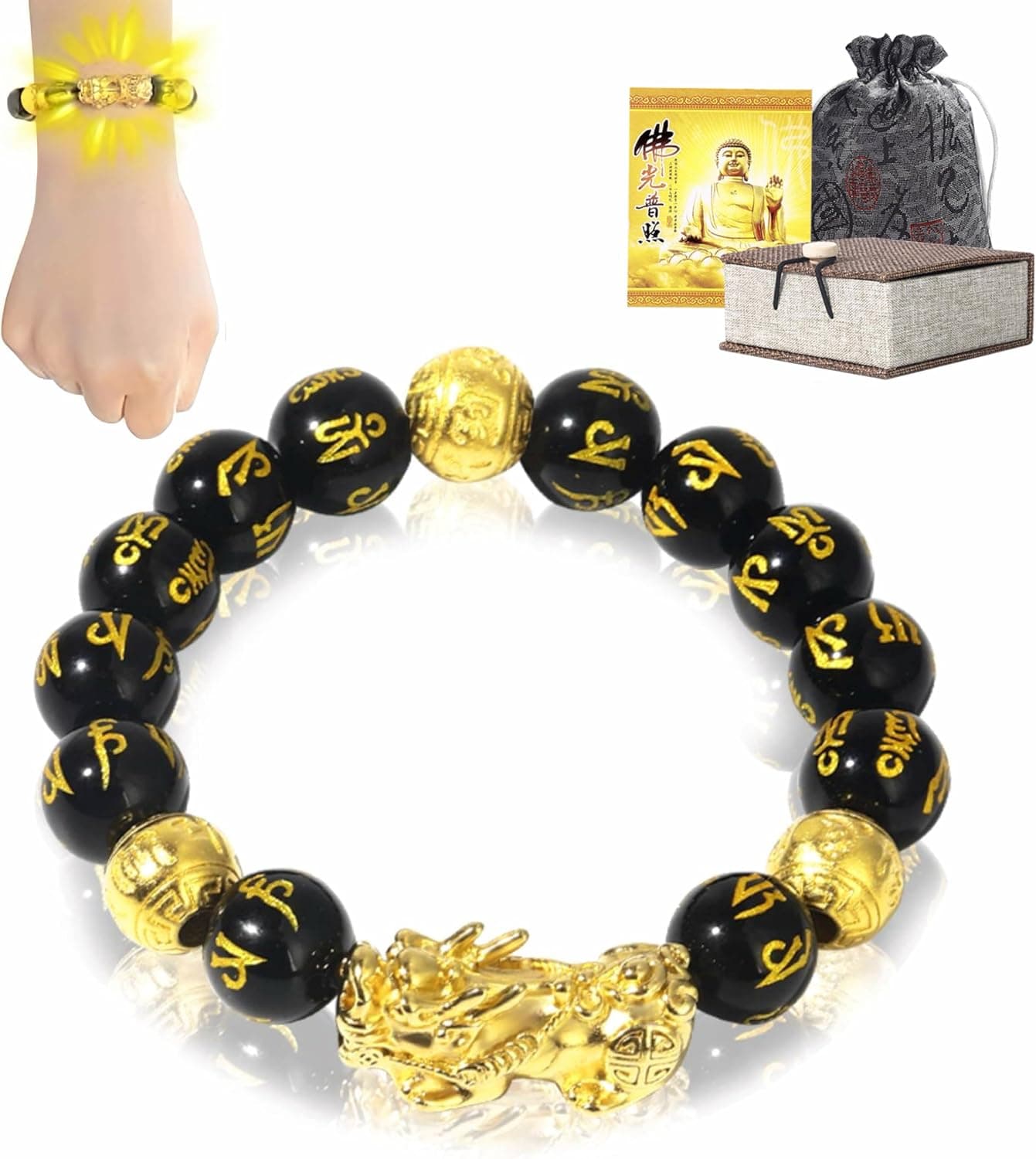 -50%
biuufish Feng Shui Black Obsidian Bracelet for Men Women, 24K Gold Plated Pix...
As an Amazon Associate, we earn from qualifying purchases. We only recommend items our practitioners have personally tested.
Continue Your Journey
Explore these related guides to deepen your understanding:
Ready for Deeper Guidance?
Try our free I Ching reading for personalized wisdom, or explore our curated Feng Shui essentials.