The point is not to quiet the mind. It is to stop handing every passing sensation the keys to your selfhood.
Why meditation is not mainly about calming down
The real shift begins when you notice that calm is a side effect, not the goal. A person sits in a quiet room and discovers that the hard part is not noise from the street, but the mind’s habit of attaching meaning to every sensation: the hum of a vent, a tight jaw, a memory, a plan. That habit is the problem.
In psychology, attention is selective by design. It must be, or we would drown in stimulus. Yin yang philosophy in daily life makes the same point from another angle: balance is never about freezing the system, but about regulating what gets fed. Meditation works the same way. It does not manufacture awareness out of thin air; it trains selection so that your mind stops chasing every bright object that passes through the field.
That is why a silent room can feel louder at first. The mind is used to privilege threat, novelty, and self-reference. When those cues are removed, the leftover mental traffic becomes obvious. People call that discomfort failure. I call it the first honest signal.
In a small practice room I once saw a hard-backed chair, a blue wool cushion, and a single round lamp set low on the left wall. The room was no bigger than a spare bedroom. Yet the person in it could not settle until the lamp was dimmed and the chair turned slightly away from the door. Nothing mystical happened. The environment stopped pulling attention in five directions at once.
That is the practical clue most people miss: attention is not only internal. It is also shaped by circulation, light, proportion, and thresholds. A room can either scatter the mind or help it stay long enough to see itself clearly.
When the mind built temples around attention
Long before modern psychology named attentional bias, contemplative traditions were already building systems around it. Monastery halls, Stoic porches, and early retreat spaces all aimed at the same hidden problem: attention drifts before we realize it has moved. The body sits still. The mind does not.
In Buddhist traditions, disciplined sitting exposed how quickly sensation becomes story. Hindu practices often linked concentration to liberation through repeated inward return. Stoic reflection trained the mind to separate event from judgment. Different languages, same furnace. The self was being forged by what it repeatedly noticed.
This is where many modern readers get misled. They imagine historical practice as exotic stillness, as if people were trying to become emotionally blank. They were not. They were training a more exact relationship to experience. That difference matters.
Architecture understood this early. A porch creates pause before entry. A courtyard slows movement. A hall stretches attention with proportion. These are not decorative choices. They are attentional instructions. The body senses them before the intellect names them.
That is why the image of a temple is useful even for readers who do not follow a religion. A temple is not merely a building. It is a machine for reducing noise, narrowing focus, and making a person aware of what was previously automatic.
How meditation changed from discipline to method
Over time, the language changed because the social purpose changed. Discipline became method. Training became technique. In older settings, practice was embedded in vows, ethics, and a whole way of life, so attention was shaped alongside conduct. In modern settings, the same basic acts are often extracted from that framework and packaged as a repeatable protocol: sit, breathe, notice, return.
That shift widened access, but it also narrowed the interpretation. When practice becomes only a tool for stress relief, it can lose its moral spine. A person may become calmer and still remain reckless, vain, or reactive. Calm alone does not make you wise. It only makes you less loud.
Modern secular use also tends to frame attention as a productivity resource. Focus better. Sleep better. Perform better. None of that is false, but it is thin. The older traditions asked a sharper question: what changes in a person when attention is repeatedly placed in one place without forcing an outcome? The answer is not just emotional regulation. It is a change in the hierarchy of what the mind treats as important.
Wu wei helps here because it names a mode of action that does not strain against reality. Applied to meditation, it means you stop wrestling each thought as if it were an enemy. You observe. You redirect. You do not bully the mind into obedience. That approach is sturdier than self-control theater, which usually collapses by lunch.
Behavioral science explains why the old methods still work. Habits form through cue-response loops, and meditation is highly dependent on those loops. A consistent chair, a fixed hour, the same corner of a room, the same candle or lamp, the same transition from work to practice—these cues lower friction and shorten the time between intention and action. The body learns the routine before the mind has a chance to bargain, which is exactly why environment matters so much.
That is why the most reliable practice spaces are often plain. A plain space reduces decision fatigue. It also reduces the seduction of novelty, which is one of attention’s favorite traps. In practice, less stimulation often means more insight, because the mind no longer has an excuse to stay on the surface.
What meditation means when traditions disagree
Traditions disagree on language, but they keep circling the same center. Some treat stillness as the route. Some use breath. Some use repetition. Some use ethics first. Some treat insight as the main event, others concentration, others surrender. The disagreement is real. The underlying concern is the same.
What changes is the theory of the self. In some systems, the self is something to see through. In others, it is something to discipline. In still others, it is something to align with a larger order. The practical result is similar: you become less ruled by whatever flashes hardest in the moment.
That is why the word itself matters less than the function it serves. Whether you call it contemplation, sitting, recollection, or mindfulness, the method asks you to notice what the mind normally edits out. The temperature at the nostrils. The weight of the body on the cushion. The grain of wood beneath the hand. The tiny urge to move. The instant before a thought turns into a story.
Taoist meditation practices often emphasize that kind of unforced observation, and they are useful precisely because they resist drama. No fireworks. No performance. Just a cleaner encounter with what is already happening.
And here is the surprise: the less glamorous the practice, the more philosophical it becomes. Every time you return attention, you are answering a question about what counts as real. Not every thought deserves equal authority. Not every feeling deserves immediate obedience. That is a philosophical claim, whether you say it aloud or not.
The attention problem nobody notices
The deepest difficulty is not distraction. It is identification. The mind does not merely notice an object; it fuses with it. A sensation becomes danger. A mood becomes truth. A passing irritation becomes a story about who you are.
That is why meditation can feel destabilizing before it feels clarifying. When the mind stops merging so quickly with its contents, you see how much of your inner life was automatic theater. This is not a flaw in the process. It is the process.
Light changes that process in rooms, and it changes it in the mind. Bright environments can over-stimulate, making attention jumpy and thin. Softer light encourages longer dwell time. You look. You stay. You notice more because you are not being hammered by contrast.
Architects understand this with entrances and thresholds. A threshold marks transition. It tells the body to shift gears. Practice spaces should do the same. The best room for this work is not necessarily beautiful. It is legible. You know where to sit. You know where to enter. You know what is held back and what is allowed in.
How yin and yang apply step by step is useful here because attention itself is a rhythm of yielding and gathering. Too much force and the mind resists. Too much looseness and it scatters. The work is to keep the channel open without flooding it.
That is also why silence sometimes feels noisy. Without external clutter, internal bias shows up. Worry prefers the foreground. So does self-judgment. So does desire. Meditation does not invent these patterns. It makes them visible enough to interrupt.
Training selfhood by changing what appears in the foreground
Selfhood is not built from grand declarations. It is built from repeated attentional habits. What appears first becomes familiar. What becomes familiar starts to feel true. What feels true begins to steer behavior.
So if your mind always puts threat in the foreground, you become a threat-centered person. If it always puts lack there, you become a lack-centered person. If it repeatedly returns to breath, posture, and present sensation, the self starts to organize around steadiness instead of panic.
This is not spiritual poetry. It is perception training. Emotions bias what the mind notices before conscious thought catches up. A tense mood makes neutral cues look hostile. A hopeful mood makes them seem promising. Meditation lets you watch that bias happen in real time, which is the first step toward not being fooled by it.
The shift can feel small. It is not small. When attention changes, interpretation changes. When interpretation changes, behavior changes. When behavior changes, a life changes. Slow chain. Real consequence.
Daoist philosophy offers a broader frame for that kind of yielding awareness, but the mechanism is not limited to one school. The point is not to become passive. The point is to stop living as if every impulse were a command.
Here is the part people dislike hearing: you can be busy all day and still be undisciplined in attention. Busyness is not focus. Motion is not presence. A room full of tasks can still be mentally empty if the mind never stays long enough to see what it is doing.
Modern practice in rooms, routines, and thresholds
By 2026, attention has become one of the most contested resources in life. Notifications, bright screens, open-plan spaces, and constant partial urgency all work against sustained awareness. That is not a moral failing. It is the environment. If the room trains interruption, the mind will obey.
The fix is concrete. Set one chair facing away from the main traffic of the room. Use softer light in the evening. Keep the practice corner visually plain. Leave a small gap between work and sitting so the body crosses a threshold instead of snapping from one demand to another. These details matter because they cue a different mode of perception.
Think in terms of circulation. Thought moves. Attention moves. The goal is not to stop movement but to redirect it. A practice space should help the mind change direction without friction. That is why a doorway, a mat, a lamp, and a fixed hour can do more than a dozen inspirational quotes.
A visitor entering a bright atrium often feels calm before understanding why. The ceiling is higher than expected. The light is even. The edges are clean. The space has already organized attention. Good practice rooms do the same. They pre-arrange the mind toward steadiness.
The current year matters here because so many people meditate in rooms that are also offices, gyms, and storage spaces. That creates a conflict of cues. If you want consistency, reduce that conflict. Use one object that means practice only. A cushion. A low stool. A simple bowl. Let the environment tell the body what the mind should do next.
Yin yang balance in modern life becomes practical when you see that a room can either exaggerate yang through glare and speed or restore yin through softness and containment. The philosophy stops being abstract the moment it enters the floor plan.
And if you want the shortest possible instruction, here it is: sit where attention is easier to keep than to lose.
That is the whole art.
FAQ
Is meditation mainly about relaxation?
Not really. Relaxation may show up, but the deeper function is training attention so it becomes less reactive and less easily hijacked by mood, memory, or external noise. Some sessions feel peaceful; others feel awkward, and both can be useful.
Do I need a special room to practice well?
No, but you do need consistent cues. A fixed chair, softer light, and a clear threshold into practice often matter more than décor. The point is to make the environment support return, not seduce you with novelty.
Why does silence sometimes feel uncomfortable?
Because silence removes the distractions that normally cover up attentional habits. Surprising fact: what feels like “too much thinking” is often just the mind noticing its own bias for threat and self-reference. Once you see that, the discomfort becomes information instead of failure.
The Tao Te Ching says little with great precision, and that is fitting here. The practice is not to conquer the mind. It is to see it clearly enough that it no longer runs the house by accident.
David Liu
Traditionally informed guidance • Cross-referenced with classical Chinese source texts
Rooted in classical Chinese metaphysics and cross-referenced with original texts. Product recommendations are based on traditional symbolism, not guaranteed outcomes.
Practitioner-Selected Tools for This Topic
Items our team has tested and found effective for the principles discussed above. Individual results may vary.
 -29%
-29%Karma and Luck March Birthstone Crystal Tree of Life, Aquamarine Gemstone Fen...
 -29%
-29%Karma and Luck July Birthstone Crystal Tree of Life, Ruby Gemstone Feng Shui ...
 -29%
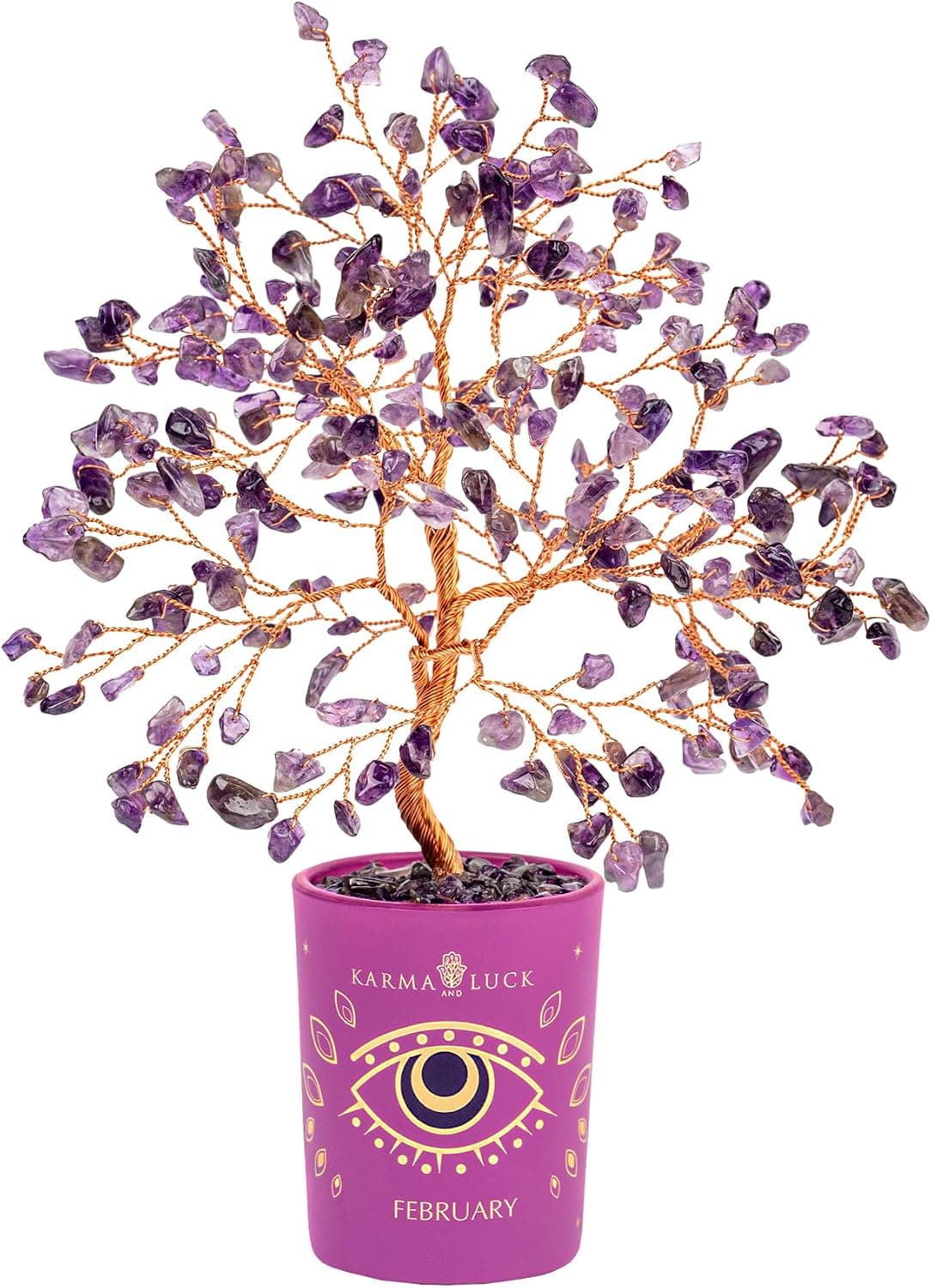
-29%Karma and Luck February Birthstone Crystal Tree of Life, Amethyst Gemstone Fe...
 -50%
-50%biuufish Feng Shui Black Obsidian Bracelet for Men Women, 24K Gold Plated Pix...
As an Amazon Associate, we earn from qualifying purchases. We only recommend items our practitioners have personally tested.
Continue Your Journey
Explore these related guides to deepen your understanding:

Ready for Deeper Guidance?
Try our free I Ching reading for personalized wisdom, or explore our curated Feng Shui essentials.