The text points to one hidden habit behind stress: the urge to grip life until it stops moving.
The Moment You Start Forcing Everything
At 11:40 p.m., the kitchen looked too small for one person’s thoughts. Unopened mail leaned against a salt tin on the counter, a laptop glowed blue beside the sink, and a man in socks walked a tight loop between the stove and the refrigerator as if movement alone might solve the month.
The air held the dry scent of paper, dust, and warm electronics. Nothing in that room was dramatic. That was the problem. The trouble was ordinary, repeated, and already normalized.
The surface symptom is easy to miss: we call it productivity, urgency, or responsibility. Underneath, it is often anxiety reduction. Control feels safer than uncertainty, so the mind keeps tightening its grip until every decision starts to feel like a test.
That is where the older Tao view of life becomes useful. Not as decoration. As diagnosis.
The text keeps pointing to the same root problem in different ways: when you force reality to behave, you stop seeing what is already moving on its own. The result is not strength. It is friction. And friction has a smell. Burnout has a smell too.
Why the River Feels Hard Only After You Grab It
I once walked a bamboo-lined garden path after rain and had a small, embarrassing lesson. Water was sliding around stones, under roots, and through the curve of the path without complaint. The stone under my bare foot was cool, and the damp air had that clean, almost metallic freshness you only notice when the body finally stops arguing.
People love to praise the river image as if it simply means “be calm.” That is too shallow. The deeper point is that reality already has pattern, and it does not need your panic to organize it.
When stress rises, the brain narrows. It overlabels. It turns a complex day into a few blunt categories: success or failure, safe or unsafe, ahead or behind. Then it mistakes those labels for the territory itself. The world gets smaller, and the mind calls that clarity.
The principle of non-forcing is not passivity. It is precise responsiveness. A good gardener does not tug a seed upward to help it grow. A good sailor does not demand wind in the wrong direction. Both work with timing, not ego.
This is why the text still lands in modern life. Not because it is mystical wallpaper, but because it names the pressure that makes us exhaust ourselves: the urge to make certainty out of movement.
The Old Text Was Not Advising Passivity
A lot of readers hear “do less” and imagine a soft retreat from life. That misses the nerve of the thing.
The ancient line of thought is less interested in laziness than in wasted motion. There is a difference. One is empty. The other is crowded with effort that does not belong to the task.
In a cramped apartment kitchen, that difference becomes visible fast. I remember a narrow layout with stacked cereal boxes on top of the microwave, a drying rack half-blocking the hallway, and a black laptop open on the counter next to a pile of unopened bills. The person living there kept saying, “I just need to get organized,” while pacing between the sink and the stove because every surface had become a command center.
That room was not merely messy. It was compressed. The walkways were too tight, the counters too full, and the body had started moving like the room itself: clipped, hurried, and defensive. The mind often copies the architecture around it.
The old text points to a different remedy. Reduce the struggle. Stop adding force where pattern, timing, or restraint would do more.
That is also why the phrase “follow the flow” can annoy serious people. They are right to be suspicious of vague comfort. Flow is not a mood. It is alignment between action and circumstance.
The Name You Put on Life Becomes the Cage
One of the hardest things to accept is that language can become a trap. The moment we name something, we start managing it as if the label were the thing itself.
A person says “my career,” “my productivity,” “my relationship,” and suddenly the mind starts policing each category. The label hardens. The living situation turns into an audit.
This is not an abstract philosophical complaint. It changes behavior in measurable ways. Overlabeling makes thought narrow. Narrow thought reduces options. Reduced options increase fear. Then fear asks for more control, and the loop closes on itself.
The text behind the classical Tao teachings keeps warning about this without sounding academic. Name too much, and you stop meeting reality directly. You begin meeting your concepts about it. That is a smaller, meaner world.
Think about a desk with one book, one cup, and one lamp. Not because emptiness is fashionable. Because deliberate space changes attention. A minimalist study with a low wooden table, a scroll of the old text, and one cup of tea cooling beside the window does something the crowded kitchen cannot: it gives the mind room to notice what it has been ignoring.
Soft afternoon light across wood grain. The faint smell of tea and damp air. Quiet enough to hear yourself before your habits start shouting.
Where Action Becomes Effortless Again
Effortless action is not magic. It is the byproduct of not fighting the wrong battle.
Start with the body before the philosophy. Clear one surface. Put the mail in a tray. Remove one object from the counter that does not belong there. If you want to work with the logic of the text, reduce points of friction first. The nervous system reads space as permission.
Then watch what happens to choice. People often believe their anxiety comes from the size of the problem. More often, it comes from the amount of mental noise layered on top of the problem. When the room is less crowded, the mind stops using every object as a reminder of unfinished identity work.
Here is a practical sequence I give people who are trapped in overefforting:
1. Sit down for two minutes before fixing anything. Do not solve. Observe.
2. Ask, “What am I forcing that could be timed instead?” That question is blunt on purpose.
3. Remove one visible source of compression: a stack, a cord, a box, a chair blocking a path.
4. Make one action smaller than your pride wants it to be. Send the email. Wash the cup. Stop there.
5. Notice whether the task now feels lighter because it is smaller, or because your ego is no longer standing in the way.
I have seen this shift in a studio apartment where a young architect kept a red filing tray on the only clear spot in the kitchen. The tray looked harmless, but it held unpaid invoices, receipts, and half-finished sketches. When he moved it to a closet shelf and left the counter empty for a week, he slept better within three nights and stopped working past midnight on tasks that were really just proof of worth.
That is the hidden root cause again: ego-based proof-seeking. Burnout often grows when every task becomes evidence that you matter. Real action does not need that burden.
The Quiet Source Beneath Anxiety, Ambition, and Clutter
The text does not separate your inner life from your outer arrangements. It treats them as neighbors who keep borrowing each other’s clothes.
Anxious minds clutter rooms. Cluttered rooms intensify anxious minds. Ambition can do the same thing when it stops being creative and becomes self-justification. Then every project must win. Every pause must be defended. Every delay feels like a verdict.
That is why the old wisdom still speaks with force. It is not trying to make you passive, serene, or pleasing. It is trying to return you to the source beneath the noise: a way of living that does not require constant argument with reality.
For a wider frame, I would send you to this deeper reading on the text’s core insights. But the practical point is already here: stop treating strain as proof of seriousness. Sometimes strain is just a warning that you have lost the shape of the moment.
That bamboo path after rain still matters to me because it showed, in one simple scene, what control forgets. Water did not win by fighting. It found the route that already existed.
The same is true for a home, a schedule, or a mind. The work is not to dominate it. The work is to stop crowding out the order that was trying to appear all along.
FAQ
Is the Tao Te Ching mainly about doing less?
That is the shallow reading. A better reading is that it teaches you to stop wasting energy on resistance that only feeds stress. The aim is cleaner action, not inactivity.
Why does the text feel so relevant during burnout?
Because burnout often comes from forcing outcomes and treating every task as identity proof. The book keeps pointing back to the same root issue: we suffer when we try to control what needs timing, restraint, or trust.
Can this be applied without becoming vague or passive?
Surprisingly, yes. In practice, it becomes more concrete: fewer objects on the counter, one clear next step, less mental argument, more attention to timing. That is not vague at all.
David Liu
Traditionally informed guidance • Cross-referenced with classical Chinese source texts
Rooted in classical Chinese metaphysics and cross-referenced with original texts. Product recommendations are based on traditional symbolism, not guaranteed outcomes.
Practitioner-Selected Tools for This Topic
Items our team has tested and found effective for the principles discussed above. Individual results may vary.
 -29%
-29%Karma and Luck March Birthstone Crystal Tree of Life, Aquamarine Gemstone Fen...
 -29%
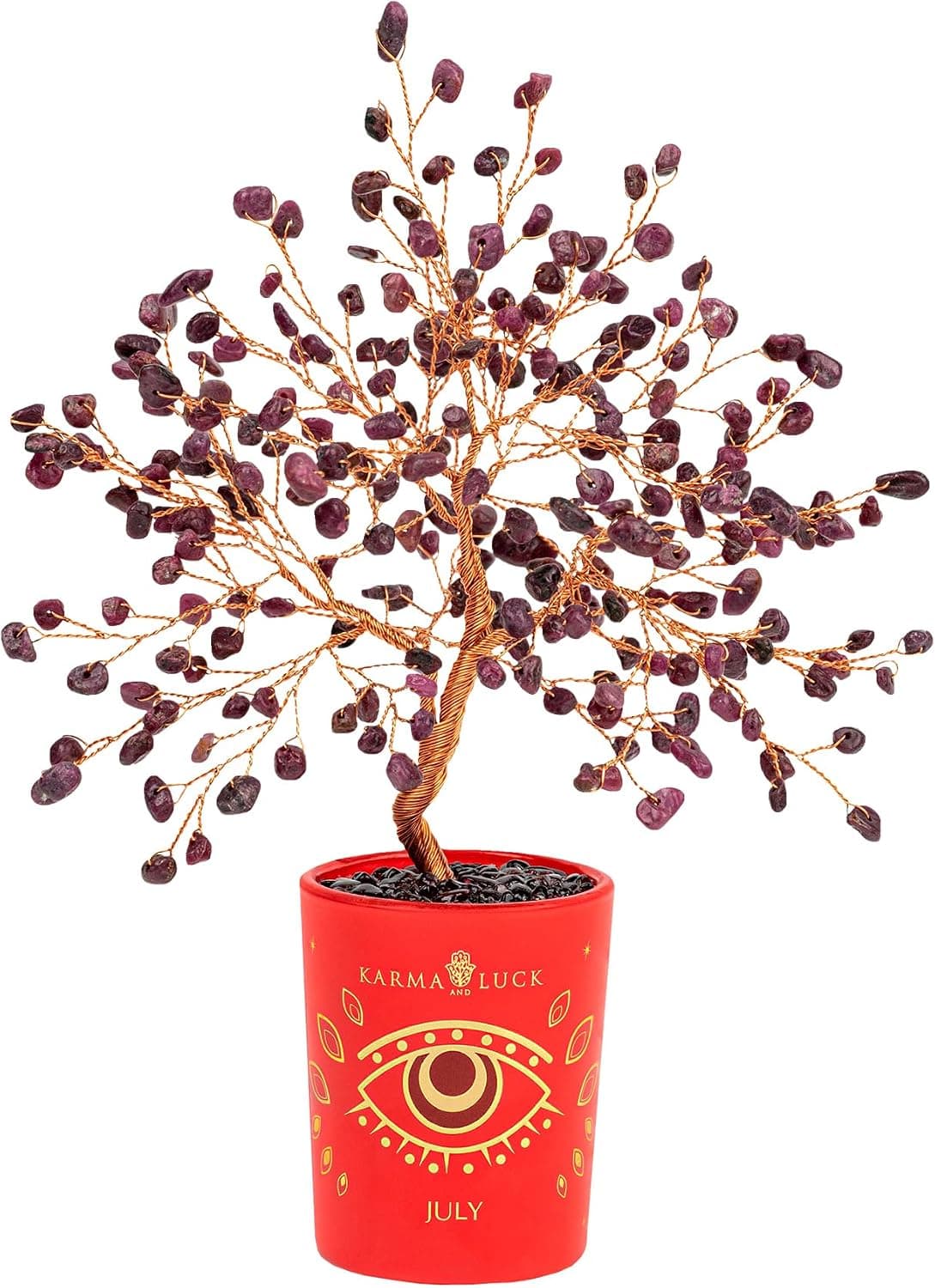
-29%Karma and Luck July Birthstone Crystal Tree of Life, Ruby Gemstone Feng Shui ...
 -29%
-29%Karma and Luck February Birthstone Crystal Tree of Life, Amethyst Gemstone Fe...
 -50%
-50%biuufish Feng Shui Black Obsidian Bracelet for Men Women, 24K Gold Plated Pix...
As an Amazon Associate, we earn from qualifying purchases. We only recommend items our practitioners have personally tested.
Continue Your Journey
Explore these related guides to deepen your understanding:

Ready for Deeper Guidance?
Try our free I Ching reading for personalized wisdom, or explore our curated Feng Shui essentials.