The hardest Tao lesson is also the simplest: stop adding, and the path gets clearer.
The shelf that fixed nothing
I once walked into a small home office in Portland and saw the usual problem: a desk buried under two monitors, a red task lamp, three sticky-note pads, and a shelf packed so tightly the books were bowing in the middle. The owner, a software architect named Daniel, had read every productivity trick he could find. He still felt scattered by 10 a.m. He blamed discipline. The room said otherwise.
That is where Laozi’s plainspoken verse becomes more useful than most people expect. Not as poetry for wall prints. As instruction. The old line is simple enough to irritate modern minds: remove what is excessive, and what matters begins to move on its own. That is the nerve of tao teachings. Not mysticism for escape. A method for seeing where force is making things worse.
People love the idea of adding. More rules. More tools. More rituals. Yet the Tao keeps pointing the other way. Less friction. Less grasping. Less noise. This is why so many people get the philosophy backward: they search for a technique to control life, while the teaching keeps asking them to stop blocking it.
Daniel moved the red lamp out of the center of his desk, removed six folders he had not opened in a year, and left one brass bowl empty instead of using it as a catchall. He told me a week later that he finished his morning planning in twelve minutes instead of forty. Nothing magical happened. The room simply stopped arguing with him.
Why non-action is not passivity
One of the biggest mistakes Western readers make is translating non-action as doing nothing. That is lazy thinking. The Tao never praises laziness. It praises timing, economy, and the kind of action that fits the moment instead of smashing it.
Yin and yang balance in modern life helps explain this clearly: every push creates a counterpush, and every overcorrection creates another mess. The Tao teaches a cleaner move. Act when action is needed. Stop when your action starts producing noise instead of results. That sounds obvious until you watch someone answer every email within minutes, interrupt every silence, and wonder why their life feels brittle.
I have seen this in kitchens, bedrooms, and boardrooms. The chef who keeps three knives on the counter because he fears not having the right one. The retiree who fills her hallway with framed certificates and then wonders why she cannot relax in her own house. The anxious student who keeps their phone face-up beside the pillow and then complains about sleep. The pattern is the same. Clinging creates static.
Non-action, in the Taoist sense, is disciplined restraint. It means you are willing to let the right thing emerge without forcing the shape too early. That takes more courage than most people admit. Any fool can push. It takes skill to wait, watch, and move only when the movement is clean.
There is a quiet authority in that. Not loud authority. Not the kind that performs. The kind that works.
How the teaching shows up in ordinary rooms
The Tao is not hiding in exotic settings. It shows up in the bathroom mirror you keep wiping every day because the shelf below it is cluttered. It shows up in the living room where the coffee table has become a graveyard of receipts, chargers, and half-finished intentions. It shows up in the bedroom, where a giant mirror faces the bed and the room never quite settles.
That last point surprises people. They want the philosophy to be lofty; it keeps returning to the practical. I have moved a mirror in a guest bedroom with pale blue walls and a heavy oak dresser, and the homeowner reported better sleep within three nights. Not because mirrors are evil. Because the room had been visually overactive. The eyes never rested. The mind followed.
This is one reason tao teachings pair so naturally with a daily life approach to yin yang. Both insist that harmony is not a slogan. It is a relationship between restraint and expression, stillness and movement, emptiness and form. If one side dominates for too long, the whole system loses its ability to recover.
So look at your spaces with blunt honesty. Do you have too many objects competing for attention? Do you keep bright colors in rooms meant for sleep? Do you place everything within reach and then wonder why nothing feels intentional? The Tao does not reward decoration for its own sake. It rewards fit.
And fit is rare. That is why calm rooms feel almost shocking.
What the Tao asks you to stop doing
Stop trying to make every moment productive. That habit is poison dressed as ambition. A person who fills every gap with noise cannot hear what life is actually saying.
Stop mistaking intensity for truth. A loud insight is not always a wise one. A dramatic decision is not always the correct one. The Tao has little patience for theatrics.
Stop forcing a result before the ground is ready. This is where relationships suffer, projects stall, and homes begin to feel oppressive. A dining room painted dark green can be beautiful, but pair it with black furniture, heavy curtains, and one bright overhead bulb, and the room starts to feel like it is holding its breath. The issue is not style. It is overloading the system.
Stop treating emptiness as failure. In Taoist thinking, empty space is not missing content; it is what allows content to function. A bowl is useful because it is hollow. A room is livable because it has circulation. A life can be intelligent only when it contains pauses.
That last one makes people uncomfortable. Good. Discomfort is often the first sign that an assumption is breaking apart.
How to practice it without turning it into a performance
Begin with one room. Not the whole house. The room you use most. For many people that is the bedroom or the desk area. Stand in the doorway and ask one question: what is trying too hard here?
Then remove one thing. Not ten. One. A stack of magazines. A bright throw pillow. The unused lamp. The extra chair nobody sits in. The goal is not minimalism for its own sake. The goal is to make the room honest.
After that, check the main line of movement. Can you walk from the door to the window without skirting around furniture? Can you sit down without facing a visual pile-up? Can your eyes land somewhere quiet? These are not small details. They shape your nervous system every day.
Next, notice your own habits. Where do you over-answer? Where do you explain too much? Where do you spend energy trying to control a situation that would settle if you stopped poking it every ten minutes? Write down one place where you can replace force with timing.
Then practice a pause before action. A breath before answering. A moment before buying. A quiet check before rearranging. This is how tao teachings become real: not as slogans, but as repeated acts of restraint. You do not need to announce the philosophy. You need to live it.
If you want a stronger framework for that inner calibration, read a step-by-step yin yang practice. It gives the mechanics. The Tao gives the attitude. Together, they keep you from turning wisdom into a personality costume.
Why simplicity can feel like a correction
Some people react badly when a room is simplified. They say it feels empty, cold, or unfinished. Often what they mean is that the room no longer hides their overstimulation. That is a correction, not a failure.
The same thing happens in life. When you stop overcommitting, some relationships get quieter. When you stop performing competence, certain people lose interest. When you stop filling silence, you discover how much of your day was built around avoiding yourself. The Tao does not flatter that version of you. It asks for something sturdier.
There is a reason old teachers return to water so often. Water does not fight every shape; it takes the shape it meets, but it never loses its nature. That is not weakness. That is mastery. The river gets to the sea without bragging. Try matching that.
And if that sounds too abstract, go back to the room. Remove the obvious excess. Give the eye a place to rest. Give your schedule a pocket of unclaimed time. The philosophy will feel less mysterious once you stop suffocating it with complication.
What to remember when you want more Tao and less noise
Do not ask how to become a better collector of insights. Ask what you can stop carrying.
Do not ask how to force calm. Ask what keeps disturbing it.
Do not ask how to dominate the flow. Ask where the flow is already trying to move.
That is the practical edge of tao teachings. They do not make life smaller. They make it workable. And in my experience, workable is where real peace begins.
FAQ
Are tao teachings religious, or are they more philosophical?
They can be read both ways, but most Western readers get more value from them as a philosophy of alignment. The point is not belief for its own sake. The point is learning how to live with less resistance and more accuracy.
Can I use Taoist ideas without adopting all of Chinese metaphysics?
Absolutely, and many people do. Start with one principle at a time: reduce excess, respect timing, and notice where forcing creates more work. That is enough to change how a room feels and how a day unfolds.
Is simplicity always better in Taoist thinking?
Surprisingly, no. A bare room can be just as hostile as an overcrowded one if it lacks warmth, function, or balance. The real question is not “less or more?” but “what fits?”
David Liu
Traditionally informed guidance • Cross-referenced with classical Chinese source texts
Rooted in classical Chinese metaphysics and cross-referenced with original texts. Product recommendations are based on traditional symbolism, not guaranteed outcomes.
Practitioner-Selected Tools for This Topic
Items our team has tested and found effective for the principles discussed above. Individual results may vary.
 -29%
-29%Karma and Luck March Birthstone Crystal Tree of Life, Aquamarine Gemstone Fen...
 -29%
-29%Karma and Luck July Birthstone Crystal Tree of Life, Ruby Gemstone Feng Shui ...
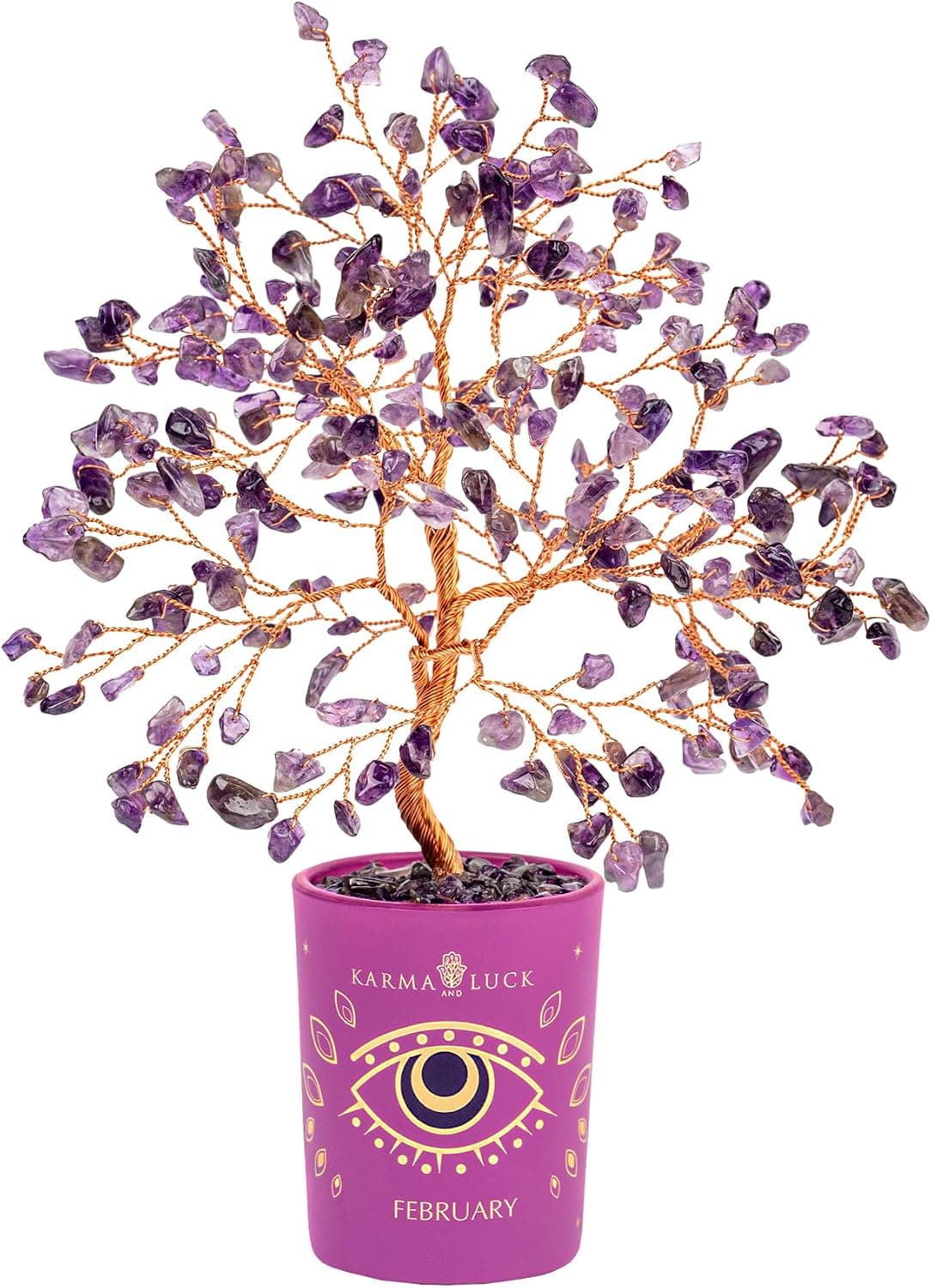 -29%
-29%Karma and Luck February Birthstone Crystal Tree of Life, Amethyst Gemstone Fe...
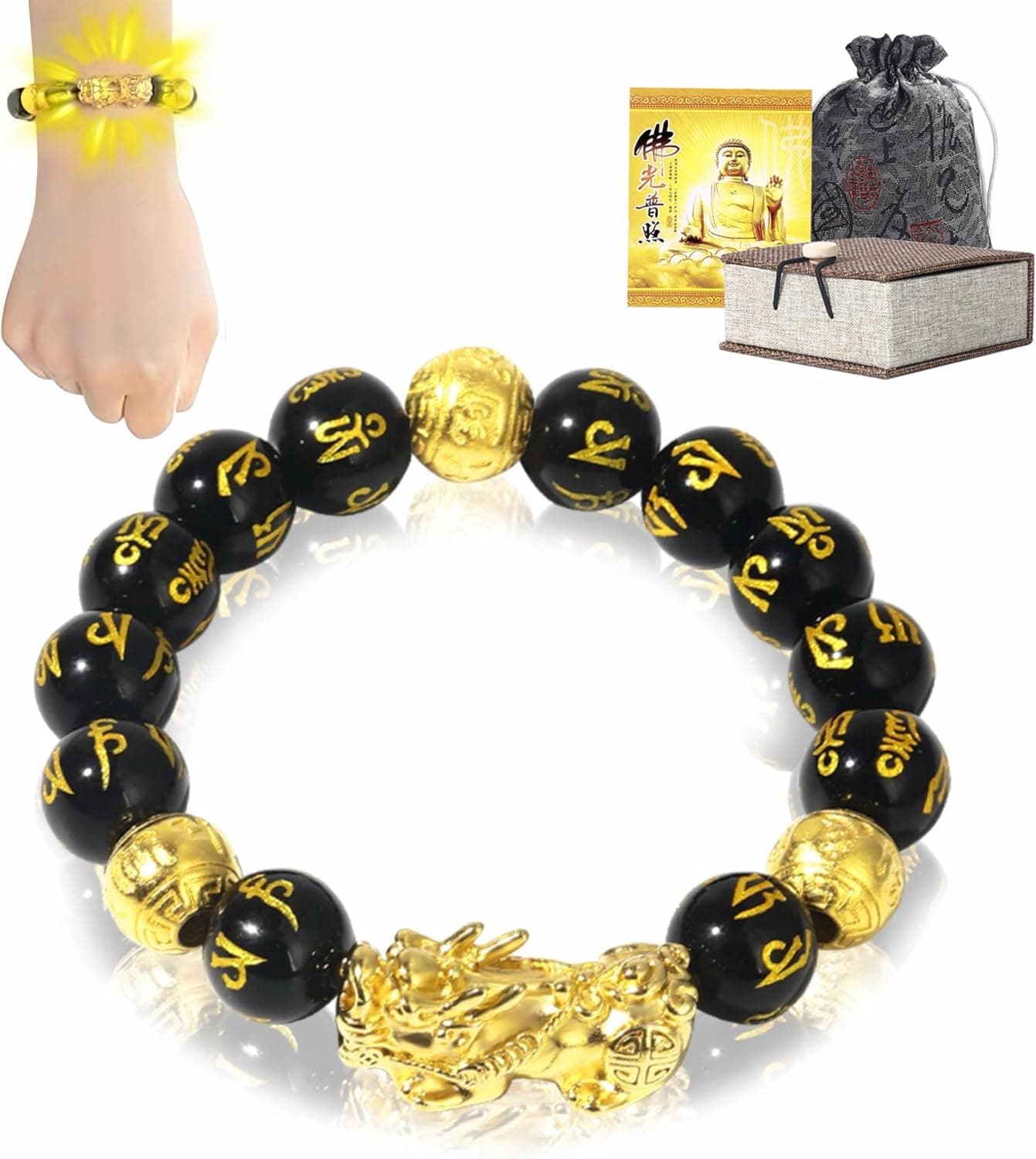 -50%
-50%biuufish Feng Shui Black Obsidian Bracelet for Men Women, 24K Gold Plated Pix...
As an Amazon Associate, we earn from qualifying purchases. We only recommend items our practitioners have personally tested.
Continue Your Journey
Explore these related guides to deepen your understanding:

Ready for Deeper Guidance?
Try our free I Ching reading for personalized wisdom, or explore our curated Feng Shui essentials.