She followed every instruction on the list. Her sleep got worse. The reason sits in two small dots most guides never mention.
Three Hundred Eighty Square Feet, One Window
The window faced north. The bed fit on one wall only, and that wall happened to sit under the window. The radiator clanked at two in the morning, every night, and the door opened directly onto the foot of the bed because there was nowhere else for it to open.
Before I say anything about what she did, understand that she did it well. She painted the accent wall persimmon to add yang. She hung a mirror opposite the bed to bounce the north light back into the room. She bought blackout curtains because a sleep article told her to, a salt lamp because a video told her to, and three succulents because a design account told her to.
She slept worse afterward than before. Not dramatically. Just a slow drift into waking at four and lying there with the radiator ticking.
That outcome is the most instructive thing in this entire subject, and almost nobody writes about it, because it doesn't fit the list format.
What Went Wrong Was Following Instructions
The popular version of this framework is a vocabulary test. Yin is dark, cool, soft, still, receptive, interior. Yang is bright, warm, hard, active, expansive, exterior. Then the instruction: balance them. So people walk around their apartments counting objects, deciding whether the grey sofa is too yin and whether the brass lamp supplies enough yang to compensate.
This is where a lot of yin and yang balance in modern life gets stuck, and it's not the reader's fault. The checklist is what survives when a four-phase cosmological model gets compressed into a decor trend.
Here's the problem with counting. Her studio was already ninety percent yin by structure — north light, low ceiling, one occupant, small footprint, and a grey January outside that never got brighter than a laptop screen. Adding a persimmon wall didn't add yang in any functional sense. It added a warm-colored surface that, under a 2700K bulb at nine at night, pushed the room's apparent color temperature upward exactly when her body was trying to drop its own.
The wall wasn't wrong. The hour was.
Same with the curtains. In a one-window apartment, that window is the entire daylight delivery system. Blacking it out until 8 a.m. in winter means she got maybe forty minutes of outdoor-level light before work, and her circadian system read that as a very long night followed by a very short day.
Every item on her list was defensible. The list itself was the mistake, because a list has no clock.
The Part the Symbol Actually Encodes
Look at the taiji circle again. Two comma shapes, one dark, one light, each swelling as the other thins. And inside each, a dot of the opposite color.
Those dots are the whole teaching and they are almost always skipped.
The classical divination system gives each phase a number. Young yang is seven. Old yang is nine. Young yin is eight. Old yin is six. When you cast a hexagram by yarrow stalk or by coins, sixes and nines are marked as changing lines — they are the lines that flip into their opposite when you read the second hexagram. Sevens and eights sit still.
Which means the tradition's own arithmetic says something specific: a phase at its peak is already turning. Old yang is nine because nine is one step from becoming yin. Old yin is six because six is one step from becoming yang. The dot inside the comma is not decoration. It is a timer.
So the model is not a scale you load evenly and walk away from. It is a cycle with four phases and a built-in trigger. Any reading that reduces it to fifty-fifty symmetry is a modern flattening of something that was never symmetrical.
Now trace the mechanism, because that's where the meaning actually lives.
Input. Light, air, sound, sightline, and surface temperature reach the body before a single thought forms about the room.
Step one: registration. Roughly one to two percent of the retina's ganglion cells don't build images at all. They report raw brightness in the blue-green band straight to the suprachiasmatic nucleus, the body's master clock. Indoor lighting runs about 100 to 300 lux. Overcast daylight coming through a north window runs 1,000 to 3,000. Direct sun is 100,000. So the gap between curtains open and curtains closed in a studio isn't aesthetic — it's a tenfold difference in the signal that sets every hormone downstream of it, including the cortisol rise that should happen in the first hour after waking and the melatonin release that should happen twelve hours later.
Step two: autonomic tagging. The brain is a prediction machine, and a room is a forecast. A bed with no view of the door, or a door that opens onto the foot of the bed, keeps a low-grade prediction of unannounced entry running in the background all night. Nothing ever enters. But unresolved prediction is metabolically expensive, and it shows up as a slightly elevated resting heart rate and a longer time to fall asleep. That is the entire mechanism behind the old command-position rule, and it has nothing to do with spirits.
Step three: behavioral drift. Because the corner behind the door never quite resolved, she stopped sitting there. The chair became a laundry chair. Because the chair was gone, the desk became the dining table. Avoidance is quiet and cumulative, and it is where most of the real damage happens — not in the object, but in whether you use the space.
Step four: the loop closes. A disused corner collects things. A cluttered visual field has high edge density, meaning many small boundaries for the eye to process on every glance, and that measurably raises cognitive load. Now the room genuinely feels bad, which confirms the original impression, which produces more avoidance.
Output. A room that is ninety percent yin by architecture and one hundred percent yin by use, with a bright wall sitting on top of it doing nothing.
This is why the practical question is never "am I balanced?" It's "what phase is this room supposed to be in, right now, today?" A bedroom wants something closer to seventy percent yin. A kitchen wants the reverse. A studio apartment has to be both, which is the hard part, and the answer is scheduling rather than shopping.
When the Ratio Drifts, and How You Can Tell
There are two failure directions and they look nothing alike.
The yin overdose is the grey apartment. Everything soft, everything matte, no overhead light ever, blackout on the only window, no textile on the floor. It photographs beautifully. It also has a reverberation time near a full second, which turns every dropped key and every neighbor's footstep into an event. Sound is the sense people forget to budget for, and a hard-surfaced studio with nothing to absorb it produces a noise floor that keeps the nervous system on duty.
The yang overdose in small square footage is worse, because it's what the internet recommends. Mirrors multiply sightlines in a room that already has too few. Four strong walls close the box instead of opening it. Twelve plants in a north-facing studio become eleven dying plants, which is a daily visual cue of failure rather than a biophilic benefit — the research on plants and attention restoration depends on plants that are actually alive.
And then there's the correctly-followed-advice failure, which is the one worth memorizing. The mirror opposite the bed. In a studio it's often the only way to get light into a dead corner, so it goes up. Then it catches the phone screen at midnight and the streetlight at three and the laptop at six, and the room never fully goes dark. Every instruction was satisfied. The outcome was still wrong, because nobody asked what the mirror would reflect at night.
The Fix Is a Schedule, Not a Shopping List
Nothing here requires a drill, a landlord's permission, or a furniture budget.
Morning: inject yang on purpose. Curtains fully open within five minutes of waking, and stand at the window for five to ten minutes. If the window is north-facing and dim, go outside instead — ten minutes at 10,000 lux beats an hour at 300. This single habit does more than every object on her original list combined.
Evening: descend. No overhead light after sunset. Two lamps, both below eye level, both warm. Dim by half in the final hour. The persimmon wall would have been fine as a canvas; it was the nine p.m. version of it that fought her.
One clear sightline. From the pillow, you should see the door without turning your head. If the bed can't move, break the line instead — a tension rod with a linen panel, a bead strand, a tall shelf set just off the door's axis.
Absorb sound. A rug covering most of the floor, a curtain with actual folds rather than a flat blind, a bookshelf against the shared wall. Textiles pull a hard room's reverberation down toward half a second and the room instantly reads as calmer.
Move air, and crack the window. One window means no cross-ventilation, and a closed 380 square feet accumulates carbon dioxide overnight at levels that degrade next-day thinking. A fan on low aimed at the ceiling stirs the boundary layer; a one-centimeter gap in January costs almost nothing in heat.
Keep one living thing alive. Pothos, snake plant, ZZ — something that tolerates north light. The value isn't decoration. It's that watering it forces a daily glance out of your own head, which is a yang move performed at a yin hour.
Move one object a week. This is the changing-line ritual, and it's the part that keeps the model honest. Because the cycle turns, the room should turn with it. If you want the full sequence worked out, this walkthrough of applying yin and yang principles step by step takes it week by week.
What the Dots Are For
Six weeks after she moved the mirror to the side wall, opened the curtains at dawn, hung the persimmon as a canvas instead of painting the wall, and put a rug down, she was sleeping through the radiator.
Not one of those changes was a cure. Each one altered a signal: brightness at the right hour, warmth at the right hour, a resolved sightline, a softer room.
The two dots in the symbol say the same thing in a slower language. Deep rest already contains the seed of waking. Full activity already contains the seed of rest. Which means the meaning of yin and yang was never equilibrium — it was timing. If you want the older, stranger version of this, the Tao Te Ching's argument that the empty space is what makes the vessel useful is the same idea from a different angle, and the twenty-four solar terms are the same idea written onto a calendar.
Balance is not a number. It's knowing what hour you're in.
David Liu
Traditionally informed guidance • Cross-referenced with classical Chinese source texts
Rooted in classical Chinese metaphysics and cross-referenced with original texts. Product recommendations are based on traditional symbolism, not guaranteed outcomes.
Practitioner-Selected Tools for This Topic
Items our team has tested and found effective for the principles discussed above. Individual results may vary.
 -29%
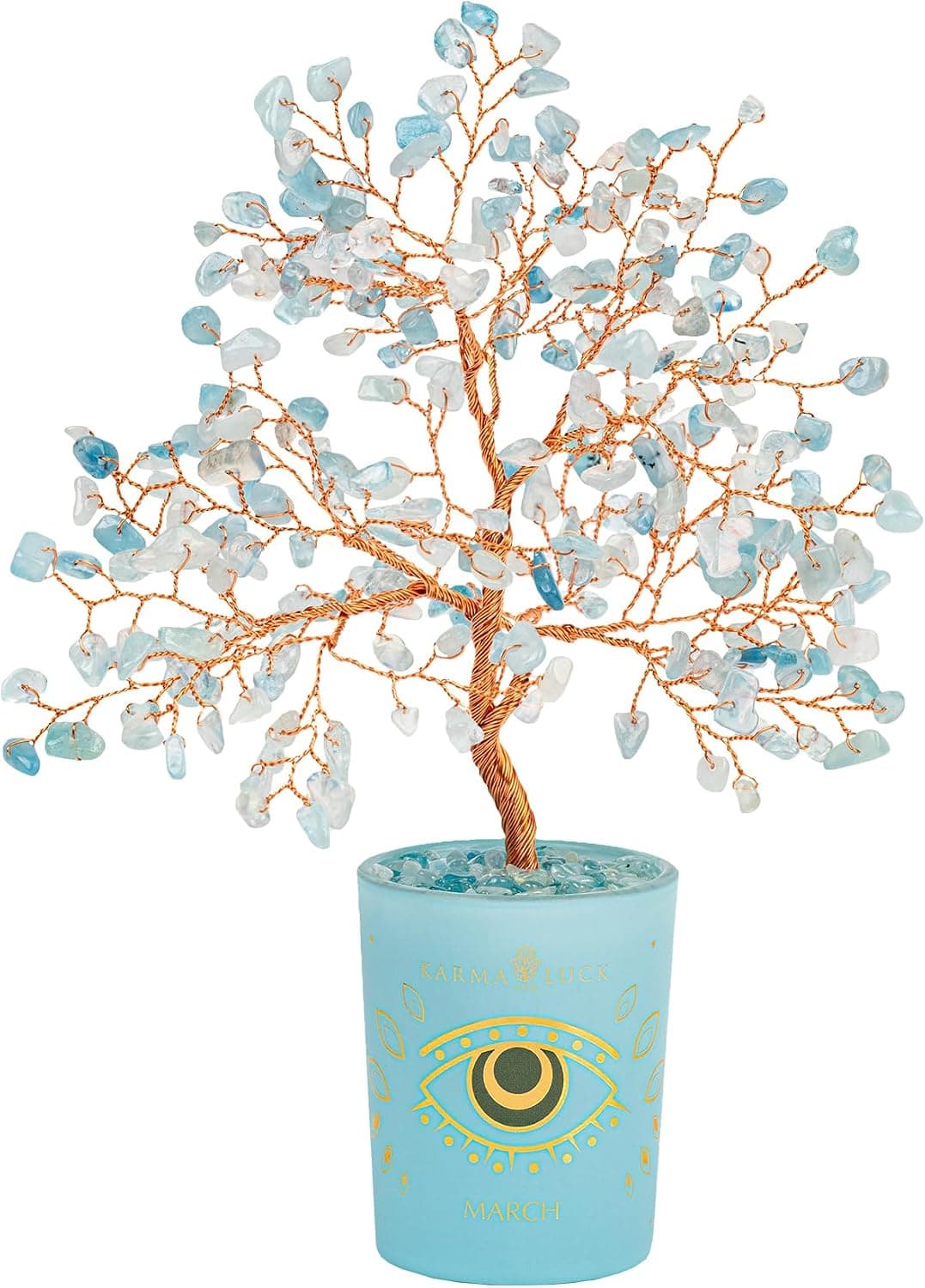
Karma and Luck March Birthstone Crystal Tree of Life, Aquamarine Gemstone Fen...
 -29%
Karma and Luck July Birthstone Crystal Tree of Life, Ruby Gemstone Feng Shui ...
 -29%
Karma and Luck February Birthstone Crystal Tree of Life, Amethyst Gemstone Fe...
 -50%
biuufish Feng Shui Black Obsidian Bracelet for Men Women, 24K Gold Plated Pix...
As an Amazon Associate, we earn from qualifying purchases. We only recommend items our practitioners have personally tested.
Continue Your Journey
Explore these related guides to deepen your understanding:

Ready for Deeper Guidance?
Try our free I Ching reading for personalized wisdom, or explore our curated Feng Shui essentials.