Stop treating the moon as decoration; it trains attention, memory, and rhythm in ways a deadline calendar never will.
What does a lunar calendar really do? It turns time from a straight line into a rhythm you can live inside.
When a crescent hangs above a dark kitchen window and a wall planner sits under a bright phone screen, the contrast is hard to miss. The phone demands speed. The moon asks for return. That is why the traditional calendar system is never just a list of feast days or farm tasks. It is a way of teaching the mind to notice pattern.
If you use this rhythm well, you stop measuring your month only by output. You make room for review, clearing, and a cleaner beginning. Keep your digital tools if they help. Just do not let them become the only frame through which you read your life.
The moon changes the question from “How much did I finish?” to “What stage am I in?” That small shift alters how people handle energy, habit, and patience.
In a north-facing entryway, a paper calendar placed at eye level often does more than a full app suite. It asks to be met again. A scrolling screen invites disappearance.
That difference matters.
Why the usual explanation falls short
Most people describe a moon-based calendar as a practical tool with a few icons attached. That misses the larger point. A month shaped by the moon is not only for marking dates. It changes how you interpret effort, because the cycle gives context to what otherwise feels random.
The common misunderstanding is that time must move in one direction to be useful. Modern productivity loves arrows, checklists, and constant acceleration. But cyclical time trains another discipline: observe, complete, release, then begin again with memory intact. The value is not in going backward; it is in recognizing that completion creates conditions for the next start.
That is why a small household ritual can change the feeling of a month. A chalkboard in the kitchen, a paper chart near the kettle, or a circle sketched beside the sink can make the cycle easier to see. The point is not superstition. The point is cadence: repeated visibility turns an abstract idea into something the body starts to expect.
People who only see deadlines usually feel time as pressure. People who notice recurrence can feel time as structure. One mindset treats the month like a narrowing tunnel. The other treats it like a sequence of phases, each with a different task.
That is also why lunar calendars often improve follow-through. When a system includes return, it reduces the fear that one missed day breaks everything. The month can be re-entered.
Return is not repetition
Old thinking and modern thinking often disagree here. The modern mind says progress means moving forward. The older view says wisdom also comes from return.
That is where cyclical time becomes more than a cultural curiosity. It quietly challenges the habit of judging value only by how much gets produced. A return is not a reset to zero. It is a second pass with more information, which is why recurring cycles can deepen judgment instead of merely repeating it.
Each month comes back changed by what has happened in between. The moon does not copy itself. It reintroduces a pattern. That matters because the same phase can now carry different meaning: a full moon after a difficult season is not the same experience as a full moon after ease.
That is also where yin and yang become practical rather than decorative. A growing phase contains its own limit, which is why expansion eventually needs containment. A waning phase looks like reduction, yet it opens space for rest, sorting, and clearer judgment. Balance is not frozen peace. It is adjustment in response to changing conditions.
If you want a simple way to apply that idea at home, see the step-by-step guide to applying yin and yang at home. The same principle shows up here: each phase carries its opposite inside it.
Motion alone can be exhausting. Meaning requires a rhythm you can recognize. Without rhythm, even good effort can feel like noise.
How recurring months change memory
Repetition gives memory somewhere to land. That is the quiet advantage of monthly cycles. The second time you notice a full moon after a stressful week, you are not merely counting days. You are comparing versions of yourself.
That is why many people feel steadier when they mark the same phase each month. Review has a home. Restraint has a place. Renewal stops feeling accidental.
In one house, a round lamp set on a low wooden table changed the feel of the whole room. The surfaces were matte, the corners softened, the palette restrained. Nothing shouted for attention, and yet the room became easier to inhabit. Monthly rhythm works the same way. It organizes life in rings instead of arrows.
Paper objects support that memory better than glassy screens do. A brushed wood desk, a stone tray, handwritten notes, a calendar with visible circles all slow attention enough for reflection to happen. Digital surfaces are efficient. Tactile surfaces are memorable.
For readers who want the inner side of this idea, inner wisdom and discernment pairs well with cyclical practice. Repetition tends to make self-observation less dramatic and more honest.
What the moon teaches a room
Design and philosophy are not separate here. The phases of the moon teach visual hierarchy. They show that emptiness is not failure, and that pause has a shape.
Bring that into a room and the effect is immediate. Silver-gray, deep navy, and soft charcoal can create the feeling of order without urgency. A round wall calendar at eye level encourages revisiting. Objects placed low signal stability. Concentric arrangements feel different from straight rows because the eye returns instead of rushing past.
A circular mirror, a bowl with a stone finish, or a lamp with a soft halo can echo that structure without becoming theatrical. The room settles. It stops pushing.
Not everything needs to be round or pale. It simply should not insist that you keep moving to prove you are alive.
For a wider look at space and energy, this piece on balancing modern life extends the idea beyond one room.
Why traditions disagree about the same moon
It is easy to flatten symbolic systems into one neat meaning. That never works. Different traditions read recurring lunar time through different practical and spiritual lenses, and that difference matters.
Some lineages focus on ritual timing. Others focus on farming cycles. Others treat the moon as a lesson in discipline, impermanence, or inner attunement. Same sky, different questions.
That variation is not a weakness. It is the proof that symbolic time works through interpretation, not mechanics alone. The moon gives the pattern. Culture gives the response.
Spiritual guidance in everyday choices makes the same point from another angle: symbols matter when they change conduct. A symbol that never reaches behavior is only decoration.
And if you are comparing systems, the Chinese calendar article explains the structure itself. Philosophy asks a different question: what kind of person does this cycle produce?
Living with recurrence in a straight-line world
Modern life still runs on targets, launches, scores, and deadlines. You can work inside that system without letting it define your sense of time. That is the practical value of a moon-based rhythm. It reminds you that life is not supposed to accelerate without pause.
Use it as a monthly checkpoint. Reserve one evening for review, one for clearing, one for quiet planning. Keep the calendar visible. Keep the room calm. Let the phases remind you that return is not failure.
When people know a cycle will come back, they become less careless with attention. They waste less. They choose more carefully. They prepare instead of merely react.
Sometimes progress looks like revisiting the same question with better eyes.
For a useful companion to that practice, habit change and character formation connects well with monthly review because both depend on repetition with awareness.
Not every advance is loud.
What the moon is asking of you
The moon does not ask you to become mystical. It asks you to stop confusing motion with meaning. That is a harder lesson than it sounds.
When time is lived through recurrence, life becomes easier to inhabit. You remember more because you return more. Rest feels legitimate because it has a place. Action becomes less frantic because the month is no longer an endless corridor.
The real gift hidden in a moon-based calendar is simple: it changes time from a race track into a pattern you can learn to read.
Once you see that, a crescent in the window is no longer decoration. It is instruction.
FAQ
How do I actually use a moon calendar if I already use Google Calendar?
Keep both. Use the digital calendar for appointments and deadlines, then choose one or two monthly points for reflection, clearing, or planning. The point is not replacement. The point is rhythm.
Does this have to be tied to religion?
No. Some people approach it spiritually, others culturally, and others as a way to notice cycles in attention and habit. You can use it without adopting any formal belief system.
Why do I feel calmer looking at round shapes and moon phases?
Because the eye reads repetition as order. Circles, arcs, and repeated phases reduce visual strain and create a feeling of return rather than urgency.
What is one simple way to start this at home?
Put a paper calendar where you will actually see it, then mark the same day each month for a short review. Keep it visible and plain so the habit stays easy.
Can cyclical time help if I am trying to build better habits?
Yes. A repeating monthly check-in makes habit tracking less harsh. You notice patterns sooner, and you stop treating every setback as a final verdict.
Is there a danger of making too much of the moon?
There is, if you turn it into a novelty. A phase becomes useful only when it helps you reflect, release, or reorient. Otherwise it is just a pretty sky object.
David Liu
Traditionally informed guidance • Cross-referenced with classical Chinese source texts
Rooted in classical Chinese metaphysics and cross-referenced with original texts. Product recommendations are based on traditional symbolism, not guaranteed outcomes.
Practitioner-Selected Tools for This Topic
Items our team has tested and found effective for the principles discussed above. Individual results may vary.
 -29%
-29%Karma and Luck March Birthstone Crystal Tree of Life, Aquamarine Gemstone Fen...
 -29%
-29%Karma and Luck July Birthstone Crystal Tree of Life, Ruby Gemstone Feng Shui ...
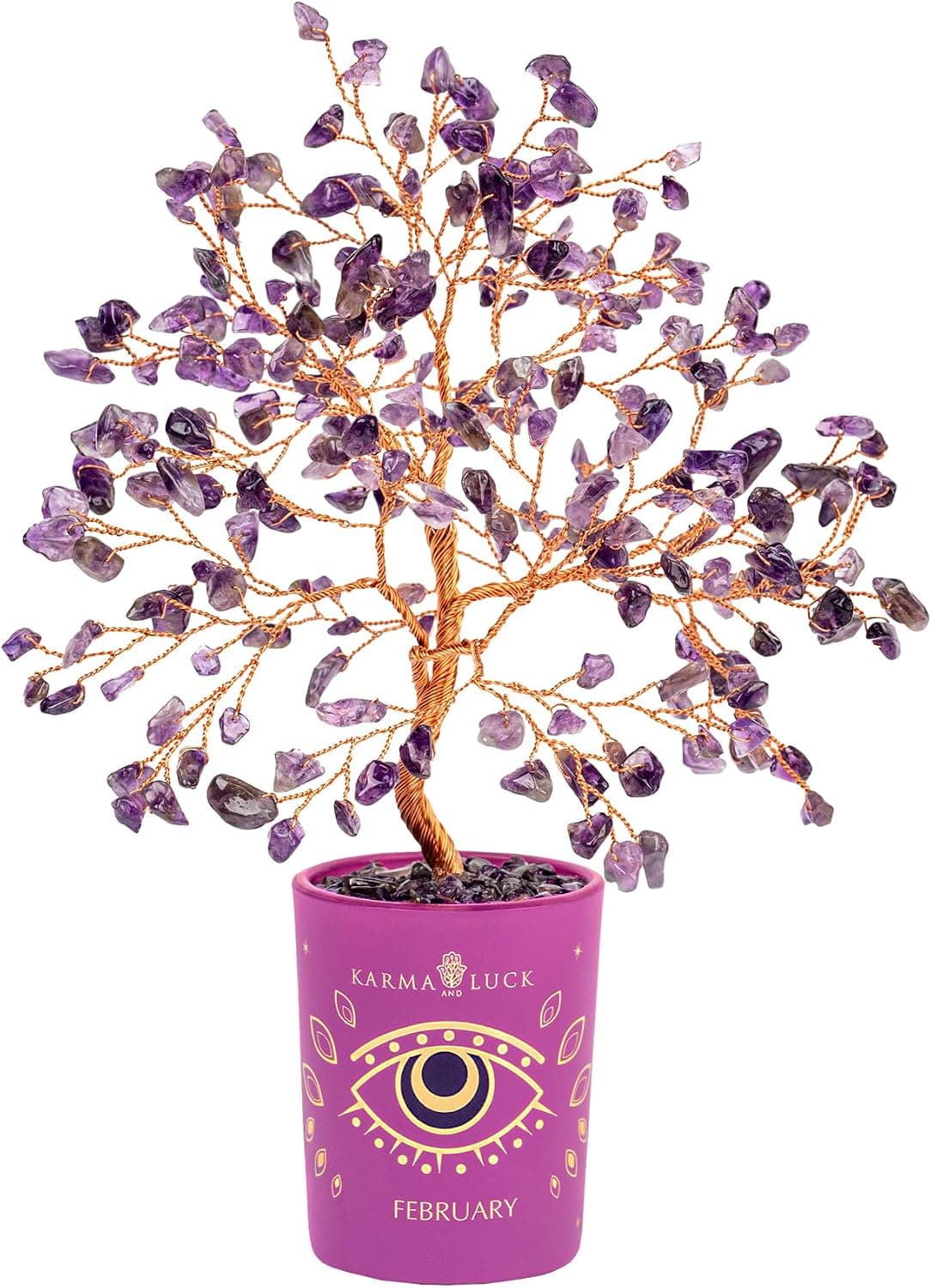 -29%
-29%Karma and Luck February Birthstone Crystal Tree of Life, Amethyst Gemstone Fe...
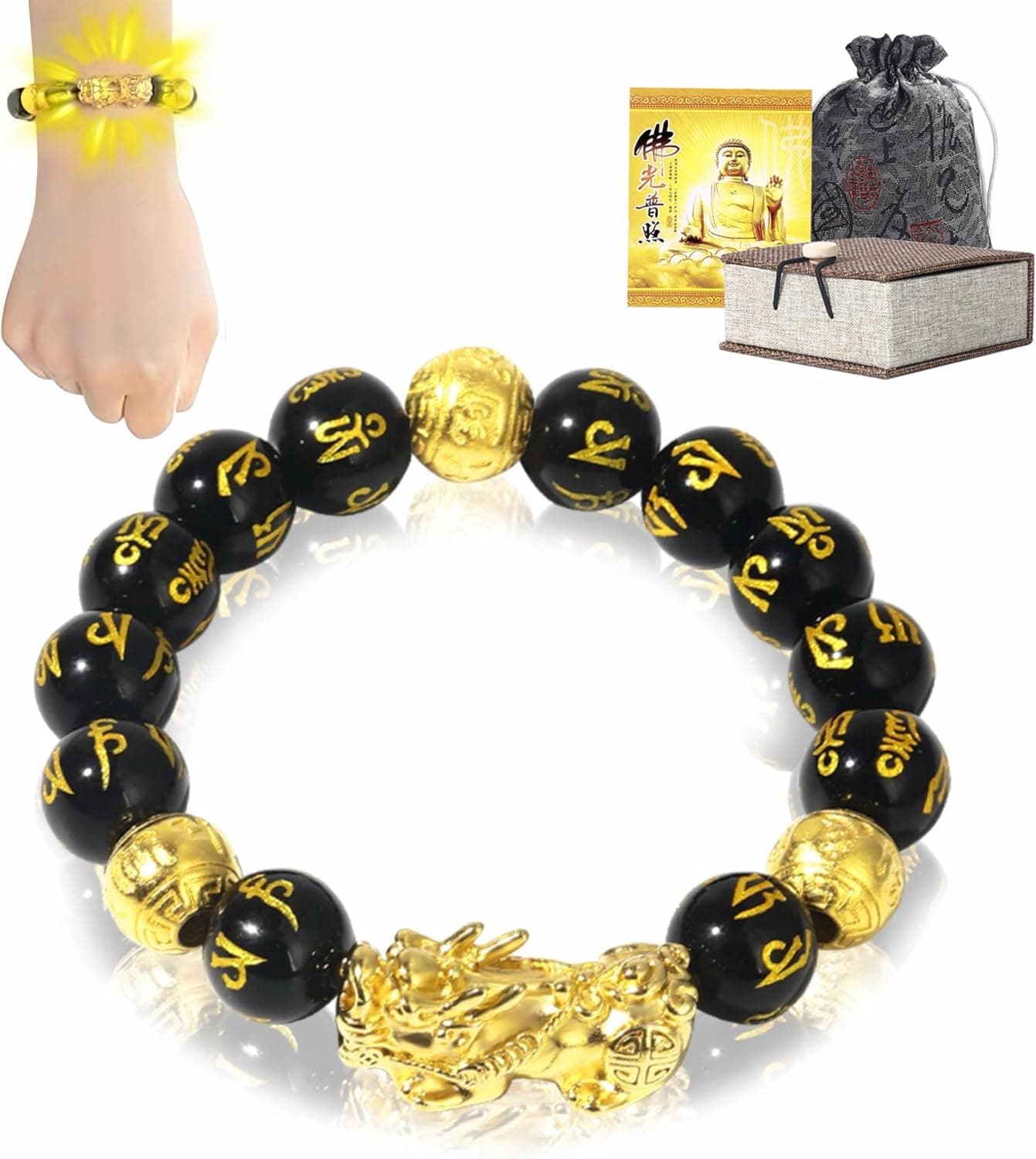 -50%
-50%biuufish Feng Shui Black Obsidian Bracelet for Men Women, 24K Gold Plated Pix...
As an Amazon Associate, we earn from qualifying purchases. We only recommend items our practitioners have personally tested.
Continue Your Journey
Explore these related guides to deepen your understanding:

Ready for Deeper Guidance?
Try our free I Ching reading for personalized wisdom, or explore our curated Feng Shui essentials.