The clearest judgment often arrives after the room goes quiet, not before the decision is made.
The quiet signal at the threshold
Stand at a doorway for ten seconds and watch what changes. The body softens, the shoulders drop, and the first loud opinion usually weakens. That is where discernment becomes available: not in the middle of the noise, but at the threshold, where a person can still notice the difference between pressure and truth.
I've seen this most clearly in a meeting room with fluorescent lights humming overhead, a whiteboard half-filled with deadlines, and a phone still warm in a hand that has been gripping it too tightly. The room feels certain because everyone is speaking fast. Yet the moment someone steps into the hallway, the sentence they were defending so hard suddenly sounds borrowed. The hush after the door closes does not create wisdom on its own, but it removes enough friction for judgment to become visible.
This is why the missing element is rarely more information. It is distance. A crowded room amplifies social conditioning. An empty hallway gives perception a chance to catch up with itself. In Chinese thought, this resembles the older idea that harmony appears when forces are properly related, not when one force shouts louder than the rest.
Inner clarity is often mistaken for a feeling of certainty, but certainty can be cheap. A rush of emotion can make any choice feel inevitable. A quieter kind of knowing arrives after the pulse slows, when the mind can separate urgency from understanding. That distinction matters more than most people admit.
In the I Ching, the change at the edge of one situation and the beginning of another is never trivial. Thresholds reveal structure. They show what is being carried forward, what is being left behind, and what was only masquerading as conviction.
From oracle to insight
Ancient traditions rarely treated wisdom as a mood. They treated it as a faculty, something a person could strengthen, neglect, or confuse with imitation. The Greek philosophers distinguished reason from appetite and impulse. Buddhist teaching examined how craving distorts perception before judgment even begins. Chinese metaphysics went further and asked whether a response is aligned with timing, context, and relationship.
That is why I am cautious when people use the phrase inner wisdom as if it were just a pleasant hunch. A hunch can be useful. It can also be a recycled fear wearing a spiritual mask. Real discernment asks a harder question: where did this thought come from, and what in me is speaking right now?
When I read the path of self-observation in classical reflection, I see the same lesson repeated in different language: know the source before trusting the message. The ancients did not assume the first impulse was the truest one. They assumed it might be the most conditioned one.
Consider the oracle tradition itself. People did not consult an oracle because they lacked opinions. They consulted it because opinions multiply under pressure and usually protect the ego. The oracle interrupted that loop. It forced a pause long enough for a deeper pattern to be seen. That is not superstition at work; it is a discipline of interruption.
A modern reader may prefer psychology to divination, but the underlying problem is identical. Human beings are pattern-making creatures. We will often call the fastest pattern recognition “wisdom” simply because it arrived first. But speed is not the same as depth: the mind can recognize a familiar shape in an instant and still miss the reason it keeps appearing. Insight begins when recognition is paired with inquiry.
Yin and yang thinking helps here, because it prevents a false split between logic and intuition. The question is not which one wins. The question is whether the response is balanced enough to hold both immediate perception and longer consequence.
The arrangement that fails when instinct borrows wisdom’s name
One of the most common mistakes is to confuse instinct, intuition, and conditioning. They can feel similar from the inside. They all arrive quickly. They all announce themselves with confidence. But they do not have the same origin, and they do not deserve the same trust.
Instinct is fast, bodily, and survival-oriented. If a room feels unsafe, the body notices before the intellect does. That is useful. Intuition is subtler; it may emerge from pattern recognition gathered over years, too fast for conscious tracing but not necessarily irrational. Conditioning is different. It is inherited response. It is what you keep doing because you have done it before, or because the people around you rewarded it.
After an argument, the difference becomes obvious. I remember standing in a kitchen with a blue tile backsplash, a kettle cooling on the stove, and a red dish towel thrown across the counter. The first reaction was sharp, familiar, and satisfying in the way a snapped rubber band is satisfying. But once I stood there long enough to hear the refrigerator hum and feel the silence in the room, it became clear that the response had come from habit, not insight. That is how the psyche often works: the oldest groove feels like the deepest truth.
Behavioral science says repeated actions in the same setting become automatic more quickly. The environment becomes a cue. The cue triggers the routine. The routine feels natural, which is why people mistake repetition for wisdom. A desk cluttered with open tabs, an email inbox glowing red, or a dining table used as a command center can all train the mind toward reactivity. The setting is not neutral.
This is also why people make poor decisions in crowded rooms. Social cues compress judgment. You inherit the tone of the room without noticing it. You speak faster, agree sooner, and later tell yourself you chose freely. Sometimes you did. Often you were simply carried.
That is not a moral failure. It is a design problem.
Attention training changes that design by teaching the mind to notice when a thought is borrowed, rushed, or emotionally inflated. The point is not to become detached from life. The point is to stop confusing urgency with authority.
How perception shapes judgment
Perception is selective. This is one of the easiest facts to say and one of the hardest to live. The mind does not record reality like a camera. It filters. It predicts. It highlights what matches expectation, fear, or habit, and it quietly edits out what would complicate the story.
That is why a person can stand in a quiet room after a tense phone call and feel the meaning of the decision change. The room did not change. The nervous system did. The same hallway, the same desk, the same closed door suddenly produce a different interpretation because the emotional field has shifted.
Imagine a narrow office with gray walls, a low window, and fluorescent lights buzzing softly over a pile of unopened letters. In that space, a problem can look final. Move the same person to an uncluttered desk beside an open window and the problem often becomes solvable. This is not magic. It is the interaction between perception and environment. The setting changes the amount of internal noise available to influence judgment.
Psychology has a useful word for this: metacognition. It means noticing the state of one’s own mind. That is close to what many traditions call a wiser faculty. It is not merely having a thought. It is seeing the thought while it is happening, and asking whether the thought deserves action.
That extra step is small, but it changes everything. A thought felt from inside can seem identical to truth. A thought observed from the outside can be tested. The difference is the gap. Wisdom lives in the gap.
The I Ching often speaks in images of timing, response, and restraint because a response is not wise simply because it is sincere. A sincere action taken at the wrong moment can still cause harm. A delayed action taken with full awareness can carry more force than a dramatic one.
Silence, distance, and character
Silence does not create wisdom, but it exposes what was crowding it out. A person who cannot tolerate silence usually cannot tolerate the first unpolished version of their own thinking. That is why even a brief pause after a door closes can feel revealing. The mind no longer has an audience to perform for.
Character matters here more than technique. Wisdom is easier to trust when it is supported by a person who has practiced restraint, kept promises, and admitted error. If your life is arranged around impulse, then your “inner knowing” will often be just another impulse with nicer branding.
This is where many spiritual conversations drift into fantasy. People want an invisible signal that tells them what to do, but they do not want the discipline that makes the signal readable. They want clarity without stillness, confidence without revision, and insight without the inconvenience of self-correction. That arrangement fails every time.
Try a quieter experiment. Sit in a room with no music, no notifications, and no open browser tabs. Let the body settle. Then ask a concrete question, not an abstract one. Should I answer now or wait until morning? Is this commitment aligned with the life I am actually building? What am I protecting by staying busy? The answer that appears may be simple. Simple is not the same as easy.
Silence also reveals emotional residue. If a choice feels impossible only because it disappoints someone, that is a social fear, not a lack of wisdom. If a choice feels thrilling because it would impress others, that is performance, not direction. The clean answer often arrives after those layers are separated.
One sentence can do that work: if no one could see this decision, would I still make it?
The modern test
The modern world is built to interrupt discernment. Notifications create false urgency. Open-plan offices reduce private distance. Kitchens become workstations. Bedrooms become command centers. In behavioral terms, the defaults are engineered for speed, not reflection. That means the environment itself often pushes people away from the conditions where clearer judgment appears.
This is why certain spaces matter so much. A quiet corner with a single chair. A hallway with no screen. A desk cleared to the surface. These are not aesthetic indulgences. They are cue structures. They invite a different internal tempo.
Here is the practical test I use: when a decision feels obvious, I ask whether the room is helping me or merely exciting me. If the answer came while standing in a crowded room, under bright lights, with a phone buzzing in my palm and three people waiting for a reply, I do not trust the answer immediately. I let it cool. I move. I walk through a quiet room. I notice what changes once the body is no longer braced for performance.
That pause is often enough. The first answer may still be right, but now it has been examined. It is no longer just a reflex disguised as certainty.
Breath-based slowing works because it lengthens the gap between stimulus and response. That gap is where wisdom becomes usable rather than theoretical. In the Five Elements language, you could say the fire of reaction needs the water of reflection before the wood of action can grow in a stable way.
People often ask for a sign. The sign may be the room itself. If your body gets calmer when the hallway opens, if your thoughts sharpen when the door closes, if your decision becomes cleaner when the noise drops, you are already being shown the path.
What the missing element really is
The missing element is a stable relation between insight, action, and responsibility. Not inspiration alone. Not obedience to a feeling. Not passive contemplation. The faculty people call inner wisdom becomes real only when it can survive contact with consequences.
That is why it is so easy to romanticize and so difficult to practice. Insight without action becomes sentiment. Action without reflection becomes habit. Responsibility without insight becomes duty performed blindly. Put them together, and the arrangement changes. The person begins to notice, choose, and own the choice without hiding behind the crowd.
This is also where philosophy becomes practical. A wise response is not always the most dramatic one. Sometimes it is the slower email. Sometimes it is the delayed yes. Sometimes it is the refusal to continue a conversation while standing in a noisy kitchen with the kettle screaming and the body already tense. Sometimes it is simply stepping into the hall and letting the body remember what the mind forgot.
There is a reason many traditions use images of gates, thresholds, and crossings. They mark the place where one order ends and another begins. That is exactly where discernment is tested. If you can recognize what is being amplified by the room, what is being narrowed by emotion, and what is being repeated by habit, you are already closer to reliable judgment than most people realize.
Applying balance in daily life begins here: not by forcing certainty, but by removing the conditions that make false certainty feel persuasive. When the environment supports pause, when the body is no longer braced, and when the mind can check the source of its own thoughts, the missing element is no longer missing. It becomes usable.
That is the work. Quiet. Exact. Unromantic. And far more powerful than the noise that usually passes for guidance.
FAQ
How is inner wisdom different from intuition?
Intuition can be fast pattern recognition. Inner wisdom is what happens when that recognition is checked, clarified, and tested against character and c
David Liu
Traditionally informed guidance • Cross-referenced with classical Chinese source texts
Rooted in classical Chinese metaphysics and cross-referenced with original texts. Product recommendations are based on traditional symbolism, not guaranteed outcomes.
Practitioner-Selected Tools for This Topic
Items our team has tested and found effective for the principles discussed above. Individual results may vary.
 -29%
-29%Karma and Luck March Birthstone Crystal Tree of Life, Aquamarine Gemstone Fen...
 -29%
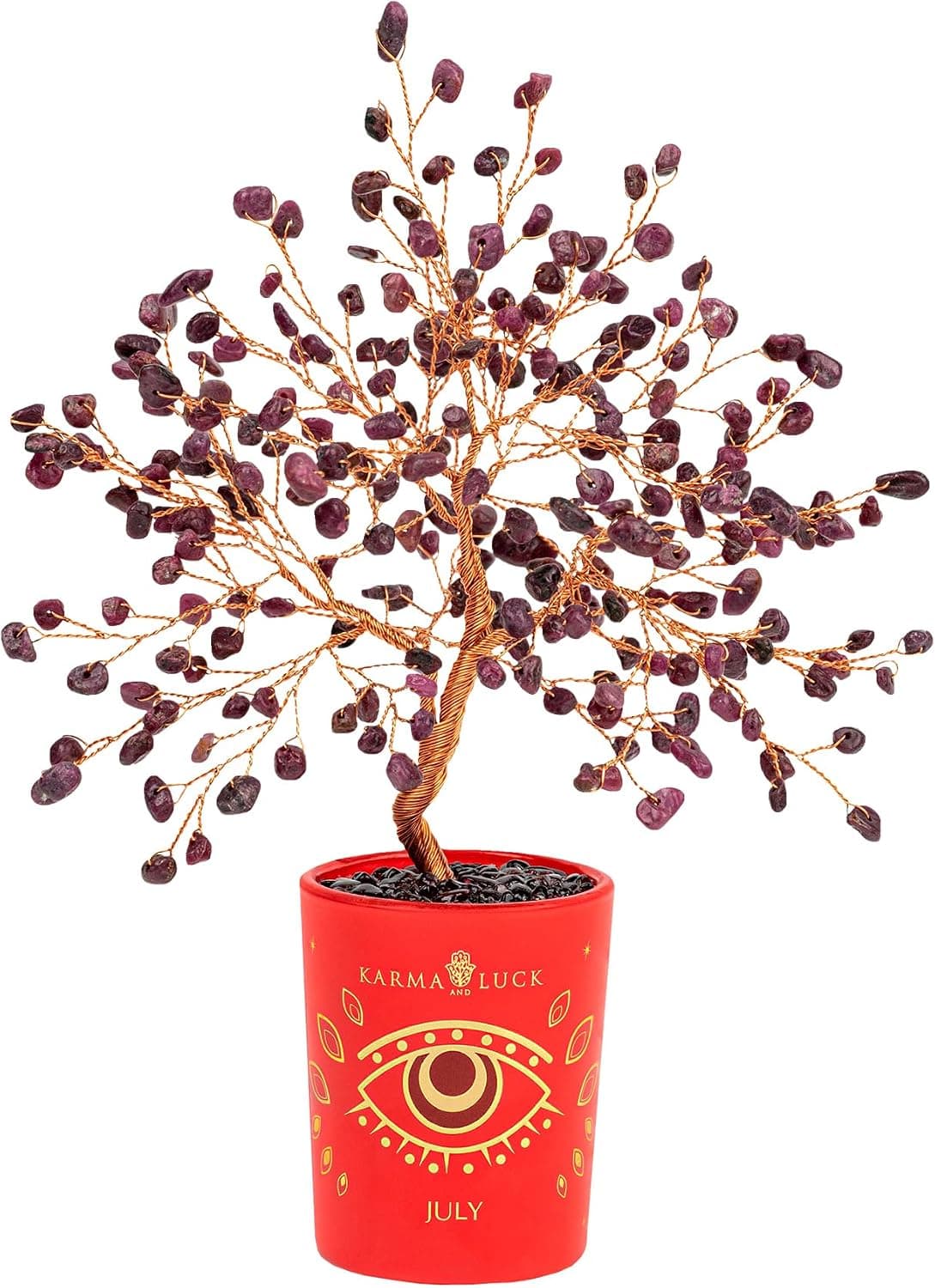
-29%Karma and Luck July Birthstone Crystal Tree of Life, Ruby Gemstone Feng Shui ...
 -29%
-29%Karma and Luck February Birthstone Crystal Tree of Life, Amethyst Gemstone Fe...
 -50%
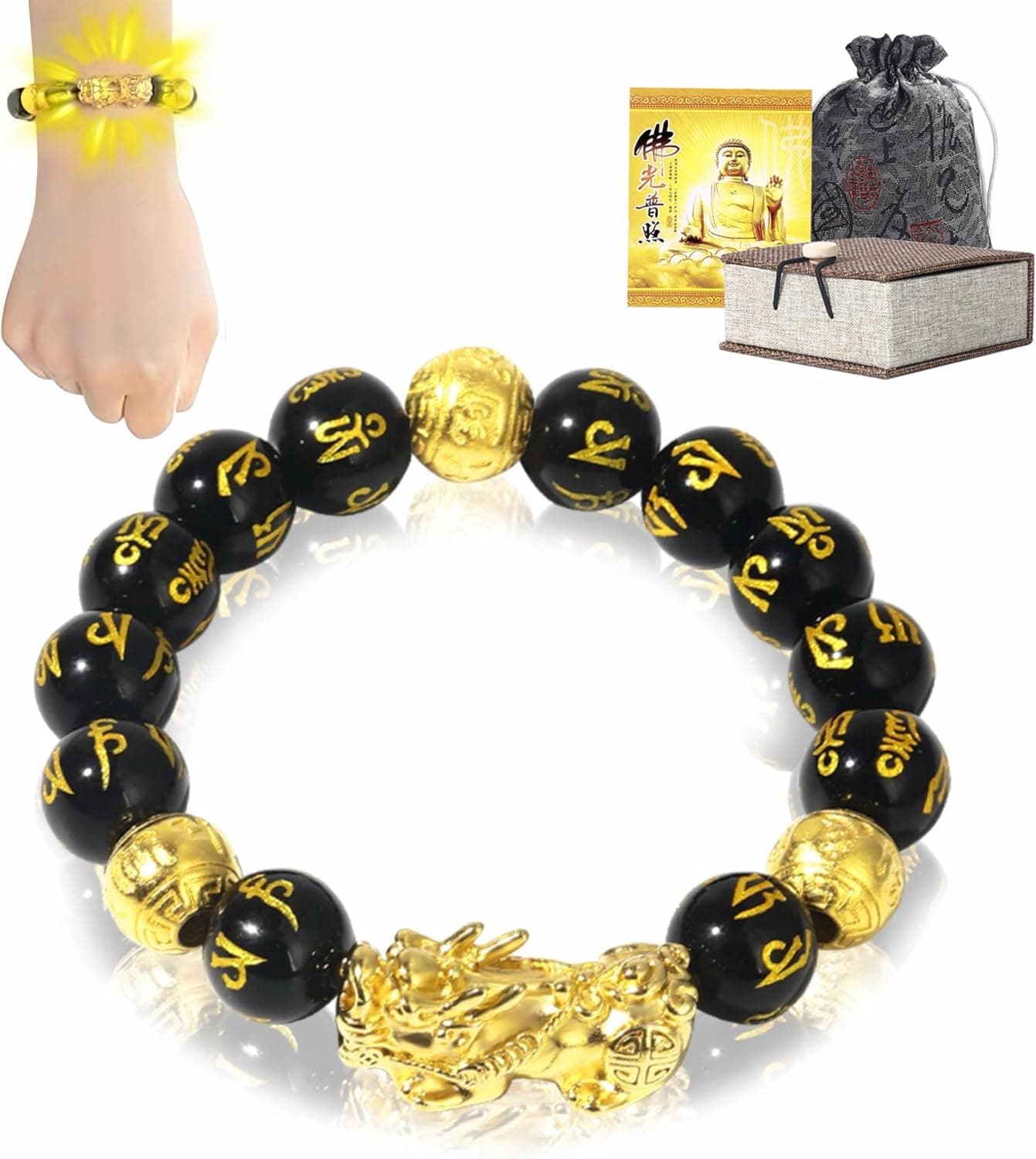
-50%biuufish Feng Shui Black Obsidian Bracelet for Men Women, 24K Gold Plated Pix...
As an Amazon Associate, we earn from qualifying purchases. We only recommend items our practitioners have personally tested.
Continue Your Journey
Explore these related guides to deepen your understanding:

Ready for Deeper Guidance?
Try our free I Ching reading for personalized wisdom, or explore our curated Feng Shui essentials.