Self-discovery becomes reliable only when you track what repeats across seasons, crossings, and returns.
When self-knowledge was treated as discipline, not mood
The old philosophers did not wait for a perfect feeling before they examined themselves. They watched conduct under pressure, because that is where character stops being an opinion and starts becoming visible. A person in a narrow studio, with one desk pressed against the wall and one chair that also serves as a coat rack, learns this fast: when the room has no extra space, the mind has less room to hide.
That is the first useful shift in self discovery. It is not a dramatic reveal. It is a method of noticing what happens again when the same kind of pressure returns. A strong emotion can be real and still be misleading. It may tell you what hurt today, not what pattern has been shaping your life for years.
Greek philosophy treated self-knowledge as an exercise in measure. Chinese thought leaned toward season, timing, and change. Those traditions differ in language, but both reject the fantasy of a fixed inner statue. You do not discover yourself once and for all; you observe how you behave when the light changes.
In one small apartment I studied, the dining table sat directly beside the only window. At dusk the room looked calm. At breakfast, the same table showed every scratch, every paper pile, every unopened envelope. The owner said the space made her anxious. It did, but not because of the furniture. The arrangement exposed a habit of delay she had been able to ignore in larger homes.
That is how self-knowledge begins: not with sentiment, but with exposure.
Why cycles matter more than one honest moment
Cyclical thinking matters because people are terrible at judging themselves from a single scene. We mistake the weather for the climate. One tearful conversation, one brave resignation, one broken habit, and we call it identity. Then the same issue returns three months later, wearing a different coat.
Chinese cycle-based traditions, including the I Ching and the five elements, were built around recurrence rather than one-time declaration. That is not mysticism for its own sake. It is a practical response to time. A person changes when the surrounding conditions change, and then changes again when pressure returns in a familiar form. The cycle shows the shape of the response.
The surprise is that repetition is often more informative than novelty. If a conflict appears in different jobs, the workplace may not be the core issue. I have seen someone leave a firm because of a difficult manager, then land in a gentler office and still collide with authority by week six. The pattern was not “bad bosses.” It was timing, interpretation, and a reflex to push back the moment instructions felt restrictive.
That same logic appears in relationships. One partner withdraws near a threshold—moving in, committing, naming the future—and the other starts pursuing harder. The visible argument is about closeness, but the deeper cycle is security versus autonomy. The body recognizes a crossing before the mind has words for it.
Light and shadow matter here. Morning light can reveal dust on a shelf that dusk makes invisible. Self-discovery works the same way. A trait may stay hidden until conditions tilt just enough to illuminate it. Then, suddenly, you see the pattern you kept walking past.
And no, that does not mean every repeat is fate. It means recurring friction deserves respect.
How self-discovery works as a mechanism, step by step
The mechanism is simple enough to describe, but not easy to do honestly. First comes perception: you notice the irritation, the avoidance, the overcommitment, the tightening in your chest before a meeting. Then comes interpretation: you tell a story about what it means. Then action follows, and the world answers back. Finally comes revision, if you are disciplined enough to compare the result with the original story.
Yin and yang practice is useful here because it teaches alternation without forcing false harmony. Too much inward watching and you become sealed in a private room with no circulation. Too much action and you build a life with no inner load-bearing structure. Proportion matters. A building can be elegant and still collapse if every wall carries the same weight.
That is why friction is informative. Repeated annoyance is usually not random. It marks the edge where self-image and behavior have not yet matched. If you think of yourself as calm but keep snapping under mild delay, the gap is visible. If you think you are open-minded but keep rejecting feedback from the same type of person, the gap is visible again.
One student I watched kept enrolling in extra projects, then hit burnout at nearly the same point each term: the last three weeks before finals. The pattern was not a lack of intelligence. It was a cycle of ambition followed by depletion, with no review stage between them. Once she stopped treating exhaustion as a moral failure and started mapping its timing, the pattern became usable. She reduced commitments before the pressure spike, not after.
That is the practical secret. Self discovery is not just observation. It is observation plus return. You come back to the same crossing with more information than you had before.
Architecture gives a precise image for this. Circulation is not decoration; it is the system that lets a building function. Thought needs circulation too. You move from observation to action, from action to review, from review back to observation. If you stay in one interior room of thought, your conclusions harden. If you never pause, your life becomes motion without structure.
What changes now: identity label or living method?
Modern culture tends to turn identity into a label. It asks for a quick answer: What type are you? Which category fits? Which trait explains you? Labels are not useless, but they can become cages when treated as final.
Self discovery works better as a living method because people are responsive to context. A person may be decisive in emergencies and hesitant in unstructured settings. That is not contradiction. It is evidence that the same person behaves differently when the room changes, when the deadline changes, when the people around them change. The task is to understand the conditions.
There is also a subtle psychological trap here. A feeling can be strong enough to feel permanent. Anger announces itself with certainty. Relief can feel like truth. But intensity is not identity. Cyclical reflection separates reaction from pattern because it asks a more demanding question: what keeps happening after the feeling passes?
harmony thinking helps because it refuses fake closure. A balanced life is not one where everything is calm all the time. It is one where the parts of life can adjust without tearing the whole structure apart. The threshold is part of that structure. Doors, passages, and crossings are not interruptions; they are places where the self is tested and re-formed.
That matters especially in small apartments, where thresholds are literal. The front door, the hall between kitchen and bed, the chair you always pass on the way to the window—all of them become cues. If you work, sleep, and relax in the same twelve feet of space, the mind needs markers to separate modes. Without them, every task bleeds into every other task, and self-observation becomes foggy.
Chinese philosophical thought gives a cleaner answer than modern self-help slogans often do: you are not a finished statement, you are a pattern in time.
Where the cycle becomes visible in ordinary life
The cycle shows itself in work first, because work has deadlines, hierarchy, and friction. A person can tell themselves they are “bad with authority,” but that phrase is too broad to be useful. The better question is: what happens at the exact moment instructions feel constraining? Do you delay? Argue? Overperform? Withdraw? The answer matters more than the label.
In relationships, the cycle often appears at the threshold of dependence. One person wants reassurance, the other wants space, and the same argument returns with different words. The conflict is not always about love. Sometimes it is about whether closeness feels like safety or loss of self. That is why the pattern repeats when the relationship deepens, not only when it begins.
Habits reveal the same logic. Many people plan their best life at night and abandon it by noon. The failure is not laziness. It is often a mismatch between aspiration and structure. A plan that ignores your actual circulation—your commute, your room layout, your energy by hour—will collapse under ordinary resistance.
A room where morning light reveals dust that was invisible at dusk is a perfect model for this. At night, your intentions can look clean. By morning, the mess of objects and obligations appears. That is not discouraging. It is information.
The five elements model offers another useful lens without turning this into symbolism for its own sake. When a person overextends, there is often too much “fire”: speed, ambition, heat, urgency. When they stagnate, there may be too little movement, too much “water” in the sense of withdrawal and passivity. The point is not to reduce a life to categories. The point is to notice imbalance as a recurring condition, then adjust proportion.
In a studio apartment, this might mean separating your work chair from your sleeping area by angle, light, or ritual rather than square footage. A folded screen, a lamp switched only for reading, a clear path to the window—small interventions change circulation. The mind registers these cues quickly because the body does.
Thresholds are where the truth leaks out.
How to read your own pattern without forcing an answer
Start with one repeating friction, not your whole personality. Choose a pattern that has shown up at least three times: conflict with authority, overcommitting, pulling away when closeness deepens, procrastinating before visible milestones, or feeling restless every time a room gets too orderly. If you try to solve everything at once, you will get abstractions. If you track one cycle, you get evidence.
Next, write the sequence in plain language. Input: what happened. Step 1: what you felt. Step 2: what story you told yourself. Step 3: what you did. Output: what changed. Then add the adjustment point: what condition, if altered, would make a different response more likely? This is not therapy jargon. It is an engineering log for the self.
Then test it across contexts. If the same reaction shows up at work, in a relationship, and in a household task, you are probably looking at a pattern rather than a situational annoyance. If it only appears in one setting, the environment may be doing more of the work than you thought. That distinction saves a lot of needless self-blame.
mindfulness practice can help, but only if it is used for precision rather than self-soothing alone. Notice the pause before the usual move. Notice the body at the threshold. Notice whether the urge comes before the event or after it. That timing tells you more than your self-description does.
Then, and only then, revise one thing. Shorten a commitment. Reposition a desk. Build a five-minute return ritual after work. Ask for clarity before resentment forms. Make the change small enough that you can observe the result without pretending the whole life has been solved.
The goal is not a perfect portrait of yourself. The goal is a better instrument for reading change.
When you practice self discovery this way, the old question shifts. You stop asking, “Who am I, once and for all?” You start asking, “What keeps repeating, and what does it become when the season turns?” That is a better question because time is part of the answer.
And time, in the end, is where the self shows its shape.
modern balance principles are most helpful when they stay connected to action, because balance is not a pose. It is an adjustment made again and again as conditions change.
That is why the cycle never feels finished. It is not supposed to. The return is the method.
FAQ
Is self-discovery supposed to feel clear right away?
Not usually. Clarity often arrives after several repeats, because one event can mislead you while a pattern across events becomes harder to dismiss. The question is not whether you felt something strongly, but whether the same structure keeps returning.
How is this different from journaling or self-improvement?
Journaling is a tool; self-improvement is a goal; self-discovery is the inquiry that decides what actually needs changing. You can journal endlessly and still miss the cycle if you never compare entries across time. You can improve a skill and still misunderstand the pattern driving your choices.
What if I keep seeing the same problem and feel stuck?
Then the problem may be telling you the scale of the change is wrong. Surprise often lies here: people assume the answer must be bigger, when in fact a small structural shift changes the whole outcome. A different threshold, a different timing, or a different boundary can alter the pattern faster than a grand reinvention.
David Liu
Traditionally informed guidance • Cross-referenced with classical Chinese source texts
Rooted in classical Chinese metaphysics and cross-referenced with original texts. Product recommendations are based on traditional symbolism, not guaranteed outcomes.
Practitioner-Selected Tools for This Topic
Items our team has tested and found effective for the principles discussed above. Individual results may vary.
 -29%
-29%Karma and Luck March Birthstone Crystal Tree of Life, Aquamarine Gemstone Fen...
 -29%
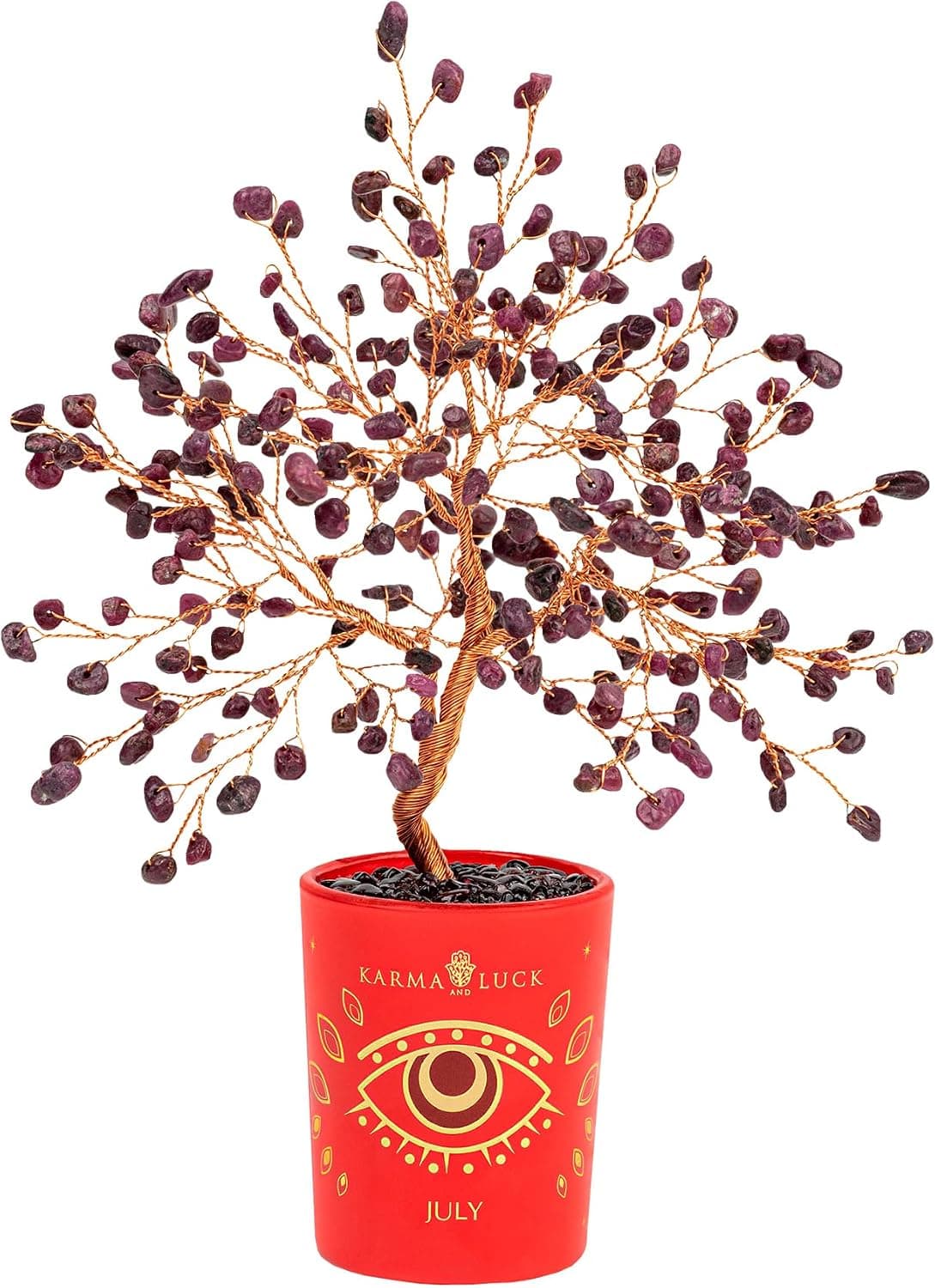
-29%Karma and Luck July Birthstone Crystal Tree of Life, Ruby Gemstone Feng Shui ...
 -29%
-29%Karma and Luck February Birthstone Crystal Tree of Life, Amethyst Gemstone Fe...
 -50%
-50%biuufish Feng Shui Black Obsidian Bracelet for Men Women, 24K Gold Plated Pix...
As an Amazon Associate, we earn from qualifying purchases. We only recommend items our practitioners have personally tested.
Continue Your Journey
Explore these related guides to deepen your understanding:

Ready for Deeper Guidance?
Try our free I Ching reading for personalized wisdom, or explore our curated Feng Shui essentials.