Clarity rarely arrives as a thunderclap; it usually shows up after the pause at the threshold.
Where the Phrase Came From: Direction Before It Became a Feeling
In older religious settings, guidance was less about a private mood and more about receiving direction at the right moment, from the right source, for the right action. The point was not to chase a feeling; it was to learn how to listen, compare, and respond.
That distinction matters because modern readers often assume every strong inner impulse deserves the same weight. It does not. A cry of fear, a burst of relief, a wish to be approved, and a true moment of insight can all feel intense, but intensity is not the same thing as accuracy.
In classical Chinese thought, the I Ching trained people to read change itself. Not as magic. As pattern. A question was asked, a pattern was received, and then the person had to interpret timing, restraint, and action. That is closer to practical discernment than to vague inspiration.
History helps here because many traditions treated guidance as something tested in context. A decision was checked against ethics, community, circumstance, and consequence. That layered method is still useful, especially now that people are surrounded by advice that arrives faster than reflection.
One reason the phrase inner wisdom has become so popular is that it sounds private and safe. But private does not automatically mean clean. Private can also mean anxious, defensive, or wishful.
I have seen this in a quiet office with stone-colored walls and a narrow window. A person sat at the edge of a wooden chair, looking toward a dark hallway and asking whether a new job offer was “meant” for them. The room was still, but their chest was not. That contrast told me more than their words did.
When older lineages spoke about direction, they were often less interested in certainty than in alignment. Alignment with timing. Alignment with duty. Alignment with what can actually be carried.
That is why the phrase needs careful terminology. It is not a synonym for comfort. It is not a guarantee of success. It is a process of receiving, testing, and acting with proportion.
How the Meaning Changed: From Sacred Direction to Personal Insight
The modern West did not simply translate spiritual guidance into a softer language; it relocated it. What had once been anchored in temples, teachers, texts, and communal accountability was increasingly reframed through psychology, self-help, and personal authenticity. That shift widened access, but it also changed the standard of proof. Instead of asking, “Is this direction consistent with shared wisdom and lived ethics?” people began asking, “Does this feel true to me?”
That change matters because feeling true and being true are not identical. A feeling can be sincere and still be partial. It can be shaped by fear, grief, status anxiety, or the wish to avoid responsibility. In other words, the modern version of guidance became more intimate, but also more vulnerable to self-deception, because it removed some of the outside friction that used to expose a bad reading.
Earlier traditions often assumed a moral and communal frame. If you sought direction, you were expected to consider how your choice affected family, obligations, and conduct. Today, people often begin with the question, “What feels right to me?” That is a narrower question, and sometimes a dangerous one.
Here is the surprise: a feeling of certainty can be produced by fear. It can also be produced by grief, social pressure, or the desire to escape ambiguity. People often mistake intensity for truth, and that mistake can be expensive.
Architecture gives a useful analogy. A building does not function because one room is impressive. It works because circulation connects rooms, thresholds slow movement at the right points, and proportion keeps one element from overwhelming the rest. Guidance works the same way. It needs movement between reflection, consultation, verification, and action.
That is where yin yang philosophy in daily life quietly helps. Not because it hands you an answer, but because it explains why mature direction often comes from balancing opposites instead of choosing one side too quickly. Rest without movement becomes stagnation. Movement without rest becomes strain. Silence without speech leaves blind spots. Speech without silence becomes noise. Healthy guidance holds these tensions in proportion long enough for a clearer pattern to emerge.
The language changed, but the human problem did not. People still face uncertainty. They still need a way to tell the difference between a passing mood and a reliable direction. They still need a method that does not flatter them.
A mentor once paused with a student at the threshold of a chapel, both of them standing where the stone floor gave way to the dim interior. The student wanted to enter immediately. The mentor did not move. The pause was the lesson. Before crossing, they checked intention. That tiny delay changed the quality of the whole encounter.
Modern readers often want guidance to behave like a shortcut. Classical traditions treated it more like a disciplined threshold.
What Spiritual Guidance Means Now: A Working Definition
In practical terms, spiritual guidance is the process of using inner attention, ethical reflection, and outside reality to determine the next right action when facts alone do not settle the matter.
That definition matters because it keeps three things together: signal, interpretation, and action. If you only have signal, you have a feeling. If you only have interpretation, you have theory. If you only have action, you may be moving quickly in the wrong direction.
In a Western setting, people often expect guidance to sound dramatic. A sign. A phrase. A sudden calm. Sometimes that happens. More often, guidance arrives as a quieter shift: a clearer question, a better boundary, or the disappearance of a fantasy that was never serving you.
Inner wisdom becomes trustworthy only when it can survive contact with reality. If a message asks you to ignore ethics, dismiss evidence, or cut yourself off from every other source of perspective, that is not wisdom. That is isolation dressed up as certainty.
Five-element thinking helps sharpen the definition. Fire can illuminate, but it can also distort. Water can calm, but it can also confuse if everything becomes fluid. Earth grounds. Metal discriminates. Wood moves toward growth. Good guidance usually brings the elements into better proportion rather than letting one dominate.
This is why the wording matters. Guidance is not the same as prediction. It is not fortune-telling in the casual sense. It is a disciplined way of orienting yourself when the future is only partly visible.
That distinction becomes especially useful in grief. A grieving person may stand in a doorway after a memorial service, hearing the last footsteps fade down the hall while the room behind them still holds the scent of flowers. The next feeling may be memory, longing, or direction. Not every surge is a command. Some are simply waves.
Working definition, then: spiritual guidance is tested meaning that helps a person choose with greater clarity, humility, and coherence.
How Guidance Actually Works: Signal, Interpretation, Discernment, Action
The mechanism is simple enough to map, even if it is not always simple to live.
First comes the signal. It may arrive through prayer, meditation, journaling, a line of text, a conversation, or the felt edge of a difficult moment. The signal is only raw material. Do not treat it as final.
Second comes interpretation. This is where people get into trouble, because the mind rushes to explain what the signal means. A desire to quit a job can be liberation, but it can also be panic. A strong attraction can be love, but it can also be projection. Interpretation requires patience because the first story is often the loudest story, not the truest one.
Third comes discernment. This is the quality most people want, but few want the delay that produces it. Discernment improves when a person separates immediate emotion from delayed reflection, because time allows the first signal to settle. If the message remains coherent after sleep, conversation, and quiet review, it deserves more trust.
Fourth comes action. Without action, guidance becomes a private performance. With action, it becomes testable. You can see whether the direction produces more clarity, better conduct, and steadier outcomes over time.
Consider the person at the edge of a room deciding about a career change. The lamp is off. Late light falls across the desk, catching the white edge of a notebook and the matte black frame of a monitor. They feel a surge in the chest and assume it means “go.” But when they write for ten minutes, call one trusted person, and sit in silence for another ten, a different shape appears. Not “go immediately.” More like “prepare, then move.” That is a better answer because it survives sequence.
Circulation matters here. In architecture, circulation is how people move through a building without confusion. In spiritual work, circulation is how attention moves between inward listening, outward confirmation, and practical testing. If you never move out of your own head, you lose balance. If you never come back to silence, you lose depth.
For a disciplined method, many people find value in simple meditation techniques because they reveal what remains when the first wave of thought subsides. Not because meditation gives automatic answers, but because it exposes the difference between noise and signal.
The sequence is less mystical than people expect. It is also more reliable.
When to Trust It, When to Question It: Credibility, Bias, and Manipulation
Trust guidance when it becomes clearer under scrutiny, not weaker. That is one of the cleanest tests available.
A credible message usually has a few stable traits. It does not demand secrecy. It does not require you to abandon judgment. It does not benefit from fear. And it rarely flatters you in a way that makes you feel chosen above everyone else.
Question it when it arrives with urgency and humiliation. Question it when a teacher, friend, or text uses your vulnerability to narrow your options. Question it when the answer seems designed to cut off comparison. Manipulation loves speed because speed prevents checking.
Confirmation bias is especially sneaky. A person may already want a breakup, a purchase, a move, or a reconciliation. Then a quote, dream, or sermon matches that wish, and suddenly it feels like the universe has approved the plan. The mind loves to borrow sacred language for personal preference.
That is why proportion matters. Healthy guidance aligns intuition, ethics, evidence, and community input instead of overloading one source. If intuition says one thing, evidence says another, and every trusted person sees a blind spot, you should slow down. Proportion is not weakness. It is structural integrity.
In traditional settings, this is where elders, texts, and practice communities had a checking function. In modern life, that role may be filled by a therapist, mentor, wise friend, or journal review. The form changes. The need does not.
One practical rule: if the guidance makes you smaller, more afraid, and more isolated, examine it carefully. If it makes you more responsible, more honest, and more able to wait, it may be worth following.
Using Guidance in Grief, Conflict, Career, and Relationship Decisions
Grief asks for gentleness first. When loss is fresh, the inner field is flooded. Do not demand a perfect message from a broken heart. Instead, ask what can be carried today. Sometimes the answer is as modest as eating, sleeping, or answering one email. That is still direction.
Conflict requires different discipline. Before sending the sharp text or making the dramatic speech, sit with the body for a full minute. If the shoulders drop and the breath lengthens, the message may be shifting from reaction to response. If the jaw tightens harder, wait. In conflict, speed often serves pride, not wisdom.
Career change benefits from staged testing. Write the decision. Sleep on it. Talk to one person who is not invested in your fantasy. Review the practical costs. Then ask whether the path increases coherence over time. This is where spiritual guidance becomes concrete: it helps you see whether a choice can live in the real world, not just in the imagination.
Relationships require even more honesty. People often ask whether a bond is “meant to be,” as though fate can compensate for pattern. Better questions are: Does this connection increase truthfulness? Does it support growth? Does it respect limits? Does it make both people more capable of integrity?
I have seen a small dining room hold the whole problem. A round table, two blue chairs, a bowl of oranges, sunlight on a pale wall. One person wanted a sign before leaving a difficult relationship. The sign was not a dream. It was the repeated experience of dread after every conversation. Eventually, the body knew before the mind admitted it.
That is why life purpose and guidance are related but not identical. Purpose points to a larger direction; guidance helps with today’s next step. Confusing them leads to grand plans and poor execution.
If you want a workable sequence, use this:
Ask the question clearly. Write the first answer without editing. Wait. Compare it with ethics, evidence, and trusted counsel. Then act on the version that remains coherent after rest.
Simple. Not easy.
Silence, Thresholds, and Form: Why Space, Proportion, and Light Matter
Silence is not empty. It is the medium in which weak signals become distinguishable from emotional static.
That is why thresholds matter so much. A doorway marks transition. A hallway changes pace. A landing interrupts momentum. In a life decision, the equivalent is the pause between impulse and action. The pause is not wasted time. It is the test.
Light matters for the same reason. Muted light falling across stone or wood surfaces makes form legible without harshness. Too much glare hides detail. Too much darkness hides structure. Guidance works best in conditions where enough is seen to act, but not so much that the imagination mistakes control for clarity.
David Liu
Traditionally informed guidance • Cross-referenced with classical Chinese source texts
Rooted in classical Chinese metaphysics and cross-referenced with original texts. Product recommendations are based on traditional symbolism, not guaranteed outcomes.
Practitioner-Selected Tools for This Topic
Items our team has tested and found effective for the principles discussed above. Individual results may vary.
 -29%
-29%Karma and Luck March Birthstone Crystal Tree of Life, Aquamarine Gemstone Fen...
 -29%
-29%Karma and Luck July Birthstone Crystal Tree of Life, Ruby Gemstone Feng Shui ...
 -29%
-29%Karma and Luck February Birthstone Crystal Tree of Life, Amethyst Gemstone Fe...
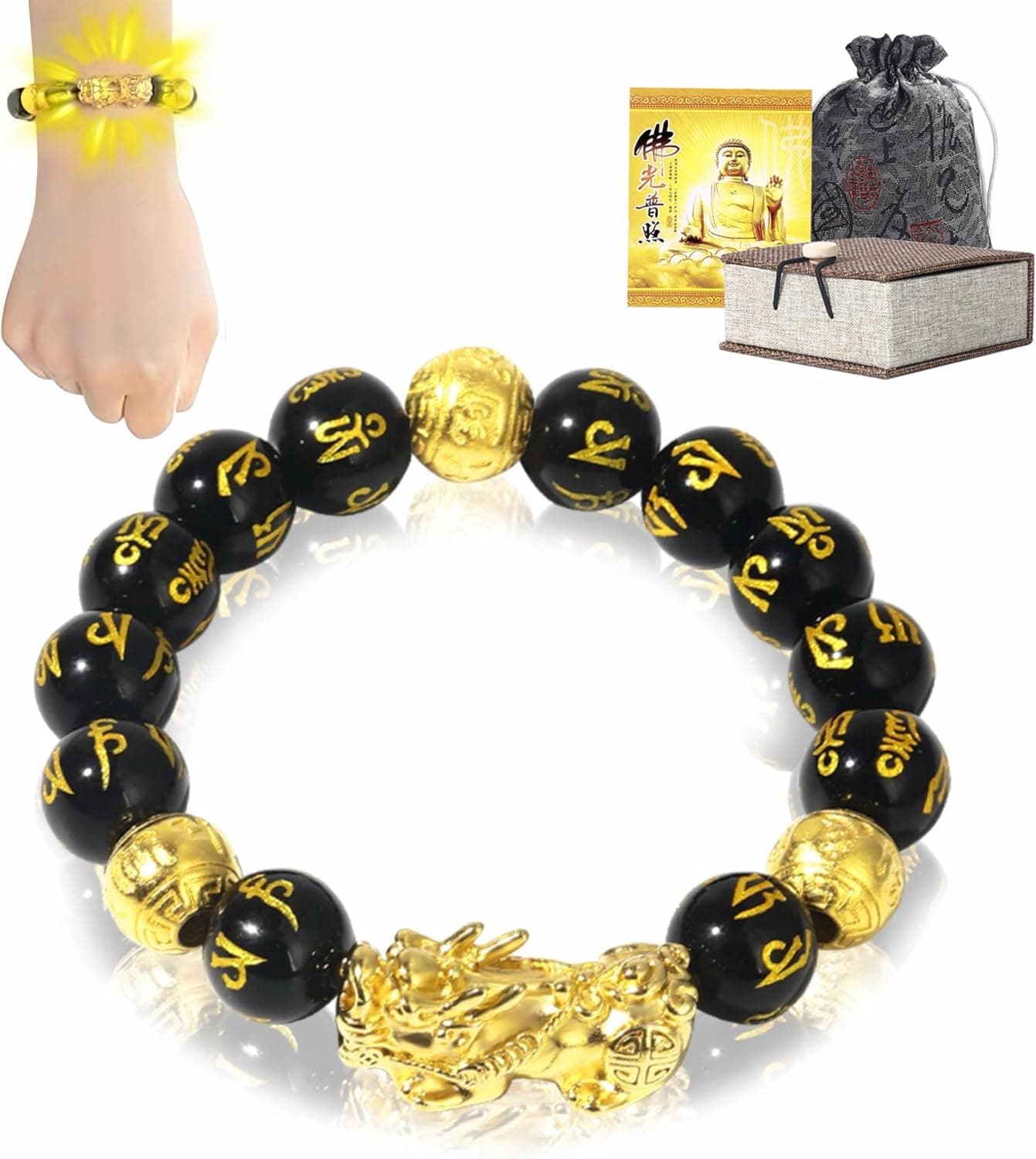 -50%
-50%biuufish Feng Shui Black Obsidian Bracelet for Men Women, 24K Gold Plated Pix...
As an Amazon Associate, we earn from qualifying purchases. We only recommend items our practitioners have personally tested.
Continue Your Journey
Explore these related guides to deepen your understanding:

Ready for Deeper Guidance?
Try our free I Ching reading for personalized wisdom, or explore our curated Feng Shui essentials.