A desk can look tidy and still wreck your focus if it sits in the wrong flow.
When the desk faces the wrong flow
I’ve watched a bright, expensive office lose its power because the desk sat in the path of every interruption. The screen caught window glare, the chair faced a hallway, and the person working there kept turning their head before every email.
That is the real problem in a well-arranged workspace: not decoration, but movement. If your eyes, chair, and door all pull in different directions, your attention leaks before the task even begins.
One small home office made this obvious. The desk was pushed against a wall, the monitor sat directly in front of a west-facing window, and a white filing cabinet stood behind the chair like a hard little cliff. By 10 a.m., the person there was squinting, shifting, and checking the hallway every time someone walked past the room.
That setup looked efficient. It was not.
In feng shui office work, I start by tracking resource flow: qi, time, money, and attention all move through the room the way people move through a building. If circulation is chaotic, the mind becomes reactive; if circulation is clear, work feels less heavy and decisions come faster.
A room does not have to be large to be usable. It has to be readable.
Why a room can drain attention before the work starts
A room starts draining attention long before the first task if the body has to keep negotiating with it. When the chair feels exposed, the monitor fights glare, or the desk sits in a traffic lane, the brain stays half on work and half on self-protection. That split costs energy before anything meaningful gets done.
Open-plan offices are famous for this. A person sits down with a clean desk, then spends the next two hours absorbing footsteps, shoulder taps, and the silent pressure of being visible from every angle. The brain keeps rechecking the surroundings because the body never feels fully settled.
That is where command position matters. It is not superstition; it is control of sightlines. When you can see the door without sitting in its direct path, your nervous system stops treating the room like a blind spot. The practical result is less scanning, fewer micro-pauses, and more sustained focus.
Architecture understands this instinctively. Thresholds matter, and so do axes. A desk placed on the main line of traffic gets treated like a junction, not a base, and a junction is a terrible place for deep work.
The front door relationship is the first thing I check in any office, because entry and exit shape the whole room’s tempo. If the door throws energy straight across the desk, the space stays too alert for too long.
And yes, the problem can be subtle. A chair that wobbles, a monitor angled too far toward the aisle, or a stack of papers sitting in the direct line of sight all create low-grade drag. Nothing dramatic happens. That is the trouble. The cost is a thousand tiny pauses.
In a corporate office, I once stood in a small corner room where the desk fit neatly beside a bookshelf, but the chair was wedged into a traffic lane between the copier and the door. Every time someone passed, the worker’s shoulders lifted. The room looked organized, yet the workday felt defensive.
How feng shui office placement works as resource flow
The core question is simple: where does your attention go when you enter, and where does it go when you sit? Good placement gives the body a stable back, a clear view, and a calm field in front. That is the same logic used in good design: support behind, access in front, movement to the side. In practice, that arrangement lowers alertness at the edges of the room so the center of attention can stay on the task.
A balanced living room layout often works because seating can see the room without being attacked by traffic. Office placement follows the same rule, but with more consequences. You are not just resting there; you are making choices, sending messages, and holding responsibility. A bad layout does not only feel annoying. It can slow decisions, increase mistakes, and make every interruption cost more.
The chair should feel anchored. A solid wall behind you is best, but a tall cabinet or substantial storage unit can work if it is stable and not cluttered. This creates the psychological effect of backing. You feel less exposed, which lowers the urge to scan for trouble.
The desk itself should not sit directly in line with the door if you can avoid it. Off-center is usually better than dead-on. That slight angle gives you awareness without vulnerability, which is exactly what a working mind needs.
Window placement is the next issue. A window behind the monitor creates glare and pulls the eyes outward when they should stay with the task. Side light is better. Bright, indirect light keeps the room awake without flattening the screen or tiring your face.
I have seen people blame their focus problems on discipline when the room was simply working against them. The office was loud in visual terms: shiny surfaces, tangled cords, bright paper piles, and a monitor that reflected the sky. The mind had to fight the room before it could fight distraction.
A single healthy plant near the edge of the room can soften hard corners and restore a little living balance, but plants are support, not rescue. If the desk is badly placed, greenery will not fix the flow. It will only make the mistake prettier.
Reading desk placement, chair position, and monitor angle
Start with the chair. Sit down and ask whether your back feels protected. If the answer is no, the room is asking you to stay on guard. That is not a neutral condition; it is a slow tax on concentration.
Next, check whether you can see the door without staring at it. This matters because visible door control reduces low-level alertness. The brain relaxes when it knows what is entering the field, and relaxed attention stays with the work longer.
Then look at the monitor angle. If the screen faces a bright window, the office becomes a fight between image and glare. Turn the desk so the window sits to the side, or use a screen filter and heavy curtains if moving the desk is impossible.
The simplest test is this: can you work for twenty minutes without wanting to swivel? If the answer is no, the layout is still asking too much of your body.
One more thing. Do not confuse visibility with exposure. A good feng shui office is not about sitting in the open like a stage. It is about having enough command to work calmly and enough enclosure to stop reacting to every movement around you.
Bedroom placement teaches the same lesson in a different register: support matters more than display. The desk is no different. Stability first. Style later.
Shaping the workspace with light, storage, plants, and materials
Light is not decoration. It is a design material. In a strong office, you want brightness without glare, and you want contrast without harshness. That balance keeps the room awake while preserving the screen and the eyes.
Storage should sit at the edge of the room, not in the middle of your field of vision. Visual clutter increases cognitive load because every object asks for a tiny amount of attention. Hide what you do not need. Keep the immediate line of sight calm.
Materials matter too. A room full of hard reflective surfaces feels noisy. Wood, matte finishes, and a few soft textures slow the visual pace. You do not need luxury. You need proportion.
Color follows function. Too much red can push a workspace into agitation. Too much gray can make it flat and inert. The middle path is usually best: enough warmth to feel human, enough clarity to stay alert. That is yin-yang in practical clothes.
A narrow office with one window should not be overloaded with decor. Let the room breathe. A desk lamp with a warm tone, a grounded chair, and a clear wall behind the seat often do more than ten symbolic objects crowded onto a shelf.
And cables. People ignore cables at their peril. Tangled wires signal unfinished motion, and unfinished motion creates mental friction. Tidy the cords, and the room stops whispering that everything is half-done.
Applying the layout in home offices, corporate offices, and shared rooms
Home offices usually fail at boundaries. The room is asked to be a workspace, a storage closet, and sometimes a spare bedroom. If that is your situation, define a work zone with the desk, the chair, and a clear edge behind them. The rest of the room can be softer and more domestic.
Corporate offices fail at exposure. You may not control the architecture, but you can usually control the chair angle, the monitor direction, and the use of a modest barrier like a low shelf, a pinboard, or a tall chair back. Small adjustments change the room’s pressure fast.
Shared rooms fail at noise and interruption. Put your desk where passersby do not cut across your sightline every ten minutes. If you cannot, make the desk feel more like a base by creating a clear boundary with storage on one side and open space on the other.
In a small corner office, the temptation is to shove the desk wherever it fits. That is where the trouble starts. A tidy room can still be badly oriented if the chair sits in a traffic lane. Clean does not mean calm.
For people using annual remedies or star-based adjustments, the office still begins with circulation. Cure objects cannot compensate for a desk that is effectively sitting in the doorway of the room. Fix the movement first, then layer in any deeper practice.
If you want a larger frame for the room, read the article on office crystals and placement after you have settled the desk. Symbols work best when the structure already supports them.
A quick room check that shows where your office is leaking focus
Stand in the doorway and look at the desk. Can you tell, in one glance, where the work zone begins and where the traffic zone ends? If not, the room is muddying its own purpose.
Now sit in the chair and notice your spine. Do you feel backed, or do you feel as if the room is open behind you? That answer tells you more than any decorative cure.
Finally, look at the light on the screen and the movement around the desk. If glare, cords, and cross-traffic all compete for attention, your office is leaking resource flow. Shift the desk off the direct line, turn the window light to the side, clear the immediate field, and you will feel the change before you can explain it.
The best office is not the prettiest one. It is the one that lets attention stay put.
And that is the point of feng shui office practice: not magic, not cluttered symbolism, just a room that helps your mind hold its own energy long enough to finish the work.
FAQ
Should my desk face the door?
Face it, yes, but not in a straight line with it. The sweet spot is a position where you can see who enters without feeling like the entry is aimed at your chest. That slight offset gives awareness without strain.
What if my office has no ideal wall behind the chair?
Use the next best support you have: a high-backed chair, a solid cabinet, or a bookshelf placed close enough to create a sense of backing. Surprising as it sounds, the body often responds to stable visual support almost as strongly as it responds to an actual wall.
Can plants really help an office feel better?
Only if the rest of the room is already doing its job. A plant can soften a hard corner, but it will not rescue a desk that sits in glare or traffic. Think of it as finishing a balanced design, not replacing one.
Mei Chen
Traditionally informed guidance • Cross-referenced with classical Chinese source texts
Content draws from both Compass (Luopan) and Form (Xingshi) school traditions. Illustrative examples are composites based on consultation experiences.
Practitioner-Selected Tools for This Topic
Items our team has tested and found effective for the principles discussed above. Individual results may vary.
 -19%
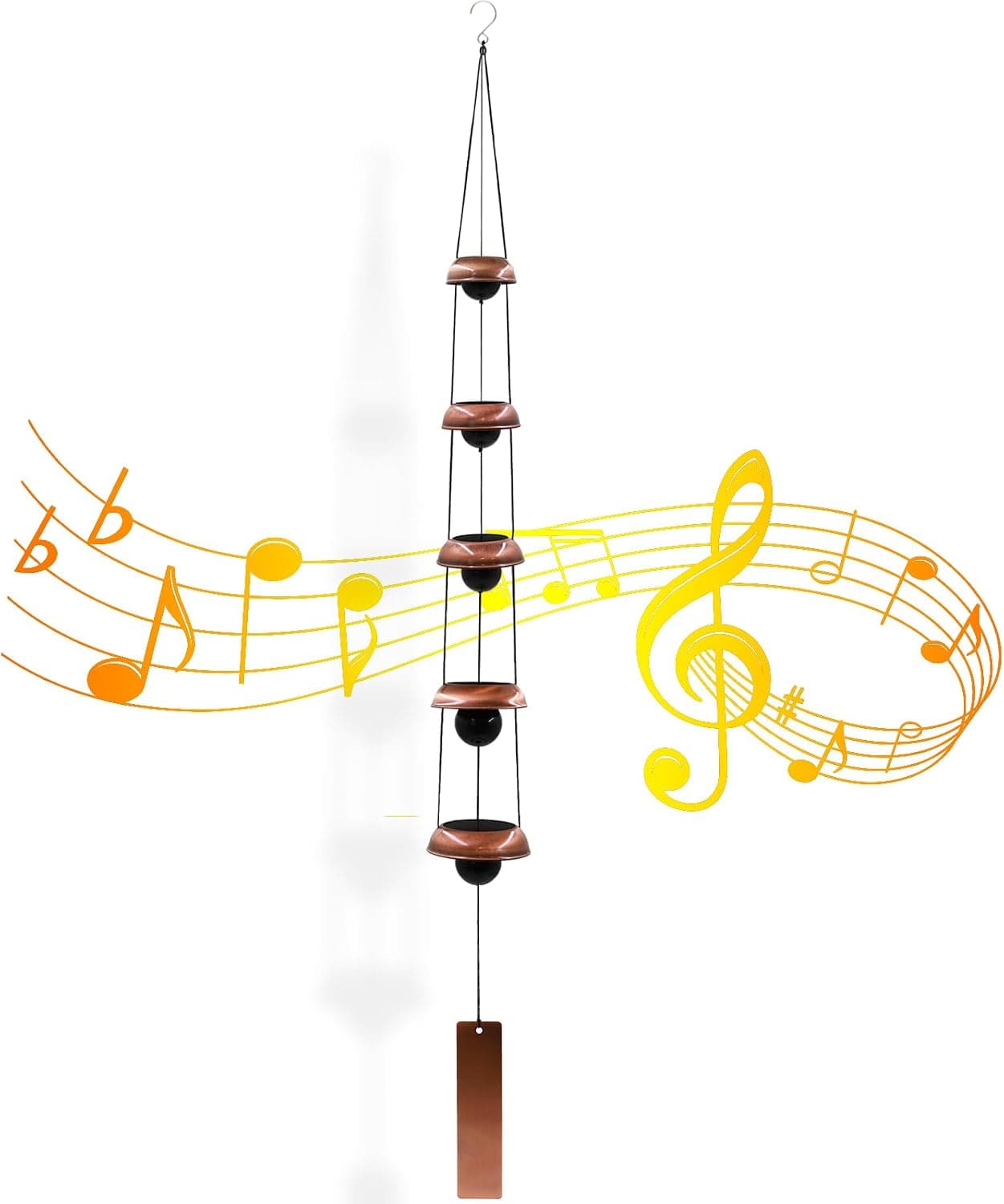
-19%Wind Chimes for Outside with 5 Bell Unique Copper Musical Chimes Feng Shui Wi...
 -5%
-5%YU FENG Evil Eye Money Tree, Blue Feng Shui Decor with Golden Buddha
 -29%
-29%Karma and Luck March Birthstone Crystal Tree of Life, Aquamarine Gemstone Fen...
 -29%
-29%Karma and Luck July Birthstone Crystal Tree of Life, Ruby Gemstone Feng Shui ...
As an Amazon Associate, we earn from qualifying purchases. We only recommend items our practitioners have personally tested.
Continue Your Journey
Explore these related guides to deepen your understanding:


Ready for Deeper Guidance?
Try our free I Ching reading for personalized wisdom, or explore our curated Feng Shui essentials.