
Your bedroom is where you spend one-third of your life. Learn how to arrange it for better sleep, deeper rest, and more harmonious relationships.
Feng Shui for the Bedroom: Create Your Sanctuary
You've probably rearranged your bedroom at least once and felt... nothing. Same restless nights. Same tension with your partner. Same groggy mornings. Most people assume that's just life. It isn't. The bedroom is where your body repairs itself, where your relationships either deepen or quietly erode, where your unconscious mind processes everything you couldn't handle during the day. What surrounds you in that room matters more than you think.
I've seen people transform their sleep within a week just by moving their bed. Not buying anything new. Not repainting. Just moving the bed.
Here's where to start.
The Command Position: Why Your Bed Placement Changes Everything
Picture this. It's 2 a.m. You're half-asleep, and somewhere in your nervous system, a low-level alarm is running. Not loud enough to wake you fully. Just enough to keep you from going deep. That alarm has a name in feng shui: it's the feeling of vulnerability. Your back is to the door. Anyone could walk in and you wouldn't see it coming. Your body knows this, even when your mind doesn't.
The command position fixes this. Position your bed so you can see the door while lying down, but don't place it directly in line with the doorway. Diagonal is ideal. You want the sightline, not the direct path of energy rushing straight through the opening.
The headboard goes against a solid wall. Not a window. A wall. Windows behind the bed create instability, literally and energetically. You lose the sense of support at your back, and your sleep reflects it.
Leave space on both sides of the bed. This isn't just about aesthetics. A bed shoved against the wall on one side sends a message, to you, to a partner, to the energy of the room: only one person belongs here. If you're in a relationship or want to be in one, this matters.
What Needs to Leave the Room
I'll be direct. Most bedrooms I've seen are doing the opposite of what they should.
The television on the dresser. The phone charging six inches from your pillow. The exercise bike wedged into the corner because there's nowhere else to put it. The boxes shoved under the bed because you ran out of closet space. Every single one of these is working against you.
Electronics don't just emit light and sound. They carry the energy of work, news, social comparison, and stimulation into the one space that's supposed to be free of all that. Even when they're off, they're present. The bedroom should feel like a different world from the rest of your life.
Mirrors facing the bed are a specific problem. The traditional explanation is that mirrors bounce energy around the room and disturb sleep. The practical explanation is simpler: catching your own reflection at 3 a.m. when you're half-awake is startling in a way that pulls you out of deep rest. Cover them or reposition them.
Clutter under the bed is the one people resist most. "No one sees it," they say. Wrong direction entirely. You sleep above it every night. Energetically, it's the equivalent of lying down on top of everything unresolved in your life.
What Most Feng Shui Advice Gets Wrong
Here's where I have to push back on some of what you'll read elsewhere.
Wrong: You need to buy special feng shui items. Crystals, wind chimes, specific figurines. None of it matters if your bed is in the wrong position and your room is full of clutter. Placement and simplicity do more than any object you can purchase. I've watched people spend hundreds on feng shui "cures" while leaving their bed jammed against the wall with a pile of laundry underneath it. The objects changed nothing.
Wrong: Feng shui is about following rigid rules. The principles are guidelines, not laws. A mirror facing the bed is generally problematic, but if covering it makes you feel anxious or the room feel wrong, that tension is its own kind of bad energy. Your intuitive response to your space is data. Use it.
Wrong: More is better. Pairs of objects, yes. But some feng shui guides will have you filling the room with symbolic items until it looks like a gift shop. The bedroom should feel spare. Calm. Like a breath out. Every object you add is something your nervous system has to process while you sleep. Less is almost always more.
Wrong: Color alone transforms a room. Soft blue walls won't save a bedroom where the bed faces a wall and the floor is covered in yesterday's clothes. Color supports good feng shui. It doesn't create it.
Color: What Actually Works
Soft blues, muted greens, warm earth tones, gentle neutrals. These aren't arbitrary choices. They're colors that lower cortisol, signal safety to the nervous system, and support the transition from wakefulness into sleep.
Bright red in a bedroom is almost always a mistake. Not because of superstition, but because red is physiologically activating. It raises heart rate. It signals urgency. That's the last thing you want at 10 p.m.
Deep, saturated colors can work in small doses, an accent wall, bedding, a single piece of art. But the dominant palette should feel like exhaling.
The Power of Pairs
Two nightstands. Two lamps. Artwork that feels balanced rather than one-sided. This is one of the feng shui principles that sounds almost too simple to matter.
It matters.
I've talked to people who've been single for years, and when I ask about their bedroom, I hear the same thing: one nightstand, bed pushed to one side, a single lamp. The room is arranged for one. And the room is telling them, every single night, that one is all there is. Symbolism shapes psychology. The space you inhabit shapes what you believe is possible.
Add the second nightstand. Even if you're not in a relationship. Especially if you're not in a relationship.
The One Change That Costs Nothing
If you do nothing else, do this: stand in your bedroom doorway and look at the room the way a stranger would. What's the first thing you see? What feeling does it create in the first three seconds?
If the answer is "chaos," "heaviness," or "I don't know where to look," that's what you're sleeping inside every night. That's what your nervous system is absorbing for eight hours while you're supposed to be recovering.
Move the bed to the command position. Clear what's under it. Take the phone out of the room, or at least across the room. These three things, done this week, will change how you sleep. Not because of mysticism. Because your environment is constantly communicating with your body, and right now, it might be saying all the wrong things.
What is your bedroom saying to you?
Mei Chen
Traditionally informed guidance • Cross-referenced with classical Chinese source texts
Content draws from both Compass (Luopan) and Form (Xingshi) school traditions. Illustrative examples are composites based on consultation experiences.
Practitioner-Selected Tools for This Topic
Items our team has tested and found effective for the principles discussed above. Individual results may vary.
 -19%
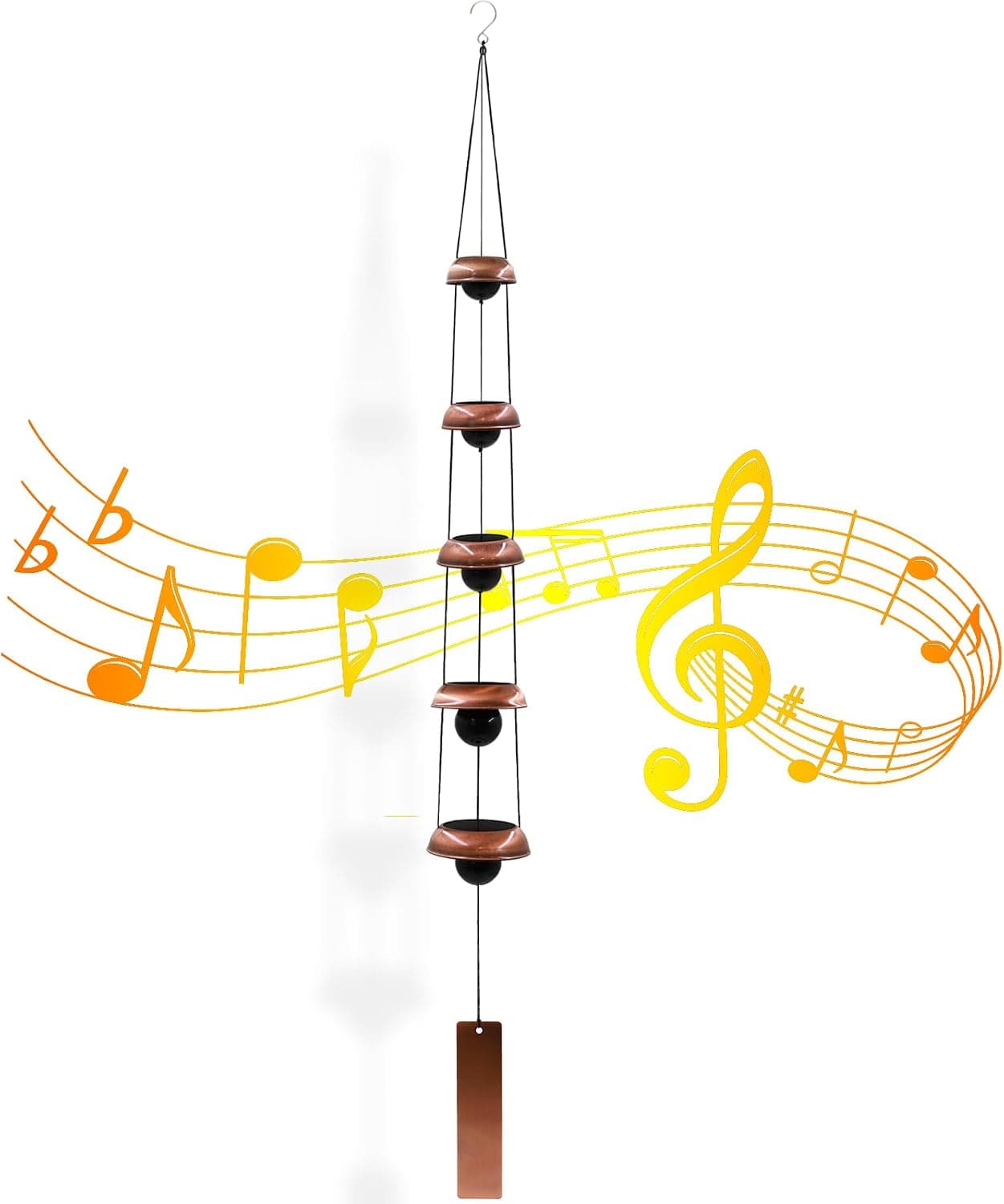
-19%Wind Chimes for Outside with 5 Bell Unique Copper Musical Chimes Feng Shui Wi...
 -5%
-5%YU FENG Evil Eye Money Tree, Blue Feng Shui Decor with Golden Buddha
 -29%
-29%Karma and Luck March Birthstone Crystal Tree of Life, Aquamarine Gemstone Fen...
 -29%
-29%Karma and Luck July Birthstone Crystal Tree of Life, Ruby Gemstone Feng Shui ...
As an Amazon Associate, we earn from qualifying purchases. We only recommend items our practitioners have personally tested.
Continue Your Journey
Explore these related guides to deepen your understanding:


Ready for Deeper Guidance?
Try our free I Ching reading for personalized wisdom, or explore our curated Feng Shui essentials.