The dragon turtle isn't a charm. It's a foundation stone that lost its stele — and in a studio with no threshold, that changes where it belongs.
The Cultural Comparison
Walk through Rome and you pass hermai — square pillars with a head on top, set at property lines and crossroads. Go east and the same job is done by a pair of shisa on an Okinawan roof, by a Bhoma head over a Balinese gate, by a dwarapala flanking a temple door in Tamil Nadu. Different figures, same posting. Every one of them stands at a boundary and faces the approach.
The Chinese version carries something the others don't: a load.
The dragon turtle — longgui, and in its oldest form bixi, one of the nine sons of the dragon — appears in temple courtyards with a stone stele rising out of its shell. It is not a guard dog. It is a foundation. The myth gives it the job of bearing weight without shifting, which is why emperors put their own inscriptions on its back: the record of a reign, held up permanently by something that does not get tired.
That instinct isn't uniquely Chinese, either. Hindu cosmology has Akupara, the turtle that carries the world; Iroquois tradition has Turtle Island; several Siberian and Central Asian accounts put the earth on a turtle's back. The figure recurs because the turtle is the animal that reads as architecture — a domed shell over a flat base, low center of gravity, immovable. Where the Roman herm marks a line, the turtle holds up a floor. That's a different job description, and it survived into the feng shui tradition intact.
And then there's the shell itself. The Luo Shu — the nine-square magic square underlying the nine-palace grid used in compass-school feng shui — is traditionally said to have been read off the markings of a turtle that surfaced from the Luo River. Whatever you make of the legend, the association is old and specific. The turtle is a diagram. Its shell is a map of nine positions, each with a number and a direction.
That single fact changes how the object should be treated.
What You're Actually Dealing With
Somewhere between the temple courtyard and the home-goods aisle, the bixi lost its stele and picked up a coin. The modern resin dragon turtle usually sits on a pile of ingots, sometimes with a baby turtle on its back, sometimes with a string of cash in its mouth. The load-bearing job is gone. What is left is a face.
That is not a small change. A foundation stone has no gaze; it has mass. An ornament has both, and the gaze is the part that does the work in a room. This is why two dragon turtles of the same size can produce different effects: one is read as furniture, the other as a presence.
The evolution went roughly like this. Tomb and temple stele bases through the Han and Tang. Then desk objects: Ming and Qing scholars kept small jade and bronze turtles on writing tables, where the figure became a private marker of stability rather than a public monument. Then the twentieth-century export version, cast in resin, sold with a wealth-attraction label, and shipped to apartments that have no courtyard, no stele, and often no foyer. The object changed jobs three times; only the first job was architectural.
The standard dragon turtle feng shui placement instructions — head toward the door, back to a wall, never in the bedroom, never in the bathroom — are correct as far as they go. They were written for buildings with thresholds. That is the gap. A rule about aiming the head at a boundary assumes a boundary exists and can be seen. In many modern apartments, especially studios, it cannot.
Here is the failure mode I keep running into. Someone reads that the head should point toward the door, so they set the turtle on a shelf, turn the head toward the entry, and stop. In a house with a real foyer, that works, because the gaze crosses an empty transition zone and lands on nothing in particular. In a studio, the same instruction puts the turtle's face on a line that runs from the bookshelf, past the sofa, and into the back of the chair where a person sits to eat dinner. The rule was followed correctly. The result is a room that feels observed. If you want a quick test, sit where you usually sit and look at the turtle. If its eyes land on your body rather than on a doorway, wall edge, or open threshold, the placement is already working against you.
The Hidden Pattern
Trace it as three steps, because it really is that mechanical.
Step one: the head is read as an agent. Human visual processing allocates attention to anything resembling a face, and a carved turtle head with two eyes and a beak qualifies. This is not mysticism. It is the same reflex that makes a coat on a chair look like a person at two in the morning. Peripheral vision registers something is looking before the conscious mind confirms what the object actually is.
Step two: attention attaches to whatever sits behind the gaze. A gaze is a pointer. When the turtle faces the front door, the door becomes the salient feature of the room — and in feng shui terms that is exactly what you want, because the entry is where qi is admitted. Read it through an architectural lens and it is the same claim: a threshold only works if it is legible. The figure is doing signage duty. It tells your body where the boundary is before your mind has decided anything.
Step three: repeated attention becomes posture. This is the part that takes months and is therefore invisible in a one-week test. If the salient point is a door you can see and reach, you settle. If the salient point is the back of your own neck, you do not. A small room has no second room to retreat into, so the low-grade bracing never discharges. People describe this as a place that will not let them relax and then buy another object to fix it, which adds a second gaze to the same bad line. This is also the mechanism behind what the Chinese call sha chi — not an invisible poison, but a sightline that keeps you subtly on guard.
Now the weight, which gets almost no airtime. Proportion matters as much as direction. A dark, dense object reads heavier than a pale one of identical size; that is a perceptual constant, not taste. Put a two-kilo resin turtle on a floating shelf above a low bed in a three-hundred-square-foot studio and you have created a visual center of gravity at head height, over the one surface where you are horizontal and unguarded. Nothing bad happens. It simply never feels right, and you cannot say why. The fix is not mystical either: lower it, lighten it, or move it off the sightline you meet when you lie down.
When It Goes Wrong
Three placements reliably fail, and none of them for the reason the lists give.
The first is the bathroom shelf. The classical prohibition sounds like superstition until you notice that a bathroom is the one room in an apartment with no threshold at all — the door stays shut, the room is small, and the object's gaze lands on a wall eighteen inches away. A guardian with nothing to guard. If you want the symbolic reading, it's water in, water out, nothing accumulates. If you want the practical one, the figure is doing no work and you are still spending attention on it every time you reach for a towel.
The second is the bedroom, specifically a turtle aimed at the bed. I've written separately about why bedroom cures tend to backfire, and the mechanism is identical here. The bed is the one place where you want your attention to stop scanning. An agent-shaped object pointed at it keeps a small part of the brain on watch. Turn the head so it runs along the wall instead of across the room, and most people report the space going quiet inside a week.
The third is the pile. Two turtles, a toad, a pixiu, and a crystal on the same console. I'd gently push back on the collector's instinct here: each object is a gaze, and four gazes in a two-foot span cancel into visual noise. If you already wear a pixiu bracelet with its own directional rules, the console does not need to duplicate the job.
The Real Fix
Start with the boundary, not the object.
Walk in your front door and stop where you naturally stop — usually three to five feet in. That zone is your threshold, whether or not a wall marks it. A front door that opens straight into the living space needs that zone made visible: a rug edge, a change in lighting, a low console, a different floor material underfoot. Once the threshold exists, the turtle has something to point at. Before that, it's pointing at your furniture.
Then set the head along the threshold line rather than across the room. Facing out — toward the entry or toward the largest window — is the classical instruction and it holds up, but only when "out" means "at the boundary." In a studio, the boundary is usually the entry zone, not the door leaf itself. Aim at the zone.
Height: below eye level when seated. This is the single adjustment that resolves most small-space complaints. A figure sitting at thirty to thirty-six inches falls into the lower band of vision, where the brain files objects as furniture rather than as company.
Backing: give it a wall. The bixi carries a stele, and a stele leans on something. A turtle floating mid-room, or on a windowsill with glass behind it, reads as unstable, and unstable reads as vigilance. Console against a wall, head out. That's the entire geometry.
Material and color come last. Dark stone, bronze, or black resin is the classic reading. If your place is already heavy — dark floors, low ceiling, solid furniture — a paler or smaller piece keeps the proportion from tipping. Light quality matters as much as color. A correctly placed turtle catches a little raking light from a window and reads as a shape; a badly placed one sits in dead shadow and reads as a lump. Move it six inches and the same object changes character.
And if you have genuinely no threshold — one room, the door opening onto the bed — put the turtle on a low shelf beside the entry with its head parallel to the wall, not facing into the room. It becomes a marker instead of a watcher. That's the honest answer for a 280-square-foot studio, and it works better than pretending you have a foyer you don't.
Mei Chen
Traditionally informed guidance • Cross-referenced with classical Chinese source texts
Content draws from both Compass (Luopan) and Form (Xingshi) school traditions. Illustrative examples are composites based on consultation experiences.
Practitioner-Selected Tools for This Topic
Items our team has tested and found effective for the principles discussed above. Individual results may vary.
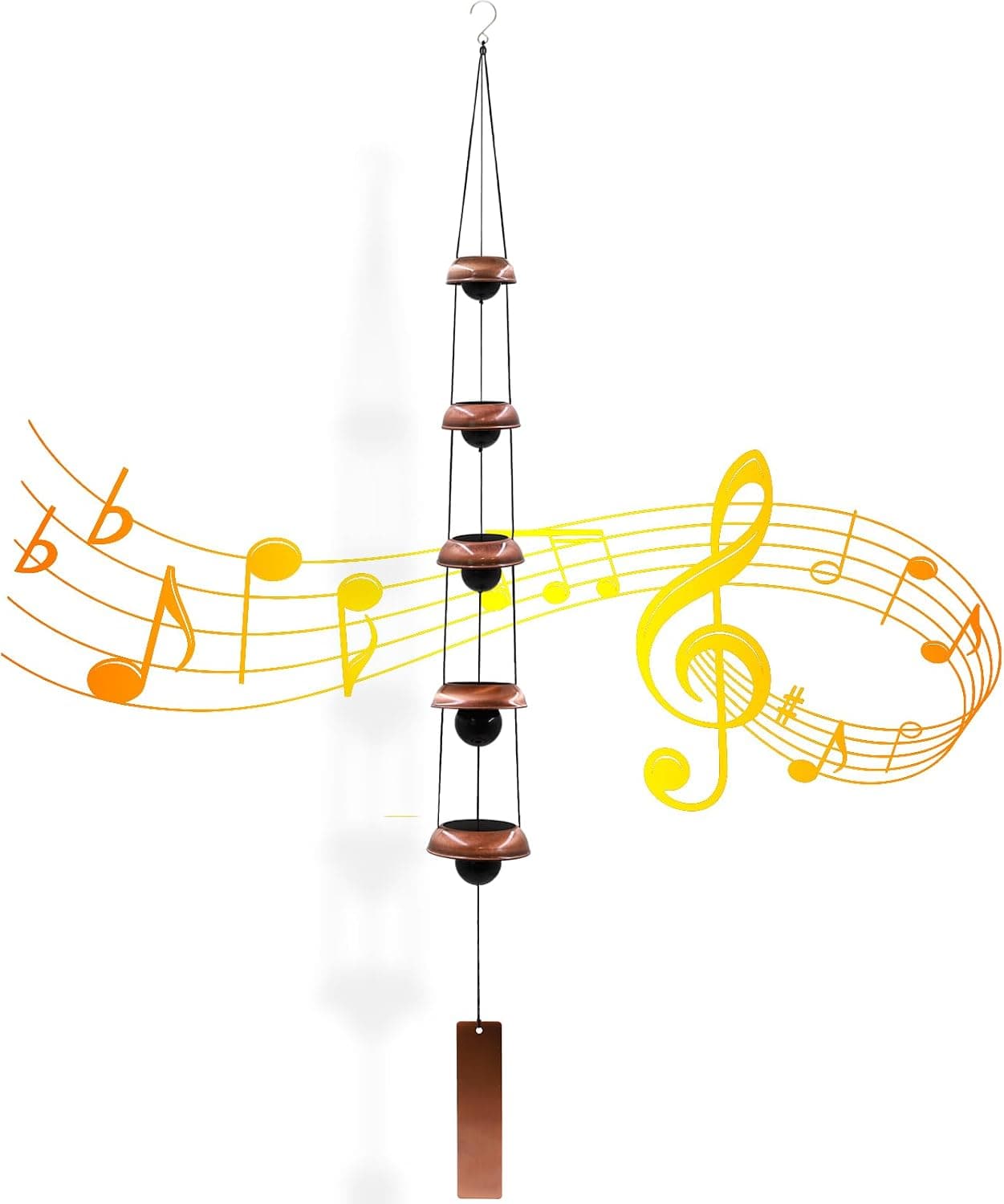 -19%
Wind Chimes for Outside with 5 Bell Unique Copper Musical Chimes Feng Shui Wi...
 -5%
YU FENG Evil Eye Money Tree, Blue Feng Shui Decor with Golden Buddha
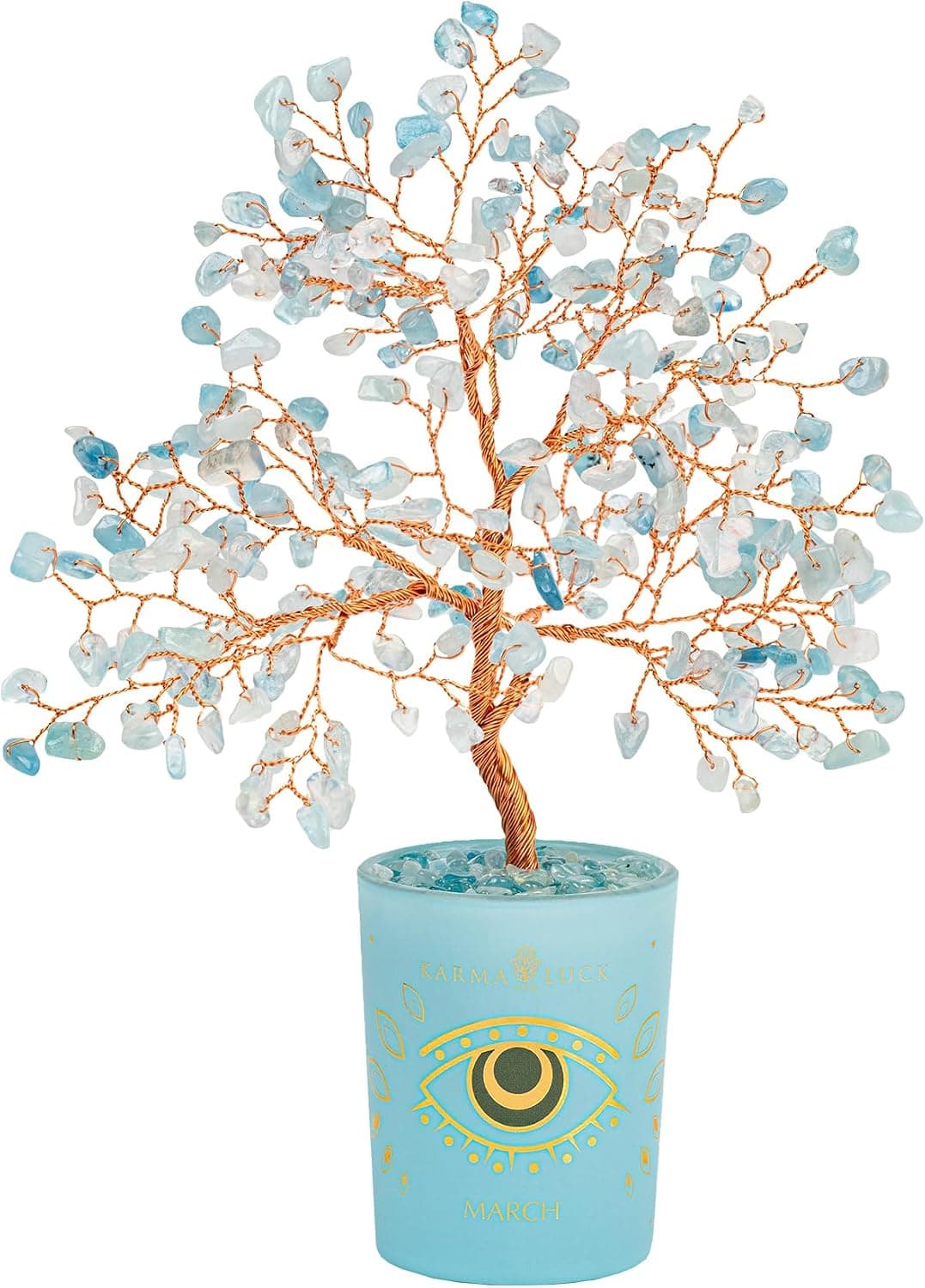 -29%
Karma and Luck March Birthstone Crystal Tree of Life, Aquamarine Gemstone Fen...
 -29%
Karma and Luck July Birthstone Crystal Tree of Life, Ruby Gemstone Feng Shui ...
As an Amazon Associate, we earn from qualifying purchases. We only recommend items our practitioners have personally tested.
Continue Your Journey
Explore these related guides to deepen your understanding:


Ready for Deeper Guidance?
Try our free I Ching reading for personalized wisdom, or explore our curated Feng Shui essentials.