Wearing more cures, following every instruction, and still feeling stuck? The problem isn't effort. It's proportion.
The Nonlinear Growth
A studio apartment, fourth floor, one window facing a brick wall. The bed has to sit against the only solid wall because the other three are a doorway, a closet, and a kitchenette. On the wrist: a pixiu bracelet, bought after a bad quarter, worn on the left hand because a video said left. Six months later the tenant still wakes at three in the morning. So she buys a second bracelet. Then a third.
I have watched this exact sequence play out more times than I can count, and it never fails the same way. The person is not careless. They are not skeptical. They have done the reading, watched the clips, and followed the instructions with genuine discipline — and the result is flat. Sometimes worse than flat.
That is the part the standard instructions never explain. The outcome of these practices does not scale with the effort you put in.
Two bracelets are not twice the protection.
Think about what the average set of pixiu bracelet rules actually is. A list. Left wrist, head facing outward, don't let anyone else touch it, cleanse it regularly, pair it with the right element, never wear it in the shower, and so on. Each line is written as if it adds a unit of benefit to a running total. Follow ten lines and you get ten units. Follow two and you get two.
That is linear arithmetic applied to a relational system, and the two do not mix.
The mismatch matters because it changes what you do next. A person who thinks in units responds to a flat result by adding units. A person who thinks in systems responds by checking where the system is leaking. Only one of those responses ever produces a change.
What You're Actually Dealing With
The common belief is that a pixiu is a wealth magnet, so more of it means more pull. That framing is modern, it is largely a product of retail copywriting, and it is the source of most of the confusion around these objects. In the older reading, the creature is a boundary animal. It sits at the edge between what flows in and what stays. Its job is to gather and hold. It has no engine of its own.
Gathering depends on the container. A net in a fast river catches whatever the current brings. The same net in a dry bed catches dust.
Follow that through and the mechanism becomes fairly mechanical. The bracelet marks a boundary at the body. The body sits inside a room. The room has an entry, and that entry determines the speed and quality of what arrives. If the entry runs fast and straight — the classic configuration behind sha chi and poison arrows — there is nothing slow enough to gather, and no quantity of additional bracelets changes the current. You are polishing the net while the river runs dry.
Input, boundary, container, output. Skip the container and the chain collapses, which is precisely why so many people who follow every instruction end up exactly where they started, plus a lighter wallet.
There is a social layer here too, and it matters more in small homes than almost anyone expects. In a shared flat or a couple's one-bedroom, income and luck are not private property. One person's stability absorbs shocks for everyone; one person's bad year becomes the household's bad year. So when one member starts wearing three bracelets and the other wears none, they have not tripled the household's protection. They have quietly assigned one person to be the household's amulet. That is a negotiation dressed up as a ritual, and it tends to produce resentment rather than flow — because the person carrying it can feel the weight and the person who isn't can't see it.
The Hidden Pattern
Here is the proportion problem, stated plainly: an object's influence on a space is a function of how much of that space it occupies, not of how much it cost or how carefully it was consecrated. In a two-thousand-square-foot house, a bracelet on a nightstand is a rounding error. In a three-hundred-eighty-square-foot studio, the same bracelet shares a visual and energetic field with the bed, the desk, the kettle, and the door.
The denominator is different.
The second layer is yin and yang, and I mean this in the plainest possible sense rather than as mysticism. Yang is active, outward-facing, gathering, daylit. Yin is receptive, inward, restful, dim. A pixiu is a yang object by nature — it faces out, it pulls, it works. A bedroom is yin territory. Put a yang object in a yin room and you have not added protection. You have added a small, persistent activity to a space whose entire job is to stop activity.
I have walked into studios where the bracelet lives permanently on the nightstand, three feet from the pillow, under a lamp that stays on until midnight, and the occupant tells me they cannot wind down. Nothing is broken. Nothing needs to be cleansed. The room is simply being asked to do two opposite things at once, and the body notices the contradiction before the mind names it. The quality of light in a properly balanced studio is the giveaway — when the rest zone reads as genuinely dim and still, sleep arrives faster and stays longer. When a metal-and-stone object catches the lamp glare at the edge of vision, the room never fully goes quiet, and the person blames their own nervous system instead of the arrangement.
The third layer is element interaction, and it is where the vague advice about pairing your bracelet with the right element actually comes from. Metal feeds water and cuts wood; fire melts metal. A pixiu in a room dominated by fire signals — red bedding, a hot lamp, a south-facing window with no shade — is a metal object under constant pressure. Not cursed. Just out of proportion with its surroundings.
Elements do not add. They modify each other.
If you want to know which zone of the flat is asking for what, the bagua map gives you the overlay. But the overlay is only useful once the walking lines are fixed. Reading zones in a room where the entry runs straight into the bed is like labeling the shelves in a room with no floor.
When It Goes Wrong
The failure I see most often is not a broken rule. It is a rule applied at the wrong scale.
Take the instruction to face the pixiu outward. Outward relative to what? For most people the answer is "away from my body," so the head points down the arm toward the fingertips. That is a reasonable reading. But in a studio where the desk faces a wall eighteen inches away and the only door is behind you, an object pointing outward is pointing at drywall. There is nothing to face. The instruction was followed correctly and the geometry was ignored, and the geometry is the part that does the work.
Same story with placement. A bracelet kept on a tray by the front door — a common recommendation for people who don't want to wear it to work — works well in an entry hall with a defined threshold. In a studio, the "entry" is a two-foot strip of floor between the kitchen counter and the coat hook. The tray ends up beside the keys, the mail, the recycling, and the shoes. The boundary object now sits in the busiest, most chaotic square foot in the home. That is not a boundary. That is a traffic island.
And the mistake that costs the most: treating the bracelet as a substitute for a decision. I have watched people wait. They buy the object, follow the conventions, and then hold off on the raise conversation, the lease renewal, the move across town. The bracelet becomes a way of not acting while feeling as though you acted. That is not the object's fault. It is what the object gets used for when nobody explains the mechanism.
The Real Fix
Stop adding and start fitting. The adjustment points are specific, and none of them require renovating a rental.
First, decide what the bracelet is a boundary for. In a small apartment the honest answer is usually the line between work and rest, because that is the line the floor plan refuses to draw. Wear it while you work. Take it off when the laptop closes. Put it somewhere that is not the bed, not the kitchen counter, and not the tray by the door — a drawer, a box, a shelf above eye level. The object now does something real: it marks a transition the room itself cannot mark. One bracelet with an assigned job outperforms three worn continuously, because three worn continuously mark nothing at all.
Second, fix the container before you add to it. That means the entry. If there is a straight run from the door into the middle of the room, break it — a runner, a plant, a low shelf, anything that makes the incoming line curve. This is the same logic that governs a front door that shapes the whole flat, scaled down to a single room. Slower arrival is the precondition for gathering. Without it, everything downstream is decoration.
Third, check where the object sits relative to the room's strongest spot. In a studio the command position is usually the corner diagonally opposite the door — the one place where you can see who enters without turning your head. If the desk or the bed can move there, move it, and let the bracelet live near that spot rather than near the door. The mechanics of that diagonal are covered in the guide to the command position in feng shui. A bracelet is a small amplifier. Amplifying a weak position produces noise; amplifying a strong one produces something you can actually feel in the first week.
Fourth, negotiate out loud. If two people share the flat, agree on one boundary object per person, not one per worry. Say which is whose and what each one marks. It sounds absurdly practical for a metaphysical practice, but the alternative is what I described earlier — one person quietly carrying the household's luck while the other carries nothing, and both of them feeling the imbalance without being able to name it.
Fifth, cleanse on a rhythm you already keep. Weekly with the laundry, or monthly with the bills. The specific method matters far less than the regularity, because the point of the rhythm is to remind the wearer that a boundary is maintained rather than installed once. Objects nobody attends to stop reading as boundaries and start reading as clutter, and clutter is the one thing a small apartment cannot absorb.
If you want the broader logic of which objects belong in which rooms, the crystal placement principles apply almost identically: material, orientation, and room function have to agree before quantity means anything.
What changes when you get the fit right is undramatic. The room stops arguing with itself. The bracelet stops being a thing you own and becomes a thing you use — a marker at a threshold, doing a job that a bigger house would have done with a wall.
Frequently Asked Questions
Can I wear two pixiu bracelets at once?
Two is not a problem in itself — but ask what each one marks. If the answer is "the same thing," you have added weight without adding information, and in a small flat that weight is felt. One bracelet assigned to a specific transition does more than three worn as insurance.
Does the bracelet have to be cleansed on a schedule?
Rhythm matters more than method. A monthly reset tied to something you already do keeps the object reading as intentional; an elaborate ritual performed once and never repeated doesn't. The regularity is the mechanism, not the ceremony.
What if my apartment is too small to fix the entry?
Renters almost never get to move a door, and you don't have to. A runner, a tall plant, or a low shelf placed to break the straight line from door to bed does most of the work, and none of it requires a landlord's permission.
Should I take it off before sleep?
In a bedroom, yes — and in a studio the case is stronger, because the same four walls have to serve as office, kitchen, and rest zone. A yang object next to the pillow keeps a small activity running in a room whose job is to stop activity.
Mei Chen
Traditionally informed guidance • Cross-referenced with classical Chinese source texts
Content draws from both Compass (Luopan) and Form (Xingshi) school traditions. Illustrative examples are composites based on consultation experiences.
Practitioner-Selected Tools for This Topic
Items our team has tested and found effective for the principles discussed above. Individual results may vary.
 -19%
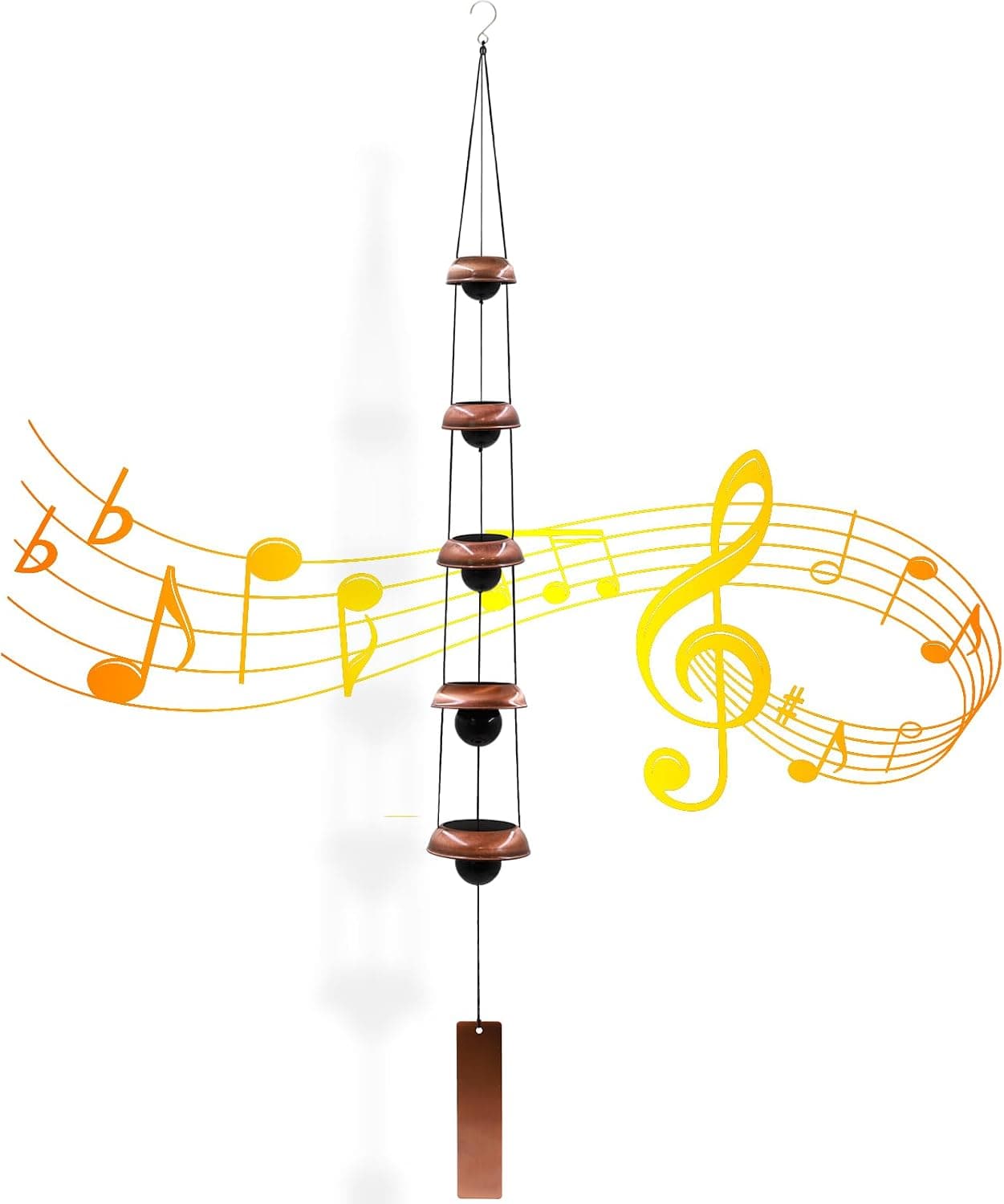
Wind Chimes for Outside with 5 Bell Unique Copper Musical Chimes Feng Shui Wi...
 -5%
YU FENG Evil Eye Money Tree, Blue Feng Shui Decor with Golden Buddha
 -29%
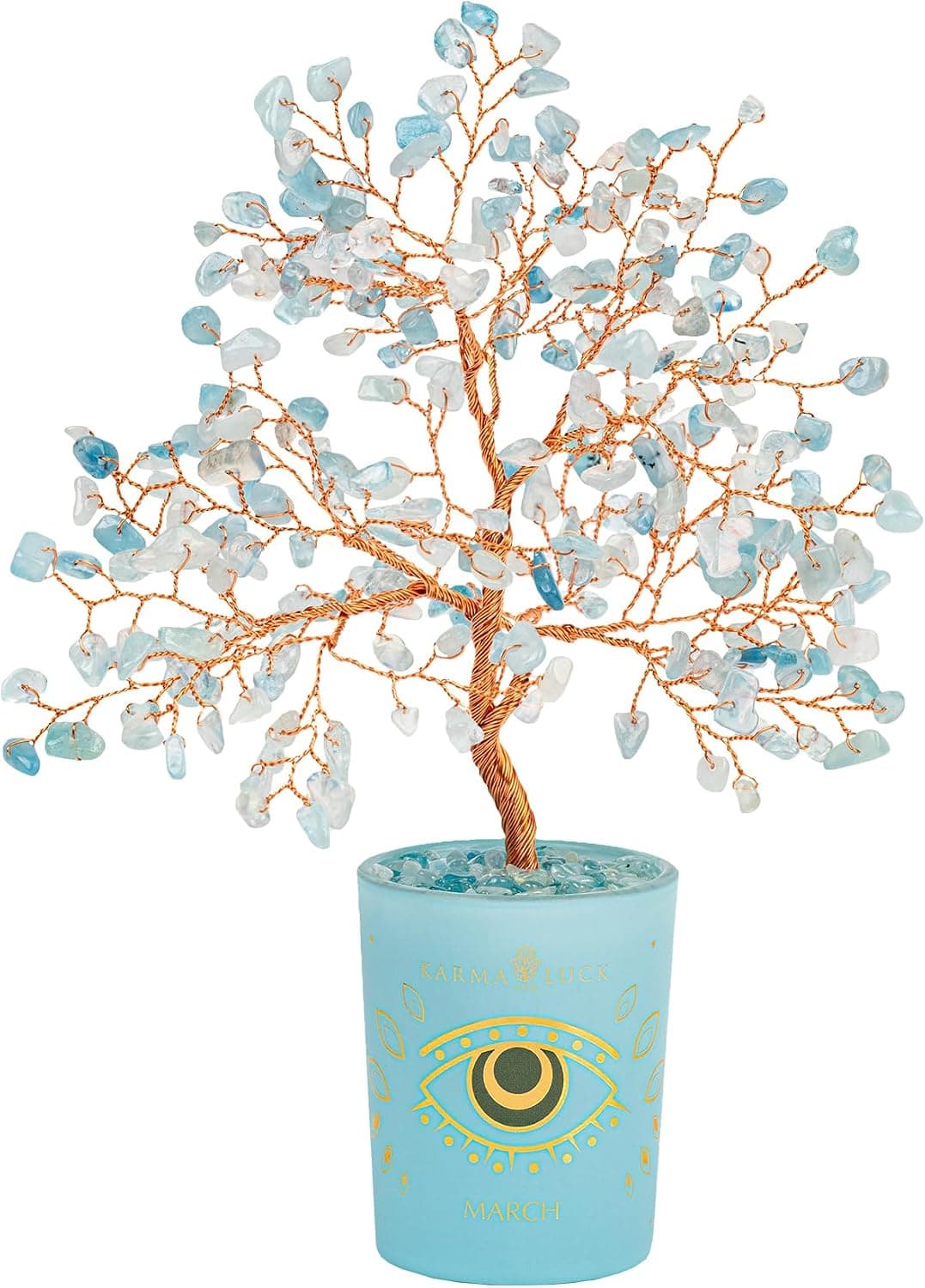
Karma and Luck March Birthstone Crystal Tree of Life, Aquamarine Gemstone Fen...
 -29%
Karma and Luck July Birthstone Crystal Tree of Life, Ruby Gemstone Feng Shui ...
As an Amazon Associate, we earn from qualifying purchases. We only recommend items our practitioners have personally tested.
Continue Your Journey
Explore these related guides to deepen your understanding:


Ready for Deeper Guidance?
Try our free I Ching reading for personalized wisdom, or explore our curated Feng Shui essentials.