Remove too many walls, and the Rooster’s 2026 pattern can turn sharp, noisy, and strangely unstable.
The Hidden Truth About rooster chinese zodiac-2026-predictions
People keep treating open plan layouts like a universal upgrade, then wondering why the year feels louder, sharper, and harder to manage. The mistake is obvious once you spend time inside a room with no edges. Rooster energy likes definition. Blur it, and the whole house starts acting like a hallway.
I walked into a condo in River North last autumn and saw the problem in one glance: the kitchen, dining zone, and desk area all fused into one long rectangle, with a stainless kettle on the island, a red lacquer bowl beside a laptop, and a TV humming from the far wall. The owner had followed every Rooster tip she found online, including a white desk lamp, metallic decor, and a neat shelf of coins near the entry. Yet she slept badly, answered emails too fast, and kept misplacing keys. Not even close. The issue was not lack of cures. It was excess exposure.
Open plans fool people because they look spacious. They photograph well. They also erase the pauses a Rooster chart needs in 2026, especially when the year already brings a fast, metallic tone that can turn into irritability if there is nowhere for sound, movement, and attention to settle. If you want a deeper baseline on directional reading, start with reading a Feng Shui compass without guessing, because once directions are off, every cure becomes decorative noise.
Here is the part most advice skips: a wall is not always an obstacle. Sometimes it is a filter. In a Rooster year, a partial barrier, a bookcase, or even a change in ceiling lighting can do more than another tray of crystals. That is why the standard advice from broad yearly forecasts often misses the mark. It speaks in symbols. Homes need geometry.
Why Open Space Can Work Against the Rooster
The Rooster carries precision, alertness, and a tendency to judge what is out of place. In a compact room, that trait becomes useful. In a loft with exposed brick, a seven-foot sofa floating in the middle, and a long sightline from front door to back window, it becomes restless scanning. The eyes never stop. The body follows. People call that ambition until their shoulders stay tight for weeks.
Open layouts also amplify the wrong kind of movement. Sound travels farther. Light bounces harder off pale floors. A pan lid clatters from the kitchen, and the whole apartment hears it. Then the mind stays on alert, even at 11 p.m. This is why a lot of Rooster households in 2026 will not need more activation. They will need fewer places for energy to ricochet.
That is where the L-shaped apartment problem becomes relevant. Odd footprints can soften or worsen a Rooster year depending on where the missing corners fall. People love saying an open plan feels modern. Modern does not mean metabolically calm. A room can be stylish and still leave you jangly by dinner.
Wrong. A bigger room is not automatically a better one. I have seen narrow separators, a closed shelving unit, and one heavy linen curtain solve more agitation than expensive wall art ever did.
What Actually Helps in 2026
Start by creating sequence. A Rooster year handles transitions better than exposure. If the front door lands directly in the living room, use a runner, a console, or a plant cluster to slow the eye. If the desk faces the kitchen, turn it a few degrees so the cooktop is not firing straight into the working field. If the bedroom opens into a broad sightline, use color and height to break the scan.
Choose materials that reduce glare rather than multiply it. Matte brass is safer than chrome. Oatmeal linen usually works better than white satin. A dark wood side table near the sofa can anchor a room that otherwise feels slippery. These are small interventions, yet they change behavior quickly because they shape how long the gaze lingers. In feng shui, that matters more than the object itself.
For wealth-related placement, people often reach for coins because they are easy, and yes, symbolic metal can be useful when the surrounding layout already has structure. A good starting point is coin placements that make money feel managed, not chaotic. But coins scattered across an open shelf in a noisy loft do little except collect dust. Put them where the eye pauses: a sideboard, a drawer insert, or the left side of a desk with a solid backing.
There is also the matter of the five elements. Open plans tend to flood a home with one dominant mood, usually yang metal or excessive fire from screens, stainless finishes, and bright track lighting. That imbalance can make Rooster traits look impressive on paper while feeling brittle in practice. A useful companion read is why good feng shui can still feel wrong, because the missing piece is often not the cure. It is the mix.
Why Conventional Advice Keeps Surviving
People repeat open-plan praise because it works for real estate, not always for nervous systems. It sells square footage. It makes a place look airy in photos. It also flatters the idea that more visibility equals more control. That belief is seductive, especially to Rooster personalities that like sharpness and clean lines. The trap is that too much visibility can become surveillance.
There is another reason the usual advice sticks around. It gives everyone the same answer. Rearrange the desk. Add the metal accent. Put a plant near the window. Done. Except homes are not spreadsheets, and a Rooster year in 2026 will punish lazy generalities faster than a slower, more recessed chart would. Look at room-by-room annual cures for 2026 and you will see how quickly one corner can differ from another in the same house.
The truth is less glamorous. The most helpful adjustment may be subtractive. Close a door. Shift a screen. Hang a heavier curtain between the kitchen and the sofa zone. Use a taller plant to interrupt the runway from entrance to back wall. Small boundaries can feel almost rude to people who love airy interiors. Then they notice the change in sleep. Funny how that works.
Where Conventional Advice Still Has a Place
It is not wrong to use metal, order, and clean lines for Rooster energy. It is wrong to stop there.
In a room with actual containment, those elements can sharpen focus. A study with a defined doorway, one desk lamp, and a grounded chair benefits from clarity. A dressing area with a neat tray and a closed wardrobe benefits from exactness. The trouble starts when people export that same logic into a one-zone loft and expect calm to appear on command. It will not. The room has to cooperate.
One of the cleaner ways to test a layout is to study the doorway first. The front threshold tells you whether energy has somewhere to slow down. The guidance in this front door framework matters because entry pressure often decides how the rest of the home behaves. If the Rooster year feels chaotic, the culprit may be the first five steps inside, not the desk or the bedroom.
Another useful check is bedroom placement. I have seen more relationship friction from oversize open circulation than from any dramatic cure mistake. A bed floating in a vast room with no backdrop can feel exposed all night. A tighter room with one solid wall behind the headboard often calms the body in under a week. For more on that, compare the advice in a bedroom setup that actually lets the mind unclench with the broader Rooster forecast. The contrast is instructive.
In other words, the year does not demand more decoration. It demands better containment. If the home already has walls, use them well. If it does not, create the suggestion of one. That distinction is where the good readings begin.
How to Test Your Own Layout
Stand at the front door at night, lights off except for one lamp in the living area. Look straight ahead. What do you see first: a work surface, a television, the kitchen sink, or a clear pause before the room opens? That first sightline tells you whether the house is directing attention or scattering it.
Now walk to the spot where you sit most often. Notice whether your back is exposed to a passage, a window, or a wide opening into another zone. Rooster energy wants to monitor everything, which is exhausting when the chair sits in the middle of traffic. Move it against a solid surface and the body usually drops its guard within days.
Check the sounds too. If a frying pan ring carries from the kitchen to the bedroom, the plan is too porous for a sensitive year. A thick rug, a curtain, or a closed door changes more than acoustics. It changes how often your mind gets interrupted.
One more thing: look at what sits in the center of the home. An open-plan center filled with a dining table, toys, office gear, and a drying rack can turn into a magnet for unfinished tasks. Clear it. Leave a deliberate gap. Space can be a boundary when walls are absent.
That is the piece conventional advice barely touches. It tells you what symbol to place. It rarely tells you what kind of emptiness the symbol needs around it.
FAQ
Is conventional rooster chinese zodiac-2026-predictions advice reliable?
Sometimes, but only in a narrow sense. The usual recommendations work best in homes with real structure, where a metallic accent or tidy desk supports a contained room. In open plans, the same advice can fail because the layout keeps broadcasting stimulation from every angle.
Should I close off my open plan completely?
No. Over-partitioning can make a home feel cramped and nervous. Use partial separation first: a shelf, curtain, rug, or lighting change. That often gives you enough distinction without making the place feel chopped up.
What if my apartment has no walls to add?
Then work with pauses instead of barriers. A rug under the seating area, a tall plant by the edge of the desk, or a heavier object behind the sofa can create a visual stop. The goal is not to build a fortress. It is to stop the energy from flying straight through.
Does this matter more for certain people in 2026?
Surprising fact: the people who think they are least affected by layout are often the first to feel its strain. Rooster years reward precision, and open plans erase it. If your sleep gets lighter, your temper shorter, or your concentration jumpy, the room is speaking louder than the forecast.
Where should I start if I only change one thing?
Begin with the longest sightline in the home. Break it. One screen, one curtain, or one anchored piece of furniture can shift the whole atmosphere. That single adjustment tells the house where to stop looking.
Sometimes the fix is almost embarrassingly plain: a linen curtain half-drawn across a bright kitchen, a walnut console holding a bowl of keys, and the desk turned so the monitor no longer faces the stove. The room goes quieter. Then you notice how long it had been shouting.
David Liu
Traditionally informed guidance • Cross-referenced with classical Chinese source texts
Rooted in classical Chinese metaphysics and cross-referenced with original texts. Product recommendations are based on traditional symbolism, not guaranteed outcomes.
Practitioner-Selected Tools for This Topic
Items our team has tested and found effective for the principles discussed above. Individual results may vary.
 -29%
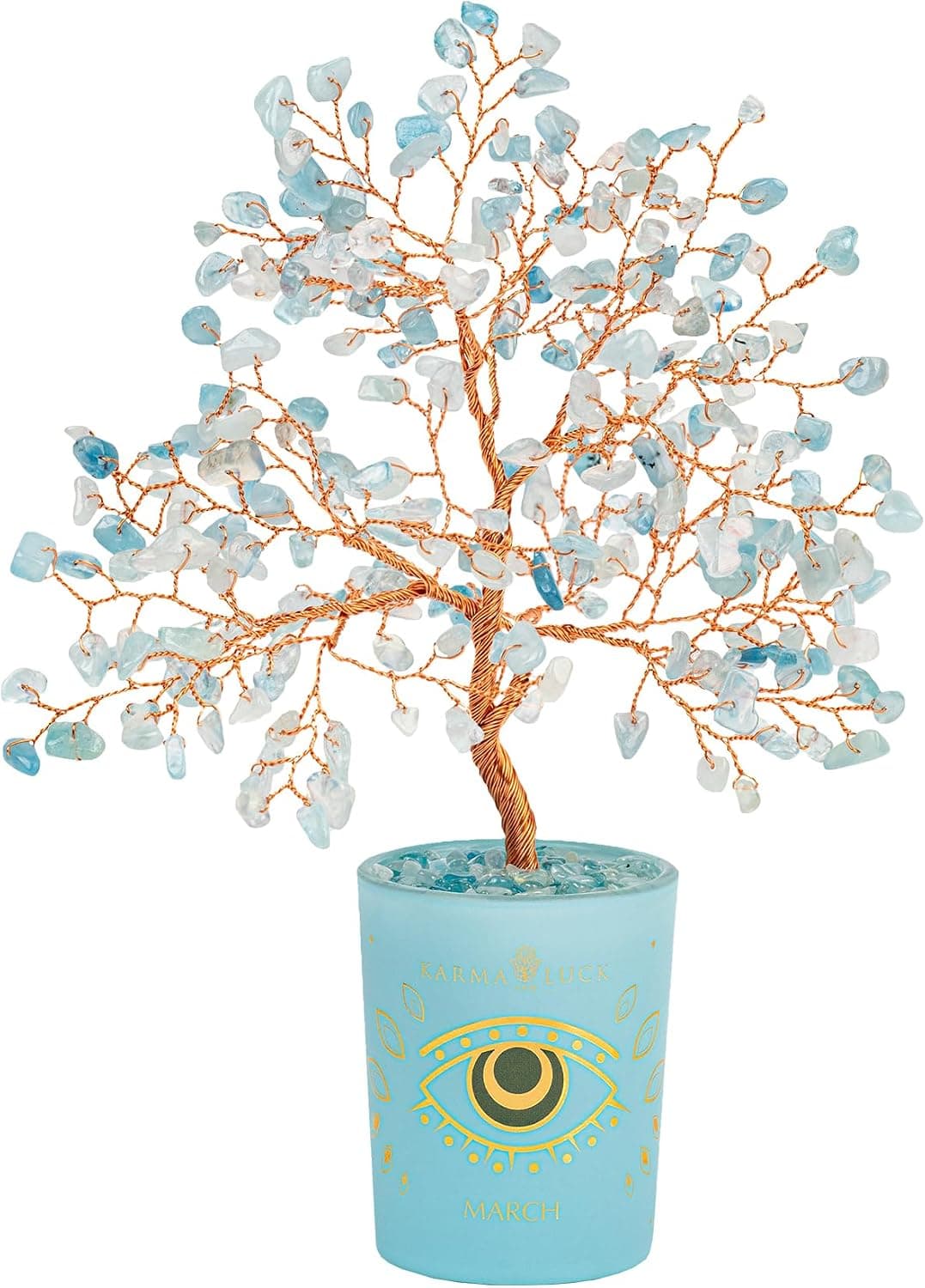
-29%Karma and Luck March Birthstone Crystal Tree of Life, Aquamarine Gemstone Fen...
 -29%
-29%Karma and Luck July Birthstone Crystal Tree of Life, Ruby Gemstone Feng Shui ...
 -29%
-29%Karma and Luck February Birthstone Crystal Tree of Life, Amethyst Gemstone Fe...
 -50%
-50%biuufish Feng Shui Black Obsidian Bracelet for Men Women, 24K Gold Plated Pix...
As an Amazon Associate, we earn from qualifying purchases. We only recommend items our practitioners have personally tested.
Continue Your Journey
Explore these related guides to deepen your understanding:

Ready for Deeper Guidance?
Try our free I Ching reading for personalized wisdom, or explore our curated Feng Shui essentials.