Stand in the doorway before you move a single object; the room is already telling you what the five forces are doing.
The Hidden Truth About chinese-elements
I learned that the hard way in a narrow apartment hallway where a red ceramic lamp, a black umbrella stand, and a wood-framed mirror were arranged with textbook confidence, yet the room felt tense the moment the front door opened. The owner had followed every rule she'd found online. Still, she slept lightly, missed calls, and kept putting off the invoice stack on the kitchen counter.
The problem wasn't the objects. It was the view.
Stand at the doorway and look straight in. Your first line of sight tells the whole story before your feet cross the threshold: where attention goes, what gets pulled forward, and which element starts dominating the room. In practice, that matters more than decorative symbols. A mirror aimed at a busy entry can scatter focus. A plant hidden behind the door never gets enough visual presence to stabilize a room. Even a bright candle on a console can make the hallway feel hot and rushed if it is the first thing your eye locks onto.
This is where common advice slips. People obsess over objects as if they work in isolation, then ignore the simple fact that the brain organizes space by what it sees first. I've seen a blue sofa near a south-facing door calm a home instantly because the doorway opened onto a clear wall, not clutter. I've also seen a perfectly balanced setup fail because the first thing visible from the entry was a pile of shoes, a leaning umbrella, and a television glow from the next room.
mapping a home by the doorway reveals more than most diagrams admit, because the entry is where the room announces its pattern. The five forces do not behave like labels on a chart; they behave like attention magnets. If the first view is sharp, cramped, noisy, or overlit, the rest of the room usually follows that script.
Picture a small dining room with cream walls, a dark oak table, and a green vase placed 90 centimeters inside the door on the left. That looked balanced on paper. In real life, the vase was the first object people saw, so every arrival landed on the same note: expectation, then friction, then a pause. When we moved it farther back and cleared the sightline to the window, conversation changed. Dinner lasted longer. The mail stopped accumulating on the sideboard. Small shift, large consequence.
That is why line of sight deserves more respect than most elemental talk gets. The doorway is not a neutral frame. It acts like a filter, deciding whether a room feels inviting, overstimulating, or unfinished before anyone has a chance to explain it away.
front-door layout choices make that visible in the biggest way, especially in apartments where the entry opens directly into the living space. A straight shot toward a cluttered sofa, a bright screen, or a mirror that doubles movement will usually produce a restless, overactive feel. A soft wall, a plant with enough breathing room, or a lamp placed off-center can slow the whole scene down.
People like to say the five elements are about balance. Fine. But balance starts with where the eyes land. Miss that, and you end up polishing the wrong corner while the room keeps broadcasting the same signal.
How the doorway decides which force dominates
Imagine a front door opening onto a hallway that points directly at a kitchen range. Fire dominates before the occupants even set down their keys. Meals may get rushed, tempers rise faster than they should, and the home never quite settles after sunset. Now shift the first view so the entry lands on a matte wood bench and a pale wall instead. The atmosphere changes because the mind stops bracing for impact.
That is the psychology underneath all of this. Your gaze checks for threat, orientation, and reward in a fraction of a second. A chaotic entry says, without words, that the house has no sequence. A simple sequence lets the nervous system unclench. Once the body stops scanning, the symbolic qualities of the room have room to work.
front-door color choices matter for the same reason, though many people treat them as paint swatches alone. A deep blue door facing a cluttered landing can feel heavier than intended; a warm ochre door opening onto a dim corridor can feel like a lantern in fog. The color is only half the message. The other half is what sits directly in view behind it.
I once worked with a study that looked polished from every angle except one. From the doorway, the first thing visible was a tall white printer on a wheeled stand, parked three feet beyond the frame and angled toward the desk. It looked practical. It also made the room feel like it was always about to start an errand. Once the printer moved out of sight and a low shelf took its place, the desk stopped feeling like a waiting room for unfinished tasks.
That kind of change feels almost rude to people who want a neat formula. They want the chart, the color, the cure. Then they ignore the fact that a room can be technically correct and still feel wrong the moment you enter it.
bedroom sightlines are even less forgiving, because the first view after waking shapes the tone of the day. If the bed faces a door and your eyes land on a mirror, a stacked chair, or a bright charging cable, the room keeps sending a signal of interruption. Move the visual weight so the gaze settles on something still, and sleep deepens by degrees, not by magic.
Here is the part many readers resist: elemental work is not mainly about adding more. It is about deciding what should be seen first, second, and not at all.
What actually changes when you treat sightlines as the main factor
Begin with the entry. Open the door and freeze. What hits your eyes first? If it is a cluttered shelf, a row of coats, and a bright package waiting to be recycled, that sequence is already teaching the home to expect unfinished business. Clear enough space so the first object has intention, not leftovers.
Then check the center line. In a long apartment, the eye often shoots straight through the living room and into the farthest wall. That can be useful when the last view is calm. It can be draining when the end point is a TV, a laundry basket, or a hard corner with no softness at all. A tall plant, a low bench, or a framed print can interrupt the tunnel and give the room a place to pause.
Don't overdo it. The goal is not to decorate every wall. Overcorrecting creates visual noise, and visual noise is just another form of pressure. Leave some surfaces quiet. Let one object carry the message. Let the doorway breathe.
the balance between active and resting spaces shows up fast when you watch the entry and the first room beyond it. Too much movement near the threshold produces a buzzy, frayed mood. Too much emptiness can feel unfinished and cold. A home needs enough structure to orient the eye, but enough softness to keep the body from staying on guard.
One winter afternoon, I stood in a west-facing kitchen with yellow cabinets, a silver kettle, and a narrow strip of sunlight falling across the doorway at 4:15 p.m. The homeowner had placed a row of shiny utensils on a rail directly opposite the entry. Every time the door opened, the whole room flashed. She wondered why everyone ate quickly and left the table early. We moved the utensils to a side drawer, set a clay bowl in their place, and the kitchen stopped shouting.
Small changes like that sound almost too simple. Yet the eyes do not negotiate. They register dominance, repetition, and contrast instantly. Once the first sightline softens, the room can begin to feel inhabitable rather than just arranged.
why a setup can still feel wrong comes into focus when the first view pushes the wrong force to the front. A room can have wood, metal, water, earth, and fire represented beautifully, but if the doorway opens onto glare and hard edges, the home will still feel brisk and unkind. Elemental presence is not the same as elemental behavior.
Signs the doorway is lying to you
Notice what people do right after entering. Do they set down their bag and drift? Do they walk past the room without looking up? Do they hover near the door as if they have not quite arrived? Those are not abstract symptoms. They are spatial reactions.
When a room feels off, the first clue is usually avoidance. The mail stays on the console because the console is too exposed. Shoes collect by the threshold because no one wants to cross the visual field and deal with the rest of the mess. Conversations shorten near the entry because the space has no clear landing place for attention.
A bedroom can do the same thing. If the doorway catches the foot of the bed, a bright rug, and a charging station all in one glance, the body remains in half-alert mode. That often shows up as waking at 3:00 a.m., thinking about errands, or staring at the ceiling while the mind runs through a list it never volunteered to make.
bedroom arrangement rules matter most when they prevent the eye from being pinned by the door. Give the room a settled first view and the mind follows. Put the first view on something jangly and the pulse keeps checking for the next interruption.
What surprises people is that the most helpful adjustment is often not the symbol they expected. Not the coin bowl. Not the red ribbon. Sometimes it's moving a chair two feet so the doorway sees its back instead of its side. Sometimes it's turning a lamp away from the threshold. Sometimes it's removing the one framed print that keeps the eye racing toward unfinished motion.
Those are not glamorous fixes. They work anyway.
compass reading for room direction helps you know where the door faces, but the lived experience depends on what that door reveals. Direction tells you the field. Sightline tells you the behavior inside that field. Miss either one and the prescription gets shallow.
How I would fix a room built around the wrong first view
Start at the door and walk in slowly. Stop after two steps. Photograph what you see. Not what you think is there. What the lens captures first is often the true message of the room, because the camera ignores excuses.
Next, strip the threshold down. Remove one item that shouts. Not five. One. If a mirror catches the entrance, test the room without it for a week. If a bright red object sits dead center in the first view, move it out of the main line and see whether the room stops feeling hot.
Then create a visual landing place. A low plant, a matte bowl, a bench with a cushion, or a piece of art with restful geometry can all serve the same function. The point is not charm. The point is to give the eyes somewhere to arrive without being shoved onward.
In one narrow hallway, a black umbrella stand sat exactly where the front door could see it. It was only 40 centimeters wide, but it dominated the entry because it was dark, upright, and always full. We shifted it behind the door, replaced it with a pale ceramic tray, and the hallway stopped feeling like a service corridor. Guests lingered. The owner quit apologizing for the apartment before they even came inside.
coin placement that feels contained rather than frantic is useful when the room already has a clear visual order. If the doorway is noisy, adding more objects only deepens the cluttered signal. Fix the sightline first. Money symbols work better when the room does not look like it is losing its breath.
There is also a point where restraint beats correction. If the entry is already soft, leave it alone. People often ruin a good setup by chasing symmetry that was never needed. A room can be healthy without looking staged.
And yes, this is where the old advice about balance becomes controversial. Balance without sequence is just decoration. Sequence tells the room where to begin.
Why so many cures fail at the doorway
They fail because they treat the room like a still life. A home is entered, crossed, glanced at, and remembered. That sequence matters more than the object's symbolic meaning on its own.
Conventional advice often tells people to add more of the element they want. Add wood for growth, add water for flow, add metal for clarity. Fine. Yet if the first view from the doorway is already saturated with one force, adding its symbol can push the room too far. A little red on a quiet wall feels alive. Red in the entry, opposite a glossy floor and a hard light fixture, can turn the whole path into a sprint.
People also mistake visibility for effectiveness. A cure sitting in plain sight is not always better. Sometimes it is just louder. The better question is whether the doorway sees it first or whether it supports the room from the side.
That distinction would have saved a lot of people from the usual backfiring pattern: they follow every rule, place the objects exactly where the book says, then wonder why the house feels overmanaged. The answer is often hidden in the first three seconds after the door opens.
small symbolic objects can help, but their effect changes once they enter the larger visual field of the home. A bracelet worn at the wrist is one thing; a bowl of similar items scattered at the entry is another. The body reads them differently, and the doorway decides which reading comes first.
I've watched rooms improve after less dramatic interventions than people expect: a coat hook moved off-center, a lamp dimmed, a hallway runner changed from glossy to flat weave. Nothing mystical. Just a clearer message to the eye.
That may sound modest. It isn't. A clear first view can alter sleep, spending, and even how long people stay in a room. The doorway is a small place with a large job.
FAQ
Is conventional chinese-elements advice reliable?
Often not by itself. It tends to focus on objects and categories while ignoring what the doorway shows first, which is where the room starts teaching the body how to behave.
How do I know if my entry is the real problem?
Stand outside the door, open it, and look without moving. If your eye jumps to clutter, glare, a mirror, or a hard corner, the entry is already setting the tone. That first impression usually predicts how the rest of the space will feel.
Do I need to replace everything if the sightline is bad?
No. Shift the dominant object, soften the path, and reduce visual collisions first. A room often changes after one or two moves because the eye stops bracing for impact.
Can I use element colors anywhere once the doorway is fixed?
Yes, but with judgment. Color works best when it supports the visual sequence rather than shouting from the threshold; otherwise it can overwhelm the entrance and make the whole home feel hurried.
What if my apartment opens straight into the living room?
That setup needs a clear landing point immediately inside the door. A bench, rug, or low piece of furniture can slow the gaze and keep the room from feeling like a tunnel. If you want a deeper framework, the front-door layout guide shows how this works across different floor plans.
Does this still matter in a small studio?
More than ever. In a studio, the first view from the door becomes the whole mood within seconds, so whatever sits there will keep repeating itself every time you come home.
The next time you open your front door, do not look for a cure. Look for the first thing your eyes trust, and the first thing they want to escape.
Mei Chen
Traditionally informed guidance • Cross-referenced with classical Chinese source texts
Five Elements analysis based on traditional Wuxing (五行) theory from the Shujing (書經).
Practitioner-Selected Tools for This Topic
Items our team has tested and found effective for the principles discussed above. Individual results may vary.
 -29%
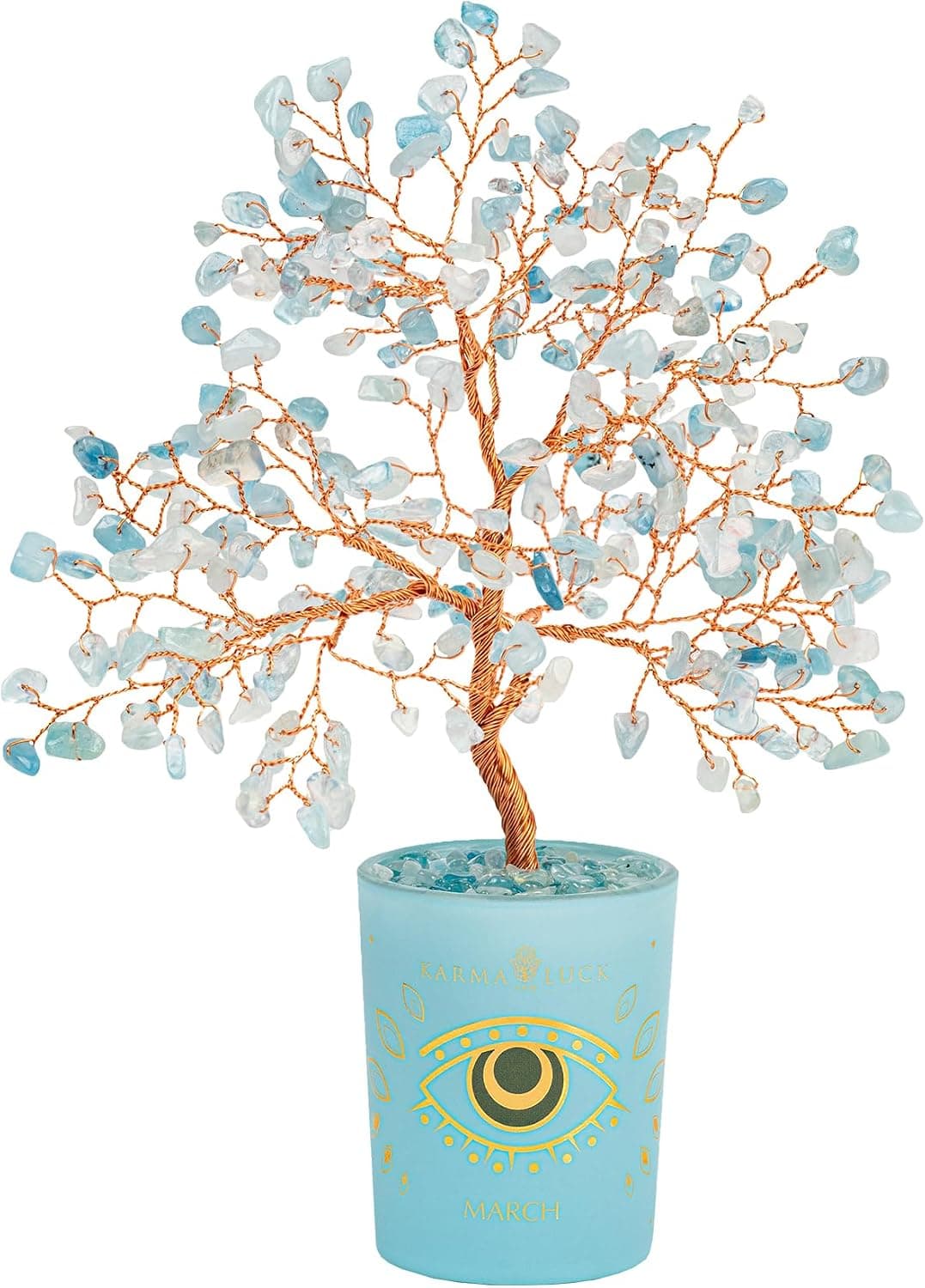
-29%Karma and Luck March Birthstone Crystal Tree of Life, Aquamarine Gemstone Fen...
 -29%
-29%Karma and Luck July Birthstone Crystal Tree of Life, Ruby Gemstone Feng Shui ...
 -29%
-29%Karma and Luck February Birthstone Crystal Tree of Life, Amethyst Gemstone Fe...
 -7%
-7%Woodstock Chimes Signature Collection, Crystal Tree of Life Chime, 19'' Decor...
As an Amazon Associate, we earn from qualifying purchases. We only recommend items our practitioners have personally tested.
Continue Your Journey
Explore these related guides to deepen your understanding:
Ready for Deeper Guidance?
Try our free I Ching reading for personalized wisdom, or explore our curated Feng Shui essentials.