If wealth cures look busy but your money life stays twitchy, the model is wrong—not your discipline.
The Hidden Truth About five elements wealth activation feng shui
People add red, place a plant, set out a coin bowl, and then wonder why their bank balance still feels jumpy.
I’ve seen that pattern in a north-facing office with a glossy black desk, a gold figurine near the monitor, and a bowl of coins by the window. The room looked “cured” from the doorway. Inside, though, the owner kept missing invoices, and every payment arrived with a delay that made his shoulders tighten before lunch.
The problem was not effort. It was sequence. Wealth responds to the order of the five elements, because each one changes the next one’s behavior; when you place the wrong element first, you create decoration instead of momentum.
That is why the standard advice often backfires. It treats money like a symbol you can paste onto a wall, while the actual mechanism runs through the room like wiring. Wrong input, wrong output.
One more thing: the common model usually starts with the object, but the better model starts with the environment. A room that feels cramped, overlit, or noisy will swallow most cures before they have a chance to do anything useful.
Step One: Build the Container Before You Add a Cure
Wealth activation begins with containment, not display. Wood grows, Fire pushes, Earth receives, Metal condenses, Water moves; if the room cannot hold the movement, the money story becomes leaky.
That is why a cluttered entrance can flatten everything else. Open the front door to a stack of shoes, a delivery box, and a wobbling umbrella stand, and the first thing the room teaches you is hesitation. People call that “bad luck.” Often it is just a bad threshold.
the front door’s receiving posture matters because it sets the pace for everything that follows, and the same logic shows up in wealth corner placement when the corner is accessible but not exposed. A cure tucked behind a lamp or jammed beside a printer is not being activated; it is being interrupted.
Here’s the simple test: stand at the doorway and look for the place your eyes settle first. If that spot feels like a traffic jam, fix the traffic before you buy another object.
Quietly, this is where many homes fail. The room is asking for order, not ornament.
Step Two: Match the Element to the Job
Not every money problem needs the same element. That part gets missed constantly, because people want one answer for rent, savings, career jumps, and debt reduction. Those are different flows.
Wood is useful when you need expansion, but too much of it turns into restless spending and half-finished projects. Fire can help visibility and promotion, yet a burst of it in a small room can make you feel keyed up instead of financially steady. Earth supports accumulation, which is why ceramic, square forms, and grounded colors often help a space that keeps losing traction. Metal sharpens decisions, while Water improves circulation and opportunity, though it can also make some people too fluid, too open, too willing to leak energy into other people’s problems.
That sounds technical because it is. I have watched a turquoise vase rescue one bedroom and overheat another, simply because the first room needed movement and the second already had enough of it from a south-facing window and a scarlet duvet.
Think in terms of job descriptions. Want more clients? You may need Fire plus Metal. Want savings to stop evaporating? Earth first, then a smaller measure of Water. That distinction changes everything.
five elements theory applied to real rooms explains why a single lucky object rarely solves a structural problem, and coin placements that make money feel managed, not chaotic show how Metal can support clarity when the rest of the room is already calm.
Not magic. Mechanics.
Step Three: Send the Flow Through a Clear Path
Once the element is right, the path matters. Wealth does not like dead ends, because dead ends create hesitation in the body before they create hesitation in the wallet.
Picture a study with a navy chair, a cedar shelf, and a jade plant in the southeast corner. The owner keeps her tax papers in a drawer that sticks, and every April she avoids opening it until the last possible week. After the drawer was fixed and the plant moved three feet toward the room’s center, the space stopped feeling like a trap. She did not suddenly become a different person. She simply stopped receiving the same resistance from the room.
That detail matters because flow is physical. If the path from door to desk is blocked by a drying rack, a treadmill, or a stack of old magazines, the room trains you to stall. Money habits often mirror that training.
Try this instead: choose one clean route through the wealth area and keep it visibly open. No boxes. No tangled cords. No chair that forces you to turn sideways every time you enter.
mapping the bagua without overthinking it helps you locate the area, while the apartment shape problem shows why awkward layouts need a path-based solution rather than another token cure.
A tidy route can feel boring. That boredom is doing work.
Where the Wrong Advice Backfires
People often place an item because it looks auspicious, then wonder why the room feels louder instead of calmer. Red cloth in a tiny den can turn into agitation. Too many coins can feel like a receipt pile. A fountain in the wrong spot may create movement without direction, which is just noise with a pump attached.
The most common error is treating the wealth area like a stage set. That approach feels satisfying because it is visible, but visibility is not the same as function. The room may look ready for a photo and still behave like a sieve.
money corner mistakes that drain a home fast are usually built from this exact confusion. Another common one lives in the kitchen: knife placement that keeps tension in circulation can sharpen the entire house faster than a person expects, and that tension bleeds straight into spending choices.
Hard truth: if you keep adding cures and the room keeps feeling busy, the cure is not the cure. The underlying pattern is off.
What to Place by Scenario, Not by Superstition
For a small apartment with one bright window and not much storage, Earth is often the starting point. Think a low ceramic bowl, a square tray, or a stone object on a shelf in the southeast area, three feet from the window so it receives light without glare. The point is to help the room hold rather than scatter.
For a home office where income depends on attention, Metal can do more than a lucky charm ever will. A simple brass desk accessory, a clean white lamp, or a framed certificate placed behind and slightly to the right of the chair can tighten focus and reduce the feeling that work is spilling everywhere.
For a family room where spending gets impulsive, Water should be used sparingly. A dark accent, a glass vessel, or a small reflective surface can support flow, but only if the room is not already full of screens, shiny surfaces, and constant motion.
For a bedroom, ease off the activators. Wealth work that leaves you sleeping lightly is a bad bargain. Use softer Earth tones and keep bright Fire elements out of the direct sightline from bed.
bedroom placement that supports rest and rules that protect sleep and relationships matter because the body makes financial decisions from its level of strain. A tired nervous system spends differently.
That is the piece most advice skips. It talks about objects and forgets the person who has to live with them.
How the Mechanism Produces Results
Here is the chain, stripped down. The room gives a first signal. The signal shapes your attention. Your attention shapes your habits. Your habits shape your cash flow.
That chain is why a correct cure can still fail if the room is overstimulated. A Metal object will not help if it sits beside a blaring television and a pile of unopened mail. A Water feature will not help if it backs up against a wall of boxes. Every element needs a container, because the container determines whether the element becomes usable or noisy.
fire balance in the home shows the same mechanism from the opposite direction: too much push creates nervousness, then the body begins making smaller, tighter choices. That is how a room edits a life without saying a word.
It’s a quiet chain. But it is relentless.
Fixes That Hold Better Than Tricks
Start with one zone and one job. If the purpose is income stability, choose Earth. If the purpose is visibility, add a measured Fire note. If the purpose is better decisions, bring in Metal. Do not stack them all at once because you want faster results; that usually creates a visual argument.
Then remove the friction that keeps the room from responding. Repair the drawer. Clear the window ledge. Move the wastebasket out of the wealth line. Replace broken or dusty items, because decay tells the space that neglect is acceptable.
Someone following the usual playbook may place a crystal, a coin tree, and a red ribbon in the same corner, then feel disappointed when nothing changes. I would rather see one clean shelf, one grounded object, and a path that reaches that corner without obstruction. The second setup looks less dramatic. It works better.
crystals that belong in a real room can support the process, but only after the structure is doing its job. If the structure is weak, the crystal becomes another object to dust.
That sounds unromantic. It is.
FAQ
Is conventional five elements wealth activation feng shui advice reliable?
Often not, because it usually starts with symbols instead of conditions. A room that is cluttered, overlit, or poorly routed will weaken almost any cure before it can settle in.
Should I use every element at once?
No. That creates overlap, and overlap produces muddle. Start with the element that matches the actual money issue, then let the room show you whether a second layer is needed.
Do coins and crystals belong together?
Sometimes, but only when each one has a role. Coins bring a Metal quality of ordering and holding; crystals add clarity or texture. Put them together without a plan and you may get decoration instead of direction.
What if my wealth corner is in a bedroom?
That happens more often than people expect, and it usually means restraint matters more than display. Use smaller, quieter objects and avoid anything that wakes the body up at night.
The odd thing is that the best wealth rooms often look modest from across the room. Up close, though, every object seems to know its job, and the corner feels like it is waiting for someone to finally stop guessing.
Mei Chen
Traditionally informed guidance • Cross-referenced with classical Chinese source texts
Five Elements analysis based on traditional Wuxing (五行) theory from the Shujing (書經).
Practitioner-Selected Tools for This Topic
Items our team has tested and found effective for the principles discussed above. Individual results may vary.
 -29%
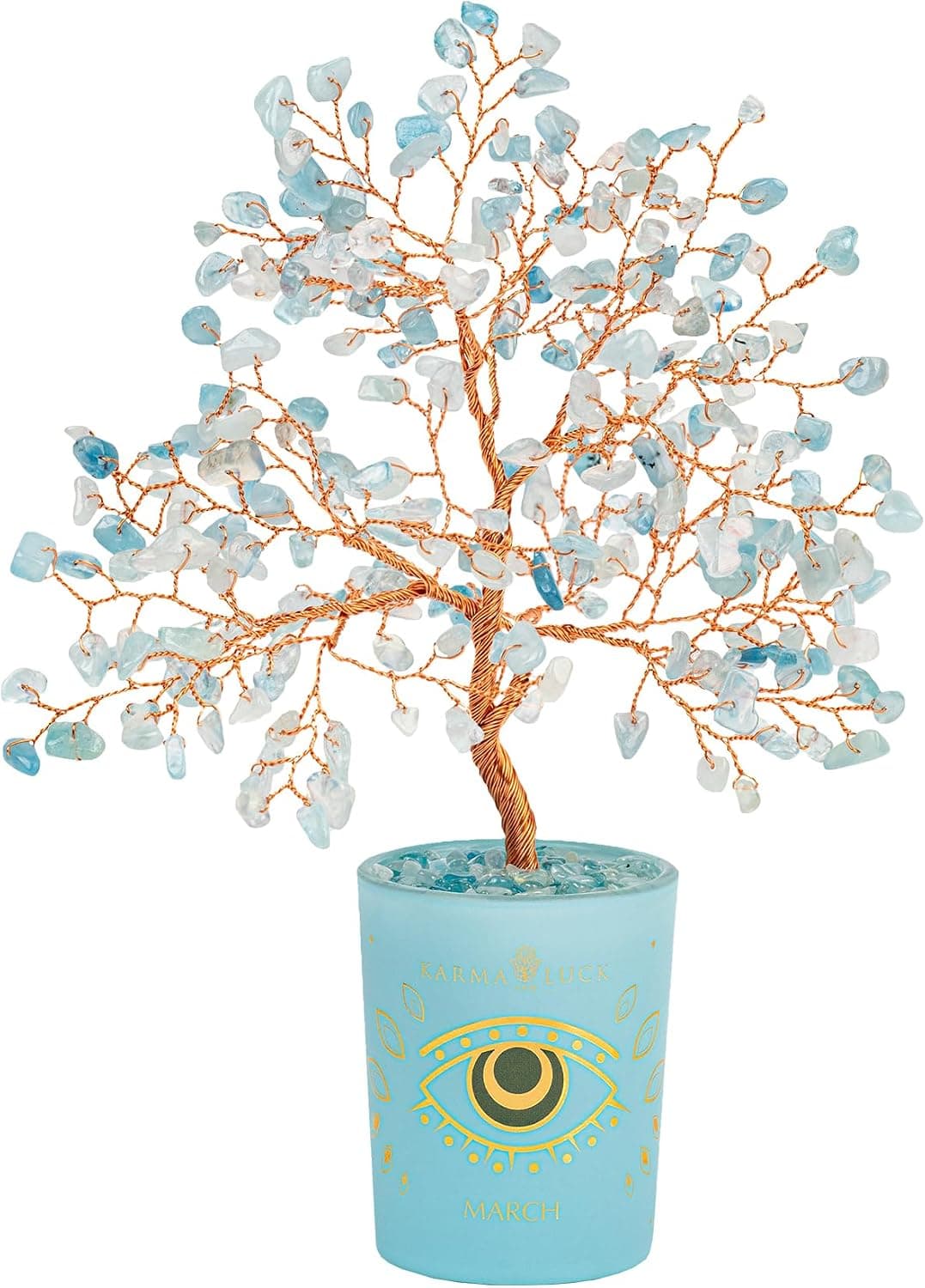
-29%Karma and Luck March Birthstone Crystal Tree of Life, Aquamarine Gemstone Fen...
 -29%
-29%Karma and Luck July Birthstone Crystal Tree of Life, Ruby Gemstone Feng Shui ...
 -29%
-29%Karma and Luck February Birthstone Crystal Tree of Life, Amethyst Gemstone Fe...
 -7%
-7%Woodstock Chimes Signature Collection, Crystal Tree of Life Chime, 19'' Decor...
As an Amazon Associate, we earn from qualifying purchases. We only recommend items our practitioners have personally tested.
Continue Your Journey
Explore these related guides to deepen your understanding:
Ready for Deeper Guidance?
Try our free I Ching reading for personalized wisdom, or explore our curated Feng Shui essentials.