When a space feels safe but strangely slow, earth is usually doing the talking.
Where Earth Shows Up Before It Is Named
A room can announce the earth element before anyone mentions feng shui. Look for the heavy oak table, the ceramic lamp with the matte cream shade, the wool rug that sits flat and quiet, and the low storage pieces that keep everything close to the floor. The feeling is not dramatic. It is containment.
That matters because people often mistake calm for health. A bedroom with a sand-colored headboard, brick-toned curtains, and square bedside tables may feel reassuring at first glance, but the real test is what it does to movement. Does it help the body settle, or does it make the whole room feel as if it has been packed into a box and taped shut?
I have stood in a north-facing bedroom with a clay-red duvet, a stone tray on the dresser, and two wide ceramic bowls that never moved. The owner said the room felt “safe,” then admitted she had stopped clearing the mail pile on the desk because she could not get herself to start. That is earth at work before it gets named: reassuring, yes, but also capable of slowing initiative if the setup becomes too dense.
In Chinese five-element thinking, Earth is not just a color palette. It mediates transition, holds form, and gives the rest of the system something stable to stand on. That is why a hallway, an entry, or a seasonal in-between week can tell you more about Earth than a shelf full of crystals ever will. For a broader map of the system, see the five-element framework.
When Grounding Turns Heavy
The problem is not Earth itself. The problem is Earth without movement. Once a space starts absorbing more than it releases, grounding stops functioning as support and starts acting like friction. The room still feels calm, but that calm now comes from suppression: fewer visual prompts, fewer transitions, fewer chances for the mind to shift state. Over time, that makes decisions linger, projects stall, and habits harden because nothing in the environment invites release.
That pattern shows up in people too. A dependable chart can look organized from the outside, but if Earth is overactive, the person may keep carrying responsibilities, filtering everyone else’s emotions, and resisting change long after the situation has shifted. They are composed. They are also slow to pivot. That is not laziness. It is excess containment, and it usually develops when someone has learned to equate steadiness with safety.
Psychology gives a clean explanation here. Predictable cues reduce uncertainty, and reduced uncertainty helps the nervous system settle. But when the cues are too dense, too repetitive, or too insulated, the system loses elasticity. The room says, stay. The habit says, stay. Eventually the person says, stay, even when staying is the wrong move. What looked like comfort has become a closed loop, where the environment keeps confirming the same response instead of widening the range of possible action.
That is why Earth-heavy spaces often use the same visual language: square furniture, low placement, muted warmth, and few sharp contrasts. Those cues create a slower visual tempo, which can be useful in a sleeping area or a recovery corner, but harmful in a workspace that needs response speed. A low, enclosed layout tells the body to conserve energy and reduce motion, which is useful only when rest is the actual goal. If you want to see how another element behaves when it is too active, compare this to how fire changes a room’s tempo.
One small office told the story perfectly. There was a taupe filing cabinet, a thick linen chair cushion, a terracotta planter, and a stone paperweight sitting dead center on the desk. The owner kept saying the desk felt professional, yet every task took longer than expected. The setup looked disciplined. The mechanism was inertia. The visual field kept signaling completion before work was actually complete, so starting felt awkward and finishing felt heavier than it should have.
The Mechanism: How Earth Stores, Supports, and Slows
Earth works through three jobs. It stores, it supports, and it slows. Store too little and the room feels exposed. Support too weakly and everything wobbles. Slow too much and momentum dies before it can become action. That is the whole mechanism in one sentence.
Stored Earth is useful when you need continuity. It is the sense that a room can keep a conversation, a routine, or a plan from scattering. You feel this in a ceramic vase with weight at the base, a bench with a solid frame, or a desk with a centered layout that keeps supplies near the core instead of sprayed around the edges. The object says, here is the boundary, and the mind relaxes because the boundary is legible.
Supportive Earth is the mediator in the cycle. It does not demand attention like fire, and it does not push like wood. It gives the other elements a landing pad. In practical terms, that means Earth can make a new habit stick, help a relationship feel more reliable, or give a transition period enough structure that people do not panic. In cultural terms, this is why Earth sits between phases rather than declaring itself as a final state.
Slowing Earth is the version people usually overuse by accident. It comes from dense materials, repeated forms, and low-centered placement when they are combined without enough lift or contrast. A room with brick, wool, terracotta, and dark beige can feel luxurious, but if every object is broad, low, and matte, the eye has nowhere to travel. The environment becomes absorbing instead of activating. For contrast, you can compare that effect with wood-led color and decor choices, which tend to create upward movement instead of containment.
That is the design side of the mechanism. Materiality matters more than symbol alone. A single crystal on a shelf is not enough if the rest of the room is airy, hard-edged, and visually restless. Conversely, a room can carry strong Earth without using obvious earth tones at all if the proportions are grounded, the textures are tactile, and the layout repeats calm forms with discipline.
Reading Balance, Excess, and Missing Earth
The clearest way to diagnose Earth is to stop asking what it symbolizes and start asking what it does. Does it stabilize change, or does it freeze it? Does it help someone trust a routine, or does it make them over-identify with caution? That shift from symbolism to function is where the reading gets better.
Balanced Earth feels reliable without feeling stuck. In a person, that looks like steadiness, follow-through, and the ability to hold other people’s emotions without losing one’s own center. In a room, it shows up as clear boundaries, grounded textures, and a calm visual field that still allows motion. You can leave the room and come back to it without feeling mentally cluttered.
Missing Earth looks different. The signs are usually poor containment, scattered priorities, weak routines, and difficulty trusting stable support. A bedroom may have too many light surfaces, too much visual interruption, and not enough grounding weight. A person in that environment may overthink because nothing around them is helping the mind settle into a reliable frame.
Excess Earth is easier to miss because it can look mature. The person is competent, composed, and dependable, yet they struggle to decide quickly or recover after disruption. The room mirrors that state with low furniture, closed storage, muted browns, and a sense that every object has already found its final place. Nothing is wrong. Nothing moves. That is the warning.
Seasonal timing matters too. Earth is strongest in transitions, not extremes. Late summer, the end of a project cycle, the few weeks after a move, and the stretch between one emotional chapter and the next all ask for Earth because these are containment periods. If you try to use more Fire or more Wood in those moments, you may get energy without integration. Earth keeps the system from splintering while it changes shape.
What Earth Changes in Work, Relationships, and Timing
In work, Earth improves follow-through because it lowers the friction around starting and finishing. A desk with a square mat, a ceramic pen cup, and two grounded task trays tells the brain what belongs where, which reduces decision fatigue. People call this “being organized,” but the mechanism is simpler: clear containment lowers uncertainty, so attention is less likely to scatter.
In relationships, Earth is the part that makes reliability feel real. Not romantic. Real. A couple with too little Earth may have chemistry but no rhythm. A couple with too much Earth may have loyalty but little elasticity. The right amount creates room for promises to hold, and that matters more than decorative symbolism because trust is built through repeated stable cues, not slogans.
Timing is where many readers get sloppy. Earth is useful when a situation needs to consolidate, digest, or stabilize. It is not the best choice when you need speed, expansion, or decisive motion. That is why an entryway, hallway, or landing zone often benefits from Earth qualities: those places are not meant to trap energy, only to help it arrive, pause, and move on without chaos.
One practical test is simple. If the space is for recovery, use more Earth. If it is for action, use less. A home office can handle a clay-colored lamp and a stone bowl if the rest of the room has enough visual lift. A bedroom can handle a wool throw and a square rug if the layout still leaves breathing room around the bed. Placement changes the result more than decoration does.
This is also where the I Ching connection becomes useful. Earth behaves like the part of a hexagram that makes a transformation hold its shape long enough to matter. A moving line can start a change, but without containment the change evaporates. Earth is the sentence that gives the verb a place to land.
Placing Earth Without Freezing the Room
Use Earth where you want steadiness, not everywhere you can fit a beige object. Start with one zone. In a bedroom, that may be the lower half of the room: a grounded rug, a wooden or ceramic bedside piece, and one muted accent rather than a field of soft brown everything. The goal is structure, not sediment.
Choose materials first. Stone, ceramic, clay, brick, terracotta, wool, unfinished wood, and matte finishes all add Earth because they change the way a room feels under the hand and in the eye. Dense materials help the body register support. Glossy or overly reflective surfaces do the opposite, because they keep the space visually active when you may want containment.
Then control placement. Keep the heaviest objects low and near the center when you want anchoring. Use squares and rectangles to signal order and practical boundaries. Repeat forms sparingly so the room feels coherent, but leave enough contrast that the eye can still travel. If everything is equally heavy, you have built a shelf, not a living space.
Color comes last. Soft yellows, clay reds, dusted browns, and muted warmth can help, but they work because they reinforce the material story, not because they are magical on their own. That is the design lesson people resist: symbol without structure is weak. Structure with the right symbol is strong.
So the real question is not whether you have Earth. The real question is whether it is doing the right job. If your room, chart, or routine needs containment, Earth should make things easier to hold. If it makes everything feel too settled, too low, or too slow, you do not need more of it. You need a better balance.
How do I know if a room has too much Earth?
Look for density without lift. Heavy furniture, muted colors, low placement, and repeated square forms can create a sense of stability, but if the room feels sticky or overcontained, Earth has crossed the line into inertia.
Can Earth help if I feel scattered?
Yes, because Earth reduces uncertainty by giving the mind clearer cues about where things belong. A grounded rug, a real storage system, and fewer visual interruptions often improve attention faster than decorative fixes.
What is the quickest way to add Earth without making a room dull?
Use one tactile material and one grounded shape, not a full theme. A ceramic lamp on a wooden console, or a wool runner under a centered bench, adds support without flattening the room’s energy.
Mei Chen
Traditionally informed guidance • Cross-referenced with classical Chinese source texts
Five Elements analysis based on traditional Wuxing (五行) theory from the Shujing (書經).
Practitioner-Selected Tools for This Topic
Items our team has tested and found effective for the principles discussed above. Individual results may vary.
 -29%
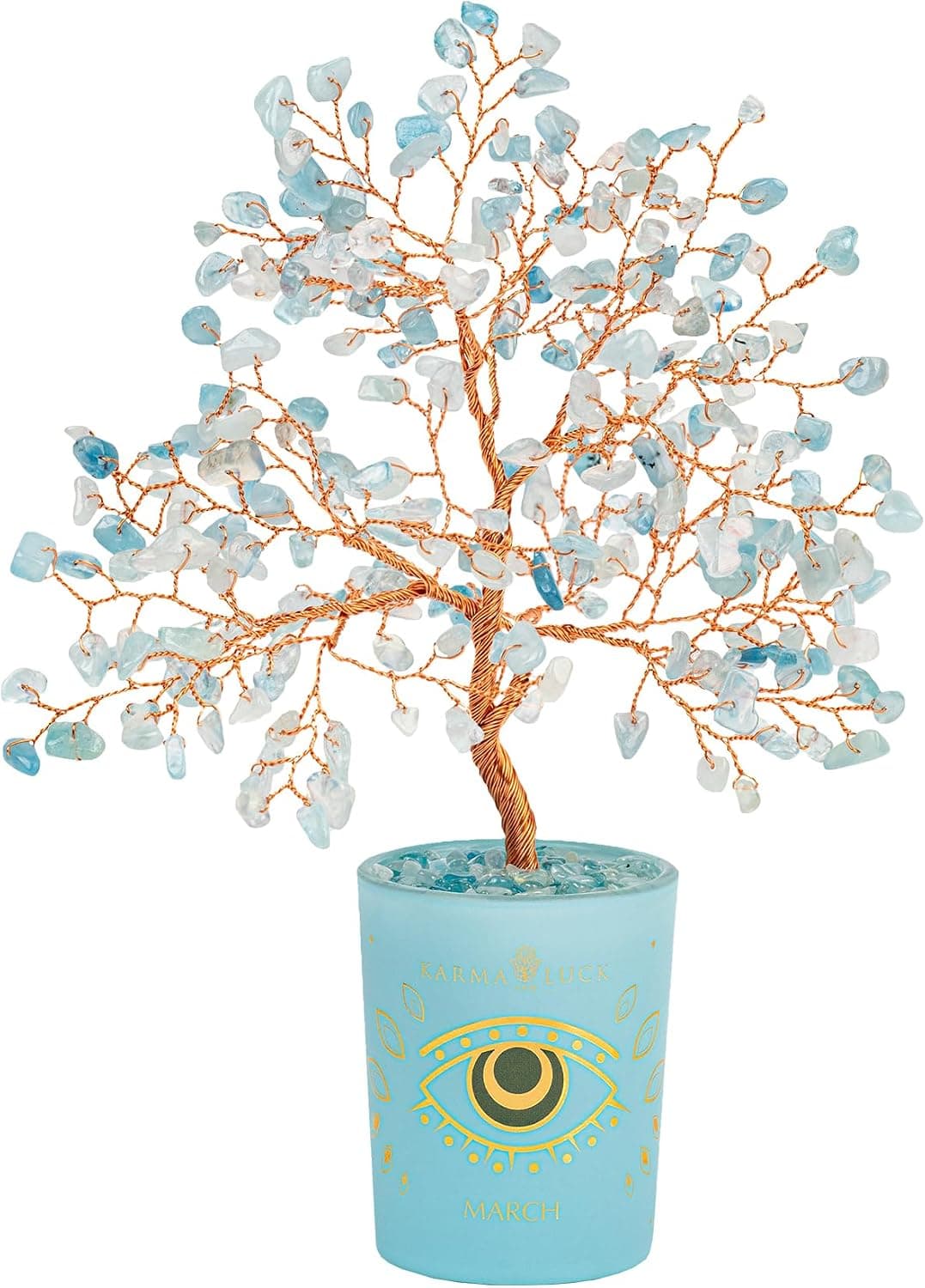
-29%Karma and Luck March Birthstone Crystal Tree of Life, Aquamarine Gemstone Fen...
 -29%
-29%Karma and Luck July Birthstone Crystal Tree of Life, Ruby Gemstone Feng Shui ...
 -29%
-29%Karma and Luck February Birthstone Crystal Tree of Life, Amethyst Gemstone Fe...
 -7%
-7%Woodstock Chimes Signature Collection, Crystal Tree of Life Chime, 19'' Decor...
As an Amazon Associate, we earn from qualifying purchases. We only recommend items our practitioners have personally tested.
Continue Your Journey
Explore these related guides to deepen your understanding:
Ready for Deeper Guidance?
Try our free I Ching reading for personalized wisdom, or explore our curated Feng Shui essentials.