Water helps a room change pace, but the wrong amount quietly pushes it toward drift, chill, and mental noise.
Why Water Became the Element of Correction
Water earns its place in feng shui because it changes a room over time. Not all at once. First the eye softens. Then the body settles. Then the mind either becomes clearer or begins to drift, depending on what the room already lacked.
That is why the water element is never just decoration. In classical Chinese thinking, it belongs to movement, depth, pause, and return. A still bowl, a dark blue wall, a mirror catching daylight, and a fountain all work through the same logic: they introduce the feeling of flow where the room has become fixed, hot, dry, or mentally tight.
Old practitioners did not treat water as a cute symbol. They watched what happened in real environments. A space near a river behaved differently from one on a windy ridge. A shaded room held a different emotional tone than a bright courtyard. The lesson was practical: energy changes with context, because people do.
That is also where the Western reader often gets misled. Water is not “calming” in every situation. In a bright south-facing living room, a little coolness may restore balance. In a damp basement office, the same intervention can make the room feel heavier, slower, and harder to trust. Context decides everything.
The relationship is best understood as proportion. Water reduces excessive heat, visual noise, and aggression, but it also weakens structure if you keep adding it after the room is already soft. That is the yin-yang mechanism in plain language: an element is useful when it restores balance, not when it becomes the new excess.
Five element theory makes this easier to read because each element has a job, and water’s job is not to dominate the room. It supports transition. It helps a space move from one state to another without snapping.
I've seen this difference in a south-facing living room with white lacquer furniture, a pale gray rug, and one black glass side table placed near the window. The room had looked stylish for months, but the owners kept saying it felt “on.” Not comfortable. On.
Once a deep blue ceramic lamp replaced a second glossy mirror, the change was not dramatic on day one. By the end of the second week, the room was still bright, but the brightness no longer bounced around like pinballs. That is how water often works: the effect accumulates.
How Water Changes Meaning as the Room Changes
The same water cue can help or hurt depending on season, light, and the surrounding elements. In winter, a cool palette may feel clean and clarifying. In summer, the same palette can feel emotionally useful because it reduces overstimulation. But in a dark room with poor airflow, cold colors and reflective surfaces can push the space toward stagnation instead of ease.
That is why I do not look at water in isolation. I look at its neighbors. Fire makes water meaningful by contrast, wood channels it, metal can refine it, and earth can contain it. Remove those relationships, and you are left with a cliché. Keep them, and the room starts to tell the truth.
There is a philosophical point here that Western readers usually appreciate once they see it. Water is relational. It does not say, “I am good.” It says, “What do I need to interact with so the room becomes proportionate?” That is a much more mature way to work with interior energy than collecting symbolic objects and hoping for the best.
In practice, this means a water feature in a room with too much fire can be useful because it lowers the temperature of the atmosphere, both visually and behaviorally. But if the same room already lacks warmth, texture, and human activity, more water can flatten it. The effect is gradual. People often blame mood or sleep before they blame the room.
Sound plays a large role in the timeline. A light fountain can blur harsh street noise and help the nervous system stop bracing for the next interruption. Continuous dripping, though, does the opposite after a while. It keeps attention hooked. The body hears it as unfinished business.
Fire element balance matters here because water and fire are not enemies in the cartoon sense; they are regulators of pace. A room with too much heat can become impatient. Too much water can become uncommitted. The art is keeping both in conversation.
Now for a point many people resist: a mirror is not “water” in the literal sense, but it behaves like one visually. It amplifies brightness, doubles motion, and makes a space feel more fluid. That can help in a cramped entry, but in a bedroom near a noisy street it can intensify alertness, because the mind keeps registering movement and light even when the body wants sleep.
What Water Does in a Modern Reading
In a contemporary five-elements reading, water often shows up as the corrective for rigidity. A schedule that is too fixed, a room that is too dry, a relationship dynamic that has become all command and no listening—these are all “low water” conditions in practical terms. The body becomes less adaptive. The mind stops pausing before it reacts.
That is why water can support cognitive flexibility. Calm movement gives the brain a cue that not every situation requires force. A person sitting in a room with balanced, low-level flow tends to soften their shoulders, scan less aggressively, and recover faster after stress. You can observe this. People do not always name it, but their posture says plenty.
Deficiency and excess look different, and the timeline matters. Too little water over time can feel like dryness, overcontrol, and an inability to recover. Too much water over time can feel like mental diffusion, emotional sensitivity, and passive drifting. The room may still look beautiful. It may even look expensive. But the behavior it produces can be wrong.
That is where environmental science quietly supports the old doctrine. Light, ventilation, humidity, and thermal comfort shape how a room is experienced. A water-like intervention in a poorly ventilated room can increase dampness and lower comfort. A small water cue in a bright, airy room, however, can create relief without harming the environment. The body knows the difference before the intellect does.
Because of that, I read water as a time-based adjustment. What the room needs at the start may not be what it needs after a month. A shiny black tray on a shelf may look elegant in week one and emotionally heavy by week six if nothing else in the room counters it. A fountain may feel soothing at first, then tiring if the sound never stops.
Chinese elements are practical when you stop treating them as labels and start treating them as behavioral forces. Water affects pace, and pace affects decisions. That is the chain.
Where Water Supports a Room, and Where It Overwhelms It
A bright south-facing living room is one of the clearest places where water can help. If the room gets strong afternoon sun, uses warm paint, and contains lots of hard reflective surfaces, the atmosphere can become visually restless. A measured water cue—one dark blue object, a glass vase with simple lines, or a small moving feature placed thoughtfully—can soften the intensity without turning the room cold.
But notice the words “measured” and “thoughtfully.” Water is not a filling material. If you add too much, you get a room that feels slippery. More blue, more mirrors, more glass, more shine, more sound. Soon the space stops supporting attention and starts scattering it.
A home office is the most common place where people overdo it. They want calm, so they add a fountain, reflective desk accessories, a dark rug, and a blue accent wall. Then they wonder why focus gets worse. The mechanism is simple: too many water cues can increase mental diffusion, especially in a room that already lacks a strong visual anchor.
There is a specific scene I remember well: a small study with one north window, a black desk, a silver lamp, and a framed photograph behind glass on the wall opposite the chair. The room had become mentally loose. Tasks took longer. Messages were answered with delay. The person said the room felt “peaceful,” but the work output said otherwise.
We removed the mirror-like frame, changed the lamp shade from chrome to linen, and added a single wooden bookend for contrast. The room did not become less elegant. It became usable. That shift matters more than style.
Wood element often helps here because wood gives water somewhere to move. Without that channel, water can pool psychologically and create indecision. With it, the room gains direction.
Bedrooms need even more caution. A bedroom near a noisy street sometimes tempts people toward reflective decor because they think “more mirror” means “more space.” But if the mirror catches headlights or passing movement, sleep worsens. The room is no longer resting; it is processing.
Aquariums and fountains deserve the same respect. They add motion, sound, and humidity. In a stagnant room, that can be valuable. In a small apartment with poor ventilation, it can tip the whole environment toward dampness. The question is not whether water is lucky. The question is whether the room can metabolize it.
Using Water as a Corrective Force
When a chart or room has too much fire, water is often the corrective force that lowers the emotional temperature. That does not mean you cover everything in blue and call it balance. It means you identify where the room is overactive and give it a cue for cooling, pausing, and recalibration.
Use it like an adjustment knob, not a theme. One dark object can stabilize a bright room. A shallow water bowl in the right location can calm a harsh entry. A reflective surface can increase light in a dim hall. Small changes are often enough because the system responds over time, not instantly.
That timeline is important. The first day tells you almost nothing. By day three, the room may feel more settled. By week two, you see behavior: less pacing, fewer interruptions, more tolerance for stillness, or in the wrong setup, more fogginess and delay. The room teaches you what it is becoming.
North-sector placements often support water because the direction naturally resonates with it in feng shui practice. But even there, the rest of the room matters. If the north side is already cold, dark, and underused, adding more water can deepen the chill. If it is balanced by light, airflow, and some warmth elsewhere, it can become a useful anchor.
This is where people often expect a mystical answer and get a practical one instead. The environment decides the result. A black vase in a bright, airy north corner can feel elegant and supportive. The same vase in a damp, cramped corner beside a laundry basket can just look like a bad idea. No symbolism can override that.
Earth element is the usual counterweight when water becomes too diffuse, because earth creates containment. Without some structure nearby, water spreads. With enough structure, water informs rather than floods.
Direction, Climate, and Daily Behavior
Direction changes the effect because direction changes light, heat, and use. A north room often suits water better than a south room if the north room is already functional and not underlit. A south room may need only a small water cue to avoid overheating the senses. A west room can become visually sharp, so a touch of water can soften the finish. None of this is abstract once you start observing how people actually use the room.
Climate matters just as much. In a dry inland climate, water-like decor can feel supportive because it adds emotional coolness and visual relief. In a humid coastal climate, the same objects can be less helpful if they contribute to a sense of heaviness. The body does not care about the theory first. It reacts to moisture, temperature, and light.
Daily behavior is the final test. If a room encourages shallow breathing, longer hesitation, or constant phone checking, it may already be too watery or too diffuse. If it encourages rushing, irritability, and a refusal to pause, it may need more water influence. The room is not just a picture. It is a habit machine.
Here is the simplest method I use when reading a space over time. First, identify the room’s dominant condition: hot, dry, stuck, noisy, heavy, or scattered. Second, ask what water would change: temperature, pace, sound, light, or visual density. Third, place the smallest intervention that changes the condition without introducing a new problem. This is how you avoid décor theater.
For a bedroom, that might mean a deep navy throw instead of a mirror. For an office, it may mean one glass object and better ventilation rather than a fountain. For a living room, it may mean lowering the visual glare with a dark ceramic piece and allowing the eye to rest. The correct move is the one that changes behavior gently and then holds that change over time.
wealth activation with the five elements can involve water, but only when water supports movement without draining stability. That distinction matters. Money energy likes circulation, but not leakage.
Common Mistakes That Change the Effect Over Time
The first mistake is treating mirrors as harmless water substitutes. They are not harmless. They amplify what they face. A mirror across from clutter doubles the clutter. A mirror across from a restless doorway doubles the movement. In a bedroom, that can keep the nervous system lightly engaged all night long.
The second mistake is assuming any fountain will calm a room. Continuous sound can soothe when it masks traffic or a noisy neighbor, but it can also become a low-level irritant if the room is already quiet. I have seen tiny tabletop fountains become the most annoying object in the house by week three because no one wanted to admit the sound had turned from soft to repetitive.
The third mistake is layering too many cool cues at once. Blue walls, black furniture, glossy finishes, glass surfaces, and a shaded corner can create a water-heavy atmosphere so complete that people start feeling mentally cloudy. Not sleepy. Cloudy. That is a different problem.
One more thing people miss: time changes everything. A room that felt fresh on installation can feel oppressive after a season because the eye adapts, the body settles, and then the excess becomes visible. Feng shui is not static décor advice. It is behavioral observation across time.
So if you want to use water well, start small, watch the room for two weeks, and notice what shifts in your own habits. Do you linger more productively, or do you drift? Do you sleep deeper, or do you stay alert? Do conversations soften, or do they thin out? Those answers matter more than the object itself.
The best water cue is the one that restores proportion. Not drama. Not symbolism for its own sake. Proportion.
wu xing gives the larger framework, but the room gives the verdict.
FAQ
How do I know if my room needs more water?
Look for heat, visual harshness, impatience, or a room that feels dry and overly fixed. If the space has no softness and no sense of transition, a small water cue may help. Start with one adjustment, then observe behavior for at least two weeks.
Can too much water make a room worse?
Absolutely. Surprising as it sounds, excess water can create mental drift, emotional sensitivity, and a damp or chilly atmosphere, especially in small or poorly ventilated rooms. The effect often shows up gradually, not on day one.
Are fountains better than mirrors for water balance?
Not automatically. A fountain adds motion, sound, and sometimes humidity, while a mirror adds brightness and visual expansion. One may help where the other harms, depending on whether the room needs energy, light, calm, or containment.
Mei Chen
Traditionally informed guidance • Cross-referenced with classical Chinese source texts
Five Elements analysis based on traditional Wuxing (五行) theory from the Shujing (書經).
Practitioner-Selected Tools for This Topic
Items our team has tested and found effective for the principles discussed above. Individual results may vary.
 -29%
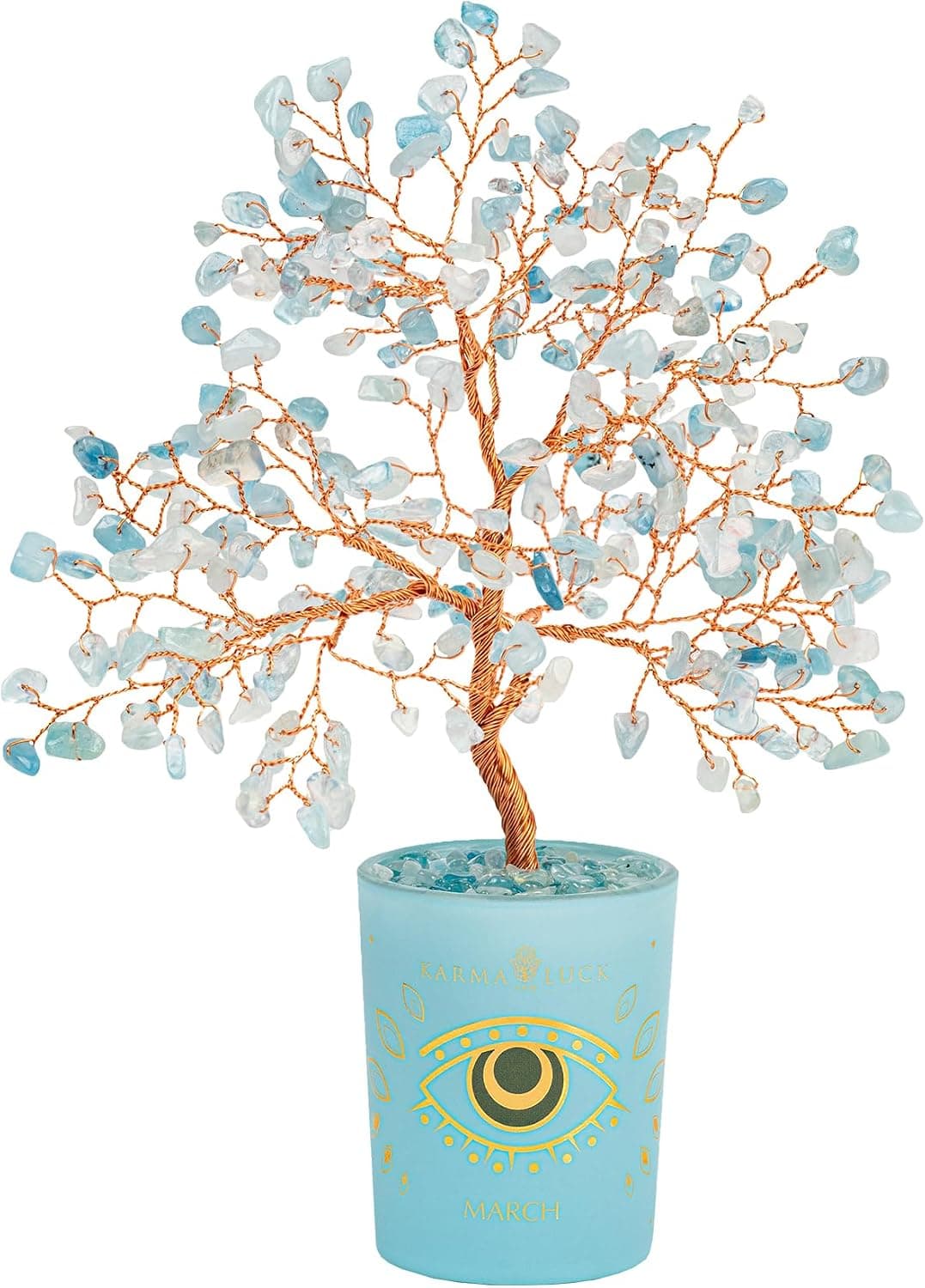
-29%Karma and Luck March Birthstone Crystal Tree of Life, Aquamarine Gemstone Fen...
 -29%
-29%Karma and Luck July Birthstone Crystal Tree of Life, Ruby Gemstone Feng Shui ...
 -29%
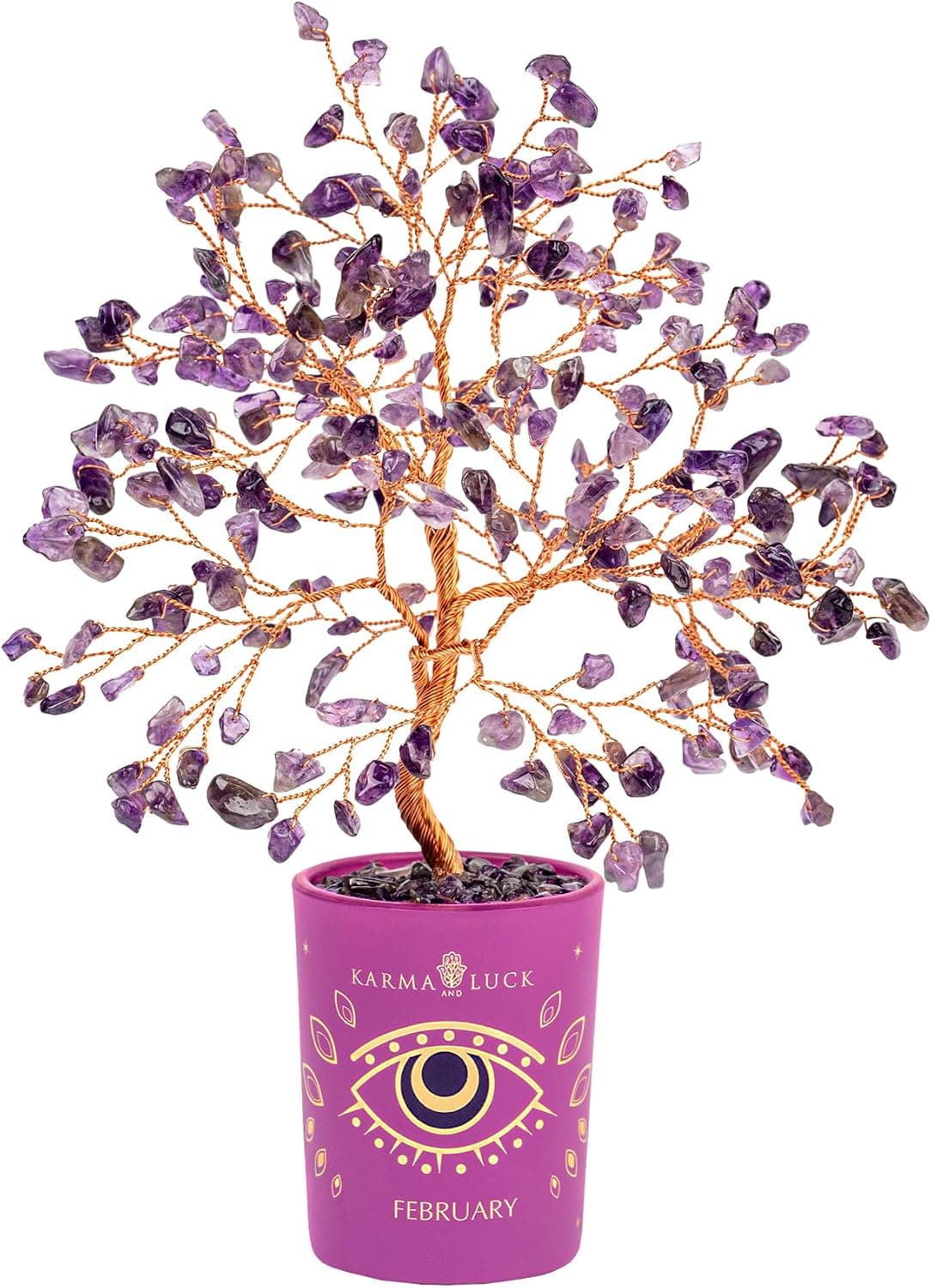
-29%Karma and Luck February Birthstone Crystal Tree of Life, Amethyst Gemstone Fe...
 -7%
-7%Woodstock Chimes Signature Collection, Crystal Tree of Life Chime, 19'' Decor...
As an Amazon Associate, we earn from qualifying purchases. We only recommend items our practitioners have personally tested.
Continue Your Journey
Explore these related guides to deepen your understanding:
Ready for Deeper Guidance?
Try our free I Ching reading for personalized wisdom, or explore our curated Feng Shui essentials.