Tall plants and bamboo decor do not fix a room that blocks movement, light, and routine.
Why a room can look wood-friendly and still feel off
I once saw a renter add tall plants, green cushions, and a bamboo tray to a small apartment, then wonder why the place still felt restless. The answer was plain: the desk faced a blank wall, open shelving exposed every folder, and the only path from the door to the window cut straight through the workspace.
That is the failure mode people miss. They treat the wood element as if it were a shopping list, then act surprised when the room does not behave differently.
What actually changed in that apartment was not the mood of the decor. It was the pattern of movement, sightlines, and effort that the room demanded every time the person entered it.
When a space asks for constant micro-decisions, the nervous system stays on alert. That is not mystical language; it is a practical description of how cluttered, interrupted environments increase cognitive load.
For a useful comparison, the Chinese elements framework treats each element as a pattern, not a prop.
What people usually mean, and where that meaning comes from
In classical terms, wood points to growth, upward movement, initiative, and springlike expansion. In practice, that means direction more than decoration, and momentum more than color.
The modern internet version flattens that into green objects, plants, and anything vaguely natural. Some of that is fine, but only if the room is already capable of supporting the behavior you want.
Philosophically, this makes sense. A principle is not the same thing as an object, and a symbol only works when the environment can carry the symbol without contradiction.
So a room can be full of wood tones and still fail the test if it blocks motion, scatters attention, or isolates the body from daylight. I have seen bedrooms that looked carefully styled but felt heavy because the morning light came in weakly from a north-facing window and the dresser top held six unrelated items.
That bedroom had oak furniture, linen bedding, and a pale green throw. It also had a laundry basket in the corner, an open closet, and a bed position that forced the first step out of sleep to land directly into visual clutter.
For color and material choices that support this pattern without overloading it, these wood-friendly decor ideas are a useful reference point.
When the environment pushes growth one way and the routine pulls another
The strongest use of the wood element is not decorative; it is behavioral. It should make starting easier, moving easier, and orienting easier.
That is where behavioral science lines up with classical practice. Environments cue habits by making some actions obvious and others annoying, so a room can quietly train procrastination or momentum.
In the small apartment I mentioned, the desk sat against a wall, which sounds orderly, but the chair also blocked the main walking route. Every trip to the kettle or bathroom required skirting the chair, shifting papers, and rechecking what had been left open.
That is a bad lesson for the body. A blocked path can prime avoidance, because the brain begins to register even simple tasks as slightly costly.
Wood energy, if you want to use the old language, should reduce friction around initiation. It should help a room behave like spring: open, moving, and ready to unfold.
It should not feel like a greenhouse crammed with pots and symbolism.
Here is the surprise for many readers: more plant matter can make a room feel less alive if the room is already overburdened. Too much visual signal, especially in a small apartment, can turn intention into noise.
Why the same advice works in one home and fails in another
The difference is usually not belief. It is constraint.
A large south-facing living room with generous daylight can carry bold greens, upright forms, and a few open shelves without feeling busy. A narrow bedroom with one dim window cannot.
Open shelving is a good example. In a spacious studio, it can support display and breathing room. In a cramped space, it often becomes a public record of unfinished errands.
That unfinished feeling matters. Spaces that appear unresolved make the brain keep tracking what is still exposed, which raises background stress without announcing itself as stress.
This is where yin-yang balance becomes practical rather than poetic. Too much openness can scatter attention; too much containment can deaden a room and make action feel harder to begin.
So the question is not, “How do I add more wood?” The better question is, “What kind of growth does this room actually support?”
A corner with one healthy plant, a closed storage cabinet, and a clear walking path may do more for a room than six decorative items ever will.
What the evidence can support, and what stays interpretive
We can say with confidence that layout affects behavior. We can also say that daylight, clutter, and blocked circulation affect how people feel in a room.
What we cannot prove in a lab is every symbolic claim attached to wood element theory. Classical texts give a coherent language for growth, direction, and vitality, but modern readers should be honest about where interpretation begins.
That honesty matters. If someone insists that one green lamp will transform a room regardless of layout, the claim outruns the evidence and usually disappoints the user.
Still, dismissing the tradition entirely would miss something real. Traditional systems often preserve a pattern-based understanding of environment long before modern design language was available.
The practical takeaway is simple: use the tradition as a diagnostic lens, not a magic trick.
That means asking whether the room supports initiation, whether light helps orientation, and whether storage calms the eye instead of scattering it. Those are testable questions, and they often tell you more than a shopping cart full of decor.
For readers who want the larger framework behind that diagnostic approach, five element theory in feng shui is the broader map.
And if you want the classical vocabulary behind the system itself, wu xing explains the moving relationships more clearly than most pop summaries.
How to apply it without forcing the room into one mode
Start by looking at the route from the door to the most used object in the room. If that path is awkward, the room is already telling you where the problem lives.
Then check the desk or bed. A desk that stares into a wall can work if the rest of the room is open and the chair does not interrupt circulation; otherwise it tends to trap attention. A bed that sits in a dim corner under visual clutter can feel heavy even when the fabrics are carefully chosen.
Next, reduce symbolic pressure. Use a few muted green or brown accents, not a theme park of plants, bamboo, and forest imagery. Natural textures help when they soften visual harshness, but they should not crowd the eye.
Closed storage usually beats open storage in a tight room. Not because hidden things are spiritually better, but because visible chaos keeps asking for processing.
Finally, test the room for start-of-day momentum. Morning light matters because it sharpens orientation and gives the body a clearer cue to begin.
If the room still feels stuck, do not blame the element. Check the path, the light, and the amount of unfinished visual business first.
A good wood adjustment should make the room easier to enter, easier to work in, and easier to leave without mental residue. That is a stronger result than “looking natural,” and it is the one that tends to hold.
Applied well, the wood element is not a style. It is a way of helping a room support growth without overpromising what decor can do.
FAQ
Can I use the wood element in a rental?
Absolutely, and rental constraints often make the diagnosis clearer. You cannot always paint or replace furniture, but you can change paths, close storage, improve light, and reduce visual noise.
Does more greenery always help?
Not in a small or overstimulating room. A single healthy plant can support the mood, while too many plants can create maintenance pressure and visual crowding.
What if my room already has wood furniture?
That does not guarantee the room is balanced. A bedroom with oak furniture, poor morning light, and exposed clutter can still feel drained because the room’s behavior is fighting the symbolism.
Is this tradition only symbolic?
Surprising to some readers, no single answer covers it. The symbolic layer is interpretive, but the layout effects are concrete: people move differently, start tasks differently, and notice stress differently depending on how the space is arranged.
For a broader wealth-related application of the same five-element logic, this wealth activation guide shows how the same principles change when the goal changes.
Mei Chen
Traditionally informed guidance • Cross-referenced with classical Chinese source texts
Five Elements analysis based on traditional Wuxing (五行) theory from the Shujing (書經).
Practitioner-Selected Tools for This Topic
Items our team has tested and found effective for the principles discussed above. Individual results may vary.
 -29%
-29%Karma and Luck March Birthstone Crystal Tree of Life, Aquamarine Gemstone Fen...
 -29%
-29%Karma and Luck July Birthstone Crystal Tree of Life, Ruby Gemstone Feng Shui ...
 -29%
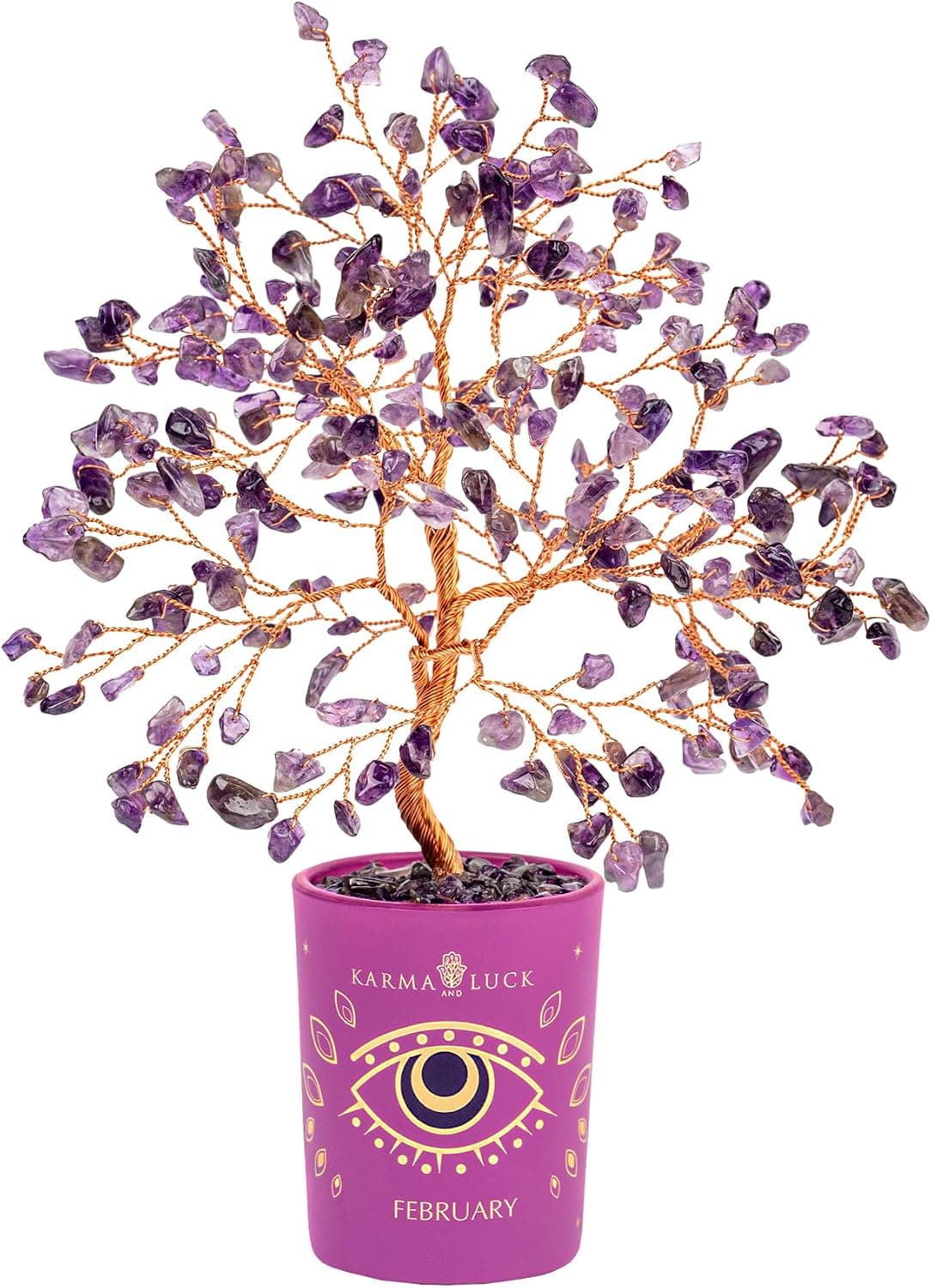
-29%Karma and Luck February Birthstone Crystal Tree of Life, Amethyst Gemstone Fe...
 -7%
-7%Woodstock Chimes Signature Collection, Crystal Tree of Life Chime, 19'' Decor...
As an Amazon Associate, we earn from qualifying purchases. We only recommend items our practitioners have personally tested.
Continue Your Journey
Explore these related guides to deepen your understanding:
Ready for Deeper Guidance?
Try our free I Ching reading for personalized wisdom, or explore our curated Feng Shui essentials.