Floor changes can cancel a careful ben-ming-nian setup before the red string even settles.
The Hidden Truth About ben-ming-nian-2026-zodiac-year-remedies
A person follows every familiar move — red bracelet, careful clothing choices, a tidy altar shelf — then walks into a split-level house and feels the year lurch anyway. The problem usually isn't the remedy itself. It's the floor under it.
Split-level homes create a break in qi flow that most advice ignores. A half-flight down to the family room, three steps up to the kitchen, then another shallow rise to a narrow landing: that stair pattern keeps changing the body's sense of arrival, so the year never fully settles. I've seen this in a house where a black console table sat exactly opposite the front door, the hallway was painted cream, and the owner kept the red protection items on a low shelf beside the first stair. Sleep got lighter, arguments came faster, and the person blamed the wrong layer of the system.
The mechanism is simple once you watch it step by step. First, the front door receives the year's incoming pressure. Then the stairs split that pressure into vertical jumps, which makes the home feel restless even when the rooms look calm. After that, the remedy gets placed where the eye can see it instead of where the movement actually breaks, so the cure sits on top while the disturbance keeps running underneath. That is why a well-meaning setup can feel flat by Thursday.
Common advice misses the floor line, and floor line matters because the body tracks changes faster than the mind does. A red knot on a wrist may help a person feel anchored, but if the bedroom is one level above the entrance and the desk sits on the landing where foot traffic cuts across from left to right, the nervous system keeps receiving small alerts. Small alerts add up. They become a mood, then a habit, then a season that feels oddly jagged.
That is the first correction: treat the split as the event, not the decoration. A remedy works best when it meets the point where energy changes speed, which may be the stair turn, the landing corner, or the first flat surface after the rise. Not the prettiest spot. The functional one.
For a deeper map of how a home gets segmented, look at the L-shaped apartment problem that quietly breaks feng shui. The same logic applies here: a home can look complete while its movement pattern keeps dividing attention into fragments.
One sentence matters more than ten charms: the home must carry the remedy through the transition, not merely display it at the destination.
Where the Remedy Fails in a Split-Level House
Start with the front threshold. If the entry opens directly onto a stair run, the year rushes upward before it can gather. In practical terms, that means the first landing becomes the real gate, because that's where the house finally pauses. Put the stabilizing object there, not in a decorative bowl near the door where shoes, mail, and keys keep knocking it sideways.
Now look at the lower room. A den sunken two steps below the main hall often behaves like a catch basin. Good for gathering. Bad for carrying a volatile year without adjustment. The fix is not to flood it with symbols. It is to reduce visual noise so the room stops swallowing movement: one grounded object, one clear surface, no cluttered corners behind the sofa.
On the upper level, the issue changes. A kitchen or bedroom that sits above the entrance can amplify upward pressure, especially when the stair rail points straight at the bed or stove. I once stood in a narrow upstairs bedroom with a blue quilt, a mirrored wardrobe, and a white ceramic lamp on the right side table; the owner had placed a red charm on the headboard because it seemed correct. The room still felt exposed because the mirror reflected the stair opening every time the door moved. Once the mirror was turned, the room quieted within days.
Here is the part people dislike: the floor plan can overrule the object's symbolism. A lucky item in the wrong movement zone becomes background decoration. A plain object at the break point can do more because it interrupts the force path itself. That feels less magical, and more accurate.
For a broader system view, compare the placement logic with the alcove advantage that changes a front door fast. Entry geometry shapes what enters next, and split-level homes exaggerate that fact.
Then there is the staircase itself, which acts like a metronome. Steep risers make the year feel hurried; shallow landings create hesitation. Neither is automatically bad, but both need attention when the birth-year cycle is already sensitive. If you have ever noticed your voice rising halfway up the stairs, you already know the house is doing more than holding furniture.
Use that awareness to place the actual remedy where the movement shifts. A brass object on the landing table, a heavy ceramic bowl near the top of the stairs, or a disciplined red accent in the room that receives the most crossing traffic can work better than scattering tiny cures throughout the house. Choose one anchor point and let it take the load.
Mechanism First: Input, Break, Response, Output
The input is the year itself: a cyclical pressure that asks for containment. The break is the split level, because each change in elevation resets attention and makes continuity harder to hold. The response is often overcorrection — too many cures, too many red objects, too much symbolic noise — because people sense instability and try to cover it rather than shape it.
That overcorrection creates the output nobody wants. The house starts to feel busy without feeling supported. People sleep in shorter stretches, forget small tasks, and pick fights over nothing dramatic: a glass left on the wrong counter, a door slammed near the stairs, a message answered too late. The pattern looks psychological, and partly it is; yet the geometry is feeding the psychology every day.
Here's the mechanism in plain terms. Qi enters, meets a vertical interruption, speeds up or stalls, then settles in the first level area available. If the first level area is chaotic, the system carries that chaos forward. If the first level area is calm and weighted, the system has something to lean on. That is why two homes can both use the same remedy and get opposite results.
Because the problem is mechanical, the correction should be mechanical too. Weight the transition zone. Clear the line of travel. Keep the remedy visible where the body notices it in motion, not hidden in a corner where it only satisfies the eye. The eye wants ornament. The home wants leverage.
A quick comparison helps. Traditional advice often treats the year like a mood to manage. Split-level reality treats it like water moving through a pipe with one kink in the middle. You do not fix that with perfume on the sink. You straighten the pipe, then decide where the water should rest.
For people who want the broader annual framework, 2026 flying stars need different remedies room by room gives the yearly pattern, but this article is narrower: what happens when those remedies have to cross a level change before they can work.
And yes, this is why some homes feel off even after every textbook placement was followed. The textbook assumes flat circulation. Your house may not be flat.
Practical Adjustments That Respect the Floor Line
Begin with one measurement: where does the house first pause after the entrance? In many split-level layouts, that pause is the lower landing or the upper hall, not the front mat. Place the year's stabilizing object there and leave it alone for three weeks. Not because three weeks is mystical. Because you need enough time to see whether the household rhythm changes before you start moving things again.
If the stair turns left into a narrow passage, soften that corner with a solid object rather than a shiny one. Matte ceramic, wood with weight, or a closed basket for mail can absorb the feeling of interruption. If the stairs open straight toward a bedroom door, keep the bedroom threshold spare and keep the bed's path free of dangling clutter. The body reads these transitions instantly.
Do not overfeed the room with symbolic color. A single red accent can steady the year; five red accents can make the space feel noisy. That mistake is common because people think more cures mean more protection. More often, it just creates visual static. The home begins to buzz, and nobody sleeps deeply.
In a family room sunken below the kitchen, I like one dense point of weight near the side that receives the most traffic from the stairs. A low, dark table lamp. A covered box. A stone object with a clean face. These do not shout. They hold. And holding is the whole job here.
For people working with personal symbolism, the placement of a bracelet or talisman matters less than where the body enters and exits its main pressure zones. If you wear protection on the wrist, fine, but pair it with a serious treatment of the stair landing. Otherwise the symbol rides along while the house keeps slipping sideways.
Need help connecting the object's role to house flow? which hand wears a feng shui bracelet matters more than you'd expect covers the personal side of the equation, while the building still needs its own correction.
One more thing: do not place fragile remedies on the stair's edge. A low shelf with a trailing tassel may look elegant, but the constant draft and movement will keep reminding everyone that something delicate might fall. That tiny fear changes how people walk.
That is the hidden mechanism. Not superstition. Feedback.
When a room is already under strain, the wrong object position creates friction you can hear: a shoe dragged on the step, a drawer left open, a lamp cord bent at the landing, a cat pausing at the turn as if it hit a wall you cannot see. These details look minor until they repeat every day.
Split-level homes ask for fewer symbols and sharper placement. Handle the break point, and the year begins to behave. Ignore it, and the cure keeps missing the current.
For an adjacent method that helps you identify where these breaks sit, see how to map energy in your home without overthinking it. The map becomes useful only when you notice the change in elevation.
Mistakes That Make the Year Feel Worse
People often put the remedy in the prettiest spot, then wonder why nothing shifts. Pretty is not the same as effective. In a split-level home, the prettiest spot is often too far from the actual break, so the object ends up decorating a quiet area while the disruptive circulation continues elsewhere. That leads to fatigue that is hard to name.
Another familiar error: scattering small cures across every level. It feels thorough because the house is being covered from top to bottom, but the result is diluted attention. The year needs one strong anchor and one clear route, not a trail of fragments. Fragmented remedies can even produce relationship tension because everyone in the house starts interpreting each object differently.
A third problem shows up in bedrooms above the entry. The owner sleeps there because it seems protected, but the stair line below keeps pulling at the room. Nights become light, dreams become busy, and mornings start with the odd feeling that the body never fully sat down. That is not imaginary. It's a circulation issue.
Open staircases create one more trap. People add plants or wind chimes near the opening, assuming movement will be softened by more movement. Usually the opposite happens. The home becomes busy at the exact point where it needed to settle, and the remedy loses its shape.
Then there is the object itself. A cracked charm, a dusty red ribbon, a faded paper talisman tucked behind a photo frame — all of these suggest the year is being managed on autopilot. That can matter more than believers like to admit. Neglect communicates.
For the wealth side of misplaced intention, the threshold problem behind wealth corner mistakes shows how an apparently small placement error leaks into money habits. The same principle works here: a system that keeps being interrupted will start acting interrupted.
What Actually Works in a Split-Level Ben Ming Nian Year
Choose one level change and treat it like a checkpoint. If the lower landing catches all the traffic, anchor there. If the upstairs hall receives the day's last movement, anchor there instead. The goal is to give the year's pressure a place to sit before it enters the rooms where people sleep, argue, and work.
Use weight, clarity, and restraint. Weight prevents scatter. Clarity prevents confusion. Restraint keeps the remedy from competing with the architecture. That trio does more than a basket of lucky objects ever will.
Then watch behavior. A good adjustment reduces small collisions: fewer abandoned mugs on the stair edge, fewer irritated exchanges in the doorway, fewer nights when someone wakes at 3:10 and cannot explain why. Those are the real metrics. Not whether the item looks auspicious in a photo.
One sentence, because it matters: the house tells the truth through motion.
That truth becomes obvious in homes with split circulation. A room with a blue rug, a narrow oak bookshelf, and a single lamp near the second landing may feel peaceful after the correction because the eye finally has a resting point. The same room without that anchor can feel like it never fully arrives. Arrival is the missing piece.
If you want to extend the logic to the full house, the annual cure map matters, but so does the building's skeleton. A flat-plan apartment and a split-level house need different handling even when the calendar is identical. That is where most generic advice goes stale.
And yes, sometimes the right move is simpler than people expect. Move the remedy one step closer to the stair turn. Remove the mirror that points at the landing. Replace a light, decorative container with something that has real mass. Then stop fiddling for a while.
What changes first is rarely dramatic. A hallway goes quieter. A stair no longer creaks at the exact same moment every evening. Someone stops glancing toward the lower room for no clear reason. Small shifts, but they stack.
For a broader reading practice that helps you track those shifts, changing lines are where the I Ching actually speaks offers a useful parallel: look at the transition, not only the endpoint.
That is the place to work. Not the symbol alone. Not the calendar alone. The crossing itself.
FAQ
Is conventional ben-ming-nian-2026-zodiac-year-remedies advice reliable?
Often not in a split-level home. The advice usually assumes a more even floor plan, so the remedy is placed where it looks right instead of where the circulation actually breaks. If your house has stairs, landings, or sunken zones, you need to think in movement patterns, not slogans.
Should I put the remedy near the front door or upstairs bedroom?
Start where the house first pauses after the entrance. That may be the landing, the hallway turn, or the first flat surface after the stairs. If the bedroom is where the day ends, it may also need its own quieter adjustment, but the first checkpoint matters most.
Can I use several remedies at once if the house feels unsettled?
You can, but that usually creates visual noise. One grounded anchor at the transition point often works better than a cluster of small symbols scattered across levels. Surprising as it sounds, less can feel safer to the nervous system than a room full of reminders.
How do I know the placement is wrong?
Watch the household, not the object. If people keep brushing past it, if shoes pile up beside it, or if the same corner stays tense no matter how neat it looks, the placement is off. The house will signal the error through repeated little annoyances before it becomes obvious in larger patterns.
Do I need to change the whole house for one troubled year?
No. Start with the level change that carries the most traffic and the rooms that receive that traffic. Once that break point settles, the rest of the layout is easier to read — and the stairwell stops feeling like it is deciding the mood for everyone else.
What if the remedy worked in my old flat but fails here?
That usually means the building changed the rules. Flat homes distribute pressure differently, while split-level homes create reset points that interrupt continuity. The remedy did not fail; the container changed.
A brass bowl sits on the upper landing now, half a meter from the wall, catching late afternoon light from the skylight. Below it, the stair turns once, then opens into a quiet den with a blue throw folded over the arm of the sofa. Nothing flashy. Yet the house finally feels like it has stopped arguing with itself.
David Liu
Traditionally informed guidance • Cross-referenced with classical Chinese source texts
Rooted in classical Chinese metaphysics and cross-referenced with original texts. Product recommendations are based on traditional symbolism, not guaranteed outcomes.
Practitioner-Selected Tools for This Topic
Items our team has tested and found effective for the principles discussed above. Individual results may vary.
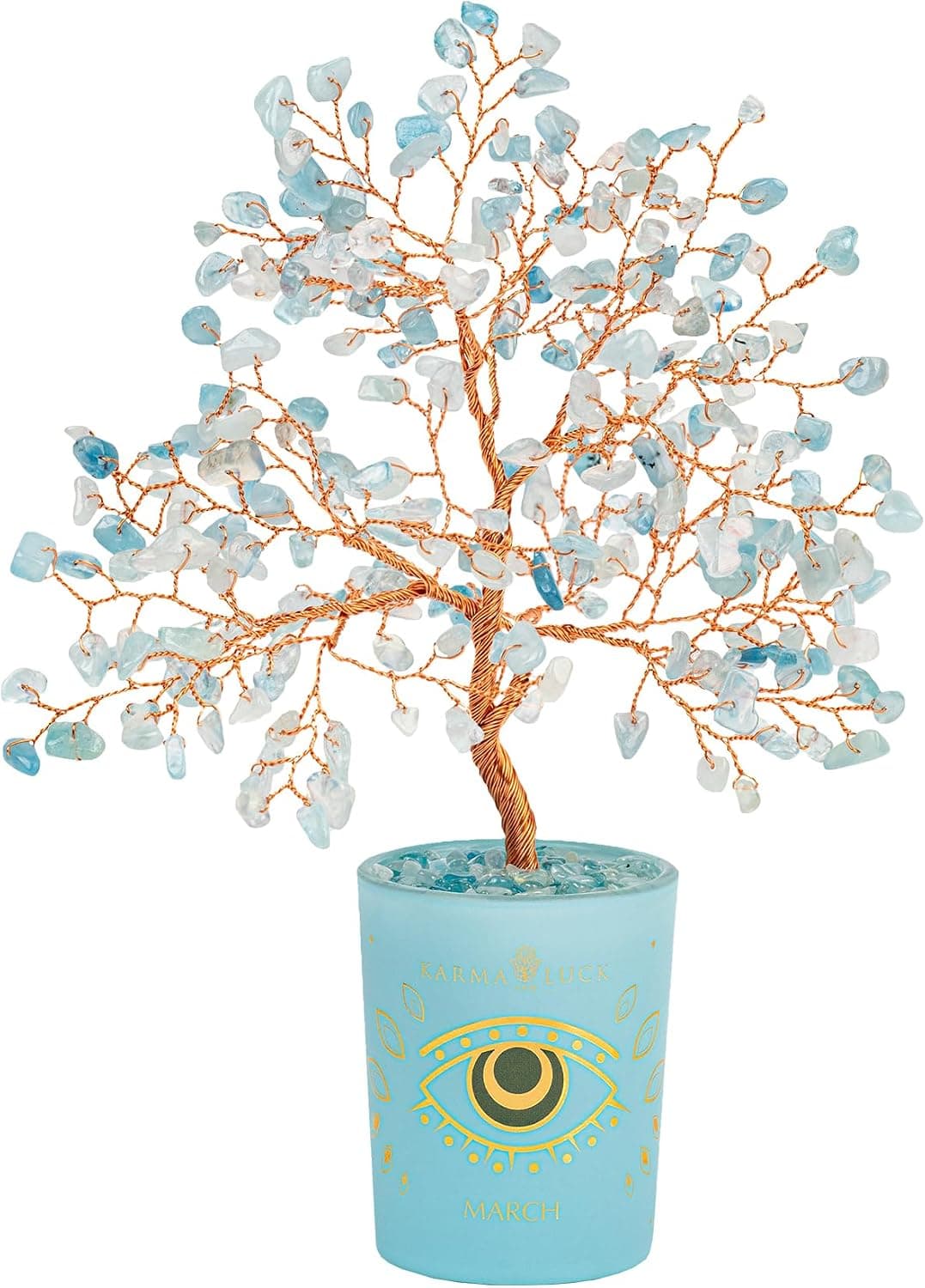 -29%
-29%Karma and Luck March Birthstone Crystal Tree of Life, Aquamarine Gemstone Fen...
 -29%
-29%Karma and Luck July Birthstone Crystal Tree of Life, Ruby Gemstone Feng Shui ...
 -29%
-29%Karma and Luck February Birthstone Crystal Tree of Life, Amethyst Gemstone Fe...
 -50%
-50%biuufish Feng Shui Black Obsidian Bracelet for Men Women, 24K Gold Plated Pix...
As an Amazon Associate, we earn from qualifying purchases. We only recommend items our practitioners have personally tested.
Continue Your Journey
Explore these related guides to deepen your understanding:

Ready for Deeper Guidance?
Try our free I Ching reading for personalized wisdom, or explore our curated Feng Shui essentials.