The remedies fail when the house moves upward faster than the person does.
The Real Story Behind unluckiest-zodiac-signs-2026-remedies
Detailed analysis of unluckiest-zodiac-signs-2026-remedies shows what surface-level advice tends to ignore. People fix the desk. They light incense. They move a crystal into the northeast and wait for life to soften. Then the bad streak keeps climbing, almost like the house itself is helping it along.
That happened to a graphic designer I visited in early January. Her stairwell sat directly beside the front hall, painted a harsh off-white, with a black runner that echoed every footstep. She had followed every remedy she found online, yet her sleep got lighter, her bank alerts got noisier, and she started snapping at her partner near the landing. The common advice wasn't useless. It was incomplete.
Vertical movement changes the story. Stairs pull attention upward, and attention is not neutral. A staircase turns a house into a sequence of rises, pauses, and sudden drops, which means the old habit of treating each room as if it were sealed off from the next misses the point entirely. If your remedies ignore that motion, they can work against you.
That is why the usual fix-list often backfires. People chase a sign-based remedy and forget the path the energy takes through the home. Wrong target. Wrong layer.
Read the house as a route, not a collection of isolated boxes. Once you do that, the pattern starts to make sense, and you can place remedies where movement actually changes speed, not where a chart looks satisfying on paper. For a fuller map of how directions and sectors interact, see how to map energy in your home without overthinking it.
Why the Staircase Changes the Outcome
A stairwell behaves like a funnel. Shoes hit the first step, voices bounce upward, and whatever mood you carry gets lifted from one floor to the next. In classical terms, this is where qi accelerates, then fragments, then collects again at landings. That rhythm matters more in 2026 than most people expect because annual pressures don't stay politely in one corner.
Conventional remedies persist for a simple reason: they are easy to sell and easy to follow. Buy this. Hang that. Done. A moving house is less cooperative. It asks you to notice how the front hall feeds the stairwell, how the first landing holds pauses, and how upstairs bedrooms receive whatever the lower level has stirred up. That's less glamorous, but far more accurate.
I have seen bedrooms on the second floor calm down after a single change on the ground floor. Once, a retired teacher in a narrow townhouse replaced a mirror at the bottom of the stairs with a matte landscape print. The mirror had been reflecting the front door and the stair rise at the same time, and every time she came home she felt rushed for no clear reason. Three nights after the swap, she said the hallway felt quieter. Not mystical. Just less sharp.
The opposite can happen, too. A remedy placed upstairs may never settle a problem that starts below. In a split-level home, for example, a blue bowl on the top landing will not do much if the entry is crowded, the stairs are dark, and the handrail feels like a ladder to nowhere. The lower level is setting the tone first.
That is where the stairs page of the house begins to matter more than the sign page. If you want to understand how stair placement and circulation shape the whole feel of a room, the logic overlaps with the way a front entry governs the rest of the home and with the movement patterns in the center rules the room. Ignore that flow, and your cure stays decorative.
When a Remedy Helps and When It Fails
A sign-based cure helps most when the problem is local. A tense office desk, a bedroom that feels jumpy, a corner that always collects clutter. In those cases, one focused adjustment can change what you notice within days.
But a house with vertical congestion needs a route correction first.
Think of a staircase with a red umbrella stand at the bottom, a storage box halfway up, and a bright pendant hanging low over the top landing. That setup creates three different pulls. The eyes rise. The body hesitates. The mind gets split between going up and getting out. Remedies aimed only at the top floor miss the bottleneck below.
People often blame the wrong factor here. They say, “It must be my unlucky year.” Sometimes that's true. Sometimes the house is broadcasting upward pressure and the year simply amplifies it. Big difference. You can feel it in the body: tight shoulders at the front door, shallow breathing on the stairs, and the odd habit of forgetting what you came upstairs to fetch.
One of the easiest mistakes is using bright red objects on or near stair landings because someone told them fire energy “activates” luck. It does activate something. Usually restlessness. A small scarlet vase at the top of a narrow stair can make a hallway feel hotter than it should, especially if the walls are cream and the rail is dark wood. In a low-ceilinged space, that combination can keep people wired at night.
By contrast, muted finishes, even illumination, and a clear visual line from entry to landing often settle the nervous system faster than a shelf full of symbolic objects. The body reads that calm instantly. The mind catches up later.
For a detailed method on the actual star-by-star adjustments that year brings, the deeper article on 2026 Flying Stars room by room remedies gives the technical layer. Here, the point is simpler: the stairwell can magnify or cancel whatever you try to do elsewhere.
How to Use the Staircase Effect Without Overdoing It
Start at the bottom step and work upward with your eyes open, not your superstition on autopilot. What hangs near the first three steps? Is the rail clean, stable, and easy to grip? Does the landing force a sudden stop, or does it allow the eye to rest?
Then look at what happens after dark. Many homes seem fine in daylight and turn awkward at 9 p.m. because the stair treads disappear into shadow or the sensor light is too harsh. A weak pool of light on the lower half of the stairs can make people feel they need to hurry, and rushing is where mistakes multiply. Broken glass, missed steps, arguments at the top. You know the sequence.
Use restraint with objects. A single framed print, a lamp with a warm shade, or a plant that tolerates the light can help more than a dozen charms. Keep the landing open enough that the body doesn't have to dodge obstacles. If there is a door opening directly onto the stairs, soften that line rather than decorating it aggressively. The point is to reduce abruptness.
One second-floor bedroom I worked on had a navy wall facing the stair landing and a white dresser under a slanted ceiling. The room felt busy even when it was spotless. We moved a hanging coat rack away from the landing, changed the bulb to a warmer temperature, and replaced a shiny tray on the dresser with a ceramic dish. That was it. Within a week, the owner said her morning fog lifted faster, and she stopped waking at 3:10 a.m. staring at the ceiling fan.
That kind of change is not dramatic from the outside. It doesn't photograph well. Yet the body notices before the brain can explain. This is the part people miss when they obsess over lucky signs and forget circulation. A remedy must fit the movement of the house, not just the symbolism of the year.
For sleep-specific rooms that sit near stair traffic, the guidance in turning a bedroom into a sanctuary matters more than any talisman. If the room gets the stair noise, the landing glare, and the door swing all at once, the fix begins with reducing those hits.
Why People Keep Repeating the Same Mistake
Because the quick answer feels kinder. It promises control without renovation, insight without observation, and relief without a hard look at the layout. People like a cure that lives on a shelf.
But the house does not care what is convenient.
There is also a psychological trap. When someone reads that a certain sign has a rough year, they start scanning for proof. Every missed call, every bill, every awkward conversation becomes evidence. Then they place a remedy in one corner and expect it to reverse a pattern that has already spread through the entire circulation route. It is the home version of putting a plaster on a moving belt.
Another reason the mistake survives: stairs are ordinary. They are so ordinary that people stop seeing them. Yet ordinary features often shape the biggest outcomes. The slope under your feet affects pace, the landing changes attention, and the sound of footsteps can either steady a household or keep it edgy. You don't need a rare formula to notice that. You need to pay attention for five minutes in silence.
That silence is revealing. Stand at the base of the stairs and listen. If the sound of someone climbing makes the nearby room feel tighter, the issue is not abstract luck. It is a circulation problem. If the top floor feels exposed because the stair opening faces the bedroom door, the mind never fully settles. The fix is spatial, not theatrical.
The same principle shows up in other parts of the house. A cluttered entry can undo a neat wealth corner. A mirrored stair landing can scatter focus. A poorly placed plant may look healthy while still feeding the wrong impression at the point where movement slows. For practical plant placement that supports rather than distracts, look at a dead plant in your wealth corner does more harm than no plant at all.
So yes, use remedies. Just don't pretend the staircase is background scenery. It isn't.
What to Do First in 2026
Clear the lower stair zone before you chase symbolic cures. Remove shoes that accumulate by the first step. Replace glaring bulbs with a gentler tone. Take down anything shiny that throws the eye upward too fast. Then see whether the house breathes differently.
One home in a narrow row house had a cobalt runner, a chrome umbrella stand, and a mirror facing the first landing. It looked stylish, honestly. Also frantic. The owner, a nurse on rotating shifts, felt awake at the wrong times and exhausted when she needed focus. We took out the mirror, moved the stand to the hall closet, and left the runner in place. Within two weeks she said the stairs no longer felt like they were pulling her into the night.
After that, add the sign-based adjustment that fits the year, not the other way around. A metal cure on one landing, a water emphasis on another, or a quieter color near a stressed bedroom can make sense once the route itself is stable. If you want a broader sense of which materials support balance in a moving home, metal and water decor pairs that make a room feel finished explain the interaction well.
The staircase effect is not glamorous. It is repeatable, though, and that is better. It explains why two people can follow the same remedy and get different results. One lives in a flat. The other lives in a home where every trip upstairs re-stamps the mood. Same cure. Different architecture. Different outcome.
That is the uncomfortable part. Sometimes the thing you think is unlucky is just a house that keeps shouting through its stairs.
FAQ
Is conventional unluckiest-zodiac-signs-2026-remedies advice reliable? Sometimes, but only when the issue is narrow and local. A single room problem can respond well to a focused adjustment, while a home with a strong vertical route often needs the circulation corrected first.
What is the first thing to check near a staircase? Look at the bottom landing before you touch anything decorative. Shoes, mirrors, bright lamps, and clutter change the way people move, and movement is where the pattern starts.
Can a staircase really affect sleep? Absolutely. Not because stairs are magical, but because they transmit noise, light, and speed into the rooms above. A bedroom near a harsh stairwell often feels less restful until that route is softened.
Do I need to remove every object from the stairs? No, and stripping a space bare can make it feel cold and unfinished. A careful balance works better: one or two grounded pieces, clear walking space, and lighting that doesn't jab the eyes at night.
How do I know whether the problem is my sign or the house? Watch what happens when you leave the house for a few days. If your mood improves quickly elsewhere, the layout is probably amplifying things. If the tension follows you everywhere, then the astrological layer deserves more attention than the stairs alone.
Should I still use annual cures if my staircase feels off? Yes, but place them after you fix the route, not before. A cure dropped into an agitated circulation pattern often gets buried under noise, and the home keeps behaving as if nothing changed.
David Liu
Traditionally informed guidance • Cross-referenced with classical Chinese source texts
Rooted in classical Chinese metaphysics and cross-referenced with original texts. Product recommendations are based on traditional symbolism, not guaranteed outcomes.
Practitioner-Selected Tools for This Topic
Items our team has tested and found effective for the principles discussed above. Individual results may vary.
 -29%
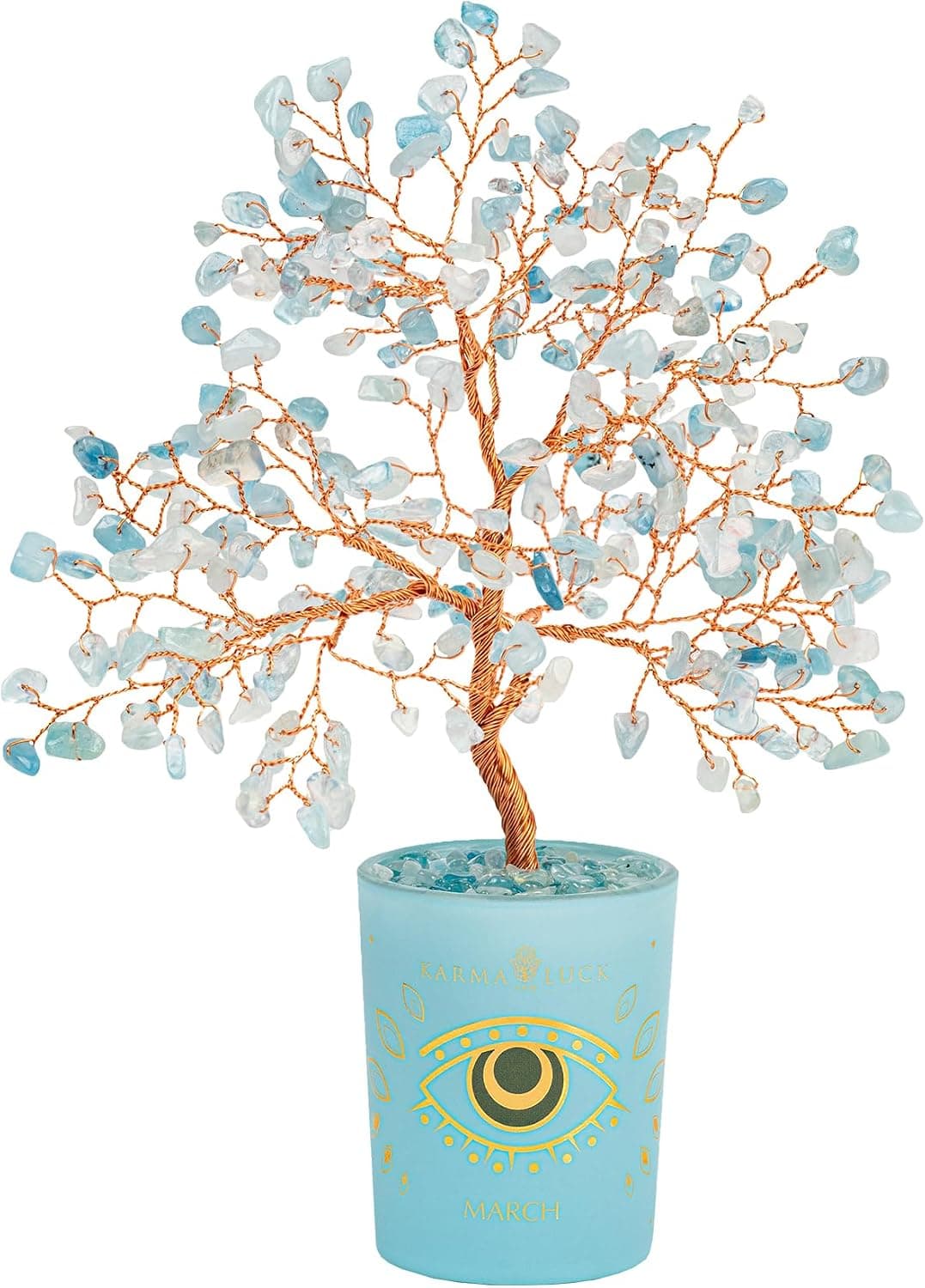
-29%Karma and Luck March Birthstone Crystal Tree of Life, Aquamarine Gemstone Fen...
 -29%
-29%Karma and Luck July Birthstone Crystal Tree of Life, Ruby Gemstone Feng Shui ...
 -29%
-29%Karma and Luck February Birthstone Crystal Tree of Life, Amethyst Gemstone Fe...
 -50%
-50%biuufish Feng Shui Black Obsidian Bracelet for Men Women, 24K Gold Plated Pix...
As an Amazon Associate, we earn from qualifying purchases. We only recommend items our practitioners have personally tested.
Continue Your Journey
Explore these related guides to deepen your understanding:

Ready for Deeper Guidance?
Try our free I Ching reading for personalized wisdom, or explore our curated Feng Shui essentials.