Qi energy began as breath and weather, but modern rooms reveal it through circulation, light, and the way people share space.
Where qi energy began: breath, weather, and landscape
Qi energy started as an observation, not a slogan. Long before it was used in interiors, people noticed that wind, humidity, sunlight, and terrain changed how a place felt and how bodies behaved inside it.
That matters because early Chinese cosmology did not separate the human from the environment. Breath, weather, vitality, and seasonal change were read as linked patterns, and the built environment was expected to cooperate with those patterns instead of fighting them.
In the oldest layer of the idea, qi was not a decorative aura floating over a room. It was the quality of movement in the world: air shifting through valleys, water collecting in low places, mist lifting from ground, and the visible results of rhythm versus obstruction.
I have stood in a narrow apartment entry where shoes piled at the door, coats hung on the left wall, and the front door opened directly to a bright living room window. The air there felt rushed because movement had no pause point; the body went from public street to private center in one step, with nowhere to decompress.
That kind of threshold taught the old builders something simple. A place that receives movement well tends to feel usable, while a place that slams movement forward tends to feel exposed.
For a modern reader, the useful shift is this: qi energy can be understood as a cultural language for perceiving environmental order. It is not a substitute for architecture, but it often describes the lived effect of architecture better than technical language does.
How feng shui turned qi into a spatial method
Feng shui made qi practical by attaching it to form. Hills, water, openings, enclosure, and orientation were not abstract symbols; they were ways of reading how energy, movement, and settlement behaved in real places.
The key move was methodological. Instead of asking whether a site was spiritually “good,” practitioners asked where movement gathered, where it leaked, where it slowed, and where the body could rest without strain.
This is where the connection to architecture becomes obvious. Buildings are circulation systems. Doors, hallways, landings, furniture edges, and window depth all control how quickly a person enters, turns, stops, or lingers. A room with clear sequence feels legible. A room with collision points feels agitating.
That is also why old feng shui did not care only about objects. It cared about thresholds, because thresholds organize the relationship between inside and outside, public and private, active and quiet. A doorway is never just a hole in a wall; it is a social negotiation point.
When people ask me whether qi energy is “real,” I usually answer with a practical distinction: the cultural model is real, the physical mechanisms are observable, and the metaphysical claim is a matter of belief. The room still changes your state either way.
One of the most useful classic ideas is that flow should be invited, not forced. If a hallway shoots straight through a home, if every sightline ends in clutter, or if seating blocks walking paths, people feel the room before they analyze it. That is qi at work as experience.
For a deeper background on the layout language behind this, the bagua map and its room logic shows how direction and function began to pair together in later feng shui teaching.
Why qi changed over time
Qi did not stay frozen because Chinese thought never treated the world as static. As medicine, cosmology, and building practice evolved, the term picked up more layers, and some of those layers became popular shorthand rather than precise theory.
Classically, qi could describe climate, body condition, movement in landforms, or the generative processes of life. In modern pop culture, it often gets flattened into “good vibes,” which is a useful starting point but too vague to guide a room.
The change matters because a modern apartment is not an ancestral courtyard, and a glass office tower is not a hillside compound. Dense urban life compresses sightlines, shortens transitions, and creates more artificial light, more noise, and more competing functions in one space.
That shift altered how qi is perceived. In older settings, the problem might have been wind racing through a valley. In a city flat, the problem is often the opposite: too much stillness, too little daylight depth, and no visual cue telling the body where to go next.
This is also where sociology enters the picture. A room’s energy is not only about walls and windows. It is shaped by who uses the room, who claims the best chair, who keeps the television on, and who gets forced to detour around everyone else’s things.
So the modern meaning of qi energy is partly relational. It describes the way shared space either reduces friction or manufactures it through layout, visibility, and implied territory.
A family living room makes this plain. One person’s reading chair sits beside a lamp near the bookshelf, another person’s television zone dominates the opposite wall, and a child’s toys spread into the central path. Nobody says, “This room has bad qi.” They say the room feels tense. Same phenomenon, different vocabulary.
The vocabulary changed, but the observation stayed sharp.
What qi means now in modern interiors
Today, qi energy is most useful when it helps you read circulation, light, proportion, and threshold sequence. That is the modern translation. If those four elements work, the room usually feels coherent before anyone decorates it.
Light is the easiest place to start because the body responds fast. Bright, even daylight tends to create alertness and visual confidence. Dim pockets, especially under cabinets or in a deep corner by the couch, absorb attention and make the room feel heavier than it is.
Proportion matters just as much. Oversized emptiness can feel unheld, while cramped compression can make every movement feel like a correction. In architecture, people do not read square footage objectively; they read body-scale relationships, and qi is one traditional way of naming that felt relationship.
Imagine a bedroom with low light, a thick dark wood dresser across from the bed, and blackout curtains that never fully open because the window track sticks. One person may love the cocooned feeling. Another person will wake up foggy, because the room gives rest without enough visual lift or fresh movement.
That is not mystical. It is environmental conditioning. Too little light, too much mass, and too little airflow cue the nervous system to slow down, sometimes beyond usefulness.
For readers trying to place this in a larger room system, living room circulation patterns are a good model because they show how shared zones either invite movement or interrupt it.
Qi energy also becomes clearer when you compare strong, stagnant, and scattered rooms. Strong qi does not mean loud or dramatic. It means the room supports predictable movement, clean sightlines, and a sensible balance between openness and enclosure.
Stagnant qi usually shows up as dead corners, air that sits still, furniture that creates a bottleneck, and surfaces that collect visual weight. Scattered qi shows up when the eye cannot settle because every wall competes, every path bends oddly, and every object seems to announce itself at once.
People often mistake clutter for the whole issue. Clutter matters, but clutter is usually a symptom. The deeper cause is often poor sequence: no pause at the entry, no clear route through the room, no place for the body to stop without blocking somebody else.
That is why a small correction can change the feel of an entire home. Move a chair six inches out of the path. Open a blind fully. Let the entry breathe. The change is modest; the effect is not.
Reading a room for flow, stagnation, or scatter
Start at the threshold. Stand at the front door and notice whether the eye is pulled immediately into the room or whether there is a short landing zone that lets you arrive before you participate.
A good threshold does not hide the home. It sequences it.
Then follow the circulation path with your body, not your assumptions. If you have to angle around a table, squeeze between a sofa and a plant, or pivot awkwardly to reach another room, the space is telling you that movement was not planned carefully enough.
Sound helps too. A hallway that echoes too sharply can make a home feel thin and exposed, while a muffled zone with no light or air movement can feel shut down. You do not need to dramatize this; you only need to notice how the body responds before the mind labels it.
Look at light distribution next. Does daylight reach only the first two feet of the room, leaving the back half in shadow? Or is light even enough that the eye can travel without stumbling into a visual hole?
Then inspect who owns each zone. In a shared room, qi is partly social. If one person’s equipment, hobbies, or devices dominate a space, the room stops functioning as a common field and starts functioning as a set of claims.
That is why a family room can feel restless even when it is clean. The television zone, the reading chair, and the toy area may each be reasonable on their own, but when they compete for the same circulation lane, they create low-level friction all day.
A room with balanced qi usually has three qualities: you can see where to go, you can move there without negotiation, and you can stop there without feeling exposed. Simple. Not easy, but simple.
Bringing qi into daily life without overclaiming it
Use qi energy as a diagnostic lens, not a superstition. The point is not to pretend every room contains a hidden force field; the point is to notice how design choices shape mood, attention, and social ease.
Here is the method I use in practice. First, clear the threshold so the entry gives the body a moment of arrival. Second, open the main circulation line so movement does not require side-stepping. Third, adjust light so the room has depth without gloomy pockets. Fourth, define each functional zone so people know where they belong.
In a bedroom, that may mean raising the blinds, moving a bulky chair out of the window line, and leaving a cleaner path from door to bed. In a living room, it may mean separating a reading corner from the television line and giving the center of the room one obvious route instead of three competing ones.
If you want a symbolic reminder, place it after the mechanics, not before them. A crystal can support attention, but it will not fix a blocked path. A plant can soften a corner, but it will not correct a bad threshold sequence. Start with structure.
For those who want to connect this with a more formal feng shui framework, front door placement and entry flow is the best place to see how the home first receives movement.
This is also where 2026 timing matters. Seasonal light shifts, heating patterns, and annual star considerations all change how a room behaves across the year, so a layout that felt fine in spring may feel heavy by winter because daylight and airflow are no longer supporting it the same way.
The deepest lesson is that qi energy became what it is today because people kept noticing the same thing in different eras: environments train bodies. Ancient observers watched landscape and weather. Later feng shui applied that observation to buildings. Modern interiors give us one more layer, because now we can see how circulation, proportion, and household negotiation turn a room into either relief or resistance.
FAQ
Is qi energy supposed to be literal or symbolic? It can be read both ways depending on your framework. In practice, the symbolic reading is often enough because it points you toward concrete changes in layout, light, and movement that people actually feel.
How do I know if a room has stagnant qi? Watch for still air, dark corners, awkward detours, and furniture that forces the body to hesitate. The room may look fine in photos and still feel heavy when you live in it.
Can one object fix a room? Not usually. Surprising fact: a single object matters less than the route people take around it, because circulation and sightlines change the whole experience of the space. That is why a small shift in furniture placement often does more than adding another cure.
Mei Chen
Traditionally informed guidance • Cross-referenced with classical Chinese source texts
Content draws from both Compass (Luopan) and Form (Xingshi) school traditions. Illustrative examples are composites based on consultation experiences.
Practitioner-Selected Tools for This Topic
Items our team has tested and found effective for the principles discussed above. Individual results may vary.
 -19%
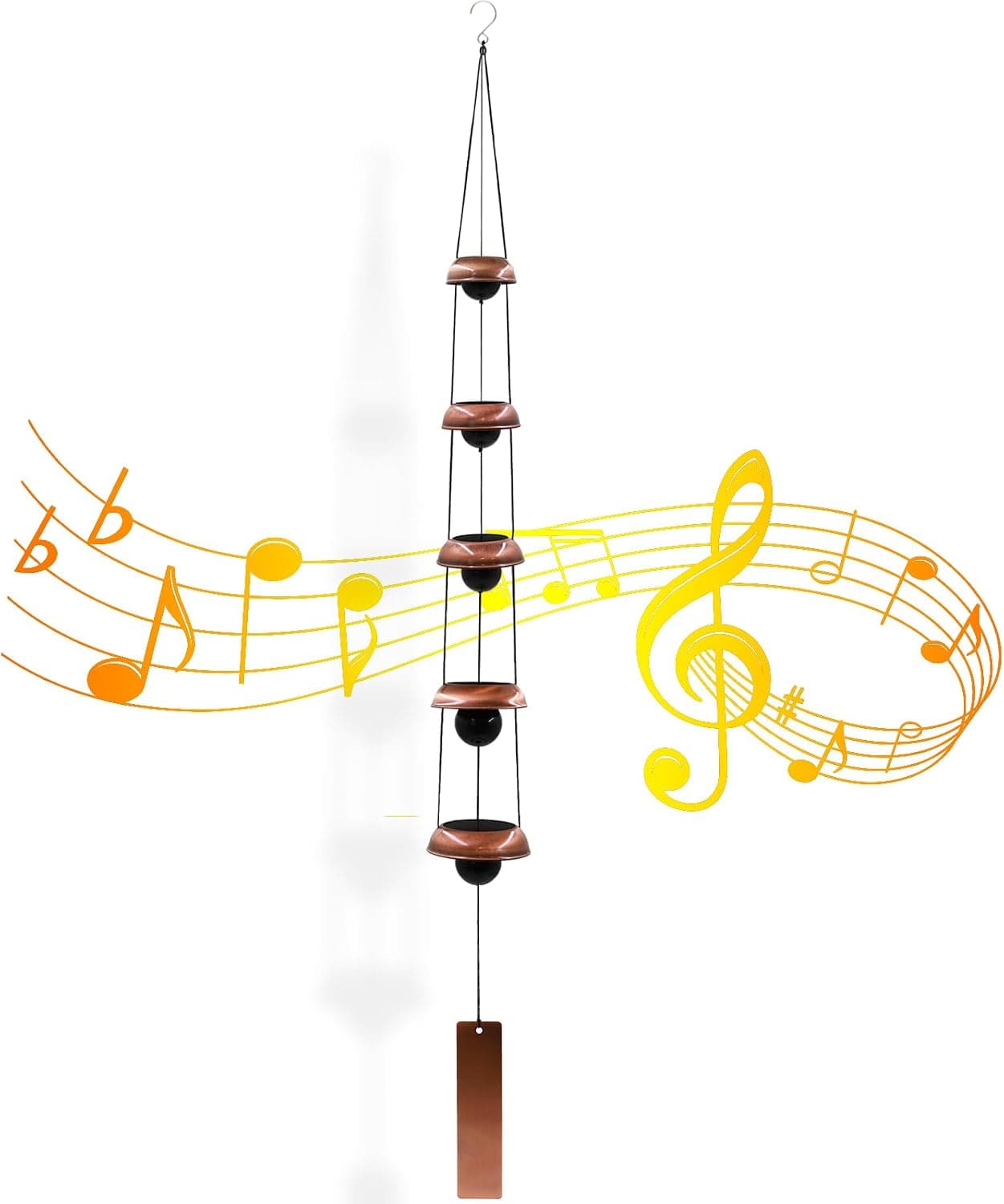
-19%Wind Chimes for Outside with 5 Bell Unique Copper Musical Chimes Feng Shui Wi...
 -5%
-5%YU FENG Evil Eye Money Tree, Blue Feng Shui Decor with Golden Buddha
 -29%
-29%Karma and Luck March Birthstone Crystal Tree of Life, Aquamarine Gemstone Fen...
 -29%
-29%Karma and Luck July Birthstone Crystal Tree of Life, Ruby Gemstone Feng Shui ...
As an Amazon Associate, we earn from qualifying purchases. We only recommend items our practitioners have personally tested.
Continue Your Journey
Explore these related guides to deepen your understanding:


Ready for Deeper Guidance?
Try our free I Ching reading for personalized wisdom, or explore our curated Feng Shui essentials.