A kua number does nothing until you measure the room. Here is the case that shows where the system works — and where it quietly fails.
The Answer, Before the Story
Your kua number is a single digit between 1 and 9, calculated from your birth year, that ties you to one of eight compass sectors and sorts the eight directions into four that support you and four that are said to work against you. That is the entire mechanism. It is a filter for where to put the bed, the desk, and the stove, and it does nothing at all until somebody measures the room.
Which is where the trouble starts.
A desk once went against the west wall of a small flat because that was the only wall without a window, and the afternoon sun on the monitor made the decision for him. Three years later he was still waking at four in the morning. Magnesium, blackout curtains, a firmer mattress, a white-noise machine that hummed like a dishwasher two rooms over: all tried. Nobody had asked which direction he faced while he worked, and he had never thought to check.
His number put east at the top of his supportive list and west at the bottom. He had built his working life on his worst wall, not from carelessness, but because the advice he found online handed him a digit and stopped there. No floor plan. No measurement. No explanation of what the digit was for.
Five Lines, If You Want the Mechanism Without the History
- The digit comes from your birth year, corrected for the Chinese solar year, and, in the traditional formula, your sex.
- Each digit maps to one trigram and one 45-degree compass sector.
- Four sectors help, four hinder, and each of the eight has a specific job rather than a general glow.
- None of it means anything until you have true north rather than magnetic north.
- The remedy is placement, material, and light. Almost never demolition.
What follows is the reasoning behind those five lines, including the places where the reasoning gives out. That last part tends to vanish whenever the kua number meaning gets boiled down to a list of lucky directions.
Ba Zhai: Eight Houses, Two Formulas, One Solar Year
Most people asking about this mean Ba Zhai, the Eight Houses school. It is not the oldest layer of Chinese geomancy and it is not the only one: Form school reads land and water, Flying Star reads time, Ba Zhai reads the occupant. That focus on the individual is precisely why it travelled west so easily. It produces a personal answer, and personal answers sell.
The arithmetic itself is trivial. Take the last two digits of your birth year, reduce to a single digit, then apply the formula that differs by sex: traditionally men subtract the result from 10, women add 5, reducing again where needed. Out comes a digit, a trigram, a direction.
Then comes the correction that nearly every online calculator quietly skips.
The Chinese solar year does not begin on 1 January. It begins at Li Chun, "start of spring," around 4 February. Born in January, or in the first days of February, and the year on your passport is not the year the formula is asking for. You inherit a number that belongs to somebody else, and every direction downstream of it is wrong.
There is one more fork. The sex-based formula is a binary assumption sitting inside a text that predates the argument about it. Practitioners today handle it in different ways: some use the formula matching the body, some the one matching the life, some run both and read the difference. No website has the authority to settle it and neither do I. What I will say is that the system was built to describe an occupant, so pick the reading that describes you.
Two Families, Eight Numbers, and a Problem Called Five
The digits split in two. East group: 1, 3, 4, 9. West group: 2, 6, 7, 8. Five owns no direction at all. Because it sits at the centre, tradition substitutes: men take 2, women take 8, and a minority of teachers reverse that. I have never found a classical argument that resolves the reversal, so I tell people to test both and keep whichever set of directions actually describes their rooms.
Each number then generates four supportive sectors and four that the old texts name in language that has aged badly. Six Killings. Five Ghosts. Total Loss. In translation these read like curses, and that mistranslation has done measurable harm. People pay for a reading, hear "total loss," and spend a month afraid of their own bedroom. The categories are not threats. They are labels for sectors where a room's movement and light are said to run against the occupant, and the classical remedy is placement, not exile.
The supportive four are not interchangeable either, which is where most charts stop being useful:
- Sheng Chi is the activity sector, for work and income and forward motion.
- Tien Yi handles health, and it is the one I care about most when someone cannot sleep.
- Nien Yen governs partnership.
- Fu Wei is the quiet corner: study, rest, rooms where nothing much is meant to happen.
People want all four at once and end up with none of them. This is where the bagua map laid over a floor plan has to survive contact with an actual apartment.
Magnetic North Is Not Your North
Before any of this applies, someone has to measure, and this is the step almost everyone skips. A phone compass reads magnetic north. Your building was laid out to true north, or to the street grid, or to whatever the developer found convenient that year. Across most of North America the gap between the two runs from five to fifteen degrees, and Ba Zhai divides the compass into eight 45-degree sectors. Twelve degrees of error is a quarter of a sector. Sit close to a boundary and your phone will tell you, with total confidence, that your best direction is your worst.
Land surveyors correct for declination as routine. So does anyone doing this properly on site. If you are standing in a hallway waving a phone, you probably are not.
Now the part that makes the system feel true even to people who expect it to fall apart. Take a west-facing desk in a northern-hemisphere house. West light arrives late, low, and hot, at the exact hour when concentration is already thin. It rakes across one side of the face and the edge of the screen. By six the room has banked hours of heat and will not cool until well after dark. No metaphysics required to predict that this arrangement grinds a person down.
Architecture has its own vocabulary for the same territory, and the two overlap more than either side likes to admit. Circulation is the path the body takes without thinking about it. Threshold is the depth and weight of a doorway. Proportion decides whether furniture can stand away from the wall. Light decides which hours the room is pleasant in. A "bad" direction in Eight Houses is very often a direction where one of those four is already working against you, and the classical adjustment happens to fix it. That does not prove the cosmology. It does explain why the advice so often lands.
Four Ways This Goes Wrong
1. The January Birthday
Mid-January birth, number pulled from the wrong year, whole flat arranged around it. Every step faithful, every result off by one sector. This is the most common error I see and the easiest to fix: check whether the birthday falls before Li Chun, and if it does, subtract a year before you calculate anything.
2. The Chart Without a Compass
Someone downloads a table, learns they are a 4, and concludes that north is good and west is bad without ever establishing where north is. The table is right. The compass is ten degrees off. The bed lands in the neighbouring sector and everyone blames the system.
Five careful minutes at the measuring stage saves the entire exercise.
3. The Sleeper Who Obeyed the Chart
Here is the case that changed how I explain all of this. A north-facing bedroom, small, one window, bed jammed into the corner the chart called the worst direction in the house. The occupant had read the chart, was sleeping badly, and felt vaguely cursed by her own furniture. We did not rotate the bed. The room was too narrow, and forcing it would have put the headboard under the window and the footboard in the door swing. Instead: a solid headboard, a screen along the open side, the lamp moved off the nightstand to the wall opposite the window, heavier window covering. Same direction. Different room.
The lesson is not that direction is meaningless. It is that direction is one input among several, and a room failing on circulation and light will not be rescued by facing the right way. Bedroom layout rules do more work here than the compass does.
4. The Cure Aimed at the Wrong Room
Eight Houses was never meant to govern a whole house. It describes one occupant's relationship to direction, which makes it useful at the bed, the desk, and the stove: the three places where a person stays put long enough for the room to matter. Applying it to a hallway, a closet, or a guest room used twice a year is effort spent for nothing, while the front door, which the older texts treat through a completely different lens, goes ignored. What your front door faces is a separate question with separate logic.
Adjusting the Room You Already Live In
Three moves, cheapest first.
Correct the number. Verify the birth year against Li Chun, the formula against a second source, the compass against true north. Free, and it removes most errors.
Then decide which sector you actually need. Sleeping badly? Work Tien Yi and the headboard. Money stuck? Work Sheng Chi and the desk. Relationship trouble? Nien Yen. Optimising a whole house for all four directions produces a floor plan nobody can live in, and it usually violates the first rule of the command position of the desk, which is that you can see the door.
Finally, adjust with material and light instead of demolition. This is where a design vocabulary earns its keep. If a sector calls for metal, that can be a white linen shade, a brass lamp base, a round mirror frame: objects you were going to buy anyway, chosen differently. If it calls for wood, it can be a taller plant, a green wool throw, an oak side table. The five elements cycle is not a shopping list. It is a tiebreaker between two options you already like.
Colour behaves the same way. A west-facing room that overheats at four in the afternoon does not need more red in it. A north-facing room that never sees direct sun does not need three shades of grey. Those are ordinary design decisions that happen to line up with element theory, and I have stopped caring whether the alignment is causal or coincidental, because the room improves either way. The same logic, applied to seating and sightlines, sits behind living room arrangement.
The desk from the start of this piece ended up turned ninety degrees to face east, with a wooden screen behind the chair and the monitor angled away from the window. The four o'clock waking stopped inside a fortnight. Whether that was the direction, the glare, or the relief of finally having done something, I cannot separate, and I have stopped pretending otherwise.
The number alone would never have moved him. The measuring did.
What People Actually Ask
Does the kua number change as I get older?
It is fixed at birth. What changes is your address, your floor plan, and which room you sleep in, which is why the same digit yields different advice in different homes. Recalculating it every year is a modern habit with nothing behind it in the classical texts.
I was born in January. Which year do I use?
The Chinese solar year, which opens around 4 February at Li Chun. January birthdays almost always belong to the previous year for calculation, and so does the first week of February. Shift that one digit and every direction below it moves with it.
My number came out as 5. Now what?
Five has no compass sector of its own, so the tradition substitutes. Most teachers give men 2 and women 8; some reverse it. Since the classical sources do not agree, run both sets of directions and keep whichever describes your rooms. Anyone who tells you the question is closed is overselling.
Can my partner and I have different numbers and still share a bed?
Happens in most households, and the room survives. Give the headboard to whoever sleeps worse, then adjust the other person's side with material and light. Hunting for a direction that suits both partners perfectly tends to end with the bed in the middle of the floor.
How is this different from my Chinese zodiac animal?
Two different calculations doing two different jobs. The animal comes from the year and describes annual cycles. The number comes from a separate formula and describes your relationship to direction. Western summaries blur them constantly, and the resulting advice fits neither system.
What if my best direction just isn't possible here?
You adjust the room, which is what nearly everyone ends up doing regardless. A solid headboard, light you can control, a clear path to the door, and a screen where the room feels exposed will outperform a technically correct bed wedged into a bad corner. Direction is one input. It has never been the only one.
Mei Chen
Traditionally informed guidance • Cross-referenced with classical Chinese source texts
Content draws from both Compass (Luopan) and Form (Xingshi) school traditions. Illustrative examples are composites based on consultation experiences.
Practitioner-Selected Tools for This Topic
Items our team has tested and found effective for the principles discussed above. Individual results may vary.
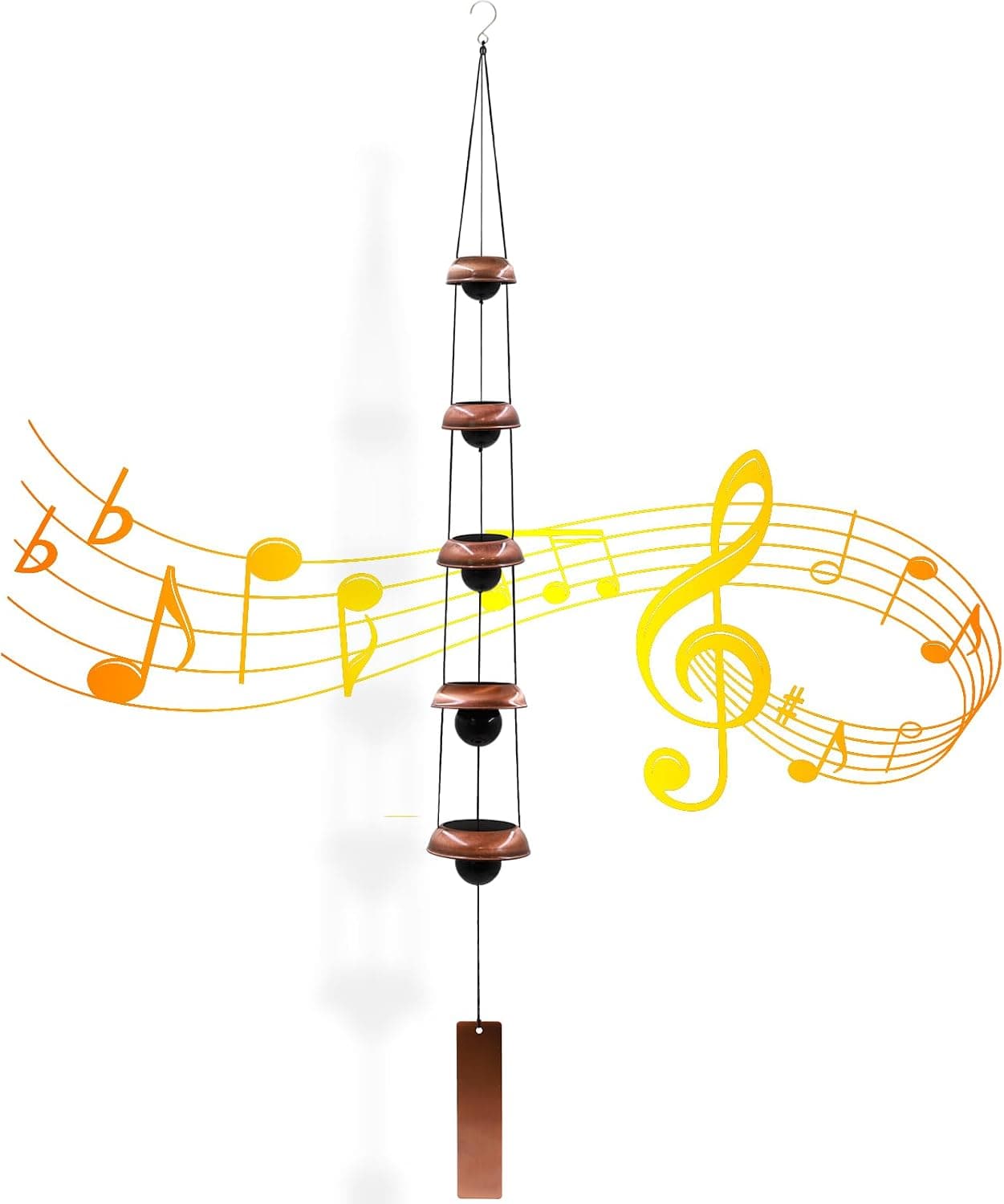 -19%
Wind Chimes for Outside with 5 Bell Unique Copper Musical Chimes Feng Shui Wi...
 -5%
YU FENG Evil Eye Money Tree, Blue Feng Shui Decor with Golden Buddha
 -29%
Karma and Luck March Birthstone Crystal Tree of Life, Aquamarine Gemstone Fen...
 -29%
Karma and Luck July Birthstone Crystal Tree of Life, Ruby Gemstone Feng Shui ...
As an Amazon Associate, we earn from qualifying purchases. We only recommend items our practitioners have personally tested.
Continue Your Journey
Explore these related guides to deepen your understanding:


Ready for Deeper Guidance?
Try our free I Ching reading for personalized wisdom, or explore our curated Feng Shui essentials.