That sudden certainty may be insight, or it may be familiarity wearing a philosopher’s mask.
When a first impression feels like a verdict
You feel it in the body before you can explain it: the meeting room goes quiet, the phone screen stays dark, and one first impression arrives with the force of a decision. That is the moment many people call intuition, but philosophy treats it less like a mystical gift and more like a claim that needs checking.
I have seen this most clearly in small rooms. A narrow office with fluorescent light, a laptop open, coffee gone cold, and a person staring at a contract as if the answer should be obvious. In that setting, the body often speaks before the mind can justify itself.
What arrives first is not always truth. Sometimes it is pattern recognition, sometimes fear, sometimes a memory of a similar mistake that never fully left the nervous system. The feeling is real; the conclusion may not be.
That distinction matters because close-range judgment is fast and local. It happens in the immediate space around us, like deciding whether to step through a doorway or hold back at a threshold. Analysis works differently. It stands farther away, looks across the whole room, and asks what the first reaction missed.
Classical thought was never unanimous on this point. Some thinkers treated direct insight as a privileged kind of knowing, while others treated it as something too slippery to trust without discipline. That tension is still alive today, even if pop culture usually smooths it over into a slogan.
yin yang philosophy in daily life helps name the balance more clearly: speed without correction becomes rashness, and correction without speed becomes paralysis.
Why the word got quoted into something simpler than it was
The word intuition did not stay stable as it moved from philosophy into everyday speech. In one context it could mean a disciplined form of direct grasp; in another, it became shorthand for any feeling that arrived quickly and sounded confident. That shrinkage matters, because a term built for careful distinctions was flattened into a word people now use as if it meant only “my first impression.”
In a classroom scene I still remember, a lecturer wrote a famous line on the board and then slowed down the room. The quote sounded sweeping when taken alone, but the original argument was narrower, more cautious, and far less convenient for self-help culture. That happens constantly with classical sources. A careful distinction gets turned into a motivational poster.
Descartes used clear and distinct perception to argue for certainty in a very limited sense. He was not handing out permission to trust every strong feeling. Hume, by contrast, made habit central to human belief, which should already make you suspicious of any claim that feels naturally obvious. If your confidence comes from repetition, not truth, it can still feel beautifully persuasive.
Kant complicated the issue further by treating the mind as active in shaping experience. In that frame, what seems immediate may already be organized by structures you do not notice. The experience of certainty is not the same thing as certainty itself.
Bergson gave intuition a different dignity, but not the cheap version sold online. For him, intuition was a disciplined way of entering movement and duration from within, not a license to bypass thought. Zen and Daoist traditions also resist the crude split between reason and insight, because direct seeing requires training, not romantic impulse.
The common mistake is to treat intuition as if the word had always meant one thing. It has not. Across traditions, it can mean self-evidence, innate grasp, lived immediacy, or trained perception. Those are related ideas, but they are not interchangeable.
That is why I distrust any teacher who says the body always knows. The body knows some things quickly. It also rehearses old errors with remarkable loyalty.
Chinese traditions and classical learning often preserve this caution better than modern shorthand does, because they treat judgment as cultivated, not automatic.
How a judgment gets assembled before you notice it
The mechanism is less mysterious than people want, and more important than they admit. First, perception gathers cues: tone of voice, posture, timing, light, distance, clutter, temperature. Then memory starts matching those cues to earlier situations. Then affect adds weight, making some patterns feel urgent and others feel harmless. Only after all that does the mind produce the sentence, “I just know.”
This is why intuition can be accurate in one context and brittle in another. It is not floating above experience. It is built from experience.
In philosophy of mind, this looks like rapid unconscious integration. The brain is not merely guessing; it is compressing information so quickly that conscious language arrives late to the scene. But compression is selective. It keeps what has been repeated and may ignore what is novel.
That selectivity explains both the strength and the risk of gut judgment. Repetition gives the mind a shortcut: it can classify familiar situations before reflection catches up. The cost is that the shortcut may overgeneralize, treating a new case as if it belonged to an old pattern. What feels like instant clarity may actually be a high-speed assumption that has not yet met resistance.
That is also where culture enters. What you have been taught to notice shapes what feels obvious. A person raised in a family where direct speech was praised will often experience bluntness as honesty. A person trained in indirect settings may experience the same bluntness as aggression. The “intuitive” response is partly a social inheritance.
Environmental conditions matter too, and not just as a poetic backdrop. Bright natural light can increase alertness and make the mind feel cleaner, while harsh artificial glare can produce strain that gets mistaken for certainty. Noise pollution does something similar: it interrupts subtle perception and pushes the nervous system toward quick, blunt conclusions. Fresh air and airflow often change the pace of thought because the body is less cramped, less threatened, and less eager to jump.
In a quiet study with a window cracked open, a judgment often matures. In a crowded street with engines idling, phones ringing, and shoulders brushing past, the same judgment can collapse into instinctive defensiveness. The context changes the quality of the signal.
That is why the same person can feel remarkably clear at a desk near daylight and oddly reactive in a sealed conference room. The issue is not purity of soul. It is sensory load.
meditation practice and attention training help because they separate signal from agitation, not because they create magical certainty.
Which intuitions survive pressure and which fail
Some judgments survive scrutiny because they were built from repeated, well-structured contact with reality. A seasoned carpenter notices a floorboard that is subtly wrong. A good editor senses when a paragraph is overworked. A nurse can often detect a problem before the chart has caught up. These are not superpowers. They are compressed expertise.
Other judgments fail the moment pressure rises. The classic failure mode is emotional congruence: you feel what you already wanted to feel, so the feeling arrives as certainty. That is how bias dresses itself as insight.
There is also the fluency problem. Something familiar feels true because it is easy to process. Repetition creates a smooth path, and smoothness is often mistaken for accuracy. This is one reason propaganda works. It is not always loud. Sometimes it is simply repetitive enough to feel natural.
Here is the part people dislike hearing: certainty is not evidence. It is a sensation. A strong one, sometimes useful, sometimes deceptive.
Consider a decision-heavy moment: a person standing in a bookstore corridor between the front tables and the back shelf, holding two job offers in mind. One offer sounds exciting because the manager used warm, confident language in the interview. The other looks less glamorous but has clear boundaries, daylight in the office, and a quieter commute. The first impression may point toward excitement; the slower review may reveal that the room, not the role, was shaping the feeling. The lesson is not “ignore your gut.” The lesson is “ask what fed it.”
Philosophically, this is where balance becomes useful. Intuition supplies speed and synthesis. Analysis supplies distance and correction. If either side dominates, judgment distorts. This is a practical version of yin-yang without the mystical fog: each mode has value because each mode compensates for the other.
balancing yin and yang in judgment is less about harmony as decoration and more about keeping speed from turning into error.
And yes, some people resent this. They want a rule that says “trust yourself” or “never trust your feelings.” Both are lazy. Human judgment is more exacting than that.
What balance looks like when you use it on purpose
Start with a simple test. Name the first impression, but do not obey it yet. Ask what in the room, in your body, and in your memory may have produced it. Then change the setting if you can: step near a window, lower the noise, or walk into fresh air for three minutes. The goal is not to escape the judgment. The goal is to give it a chance to become legible.
If the feeling remains strong after the environment changes, it may deserve more respect. If it fades quickly, it was probably more atmosphere than insight.
Use thresholds as a method. When you move from one room to another, pause at the doorway and ask what you are carrying across. Are you bringing a real perception, or just the residue of a harsh light, a crowded corridor, or a bad hour? Thresholds are useful because they interrupt automatic continuity.
Do the same with distance. Close-range judgment is excellent for immediate safety and subtle cues. Distant judgment is better for ethics, commitments, and large consequences. One sees texture; the other sees pattern. A wise decision uses both.
If you want a more concrete routine, try this sequence: observe the first reaction, wait one full breath, write down the reason it feels true, then list two alternative explanations. After that, check the environmental conditions. Was the room noisy? Was the light too sharp? Were you hungry, rushed, or under pressure? These questions are not soft. They are diagnostic.
Over time, this creates a cleaner relationship to your own mind. You stop worshipping every hunch. You also stop dismissing the quiet ones that survive review. That is the real task.
modern yin-yang balance is not a slogan for being calm. It is a method for keeping immediate judgment answerable to reality.
FAQ
Is intuition always emotional? Not always, because a trained judgment can feel immediate without being impulsive. But emotion often tags the result, which is why people confuse conviction with accuracy. The better question is what kind of evidence fed the feeling.
Can I trust intuition in moral decisions? Trust it as a signal, not as a verdict. Moral judgment is especially vulnerable to habit, group pressure, and cultural bias, so the first response deserves examination. In hard ethical questions, speed should never outrun reflection.
What makes intuition stronger in some environments? Surprisingly, quieter and more breathable spaces often make judgment feel less frantic and more discriminating. Bright natural light, lower noise, and a room with some openness can reduce tension and help the mind separate pattern from panic. That does not make every insight correct, but it often makes it clearer.
David Liu
Traditionally informed guidance • Cross-referenced with classical Chinese source texts
Rooted in classical Chinese metaphysics and cross-referenced with original texts. Product recommendations are based on traditional symbolism, not guaranteed outcomes.
Practitioner-Selected Tools for This Topic
Items our team has tested and found effective for the principles discussed above. Individual results may vary.
 -29%
-29%Karma and Luck March Birthstone Crystal Tree of Life, Aquamarine Gemstone Fen...
 -29%
-29%Karma and Luck July Birthstone Crystal Tree of Life, Ruby Gemstone Feng Shui ...
 -29%
-29%Karma and Luck February Birthstone Crystal Tree of Life, Amethyst Gemstone Fe...
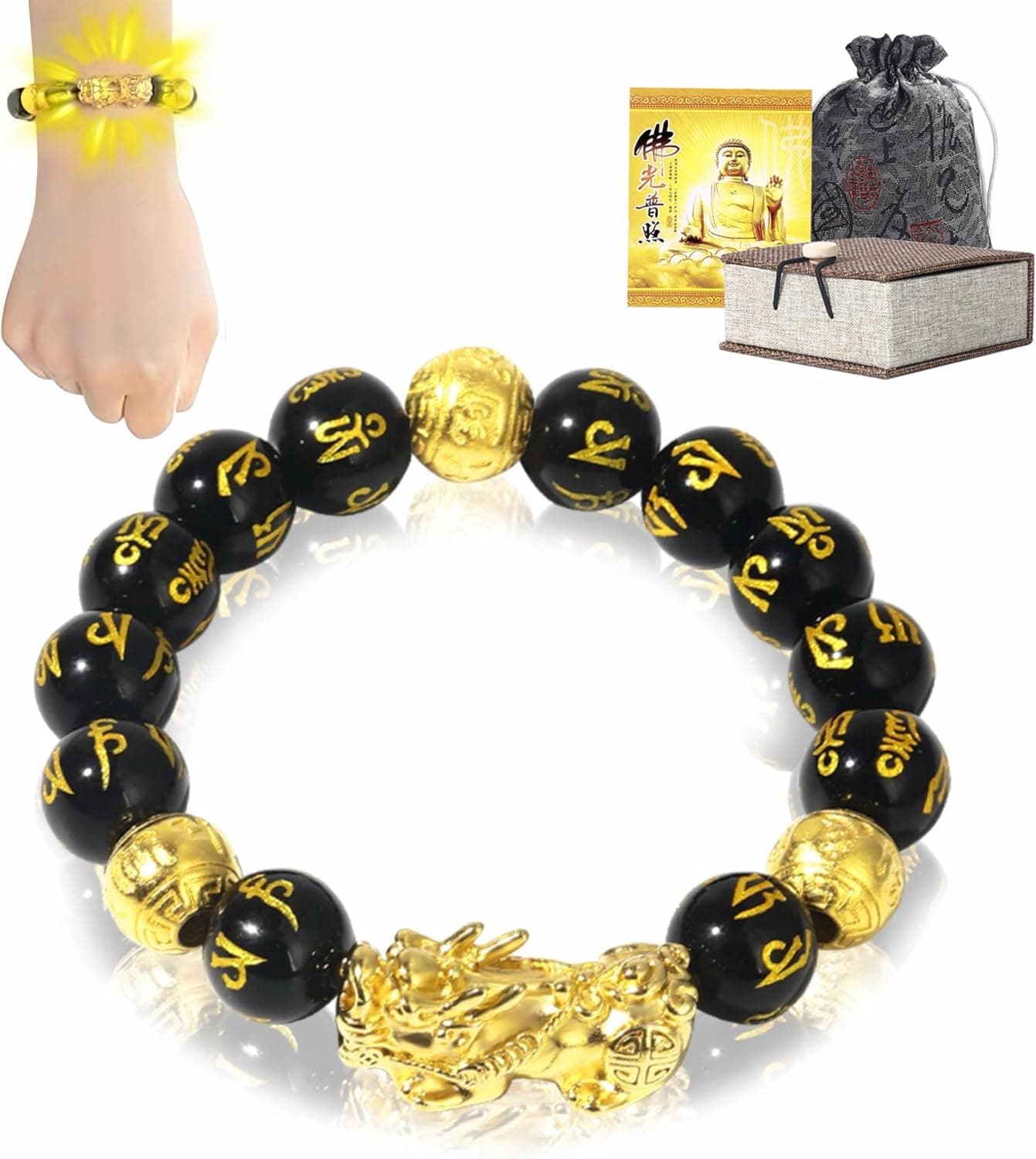 -50%
-50%biuufish Feng Shui Black Obsidian Bracelet for Men Women, 24K Gold Plated Pix...
As an Amazon Associate, we earn from qualifying purchases. We only recommend items our practitioners have personally tested.
Continue Your Journey
Explore these related guides to deepen your understanding:

Ready for Deeper Guidance?
Try our free I Ching reading for personalized wisdom, or explore our curated Feng Shui essentials.