Too much openness can make practice drift, flatten, and lose its inner shape.
The room that felt peaceful until it felt empty
A bare room can calm you for about thirty seconds, then it starts to unmake your attention. I have watched this happen in a large, minimally furnished hall with white walls, one low bench, and no partitions: the first impression is relief, but soon the eye has nowhere to settle and the mind begins to float without direction.
That is the open space fallacy. People assume more openness automatically means more clarity, as if removing every visual object also removes mental noise. But attention is not improved by vacancy alone; it needs proportion, edges, and a place to land. A room without shape can feel peaceful while quietly erasing the very distinctions meditation depends on.
The same thing happens in practice. A person sits in an apparently open setup—no altar, no cushion boundary, no routine, no defined start—and the session becomes technically quiet but internally noisy. The breath is there, the posture is there, yet awareness slips into a diffuse, unanchored state that feels less like insight and more like being mentally under-furnished.
That is where many people misunderstand meditation benefits. They expect a soft wash of calm, when the deeper change is a reorganization of perception. Calm can be part of it, but if the practice lacks form, the mind may mistake numbness for depth and passivity for release.
When openness becomes overexposure
A room that echoes too much does something strange: every footstep feels exposed, every shift of weight sounds larger than it should. That acoustic effect has a psychological cousin. When a practice space is too open, too flat, or too undefined, awareness can lose the contour that lets sensations, thoughts, and meanings remain distinct.
This is why “just sit anywhere” sounds liberating but often fails in a studio apartment or renter’s corner of a bedroom. A chair pulled into the middle of an empty living room may look serene, yet the openness can become exposure. The window, the hallway light, the laundry basket, the laptop on the table—suddenly the mind has nine doors open at once. Nothing is wrong with spaciousness. The problem is spaciousness without scale.
In architectural terms, good spaces do not maximize openness. They balance openness with enclosure, light with shadow, movement with pause. A cloister proves the point without making a speech. Corridors do not imprison attention; they guide it. Thresholds do not interrupt experience; they help experience change state.
That same principle applies inwardly. Too much uninterrupted mental openness can reduce agitation, but it can also reduce differentiation. The mind becomes less able to tell one sensation from another, one thought from another, or a passing mood from a genuine insight. The result is a kind of spiritual fog that people sometimes praise because it feels quiet.
Quiet is not the same as clarity.
Why a practice needs walls, thresholds, and circulation
Classical meditation spaces understood something modern wellness language often misses: transition matters. You do not step from ordinary life into contemplation by accident. You cross a threshold. You leave noise behind, then enter a shaped environment where attention can change its posture.
That threshold can be tiny. A candle lit before sitting. A cushion placed in the same corner each morning. A small bowl, a folded cloth, a fixed direction of facing. These are not decorative extras. They tell the nervous system that it is no longer wandering through the day. It has arrived.
Circulation matters just as much. In architecture, circulation is the path through a building; in meditation, it is the path awareness takes through experience. Without some internal pathway, the mind does not rest well. It drifts. It skims. It keeps re-entering the same surface layer because nothing in the practice tells it where to go next.
That is why a practice space should not feel like an empty warehouse. Even in a small apartment, a 3-foot by 5-foot area can be enough if it is consistent, oriented, and slightly separated from daily traffic. A rug, a lamp with warm light, and a cushion placed near a wall can create enough enclosure to let the mind travel somewhere instead of dissolving into ambient life.
Space needs sequence. Sequence gives the mind a route.
For readers who want the broader philosophical frame behind this, I would place this discussion beside the daily life application of yin and yang, because the core issue is balance, not emptiness.
The benefit is not relaxation alone
Relaxation is a respectable outcome, but it is not the whole story. If that were all meditation offered, a warm bath and a quiet room would satisfy the same need. The deeper effect is that repeated practice changes what counts as self, threat, and desire.
That sounds abstract until you notice it in actual life. A person who used to treat every difficult email as an emergency may, after steady practice, feel the surge of reaction without automatically becoming the reaction. A sudden criticism still lands, but it does not colonize the whole inner house. That is a real benefit. Not escape. Reallocation.
Here the philosophical language matters. In many contemplative traditions, the point is not to produce a blank, improved mood. The point is to alter the relation between consciousness and its contents. A thought becomes a thought. A fear becomes a fear. A craving becomes a craving. That may sound modest, but it is the beginning of freedom.
And this is where the open-space myth fails hardest. Too much openness can flatten these distinctions. A practitioner may sit in an airy, aesthetically pleasing room and feel very peaceful, yet also strangely unresponsive. They can mistake absence of friction for wisdom. That is a real risk, especially in small apartments where “minimal” can quietly become “vacuous.”
I've seen bedrooms where the only object near the bed was a pale blue meditation cushion, a phone charger, and a mirror across from the closet. The room looked clean. The sessions inside it did not. The mirror kept scattering attention, the cushion had no boundary, and the practitioner described the result as “clear” when it was really thin. Once the mirror was moved and a small standing lamp created a warmer corner, the same ten minutes produced steadier concentration and less emotional drift.
The surprise is that limitation can improve depth.
Yin and yang in the mind: balance, not vacancy
Yin and yang are useful here because they prevent a lazy equation between “more space” and “more insight.” Yin is not just emptiness, and yang is not just activity. Each needs the other to become intelligible. A meditation session with only openness is all yin and no structure; it softens, but it does not shape. A session with only effort is all yang and no receptivity; it strains, but it does not receive.
The practical implication is straightforward. Your practice needs a little enclosure and a little openness, a little discipline and a little release, a little form and a little breath. If the room is too open, add a visual boundary. If the mind is too loose, shorten the session and make the beginning and ending exact. If the breath feels so spacious that it no longer anchors attention, return to a slower, more measurable pace. Spaciousness is useful only when it still has proportions.
Philosophically, this is where meditation becomes more than self-management. It is a disciplined encounter with how experience is organized. You stop asking only, “Do I feel better?” and start asking, “What kind of self is being formed here?” That question changes everything. It shifts practice from symptom relief to meaning.
If you want a companion piece on how that balance shows up outside the cushion, see the way balance actually functions in ordinary life.
Another common error is to think that every discomfort should be removed from the practice space. Not true. A little containment is healthy. Too much comfort can sedate. Too much emptiness can disperse. The goal is a room, and a mind, with enough shape to support awareness without crowding it.
What changes when perception has proportion
When perception has proportion, life stops feeling like one undifferentiated field of input. You begin to register thresholds again. Arrival feels different from dwelling. Noise feels different from language. Desire feels different from need. Those distinctions are not trivial; they are the basis of sane action.
That is why a meditation practice should be designed like a good passageway, not a vacant hall. The room should guide rather than overwhelm. The light should reveal form without blasting it. The silence should hold shape. In a small apartment, that might mean facing a wall, using one lamp instead of overhead lighting, and keeping the area visually simple but not blank.
There is a real difference between a spacious breath and a breath that has become so loose it no longer anchors attention. The first settles the body. The second can feel almost weightless, and that weightlessness may be mistaken for transcendence when it is actually loss of contact. A stable practice keeps enough structure to prevent that slide.
So the benefit is not merely that you relax, sleep better, or feel less reactive. Those can happen. But the stronger change is that the world becomes legible again. You see your impulses with more proportion. You experience suffering without being swallowed by it. You can rest without disappearing.
That is a far more serious claim than “stress reduction.” And it is the one worth keeping.
For the full philosophy behind that shift, link this discussion back to a clearer account of how inner guidance becomes usable.
Practical shape for a small room
Start by choosing one edge of a room and claiming it as practice territory. Not the middle. The edge. Put a cushion, mat, or chair there, with one object that signals arrival—a lamp, a small bowl, a folded cloth, or even a single book kept only for this purpose. The point is not decoration. The point is threshold.
Then remove visual competition. A mirror across from you, a bright screen, or a cluttered shelf will keep asking for attention. If you cannot remove them, angle yourself away. In small spaces, orientation does more work than furniture. A slight turn of the chair can change the entire experience of the room.
Keep the session form simple: one minute of settling, ten to twenty minutes of sitting, one minute of closing. Do not make the beginning vague. Do not make the ending accidental. This is where circulation becomes visible. Your awareness should know where it enters, where it stays, and where it returns.
If the mind gets foggy, tighten the structure rather than widening the field. Sit closer to a wall. Shorten the session. Reduce ambient light. Use one consistent object of attention. In practice, a little less openness often creates a lot more depth.
If you want a related method for translating these principles into daily life, the step-by-step version lives in this practical guide to balancing opposites.
The unexpected lesson is simple. Meditation does not always flourish in the most open room. Sometimes it needs a corner, a threshold, and a path. Sometimes the mind becomes clearer not when everything is removed, but when enough is arranged to let perception take shape.
FAQ
Do meditation benefits disappear if the space is too open?
Not disappear, but they can weaken or become harder to recognize. A very open setup may still reduce agitation, yet it often blurs the boundaries that support stable attention and clear discernment.
What should I do in a studio apartment with almost no separate room?
Create a micro-boundary instead of waiting for ideal conditions. A cushion beside one wall, a lamp with warm light, and a consistent facing direction can turn one corner into a practice threshold.
Is blankness ever a good sign in meditation?
Surprising as it sounds, blankness can be either useful quiet or subtle dullness. The difference shows up afterward: clear practice leaves you more responsive and more precise, while dullness leaves you flatter and less able to name what you experienced.
David Liu
Traditionally informed guidance • Cross-referenced with classical Chinese source texts
Rooted in classical Chinese metaphysics and cross-referenced with original texts. Product recommendations are based on traditional symbolism, not guaranteed outcomes.
Practitioner-Selected Tools for This Topic
Items our team has tested and found effective for the principles discussed above. Individual results may vary.
 -29%
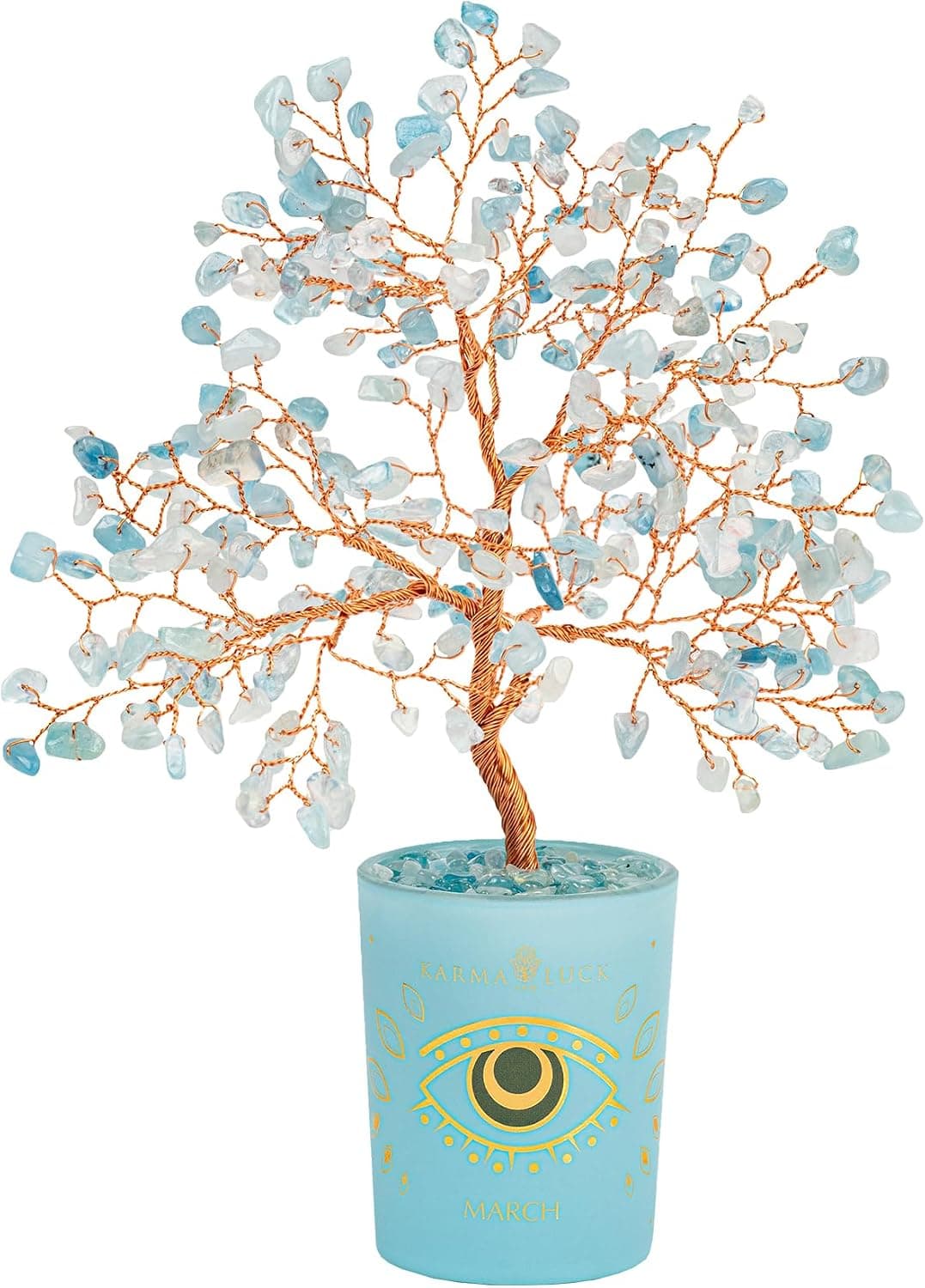
-29%Karma and Luck March Birthstone Crystal Tree of Life, Aquamarine Gemstone Fen...
 -29%
-29%Karma and Luck July Birthstone Crystal Tree of Life, Ruby Gemstone Feng Shui ...
 -29%
-29%Karma and Luck February Birthstone Crystal Tree of Life, Amethyst Gemstone Fe...
 -50%
-50%biuufish Feng Shui Black Obsidian Bracelet for Men Women, 24K Gold Plated Pix...
As an Amazon Associate, we earn from qualifying purchases. We only recommend items our practitioners have personally tested.
Continue Your Journey
Explore these related guides to deepen your understanding:

Ready for Deeper Guidance?
Try our free I Ching reading for personalized wisdom, or explore our curated Feng Shui essentials.