Hexagram 2 does not ask you to conquer the moment. It asks you to hold steady long enough for the right shape to appear.
The line people miss in Hexagram 2
The receptive hexagram looks soft on paper, but in practice it can be stubborn. I have seen people get more confused by Hexagram 2 than by a changing line in Hexagram 49, because they expect a clear command and receive an instruction to yield, wait, and support. That feels passive only if you think power always needs noise.
In a narrow upstairs bedroom in Portland, a nurse told me she kept drawing this hexagram while staring at a blue-gray wall and a white metal bed frame. She wanted a direct answer about whether to leave her job. The answer she kept receiving was not a dramatic yes or no. It was a message about timing, posture, and the kind of strength that does not announce itself.
This is where the i ching hexagram 2 receptive meaning gets misunderstood. People want movement. Hexagram 2 gives form. It points to the field before the harvest, the soil before the seed, the pause before speech. That is not laziness. That is arrangement.
And if that sounds too gentle for real life, good. Gentle is often what survives. The receptive principle shows up when a home settles after renovation, when a relationship stops being forced, and when your own mind finally stops trying to win every minute.
For a broader orientation to the hexagram system, I recommend reading how hexagrams work as a pattern language before you reduce this one to a single moral. Hexagram 2 makes more sense when you see where it sits in the larger structure.
What receptive power actually does
Hexagram 2 is not about emptiness. It is about capacity. A bowl is not weak because it receives water; it is useful because it can hold what arrives. That is the heart of this hexagram. It favors responsiveness over initiative, but not helplessness. Those are very different things.
The classic mistake is to imagine that the receptive means doing nothing. Not true. The receptive movement is active in a quiet way: preparing the ground, noticing the timing, supporting the right leader, and refusing to oversteer. I have watched more than one executive ruin a good opportunity by forcing a decision three days too early. The room had already told them to wait. They just did not like the tone of the message.
One of the clearest ways to understand the i ching hexagram 2 receptive meaning is to compare it with a kitchen. A good cook does not bully a pan into heating faster. She listens to the oil, watches the edge of the onion, and lets the process come into coherence. That is Hexagram 2 in ordinary life: intelligent patience with structure underneath it.
This hexagram also speaks to relationship dynamics. If Hexagram 1 is the initiating force, Hexagram 2 is the force that allows form to land. In readings, that often means the answer is not to chase, argue, or perform. It may mean to support, to hold, or to step back so that the situation can reveal its own shape.
Surprise: sometimes the receptive is the more demanding choice. It asks you to tolerate uncertainty without turning it into drama. That is harder than making a noisy move and calling it courage.
How to read it without making the usual mistake
People often ask whether Hexagram 2 means “be passive.” That phrasing is already a trap. Passive means uninvolved. Receptive means open, grounded, and able to respond without forcing. The difference matters when you are making decisions about work, money, or family.
If you receive this hexagram without changing lines, the message usually emphasizes steadiness and non-domination. If it appears with changing lines, then the receptive energy is shifting into a more specific expression, and the details matter. Do not flatten the reading into a slogan. The lines are where the instruction becomes usable.
In practice, I look at three things: where the question is trying to push, where resistance is already present, and whether the querent is confusing urgency with importance. That last one causes more bad readings than people admit. Urgency is loud. Importance is often quiet.
It helps to remember that Hexagram 2 belongs to the earth principle. Earth does not compete with rain. It receives, filters, and nourishes. When your situation feels blocked, this hexagram may be saying that the next move is to become more capable of receiving the answer rather than trying to manufacture it.
If you are new to casting methods, the coin method gives cleaner results than rushed intuition when you are working with subtle hexagrams like this one. The method matters because sloppy casting produces sloppy interpretation.
Practical application: what to do this week
Start with the question itself. If you ask, “What should I do?” and receive Hexagram 2, the answer may be that your question is too aggressive. Try asking, “How do I support the right outcome?” or “What posture will let this situation develop naturally?” That shift alone changes the quality of the reading.
Then look at your environment. Receptive energy suffers in cluttered, overstimulating spaces. I walked into a home office in Austin last spring where a teacher had a black desk, three red file boxes, and a blinking router light pointed directly at her chair. She said she could not focus. We moved the red boxes out, softened the desk area, and within four days she stopped feeling like she had to fight every email. The room was teaching her the same lesson as the hexagram: receive what is real, and stop wrestling with what is not.
Use this sequence for a practical response to Hexagram 2:
1. Pause before acting for at least one full day if the issue is not urgent.
2. Write down what you are trying to force.
3. Remove one source of friction: noise, clutter, unnecessary discussion, or overplanning.
4. Ask who or what needs support rather than control.
5. Watch what changes when you do less, but with more precision.
That last step matters. The receptive is not a retreat from action. It is a refinement of action. You do less of the wrong thing and more of the thing that lets life organize itself.
In a bedroom, this can mean lowering visual tension. Heavy red bedding, harsh overhead light, and mirrors aimed at the bed can all create a restless feeling that clashes with receptive energy. A better arrangement often uses softer colors, solid grounding pieces, and a sense of containment. The point is not decoration. The point is to stop the room from arguing with your nervous system.
And if you want the wider context for how this fits into actual divination practice, the best questions are usually the ones that reduce your ego, not inflate it. Hexagram 2 rewards humility in the question as much as in the answer.
How it connects back to the larger system
The i ching hexagram 2 receptive meaning becomes clearer when you place it beside the whole book. The I Ching is not only a set of answers; it is a map of change, polarity, sequence, and timing. Hexagram 2 is one of the foundational poles. Without it, initiation becomes aggression. With it, initiation becomes usable.
This is why people studying Hexagram 2 only as “the feminine” often miss the practical instruction. The hexagram is broader than gender. It is about the field that accepts influence without losing its own integrity. It is about the kind of strength that makes growth possible.
Read that again. Receptive does not mean weak. It means able to hold. A cracked vessel cannot receive much, no matter how beautiful it looks from a distance.
If you are trying to understand the full pattern of a reading, use Hexagram 2 as a check on your own behavior. Are you trying to force a timeline? Are you trying to impress the question? Are you overexplaining what should be observed? The hexagram often exposes where the real problem is not the situation but the reader’s impatience.
FAQ
Does Hexagram 2 always mean wait?
Not always. Sometimes it means prepare, support, or step into a secondary role so the situation can organize itself. Waiting is only one expression of receptivity, and it is the wrong one if preparation is the real instruction.
Is the receptive hexagram about women or femininity?
Surprisingly, no reading should stop there. The image has feminine associations in classical Chinese thought, but the practical meaning applies to everyone: how to receive, contain, nourish, and align without forcing.
What if I keep getting this hexagram in readings?
Then your life is probably asking for less pushing and more structure. Repeated appearances usually point to a habit pattern, not a one-time message, and that habit is often impatience dressed up as action.
Can Hexagram 2 support career decisions?
Yes, especially when the issue involves timing, alliances, or leadership that is not yet visible. In career work, it often says to build the conditions for success instead of trying to seize a result before the ground is ready.
David Liu
Traditionally informed guidance • Cross-referenced with classical Chinese source texts
Interpretations cross-referenced with the Zhouyi (周易) and Wilhelm/Baynes translation.
Practitioner-Selected Tools for This Topic
Items our team has tested and found effective for the principles discussed above. Individual results may vary.
 -20%
-20%Aquarius 12 Zodiac Challenge Coin - Twelve Constellations Aquarius Protective...
 -29%
-29%Karma and Luck March Birthstone Crystal Tree of Life, Aquamarine Gemstone Fen...
 -29%
-29%Karma and Luck July Birthstone Crystal Tree of Life, Ruby Gemstone Feng Shui ...
 -29%
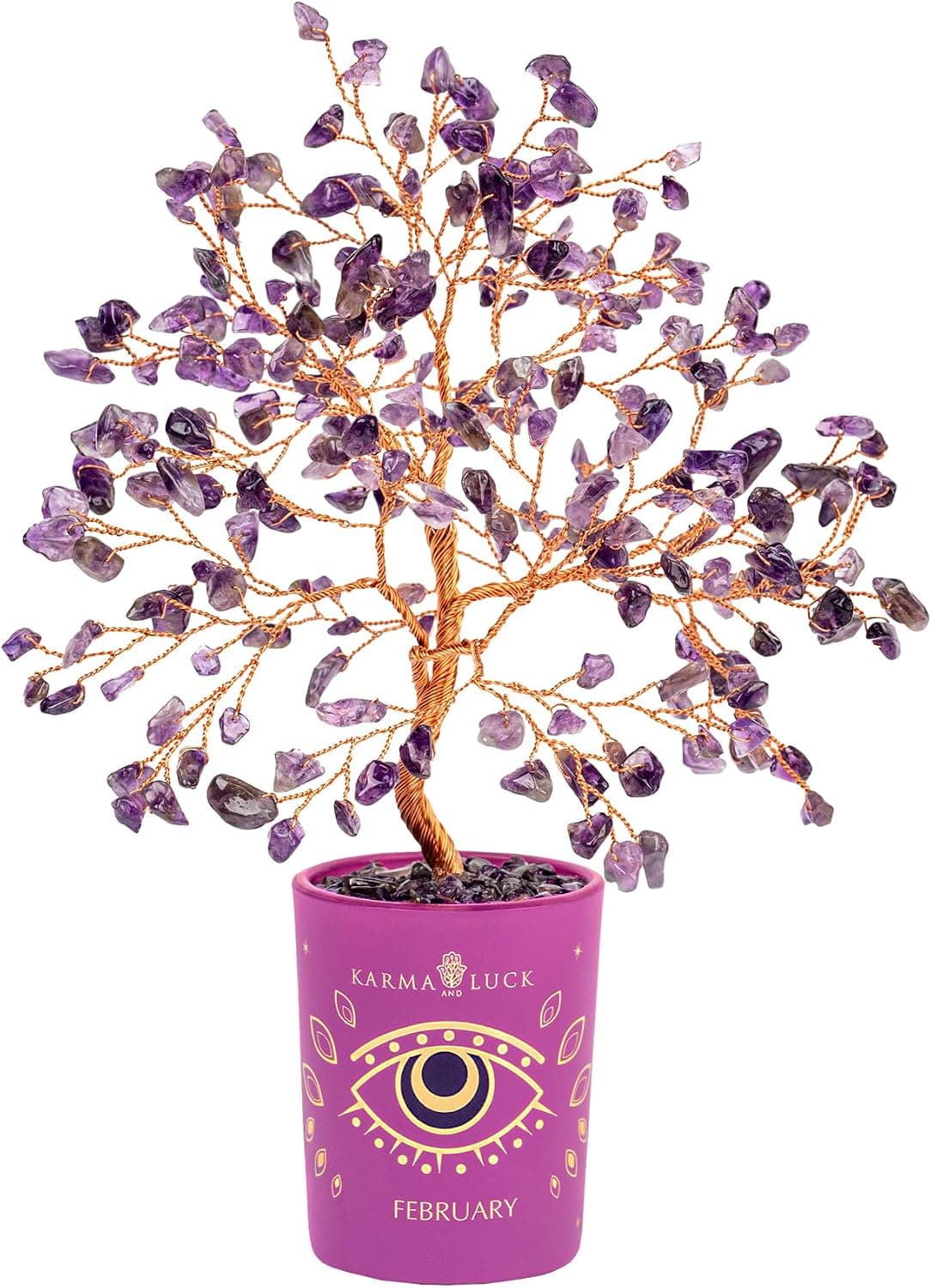
-29%Karma and Luck February Birthstone Crystal Tree of Life, Amethyst Gemstone Fe...
As an Amazon Associate, we earn from qualifying purchases. We only recommend items our practitioners have personally tested.
Continue Your Journey
Explore these related guides to deepen your understanding:

The I Ching Doesn't Answer Lazy Questions — Here's What to Ask Instead
8 min readConfucian Commentary Turns the I Ching Into a Moral Floor Plan
9 min readBroken Lines, Solid Lines, and the Real Yin-Yang Logic of the I Ching
11 min readThe Wilhelm I Ching Feels Deep Because It Slows Your Reading
11 min readReady for Deeper Guidance?
Try our free I Ching reading for personalized wisdom, or explore our curated Feng Shui essentials.