The doorway tells you more than the coin toss: what you can see from the threshold often predicts the quality of a money decision.
Start at the Threshold
The I Ching helps with money when you treat it as a read on conditions, not a promise of cash. It tells you whether the path is open, cramped, delayed, or poorly supported.
That is the first discipline a practitioner learns. A person may ask about a raise, a bill, a loan, or a side project, but the oracle responds to the shape of the situation, not to wishful thinking.
Imagine standing in a half-open doorway with daylight on the floor and the next room still partly hidden. The question is not, “Will treasure appear?” The question is whether the floor is sound enough to step on.
If you want a clean beginning, use the method in your first I Ching consultation and keep the question tied to one concrete money decision.
Ask one thing, give it a time frame, and decide in advance what you will do if the answer points to delay. That alone removes a great deal of noise.
A bright room can still conceal a weak floorboard.
Why Broad Money Questions Go Sideways
“Will money come?” sounds direct, but it is too loose to be useful. Money can arrive through wages, a refund, a debt settlement, a sale, or simply by avoiding a loss. Those are different channels, with different timing, different costs, and different risks.
That is where many readings go off course. A broad question forces the oracle to answer a blur. The anxiety behind the question then fills in the blanks, so the result gets bent toward the fear or hope that is loudest that day.
Picture an empty storeroom with one narrow passage between stacked boxes. If someone asks whether the room is “good,” the answer is meaningless. If they ask whether goods can move through it this week, the reading finally has something concrete to measure: width, obstruction, timing, and handling.
Classical consultation was never only about prediction. It was about placing action inside change. A vague money question strips out the action part, which leaves you with symbolism but not guidance.
For context on the older structure behind the text, see the history of the Book of Changes. The tradition is older than modern yes-no thinking, and it shows.
A debt question needs the same precision. “Will I get the money?” is weak because it hides the real issue: whether the position can be carried long enough for cash to arrive. “Can I hold this position for six weeks without making it worse?” is usable because it names the pressure and the window of time.
That is the sort of question the oracle can actually answer.
How Money Shows Up in the Oracle
The I Ching does not treat money as a fixed object sitting in a pile. It treats it as movement: income arriving, expenses leaving, reserves thinning, obligations pressing, and timing shaping everything.
That is why a good reading often feels less like a forecast and more like a map of pressure. It shows what is entering, what is draining, and what becomes harder to manage if you move too soon or too broadly.
Yin and yang matter here more than most people expect. A favorable sign can still call for restraint if the situation is overheated, exposed, or missing support. A promising opportunity can still be poor timing if the cash position is thin or the obligations are already crowded.
The fantasy of sudden windfall usually collapses when the reading is honest. The oracle often gives a harder answer: not “can you get it,” but “can you carry it without distortion.” That shift matters because carrying capacity is usually what determines whether a gain turns into stability or stress.
To see the mechanics more clearly, study the trigrams in a reading. They show whether the energy is rising, yielding, stopping, or opening, which matters when you are deciding whether to spend, save, borrow, or wait.
In a north-facing study with bills on the desk and receipts still unsorted, the real issue is not desire. It is whether the current structure can absorb one more obligation without buckling.
That is the level where serious money work begins.
Ask the Right Kind of Question
Most people think they are asking about money when they are really asking for relief. That changes the reading before the first line is cast.
Separate the issue before you consult. Income, spending, debt, saving, and risk are not the same question, and they do not deserve the same phrasing.
Income questions ask whether support and timing are aligned. Spending questions ask whether outflow is disciplined. Debt questions ask whether pressure is manageable. Investment questions ask whether exposure matches the ground you are standing on.
Someone considering a side job should not ask, “Is this good?” The better question is, “Will this help me without crowding out the obligations already in front of me?”
That is a real doorway question. It looks at what can be seen now instead of trying to guess three rooms ahead.
For a grounded explanation of the process itself, this guide to how the oracle functions will help keep the reading tied to the decision rather than the mood.
Time frame matters too. Six weeks and six months are not the same landscape.
Shorten the question and the answer usually sharpens.
Changing Lines and Financial Pressure
Changing lines matter in money readings because they show where the situation is unstable. That instability may be useful, but it is rarely neutral.
Do not treat a changing line as a special effect. Treat it as a point of strain, movement, or transition.
A line near the bottom often shows a decision still close to your hands. A line near the top can suggest distance from direct control. That is one reason the doorway image works so well: it tells you where influence is strongest.
If you want the structural picture, the hexagram chart itself is worth studying. It shows how one condition turns into another instead of freezing the reading into a single verdict.
Consider a small seller with unpaid invoices on one shelf, fresh stock in another corner, and a promotion plan already drafted. The question is whether to expand inventory before a busy season. The reading points to compression, not expansion. Demand is not the issue. Cash timing is.
That kind of answer is easy to resent and useful to receive.
A warning can save more money than encouragement ever will.
When the Reading Says Hold Back
Caution is not a weak response. In financial questions, it is often the clearest one.
When the reading feels tight or obstructed, the practical move is usually to delay, reduce exposure, or test the assumption that created the question in the first place. That may mean waiting for a payment to clear, cutting the size of an order, or refusing to borrow against optimism.
People dislike that advice because it feels passive. It is not passive if it preserves position.
In five-element terms, too much pressure without enough support dries the situation out. The point is to restore balance, not force momentum.
A debt question makes this plain. Someone may ask whether money will arrive, but the deeper issue is whether the next six weeks can be endured without making the position worse.
That is a more adult question. It turns the reading from hope into strategy.
When a result says “stop, hold, or reduce,” compare it with the logic of Before Completion. It is especially useful when something is nearly finished but not yet stable.
Delay is not refusal. Sometimes it is the cleanest way to keep your footing.
How to Use the Oracle Without Abandoning Judgment
The best way to use an I Ching reading for money is as part of a decision loop. Ask the question, record the answer, act on it, and then check what actually happened after the money event unfolds.
That habit matters. Historically, consultation was tied to responsibility and right action, not just to curiosity. The question was not only what might happen, but what should be done under the present conditions.
So do not ask the oracle to replace analysis. Ask it to refine your judgment.
If the reading points to waiting, see whether waiting preserved capital. If it points to proceeding, see whether you moved with awareness instead of impulse. That is how the system teaches without becoming superstition.
The same method applies whether the question is a salary negotiation, a business cash-flow pinch, or a debt decision. The threshold image remains useful: can you see enough of the next room to move responsibly?
If yes, step. If not, stand back until the light changes.
The cleaner the question, the cleaner the answer.
FAQ
Is an I Ching money reading supposed to tell me if cash is coming? Sometimes it may hint at that, but its stronger use is showing whether the conditions support a move. For money work, timing and exposure usually matter more than a bare yes or no.
What does it mean when the reading feels discouraging? It often means the structure is tight, not that the outcome is doomed. A narrow passage can still be passable later. The reading may simply be saying, “not in this form, not right now.”
Should I ask about one bill or my whole financial life? One bill, one loan, one investment, one decision. Specific questions give the oracle a shape. Broad questions tend to echo your worry back at you.
Can changing lines show whether a business move is too risky? Yes. They often point to where strain is building, where timing is shifting, or where the plan is still too fragile. That is more useful than a dramatic prediction.
What if I keep getting cautionary readings about money? Treat that as information about structure. Repeated caution usually means the plan is too thin, the timing is off, or the assumptions are too rosy. It is worth revisiting the setup instead of pressing harder.
Does a favorable result mean I should move fast? Not automatically. A favorable sign still has to fit the ground conditions. If reserves are low or obligations are already crowded, a careful move can be wiser than a quick one.
David Liu
Traditionally informed guidance • Cross-referenced with classical Chinese source texts
Interpretations cross-referenced with the Zhouyi (周易) and Wilhelm/Baynes translation.
Practitioner-Selected Tools for This Topic
Items our team has tested and found effective for the principles discussed above. Individual results may vary.
 -20%
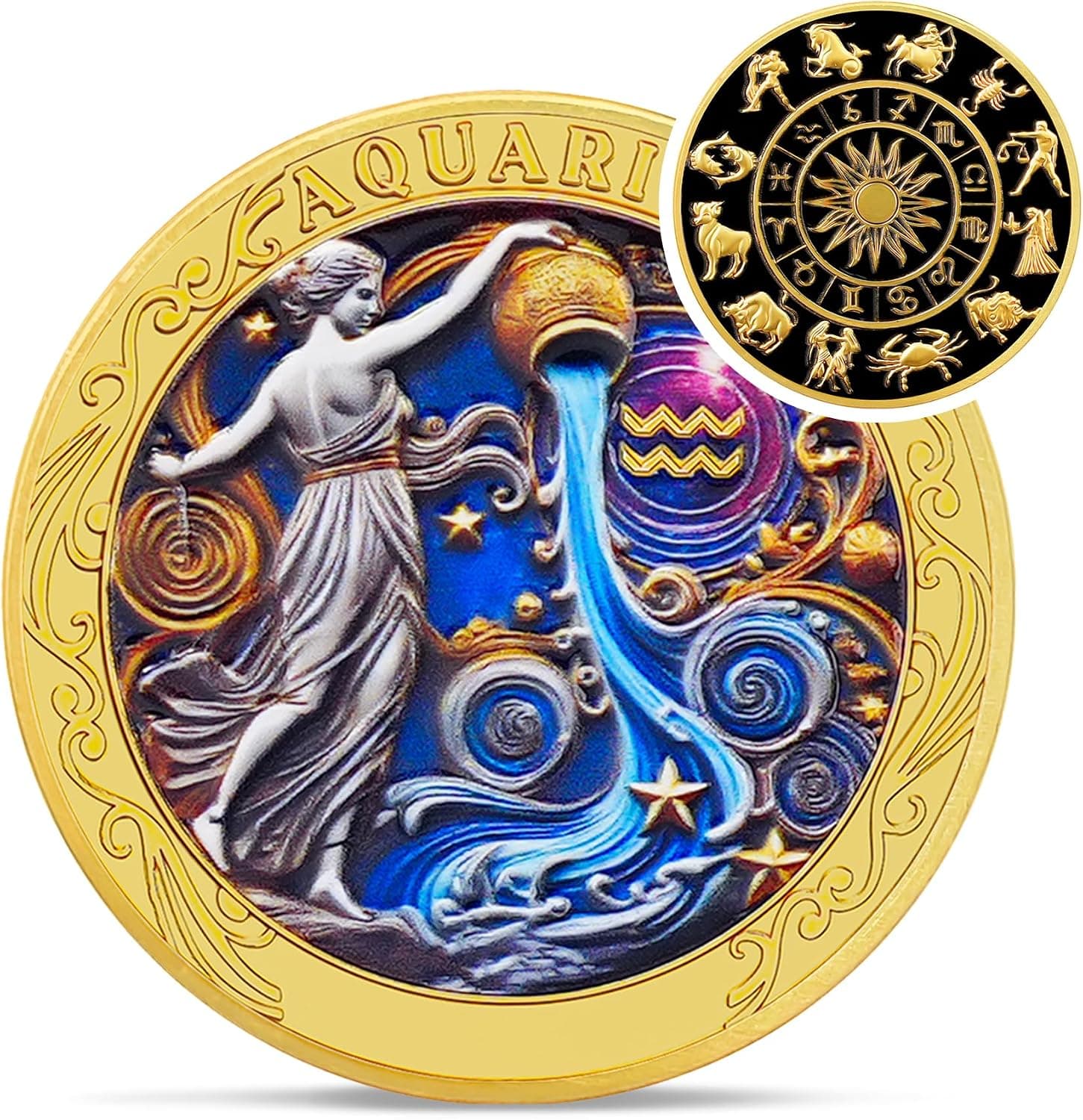
-20%Aquarius 12 Zodiac Challenge Coin - Twelve Constellations Aquarius Protective...
 -29%
-29%Karma and Luck March Birthstone Crystal Tree of Life, Aquamarine Gemstone Fen...
 -29%
-29%Karma and Luck July Birthstone Crystal Tree of Life, Ruby Gemstone Feng Shui ...
 -29%
-29%Karma and Luck February Birthstone Crystal Tree of Life, Amethyst Gemstone Fe...
As an Amazon Associate, we earn from qualifying purchases. We only recommend items our practitioners have personally tested.
Continue Your Journey
Explore these related guides to deepen your understanding:

The I Ching Doesn't Answer Lazy Questions — Here's What to Ask Instead
8 min readConfucian Commentary Turns the I Ching Into a Moral Floor Plan
9 min readBroken Lines, Solid Lines, and the Real Yin-Yang Logic of the I Ching
11 min readThe Wilhelm I Ching Feels Deep Because It Slows Your Reading
11 min readReady for Deeper Guidance?
Try our free I Ching reading for personalized wisdom, or explore our curated Feng Shui essentials.