Changing lines are not decoration; they are the moving part of the answer, and if you ignore them, you miss the point.
The part of the hexagram most people rush past
You cast the coins, you get the hexagram, and then you stare at the moving lines like they are an error message. That’s where people stall. They want the answer to be loud and simple, but the shape of the hexagram itself is already speaking before you even touch the changing lines.
I’ve seen this happen at a dining table in a small apartment in Portland, with three old coins, a blue teacup, and a notebook full of crossed-out questions about work and marriage. The woman was a nurse, tired enough to look angry at the oracle. Her result had two moving lines, and she kept asking, “Which one do I believe?” The better question was different: which line is describing the tension that is actually alive right now?
That is the first shift you need to make. Changing lines are not there to decorate the reading. They show where the current situation is unstable, where pressure is turning, and where the original pattern is already giving way. If you want to understand what moving lines are doing in a reading, stop treating them like footnotes. They are the mechanism.
And no, you do not need to be mystical about it. You need to be precise.
How to read them without flattening the message
The cleanest way to work with changing lines is to read the original hexagram first, then the changing lines, then the resulting hexagram. That sequence matters. The first hexagram describes the present condition. The moving lines identify the active points of change. The second hexagram shows the direction the situation is taking if nothing interrupts it.
Here is where people get careless. They jump straight to the second hexagram because it feels decisive. It isn’t. If the first hexagram is a room, the moving lines are the doors that are swinging open or slamming shut. The resulting hexagram tells you which room you are headed toward, but the line text tells you which hinge is squeaking. Ignore that, and you lose the practical advice.
When I teach people a reliable casting method, I tell them to write the lines down exactly as they appear, from bottom to top. That bottom-to-top order is not a quirk. It reflects movement through a situation, from the foundation upward. A line at the base is usually more immediate, more structural. A line near the top often describes consequences, limits, or what happens when you push the situation too far.
One useful rule: if only one line changes, read that line closely and let it carry the message. If two or three lines move, look for a pattern among them. Are they all in the lower half, suggesting the issue is still forming? Are they clustered at the top, suggesting the situation is already peaking or slipping away? If six lines change, the hexagram is in total transformation, and you should read the resulting hexagram very carefully because the original state is dissolving fast.
That is the basic framework. Simple, but not easy. The oracle rewards attention, not performance.
There is one more thing Western readers often miss: moving lines do not always “mean” the same thing as the sentence around them in modern self-help language. They can warn, instruct, restrain, or simply point out timing. A line can be favorable and still tell you to wait. It can sound severe and still be the safest advice in the reading.
A practical way to work line by line
Start by naming the question clearly. Not “What about my future?” That question is too foggy to hold a sharp answer. Ask about one situation, one decision, one pressure point. A reading for a job interview is not the same as a reading for a relationship argument, and the lines will show you that difference immediately.
Then look at the moving line positions. Lower lines tend to show beginnings, private motives, first mistakes, or the part of the situation that has not yet become visible to everyone. Middle lines usually describe the working heart of the matter, the place where influence is possible. Upper lines often point to exhaustion, overreach, resolution, or the cost of continuing in the same way. That is not a rigid law, but it is a sturdy habit.
If the text of a moving line seems strange, resist the urge to force it into your favorite interpretation. The oracle is often blunt in ways that feel inconvenient. A line may describe a petty detail—a belt, a drum, a pig, a path, a ditch—and that detail matters. The image is usually the clue. The mind wants abstraction; the I Ching keeps returning to concrete scenes because concrete scenes are where behavior changes.
Here is a real example. I once reviewed a reading in a home office with a walnut desk, a white lamp, and a red folder sitting open beside a laptop. The question was about leaving a freelance contract that had become draining. The active line mentioned “not climbing,” which annoyed the reader because she wanted action, not restraint. But when we looked at the whole reading, the message was obvious: the contract was already shifting, and forcing a move too early would damage her leverage. Two weeks later, the client revised the terms on its own. The line had not been passive. It had been tactical.
That is why learning hexagram structure and line positions is so useful. Once you can locate the line in the architecture of the figure, the text becomes less like poetry and more like instruction.
If there are multiple changing lines, read them in order and ask what sequence they create. A lower moving line may show the seed of the issue, while a higher line shows the consequence if the first shift is ignored. The line texts often form a progression: hesitation, action, correction, result. Do not treat them as isolated fortune-cookie fragments. They are part of one motion.
And if the result hexagram surprises you, good. Surprise is often the point. People come to the oracle hoping for reassurance, but the lines frequently reveal that the situation is already moving under their feet. That is not bad news. That is useful news.
Two mistakes that keep readings muddy
The first mistake is reading the changing lines as if each one is a separate answer. They are not. Unless you are deliberately doing a very advanced line-by-line analysis, the lines should be read as facets of one turning point. I’ve watched beginners create three conflicting stories from three moving lines and then call the reading unclear. The reading was not unclear. The method was.
The second mistake is skipping the original hexagram because the transformed figure feels more interesting. That habit produces shallow interpretations. The original pattern tells you why the situation is the way it is; the changed pattern tells you where it tends to go. If you skip the first half, you lose the reason the change matters in the first place.
If you want a deeper refresher on where people go wrong with interpretation, it helps to review the common line-reading traps. Most of them come from impatience, not lack of intelligence.
And yes, some readers over-polish the story until it sounds wise and vague. Don’t do that. A good I Ching reading can be plainspoken. The line about closing the gate, stopping the cart, or waiting at the road is not there for atmosphere. It is there because your timing is off, or because the situation is asking for a different posture.
Questions readers ask after their first few casts
Do I always read every changing line?
Not in the same way. One moving line can carry the whole reading, while several lines ask you to notice a pattern. If all six lines change, the reading has a much bigger arc, and the transformed hexagram becomes especially important.
Should I trust the changed hexagram more than the first one?
No. The changed hexagram is the direction, not the full story. The first hexagram tells you what is already true, and the moving lines explain the pressure that is causing the turn.
What if a line sounds negative but the result looks good?
That usually means the path is awkward but the destination is workable. The oracle is not always flattering. A difficult line can be the exact instruction that keeps you from making a bigger mistake later.
How do I know whether a line is about timing or action?
Listen for the verb and the image. A line that warns against advancing often speaks to timing, while a line that describes a specific act or omission often points to behavior. The distinction gets clearer once you compare the line to the surrounding hexagram and the question you asked.
If you want to go further, focus on consistency. Cast the same way each time, write the full reading down, and ask cleaner questions. The oracle becomes far easier to read when your own question is no longer muddy. That is the part people dislike hearing, because it puts responsibility back on the reader. But it works.
And if you ever catch yourself trying to force the answer into what you already want, stop. That’s usually the exact moment the changing lines are trying to wake you up.
Mei Chen
Traditionally informed guidance • Cross-referenced with classical Chinese source texts
Content draws from both Compass (Luopan) and Form (Xingshi) school traditions. Illustrative examples are composites based on consultation experiences.
Practitioner-Selected Tools for This Topic
Items our team has tested and found effective for the principles discussed above. Individual results may vary.
 -19%
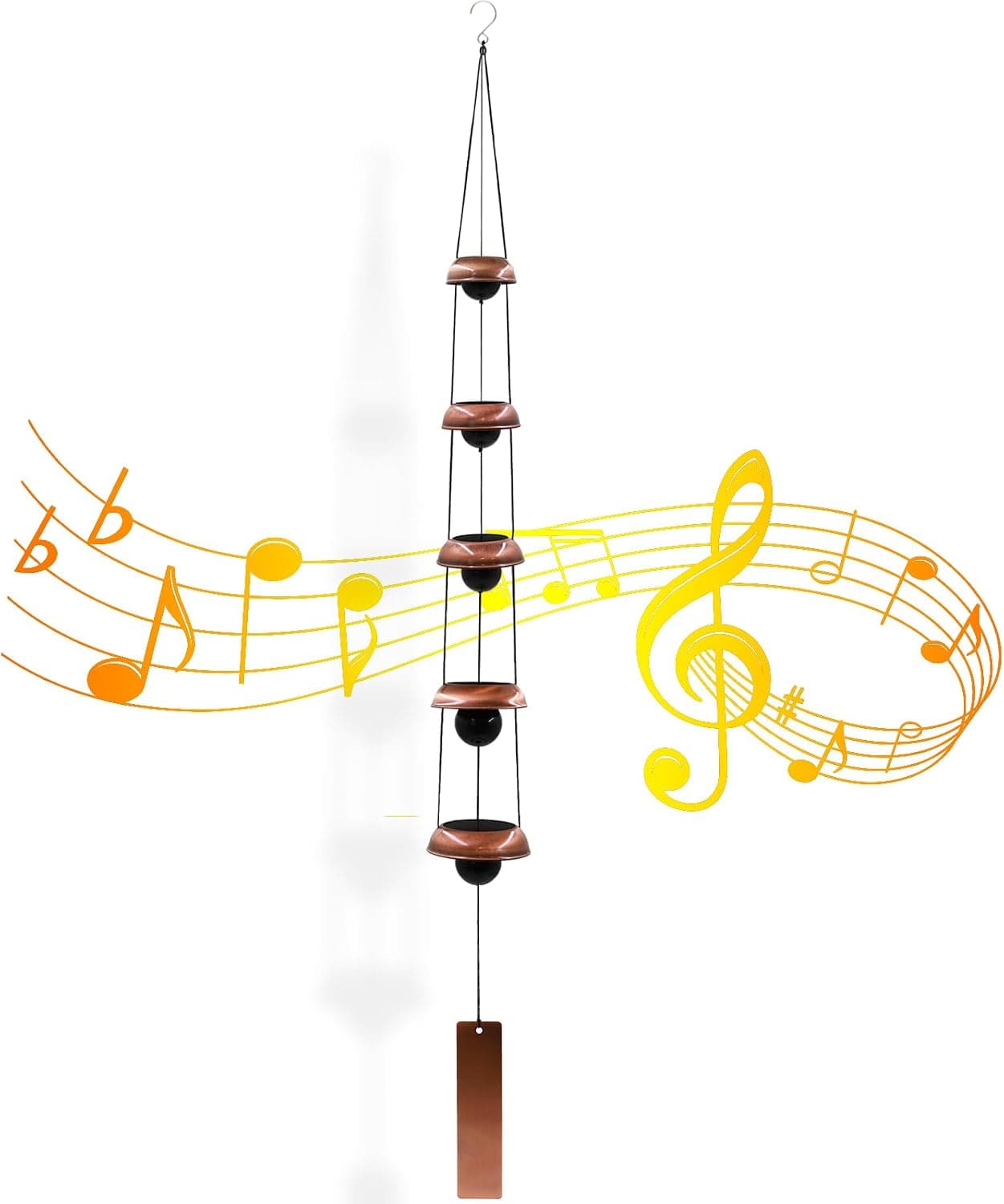
-19%Wind Chimes for Outside with 5 Bell Unique Copper Musical Chimes Feng Shui Wi...
 -5%
-5%YU FENG Evil Eye Money Tree, Blue Feng Shui Decor with Golden Buddha
 -29%
-29%Karma and Luck March Birthstone Crystal Tree of Life, Aquamarine Gemstone Fen...
 -29%
-29%Karma and Luck July Birthstone Crystal Tree of Life, Ruby Gemstone Feng Shui ...
As an Amazon Associate, we earn from qualifying purchases. We only recommend items our practitioners have personally tested.
Continue Your Journey
Explore these related guides to deepen your understanding:


Ready for Deeper Guidance?
Try our free I Ching reading for personalized wisdom, or explore our curated Feng Shui essentials.