Hang them wrong, and the entrance gets noisy instead of nourishing.
The chime that changed a quiet foyer
I once walked into a narrow entry hall in a brick townhouse on a rainy Tuesday and heard metal tapping before I even saw the front door. A silver wind chime hung inside the threshold, right over a lacquer-red console table with a bowl of keys and three dead houseplants. The owner, a retired teacher named Elaine, kept saying the house felt “busy” at night. It did. The sound was sharp, the hallway was echoing, and the first thing anyone met on entering was noise, not welcome.
That is the real problem with placement rules by direction: people assume a decorative object is harmless because it looks light and pretty. It is not harmless. At the mouth of the home, a wind chime behaves like a signal amplifier. Put it where qi moves cleanly and it can soften stagnation. Put it where doors slam, voices carry, or metal already dominates, and it can turn the entry into a restless little drum.
So the question is not whether wind chimes “work.” The question is where they stop helping and start irritating the house.
front door feng shui starts with respect for the threshold. The door is not just an opening. It is a decision point. Energy enters here first, and if the doorway is already crowded with shoes, umbrellas, mail, and a jangling sound maker, the house has no chance to receive anything cleanly.
Why the entry reacts so strongly to metal and movement
Wind chimes belong to the metal element, which can be useful when the front area feels stale, heavy, or visually blocked. Metal can cut through sluggishness. It can wake up dead corners. It can also become too aggressive if the chime is oversized, tuned too sharply, or exposed to constant motion from a drafty door.
The mistake I see most often is placement above or immediately beside the door where it collides with the door’s opening arc. That sounds minor. It isn’t. Every time the door moves, the chime strikes, and the entry never gets a moment of stillness. A home needs a welcoming pause. Without that pause, people step in already tense.
There is also a directional issue. In some homes, the front door faces a sector that already carries strong metal or fast-moving energy. In those cases, the chime can become too much. This is where knowing the door’s facing matters more than choosing a cute style from a garden store. If you want the deeper pattern, see wind chimes for wealth activation and how the entry interacts with opportunity.
Here is the surprise: the best use of a wind chime is often not at the exact center of the doorway at all. It is near the approach, where it can gently announce movement before a person reaches the threshold, or on a protected side where it does not strike every time the door opens.
One more hard lesson. Bigger is not better. A large chime can feel theatrical, but at a front door it may overpower the space, especially in apartments, row houses, or small foyers with low ceilings.
I’ve seen dozens of homes where people blamed bad luck on the wrong thing, when the real issue was an entrance that sounded like a hardware store in a wind tunnel.
Where wind chimes help, and where they sabotage the door
If the entry is exposed, empty, or visually harsh, a chime can add a soft boundary. Think of a porch that faces a long driveway, a corner lot where wind rushes straight in, or a front stoop that feels too open to the street. In those cases, a light, well-tuned chime can make the approach feel less abrupt.
But if the front door already opens into a tight hall, a staircase, or a room packed with sharp angles, hanging a chime right there often adds friction rather than flow. This is especially true when the doorway is already active with pets, children, or a smart doorbell that rings constantly. You do not need another layer of agitation.
People also underestimate sound quality. Thin, high-pitched chimes can feel nervous. Deeper tones are usually easier on the nervous system and on the house. In a small space, I prefer fewer tubes, cleaner resonance, and less constant motion. A chime should mark the threshold, not dominate the neighborhood.
For readers building a full entrance strategy, the doorway itself matters more than any single object. The door color, the mat, the lighting, the visibility from the street, and the clutter level all shape the first impression. A chime is only one part of the conversation.
In one apartment in Portland, a software engineer had hung a brass chime on the inside of the door because he liked the sound. The problem was simple: the door closed with a metallic snap, the chime answered back, and every arrival sounded like a punctuation mark. We moved it outside under the porch roof, reduced the swinging length, and put a calm runner rug inside. Within a week, he said the entry no longer felt like it was “arguing with itself.”
How to place it correctly without guessing
Start by standing outside your front door on a calm day. Watch how wind moves across the entry for a few minutes. If the door is sheltered, the chime may rarely move on its own, which is fine. A chime that never sounds is not necessarily a failure. At an entry, restraint can be better than constant ringing.
Next, check what the chime would do when the door opens. If it touches the door, bangs against the frame, or strikes every time someone passes through, the placement is wrong. Move it farther from the swing path. That may mean the side of the porch, a beam, or a wall hook slightly offset from the opening.
Here is the sequence I use in real homes:
1. Clear the threshold first. Remove broken items, tangled shoes, and anything dead or dusty. 2. Decide whether the front area needs softening or calming; do not add metal just because you own one. 3. Choose a smaller chime for narrow entries and a more substantial one only for open porches. 4. Hang it high enough that it does not brush heads or swing into the door. 5. Listen for three days before deciding if the sound is supportive or irritating.
If the front door faces a sector that traditionally calls for a more careful treatment, adjust accordingly. You can cross-check the doorway orientation with wind chimes placement rules by direction instead of relying on generic advice from a home decor aisle. Direction changes the effect. Always.
And if you are tempted to hang it on the inside because it seems safer, ask yourself one question: safer for whom? Inside the house, the chime becomes part of daily life. Every mail delivery, every late arrival, every gust through a cracked window adds more sound.
What to do when the front door already feels too active
If your front entrance is already lively, the answer may be to remove the chime rather than improve it. Not every home needs one. That thought annoys people, because they expect feng shui to be additive. Often it is subtractive. The cleanest fix is to stop overworking the doorway.
Try these adjustments before you keep the chime:
Use a calmer material finish. Brushed metal is usually gentler than shiny chrome. Shorten the suspension so it does not swing wildly. Keep it outside the direct path of rain and strong drafts. Pair it with a clean mat, good light, and an uncluttered view inward.
If the door opens directly into a living area, the transition matters even more. A soft threshold keeps movement from rushing straight through the house. A chime should help define that transition, not blast through it. For broader context on the whole entrance system, read the front door basics that support a calmer home.
And yes, sometimes the answer is no chime at all. I know that disappoints people who want a symbolic cure they can hang in five minutes. But a quiet, balanced doorway often does more for the home than an object chosen on impulse.
When the placement is right, you feel it fast
After we adjusted Elaine’s townhouse entry, the change was immediate. The chime moved outside, off the direct swing of the door, and I swapped the sharp silver piece for a smaller bronze one with a lower tone. The hallway stopped echoing. She said the evening arrivals felt less “pointed.” Two weeks later, she mentioned she was sleeping better in the upstairs bedroom because she no longer heard every draft and every closing door from the hall.
That is the level at which this works. Not magic fireworks. Not superstition. A small correction in the first few feet of your home can change the emotional temperature of the whole place.
If you want a bigger picture of how the entry supports everything else, the pillar page on front-door energy and house flow connects this detail to the rest of the system. That is where wind chimes fit into the larger architecture of qi, rather than floating around as a lucky charm.
One sentence can save you a lot of trouble: if the chime makes the entrance feel more alert than welcoming, it is in the wrong place.
FAQ
Should wind chimes be inside or outside the front door?
Outside is usually better because the sound marks the threshold without disturbing the interior. Inside, the chime becomes part of daily noise and can make the home feel more reactive, especially in a small foyer.
How many wind chimes should I use at the front entrance?
One is usually enough. A second chime rarely improves the energy; it usually creates clutter, both visually and acoustically. The doorway needs definition, not a chorus.
Can a wind chime attract wealth by the front door?
Surprisingly, the answer is sometimes yes—but only if the entrance is already clean, balanced, and properly oriented. A noisy or cluttered doorway will not benefit from symbolic decoration; it needs correction first. After that, a well-placed chime can support movement and opportunity.
Mei Chen
Traditionally informed guidance • Cross-referenced with classical Chinese source texts
Content draws from both Compass (Luopan) and Form (Xingshi) school traditions. Illustrative examples are composites based on consultation experiences.
Practitioner-Selected Tools for This Topic
Items our team has tested and found effective for the principles discussed above. Individual results may vary.
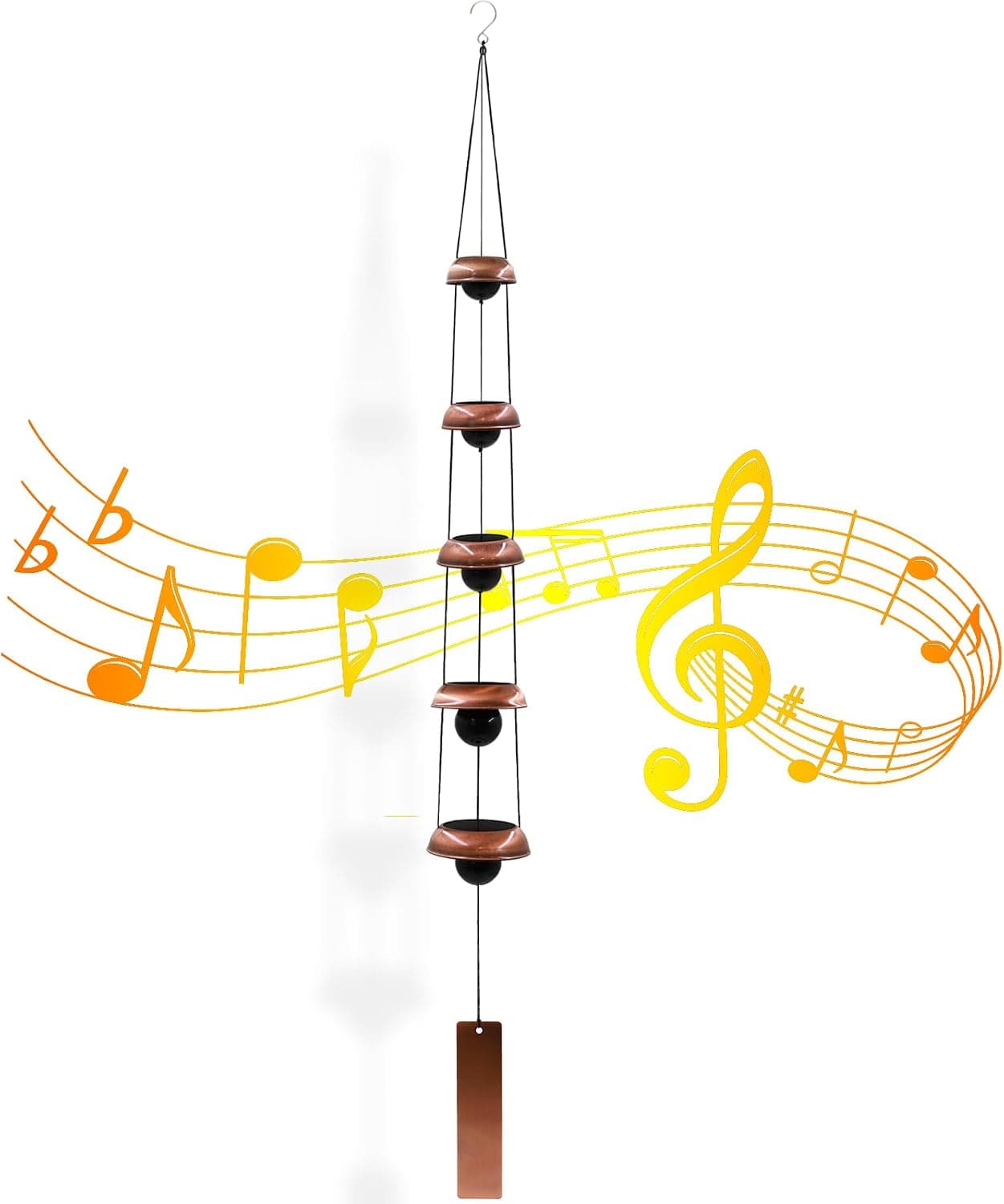 -19%
-19%Wind Chimes for Outside with 5 Bell Unique Copper Musical Chimes Feng Shui Wi...
 -5%
-5%YU FENG Evil Eye Money Tree, Blue Feng Shui Decor with Golden Buddha
 -29%
-29%Karma and Luck March Birthstone Crystal Tree of Life, Aquamarine Gemstone Fen...
 -29%
-29%Karma and Luck July Birthstone Crystal Tree of Life, Ruby Gemstone Feng Shui ...
As an Amazon Associate, we earn from qualifying purchases. We only recommend items our practitioners have personally tested.
Continue Your Journey
Explore these related guides to deepen your understanding:


Ready for Deeper Guidance?
Try our free I Ching reading for personalized wisdom, or explore our curated Feng Shui essentials.