A fountain can look perfect and still energize the dead zone no one checked.
The Hidden Truth About water fountain outdoor placement feng shui
A fountain can sit beside a porch, splash cleanly, and still make a home feel oddly alert at night, because the water is feeding the wrong pocket of the site.
I’ve seen this most often where the front path bends hard left, the driveway opens into a shallow court, and the fountain sits in the prettiest spot near the entry lanterns. The owner expects movement to attract opportunity. Instead, the house gets a restless edge: the dog circles the patio, the mail stacks near the bench, and nobody wants to linger on the back step after dark.
The missing piece is the dead zone. Every room has one, and every yard does too. It is the pocket where circulation weakens, sound dies quickly, and attention slips away because the shape of the space refuses to carry qi evenly. A fountain placed there does not always fix the lull; sometimes it amplifies the leak.
Conventional advice often skips this mechanism and jumps straight to symbolism. Water is not magic confetti. It behaves like a current, and currents need a path.
How the dead zone forms before the fountain ever starts
Start with the boundary. A wall, hedge, fence, garage edge, or side passage creates a directional bias. Water then follows the bias, because the eye follows it first and the body follows the eye. That is why a basin tucked near a dead corner can feel like it is pouring energy into a cul-de-sac rather than carrying it onward.
One courtyard I still remember had slate pavers, a cobalt ceramic urn fountain, and three boxwood shrubs that boxed in the north-west corner. At 6:40 in the evening, the water sounded louder than it should have, because the sound bounced between the fence and the urn. The owners loved the look. Yet they kept complaining that the outdoor seating area felt empty unless guests were already drinking.
That was not a decor problem. It was a circulation problem.
Here is the part people resist: stillness is not always the enemy. A dead zone is not cured by pouring activity into it. If the corner has no outlet, the water keeps recirculating inside the same energetic pocket, and the site begins to feel noisy without feeling alive. That difference matters. Noise can mask stagnation for a while.
If your layout has a narrow side yard, a recessed stoop, or a terrace that ends in a blind angle, check the edges before you check the fountain. The shape tells you where the current will stall. For a deeper look at front thresholds, see the front-door pattern that changes how a house receives movement.
Why the pretty placement often fails first
People usually place the fountain where it looks balanced from the kitchen window. That feels sensible. Unfortunately, visual balance and energetic balance are not the same thing. A fountain centered in a visual composition can still sit on a weak node in the site map, especially when a path, drain, or retaining wall chops the space into small compartments.
The usual failure has three stages. First, the fountain draws attention, so the owner assumes it is working. Next, the site adapts by concentrating movement around the object instead of through the property. Then the dead zone grows more pronounced because the rest of the yard receives less use, less light, and less foot traffic. The result is subtle: you stop opening the back door as often, the potted herbs dry out, and the place seems smaller than it measures.
That pattern is common in homes with a strong front presentation and a neglected side wing. A fountain near the entry may look lively in daylight, yet the side passage behind it can become the energetic sink. If you want the full context on doorway flow, compare it with how color shifts the first impression before anyone steps inside.
One-sentence test: if the fountain makes one area louder while another area gets less used, it is serving the loud spot, not the whole property.
How to find the dead zone before placing water
Walk the yard slowly at dusk. Not at noon. Dusk shows where motion disappears because shadows flatten detail and the body becomes more aware of pressure, draft, and hesitation. Notice where you slow down without deciding to. Notice where your gaze slips off to the fence line, the trash bins, the narrow gap by the compressor, the corner where leaves gather even when the rest of the patio is clean.
Then listen. A dead zone often swallows sound instead of carrying it. Your footsteps go soft. Conversation feels clipped. In a covered atrium, even a small fountain can sound oddly detached, because the overhead plane traps it in one pocket instead of letting it travel through the site.
If you have a compass reading, use it, but do not worship it. The compass tells you direction; the site tells you behavior. A north-east corner that opens broadly into the garden may support a very different water response than a north-east corner fenced by a tall screen and a storage shed. For directional reading, this compass guide shows why the tool only works when the layout is honest.
Look for three clues. One is visual compression: the corner feels squeezed. Another is functional neglect: no chair, no plant care, no reason to stand there. The third is emotional avoidance: people pass through without pausing. That is your dead zone.
Mechanism: what the fountain actually changes
Water moves attention first, then habit, then use. That sequence matters because a fountain does not only symbolize abundance; it redirects repeated micro-choices. Where people look, they walk. Where they walk, they maintain. Where they maintain, the area stays active.
But the mechanism only works if the current can enter and exit the space. A basin fed from one side and visually trapped by hard edges creates a loop. A basin that sits beside an opening, path, or wider field creates transfer. Transfer is the goal. Looping is the trap.
Think of the difference between a shallow bowl and a stream. One holds. One carries. Outdoor placement should favor carry. That may mean moving the fountain six feet, turning it fifteen degrees, or removing a hedge that blocks the line of sight to the rest of the garden. Small adjustments can change the entire read of the yard.
Here is a real-feeling example. A slate-gray fountain stood on the west terrace of a townhouse, three feet from a glass door, facing a brick wall painted cream. It looked elegant. It also sat at the end of a dead pocket created by a grilling alcove, so every drop of sound bounced back. Once the owner shifted it toward the open corner near the herb beds and cleared the stacked planters from the wall, the terrace stopped feeling like a cul-de-sac. Guests began drifting outside without being asked. The space began to carry its own momentum.
That kind of shift is why the old advice feels incomplete. It names water, but not the path. It praises placement, but not the receiving space. Both matter.
Where the fountain belongs once the dead zone is mapped
Put water where it can touch circulation without getting trapped by it. That usually means a spot that can be seen from the main approach, but not pinned against a hard stopping point. The fountain should appear invited, not cornered.
In a front yard, that often means offset from the direct line to the door, with open space beside it so the eye keeps moving past the water rather than collapsing into it. In a side garden, it may mean placing the fountain where a walkway widens or turns, because the bend gives the current somewhere to go. In a courtyard, the best position is often near a threshold, not in the deepest pocket.
Size matters less than relation. A small copper bowl can outperform a large stacked-stone feature if the bowl sits in the right field and the stone tower sits in the dead zone. Form follows flow. Always.
If wealth concerns are part of the reason you are considering water outdoors, study the wealth-corner map that explains why some areas welcome movement and others reject it. The point is not to force water into every promising corner. The point is to place it where the site can digest it.
One-sentence warning: a fountain beside a blocked passage will advertise movement while the rest of the property stays asleep.
When water makes things worse
Water backfires in three common situations. First, the fountain sits beside a cluttered service area, so the eye reads maintenance instead of refreshment. Second, the stream is too loud for the scale of the space, and the sound becomes agitation rather than rhythm. Third, the water faces a sealed boundary with no visual escape, which traps the effect in a tight loop.
That is why some people buy a beautiful fountain, set it down, and feel a strange disappointment they cannot explain. The object is fine. The placement is not. The site is telling the truth, and the homeowner is listening to the product brochure instead.
Surprising fact: a smaller, quieter fountain often works better in a dead zone than a grand feature because it leaves room for the surrounding space to wake up. The fountain should not dominate the pocket. It should unstick it.
For homes already dealing with harsh surfaces and overactive movement, the problem can be compounded by sharp tools or reflective objects nearby. Even the kitchen can leak that pressure outward; see why knife storage changes the tone of a house more than most people expect.
What to adjust before you buy anything new
First, clear the boundary clutter. Remove the broken pot, the leaning broom, the empty hose reel, the toy bin, the stack of faded planters. A dead zone hates unfinished business. Once the visual noise drops, you can see whether water will have anywhere to move.
Next, create an exit line. Open the view, widen a path, or shift one hedge so the fountain has a direction beyond itself. If the area ends abruptly, the water turns inward. If the area opens, the water can circulate into the broader site pattern.
Then test the sound from inside the home. Stand in the hallway, the breakfast nook, and the room nearest the yard. If the fountain sounds like a whisper in one place and a hammer in another, the placement is uneven. Adjust until the sound feels integrated rather than intrusive.
Sometimes the answer is to move the fountain out of the dead zone entirely and use plants, lighting, or a bench there instead. Not every corner wants water. Some corners need recognition, not stimulation.
That is the piece most advice misses. It assumes any stagnant-looking spot wants a water cure. I have watched that assumption create more awkwardness than relief, especially in narrow patios where the wrong fountain ends up stealing calm from the whole property.
FAQ
Is conventional water fountain outdoor placement feng shui advice reliable?
Often not by itself. Rules about direction or element symbolism can help, but they miss the actual behavior of the site, which is where the dead zone lives. If the space cannot carry the movement, the fountain may only intensify the stall.
How do I know my yard has a dead zone?
Watch where people hesitate, where leaves collect, and where sound falls flat. A dead zone usually shows up as a pocket that gets less use than the rest of the yard, even when it looks fine on paper. That gap between appearance and behavior is the clue.
Should a fountain ever go in a corner?
Sometimes, yes, but only if the corner can connect to the rest of the site. A corner that opens into a broader field can support movement; a boxed-in corner often traps it. The difference is not the angle alone. It is whether the space has a route.
What if I already installed one and the area feels off?
Move it before adding more items. More cures rarely solve a placement error, because the original problem is spatial, not decorative. Start by shifting the fountain, clearing the perimeter, and checking whether the rest of the yard begins to participate.
Does a bigger fountain fix a weak area?
Usually the opposite. Oversized water in a tight pocket creates pressure, sound fatigue, and a sense that the space is trying too hard. A modest feature placed with room to breathe tends to work better than a showpiece squeezed into the wrong spot.
The fountain keeps running, but the shadow behind the boxwood still sits there at dusk, untouched, as if the yard is waiting to be asked a better question.
Mei Chen
Traditionally informed guidance • Cross-referenced with classical Chinese source texts
Content draws from both Compass (Luopan) and Form (Xingshi) school traditions. Illustrative examples are composites based on consultation experiences.
Practitioner-Selected Tools for This Topic
Items our team has tested and found effective for the principles discussed above. Individual results may vary.
 -19%
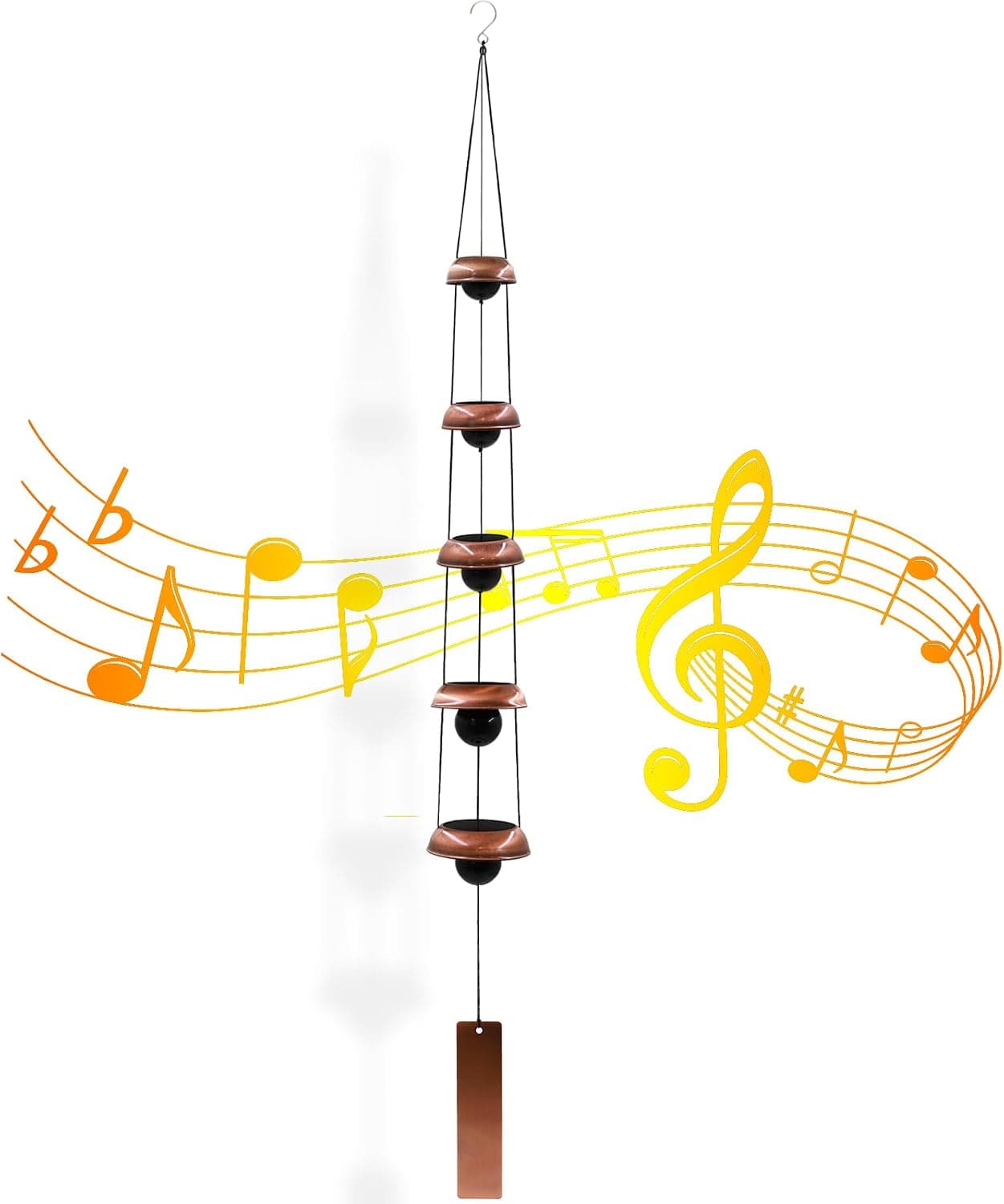
-19%Wind Chimes for Outside with 5 Bell Unique Copper Musical Chimes Feng Shui Wi...
 -5%
-5%YU FENG Evil Eye Money Tree, Blue Feng Shui Decor with Golden Buddha
 -29%
-29%Karma and Luck March Birthstone Crystal Tree of Life, Aquamarine Gemstone Fen...
 -29%
-29%Karma and Luck July Birthstone Crystal Tree of Life, Ruby Gemstone Feng Shui ...
As an Amazon Associate, we earn from qualifying purchases. We only recommend items our practitioners have personally tested.
Continue Your Journey
Explore these related guides to deepen your understanding:


Ready for Deeper Guidance?
Try our free I Ching reading for personalized wisdom, or explore our curated Feng Shui essentials.