Your sofa placement starts at the doorway, not the wall behind it. Miss the sightline, and the room starts working against you.
Beyond the Surface of Feng Shui Sofa Placement Rules
The conventional thinking on Feng Shui Sofa Placement Rules has a fundamental flaw. People obsess over the back wall, then wonder why the room still feels jumpy, why conversation dies in ten minutes, why the couch becomes a dumping ground for jackets and laptop bags.
I walked into a Chicago condo last spring where the owner, Elena, had bought a deep charcoal sectional and pushed it neatly against a solid plaster wall. On paper, it looked correct. From the front door, though, the first thing she saw was the sofa arm cutting across the entry like a barricade, with a brass floor lamp stranded behind it and a pile of dog leashes draped over a side table. She kept saying the living room felt tight. It did. Not because the sofa lacked support. Because the sightline hit resistance before the body did.
That is the part most advice misses. The room is read in motion, not in photographs. You open the door, your eyes go somewhere immediately, and your nervous system decides whether to soften or brace. A sofa that creates a clean, welcoming line from the entry lets the room breathe; one that chops the view into awkward angles makes the whole space feel defensive.
And yes, the old rule about backing the sofa with a solid wall still matters. Just not first. First comes the view. Then the support.
People love a tidy formula. Face the door, but not directly in line. Avoid floating in the middle. Keep a wall behind you. Those rules sound complete because they are easy to remember, but easy is not the same as correct. A sofa can have a wall behind it and still fail if the first thing you see from the threshold is the sofa back blocking circulation, or if the seat faces a glare-heavy window that pulls attention away every time someone sits down.
In another home, a retired teacher named Marisol had a cream linen sofa placed beautifully beneath a large ink painting. The problem was the doorway view: from the hall, the sofa was invisible until the last second, and the eye landed instead on a stack of magazines, a black TV screen, and a half-open ottoman. The room felt unfinished and strangely anxious. We shifted the sofa four feet left, angled it slightly toward the center, and left a clear sightline to a round wood table with a low bowl of oranges. Within a week, she said people stayed longer after dinner. She did not mention energy. She mentioned that nobody seemed eager to leave.
That is the real test. Not aesthetics. Not doctrine. How the room behaves the moment someone enters.
Why the doorway view changes everything
The front door is a decision point. Your eyes search for the safest route, the largest opening, the clearest place to land. If the sofa creates a hard stop right there, the whole room can feel like it is telling you to turn back or keep moving. A softer arrangement lets the visual current slide past the seating area and settle somewhere calm.
It helps to think in layers. The first layer is what the threshold reveals. The second is where the sofa anchors the body. The third is whether the room gives you a place to rest your gaze without snagging on clutter, mirrors, or oversized furniture.
That is why I link people to the bigger picture of the living room's center and flow before we even talk about cushions or coffee tables. If the room's middle is chaotic, no sofa rule saves it. And if you have never checked the bagua map for the room layout, you may be solving the wrong problem entirely.
The conventional approach persists because it gives homeowners something simple to do: put the sofa on a wall, avoid the window, stop there. But rooms are not solved by obedience. They are solved by reading what the body sees first.
Wrong.
One of the most common mistakes is treating the sofa like a wall decoration instead of a seating command. A sofa that disappears into the room can make people drift. A sofa that dominates the entry can make them tense. The sweet spot is visible support without visual aggression.
What actually works when you place the sofa
Start at the doorway. Stand there with the door open, then with it half closed. Notice the first object your eye lands on. If it is the back of the sofa, ask whether that back is clean, low, and buffered by a rug, console, or side chair. If it is the arm of the sofa, check whether that arm points like a finger into the room. If it is a TV, a mirror, or a dark corner, the seating arrangement is already losing the argument.
A sofa near a solid wall usually works best when it leaves breathing room on both sides and a clear path from the door to the main seating cluster. Not a runway. Not an obstacle course. Just enough space for the room to feel intentional. I often want the back of the sofa to read as a boundary, not a barricade. That distinction changes everything.
For open-plan spaces, a sofa can act as a gentle divider, but only if the entry view still shows a destination. A round table with a lamp, a plant with actual life in it, or a low piece of art can guide the eye forward. If the first thing seen is a blank back panel and an outlet strip, the room loses face. Fast.
Color matters too, though not in the cartoonish way people imagine. A pale sofa under harsh north light can look washed out and floaty; a heavy espresso sectional in a dim room can swallow the center. I have seen a moss-green sofa near a west-facing entry work beautifully because it echoed the garden outside and gave the eye a place to rest. I have also seen a white boucle sectional become a glare machine beside a glass front door. Same rule. Different result.
Before you move anything, look at the doorway sightline and ask one blunt question: what is this room asking me to notice first? That answer tells you more than any generic placement chart.
Why common advice still sounds convincing
Because it works often enough to seem wise. A sofa backed by a wall feels secure, and security matters. People sleep better, talk more easily, and settle faster when their back is not exposed to an open path. That part is real. The mistake is assuming the wall solves the whole problem.
Some homes have a front door that opens straight into the living room. Some have long hallways. Some have split sightlines where the sofa is seen from the stair landing before it is seen from the entry. In those layouts, a wall-backed sofa can still be the wrong answer if it blocks movement or forces the room's first impression into a dead end. The conventional rule survives because it is easy to teach, not because it fits every room.
I've seen dozens of living rooms where people copied a magazine layout and then complained that guests never lingered. The sofa looked "correct." The room felt cold. Usually the problem was not the sofa itself but the fact that the doorway view landed on the wrong target: a blank back, a cluttered side table, or a television that hijacked the room before anyone had a chance to sit.
That is where the older Chinese idea of orientation becomes useful. You are not just placing furniture. You are arranging what the body encounters first. Direction, enclosure, and openness all matter, but they matter in sequence. Miss the sequence and the room reads as effortful.
Big mistake.
How I judge a sofa placement in real homes
I look for three things. First, can a person entering the room see a settled destination within two steps? Second, does the sofa anchor the sitting area without blocking the path from the door? Third, does the view from the entry include one calm, coherent surface rather than a scatter of competing objects?
That third point gets ignored constantly. A sofa can be perfectly placed and still lose the room if the first visual field includes a bright red cushion, a charging cable, two remotes, and a basket that nobody empties. The eye does not feel support. It feels noise.
There is a reason the old masters cared about line of sight, even when they used different language. They understood that the mind reads space before it reasons about it. A clear path and a gentle focal point lower friction. A chopped-up view keeps the body on alert.
Place the sofa so that a seated person can see the room entrance without being stared down by it. That usually means slight offset, not perfect symmetry. A little asymmetry often feels more humane than strict alignment. The room can still look polished. It just stops feeling staged.
One more thing: do not ignore the back of the sofa. If the doorway reveals it, the back must look finished. A plain slipcover with a neat throw, a slim console behind it, or a lamp that gives the edge some dignity can rescue the entire arrangement. If the sofa back looks sloppy, the whole entry reads as unfinished, and people feel it before they know why.
For deeper context on seating support and room flow, the principles in bedroom rules that protect rest and privacy explain the same logic in a quieter setting. And if your space feels off even after you've followed every obvious rule, the five elements can show the missing layer.
When the conventional rule is fine, and when it fails
A sofa against a wall is fine in a compact apartment, a narrow den, or any room where circulation is tight and the entry view is already busy. It is also fine when the wall behind the sofa is visually clean and the sofa does not block the natural route into the room.
It fails when that wall becomes a trap. It fails when the first sight from the door is the sofa back cutting off depth. It fails when the seating arrangement makes the room feel like a waiting area instead of a place to stay.
That is why the question is never simply, "Where does the sofa go?" The better question is, "What does the doorway see, and how does that image make the body move?"
Someone followed all the supposed sofa rules in a Toronto townhouse and still got nowhere. The beige sectional sat flush to the wall. The entry opened straight into the room. Yet every visitor walked in, glanced at the dark sofa back, and drifted toward the kitchen island instead. Once we rotated the sectional slightly and placed a low walnut console with a ceramic lamp in the doorway line, the living room started pulling people in. Not because the sofa changed. Because the first impression did.
If your room is already stable, a conventional setup may be enough. If the room feels flat, tense, or oddly avoidant, the doorway is usually the place to investigate first.
FAQ
Is conventional Feng Shui Sofa Placement Rules advice reliable?
Often no, at least not by itself. A sofa backed by a wall can still fail if the doorway view is cluttered, blocked, or visually dead. The room has to read well from the threshold before the seating position can do its job.
Should the sofa face the front door?
Not directly. Direct confrontation usually creates tension, like sitting in a room that is always bracing for company. Better is a slight angle that lets you see the entry without turning the sofa into a guard post.
What if my living room is small?
Then the sightline matters even more. In a tight room, one bad angle can make everything feel cramped, while one clear view can make the same square footage feel orderly. Move the sofa a few inches if you have to; small shifts change the first impression fast.
Do I need to buy new furniture to fix this?
Usually not. Start with rotation, spacing, and what the door actually sees. A lamp moved six inches, a console cleared of clutter, or a rug pulled forward can change the whole reading of the room before you spend a cent.
Walk to your front door tonight and stand there for ten seconds. What does the room hand you first: a welcome, or a wall?
Mei Chen
Traditionally informed guidance • Cross-referenced with classical Chinese source texts
Content draws from both Compass (Luopan) and Form (Xingshi) school traditions. Illustrative examples are composites based on consultation experiences.
Practitioner-Selected Tools for This Topic
Items our team has tested and found effective for the principles discussed above. Individual results may vary.
 -19%
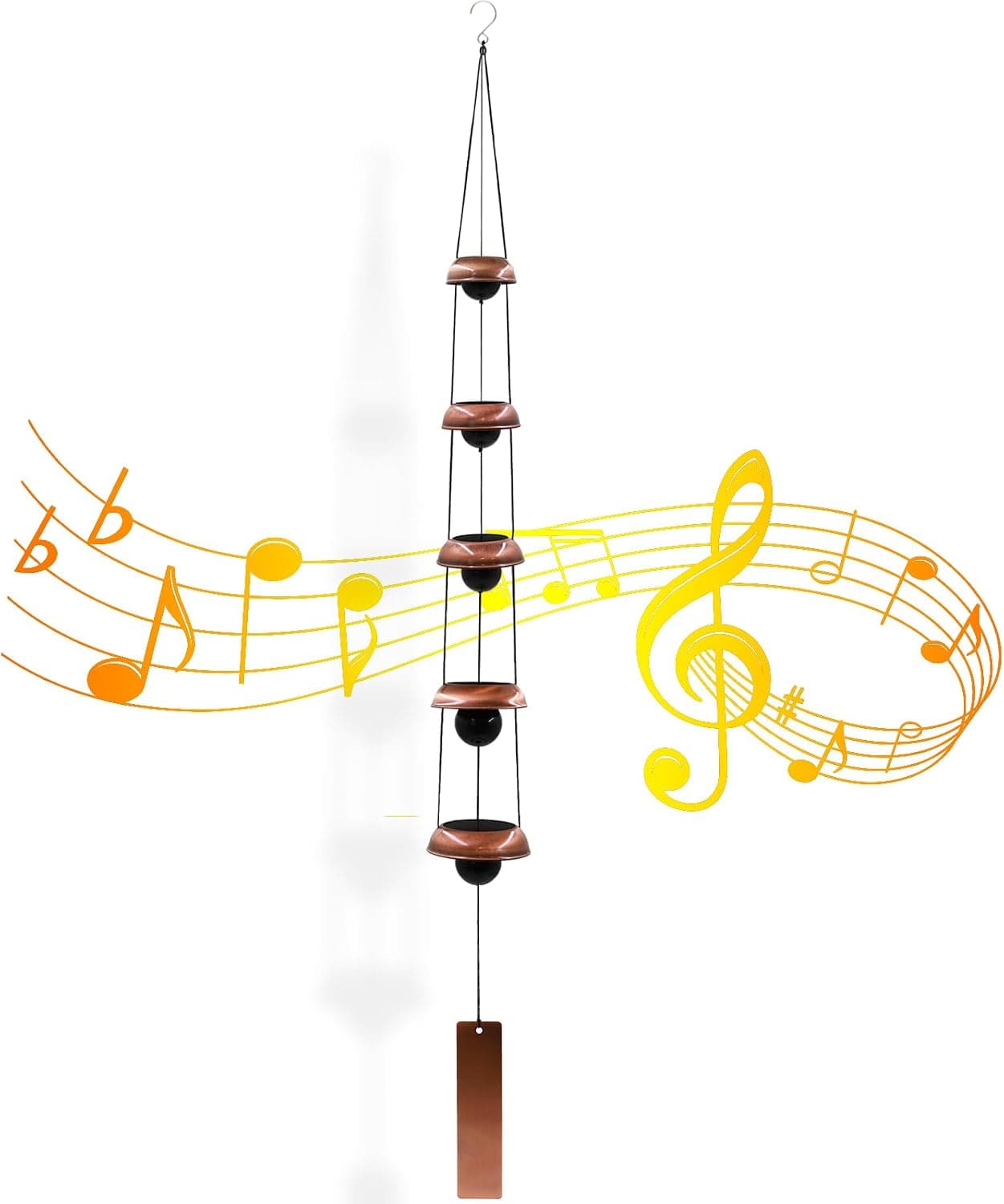
-19%Wind Chimes for Outside with 5 Bell Unique Copper Musical Chimes Feng Shui Wi...
 -5%
-5%YU FENG Evil Eye Money Tree, Blue Feng Shui Decor with Golden Buddha
 -29%
-29%Karma and Luck March Birthstone Crystal Tree of Life, Aquamarine Gemstone Fen...
 -29%
-29%Karma and Luck July Birthstone Crystal Tree of Life, Ruby Gemstone Feng Shui ...
As an Amazon Associate, we earn from qualifying purchases. We only recommend items our practitioners have personally tested.
Continue Your Journey
Explore these related guides to deepen your understanding:


Ready for Deeper Guidance?
Try our free I Ching reading for personalized wisdom, or explore our curated Feng Shui essentials.