The strongest feng shui kitchen fixes usually begin with circulation, not décor.
The walking line is the first thing I check
A kitchen starts to feel wrong the moment your body has to keep dodging a door, a drawer, or a fridge handle. That is where energy gets tangled first, and it is usually the real reason a room feels tiring before a single meal is made.
I have seen a renter’s galley kitchen where the stove faced a narrow hallway, the sink sat under weak light, and the refrigerator door blocked the only clean walking line. The owner kept blaming the color of the walls. The room was not failing because it lacked charm; it was failing because movement had no clear path.
That is why my first pass through any kitchen is not decorative. I look for where the body hesitates. If you need to twist your shoulders to pass the fridge, or step sideways to open the dishwasher, the kitchen is already asking too much.
People often want a symbolic cure. I understand the impulse. But kitchens are architectural spaces first, and architecture punishes friction. A room with poor circulation feels smaller than its square footage because the mind keeps registering interruptions.
In a good kitchen, the hand knows where to go next. The eye sees the counter landing, the foot finds the open path, and the work unfolds with less resistance. That is not magic. It is design meeting use.
The problem is rarely the stove by itself
Readers usually arrive asking about the stove, as if one object could explain everything. It cannot. The real issue is the relationship between sink, stove, and refrigerator, because those three points create the working triangle that governs daily movement. If one point is isolated, if one door swing cuts across another, or if the route between them forces repeated backtracking, the whole kitchen feels less efficient and more tense.
When that triangle is too tight, the cook feels crowded. When it is too spread out, the cook wastes steps and loses rhythm. When one appliance opens into the path of another, the kitchen constantly interrupts itself. This is why a fixed layout can still feel unsettled even when every item is technically in the “right” place.
The common mistake is treating feng shui kitchen tips like decoration advice. That leads people to chase red accents, hang charms, or rearrange bowls while the actual problem stays untouched. If the path from fridge to counter to stove is awkward, the room will keep resisting you.
A small open-plan apartment makes this even clearer. I remember a kitchen that bled directly into the dining area, with no real boundary except a runner rug and a pendant light over the table. The cook felt exposed the entire time, especially when guests sat three feet away and the refrigerator compressor hummed through conversation. The issue was not privacy in the emotional sense alone; it was lack of a threshold, which made the kitchen feel like part of the circulation zone instead of its own working space.
Architecture gives a plain answer here: a kitchen needs proportion, circulation, and a readable edge. Without those, the room has no settled identity. It becomes a corridor with appliances.
The Five-Layer Feng Shui Analysis for kitchens
My own kitchen evaluation moves through five layers: environment, movement, function, psychology, and meaning. I use them in that order because people usually begin with meaning and skip the rest, which is exactly backwards.
Environment means light, air, heat, and sightlines. A dark sink corner feels heavier than the same sink in bright task light. A stove that pools heat into a poorly vented corner creates stress before you ever notice why. The room should breathe, and the lighting should let you see work surfaces clearly instead of guessing where the next step is.
Movement means how the body travels through the space. Can you open the oven and still pass behind yourself? Can the dishwasher door drop without trapping the route to the sink? Can two people cook without colliding at the narrowest point? These questions matter more than any lucky object because repeated obstruction turns a simple chore into a series of small corrections.
Function means landing space, storage access, and sequence. A microwave above the range with no counter nearby creates a clumsy handoff, because there is nowhere to set the hot bowl down. The same problem appears when a fridge opens into a dead-end corner and steals the only landing zone beside it, forcing you to juggle hot or heavy items instead of setting them down safely.
Psychology is the layer most people feel first. Crowded circulation increases decision fatigue. Visible clutter signals unfinished work. A messy counter does not just look untidy; it tells the mind that the task is incomplete before cooking even begins, which is why an otherwise attractive kitchen can still feel draining.
Meaning is where the room becomes more than utility. In classical terms, the kitchen carries transformation: raw to cooked, cold to warm, storage to nourishment. That is why balance matters so much here. Not symmetry. Balance.
One sentence can save a lot of confusion: yin-yang in a kitchen means pairing active and quiet, hot and cool, open and contained.
Balance is usable contrast, not perfect symmetry
People love the idea that a balanced kitchen should look even. Two matching lamps. Identical jars. Equal cabinet pulls. That is a shallow reading. Real balance comes from contrast that supports use.
A bright task light over the counter can balance a dimmer dining edge nearby. A lively cooking zone can sit beside a calmer cleanup zone. A strong stove area can be offset by a visually quiet wall or a closed pantry door. The point is not to mirror everything. The point is to reduce confusion.
That is why kitchen feng shui often improves when the room becomes easier to read. In philosophy terms, too much sameness is dead. Too much opposition is tense. Good kitchens hold both forces without letting either dominate. The result is a room that feels awake, but not agitated.
Here is the surprise for many readers: a kitchen can be highly functional and still feel off if it lacks visual rest. A row of open shelves packed with mismatched containers may be practical in theory, yet it broadcasts unfinished energy. The eye never lands. The mind never settles.
This is where the conventional focus on lucky décor misses the mark. A red bowl does not fix a narrow passage. A crystal near the stove does not create landing space. The room has to be usable before it can be auspicious.
Fixed layouts still have fixes
Renters hear the phrase “fixed layout” and assume they are stuck. They are not. You may not be able to move the sink, but you can still shape how the kitchen behaves.
In a galley kitchen, the first move is to protect the walking line. Keep cabinet doors and appliance doors from overlapping where possible. If the fridge door opens into the main route, shift the most-used items so the opening action is faster and less frequent. Then clear the counter landing beside the stove or fridge, because every appliance needs a place to arrive and depart.
In a studio kitchen with a microwave above the range, the problem is not just heat. It is vertical congestion. You need one obvious place to set down hot food, even if that place is only a narrow cutting board zone kept deliberately empty. That small landing space changes the whole feel of the room.
For open-plan apartments, the kitchen must be visually separated without being isolated. A change in light works better than a wall. A pendant over the table, a warmer bulb near the dining area, or a cleaner edge in the flooring can create a threshold the eye understands. The cook stops feeling like a performer on display.
I have also seen a poorly vented corner improve simply because the owner stopped stacking cookware beside the stove and moved the daily tools into one cabinet at arm’s reach. The heat was still there. The friction was not. That is the kind of fix renters can actually use.
For more context on how room boundaries shape energy, I often point readers to the way an open room handles flow and rest. The kitchen borrows the same principle, but with more heat and more motion.
What to change first in a real kitchen
Start with the object that blocks the body most often. Not the prettiest object. Not the most symbolic one. The blocking object.
If the refrigerator door cuts into the main path, change what lives inside it so you open it less often during active cooking. If the sink area is dim, add task lighting before buying anything decorative. If the stove has no landing space, clear the nearest counter and keep it clear on purpose. These are small moves, but they change the room’s rhythm immediately.
Then look at the three points of the work triangle. The best triangle is not the shortest one. It is the one that asks for the fewest interruptions. You want simple turns, visible access, and no collision with drawers or cabinet doors. That is the functional equivalent of smooth qi.
One practical test: stand at the stove, reach for the sink, then turn toward the fridge. If the sequence feels clumsy in your body, the layout is telling you something honest. Listen to that before you listen to a shopping list.
Another test: cook one ordinary meal and notice where you hesitate. That hesitation is data. Maybe the cutting board has nowhere to land. Maybe the trash bin blocks the drawer. Maybe the sound of the refrigerator compressor competes with conversation and makes the room feel harsher than it looks. Fix the hesitation, and the room changes.
This is where the best feng shui kitchen tips become practical rather than ornamental. They help you read the room as a system, not as a collection of lucky parts.
How to diagnose the kitchen by symptoms
Use symptoms, not superstition. That is the cleanest method.
If cooking feels exhausting, check circulation first. If the room feels cold or disconnected, look at light and proportion. If people avoid eating in the kitchen, examine whether the space feels visually unfinished or too exposed. If you keep cleaning but the room still feels messy, the problem may be storage access rather than clutter volume.
If you want a quick sequence, use this: Environment, Movement, Function, Psychology, Meaning. You do not need a ritual. You need an honest assessment. The room will tell you where it is struggling.
For example, a studio kitchen with a microwave above the range and a fridge corner jammed against the entry may look acceptable on paper. But if the cook cannot land a hot bowl, has to sidestep the door swing, and ends up standing in the only open patch to plate food, the kitchen is sending one message: too much friction, too little ease. That is not a spiritual failure. It is a layout problem.
And if you are wondering whether these principles apply beyond the kitchen, they do. The same logic appears in the front entry, where thresholds decide whether a home receives movement gracefully. You can see that pattern in how the front door shapes the first line of flow.
FAQ
Do feng shui kitchen tips still matter in a tiny rental?
More than people expect. A small kitchen magnifies every blocked path, so one clear counter, one improved light source, and one open walking line can change the whole feel of the room. You are working with function first, not trying to force a remodel.
What if I cannot move the stove, sink, or fridge?
Then stop trying to solve the wrong problem. Improve landing space, clear door swings, strengthen task lighting, and reduce the number of steps between your most-used tools. Fixed plumbing does not cancel good circulation.
Should I use red or metal cures in the kitchen?
Surprising as it sounds, color is usually secondary. If the room has poor light, bad airflow, or a broken working triangle, a color cure just decorates the friction. Start with the body’s route through the space, then think about appearance.
Mei Chen
Traditionally informed guidance • Cross-referenced with classical Chinese source texts
Content draws from both Compass (Luopan) and Form (Xingshi) school traditions. Illustrative examples are composites based on consultation experiences.
Practitioner-Selected Tools for This Topic
Items our team has tested and found effective for the principles discussed above. Individual results may vary.
 -19%
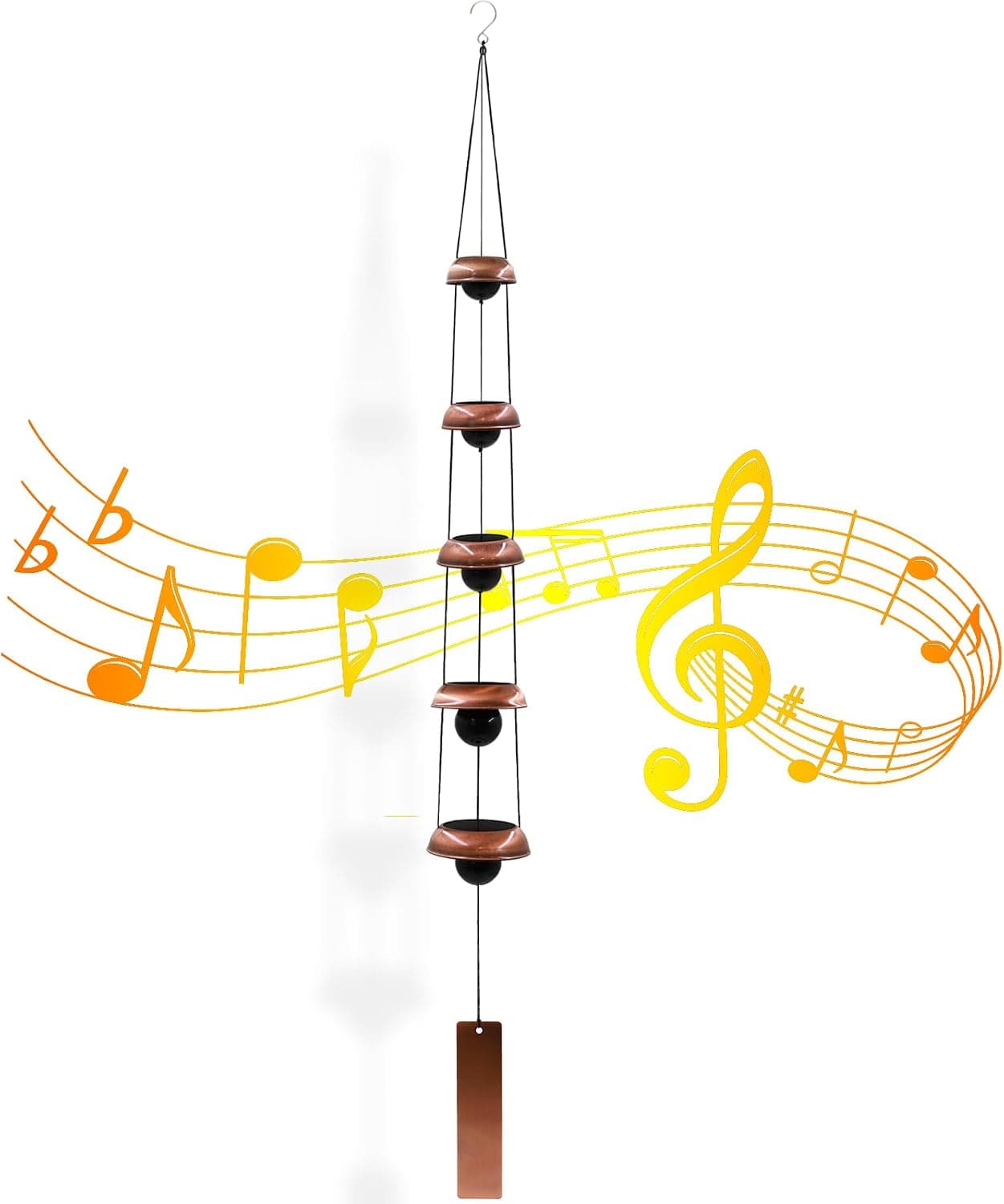
-19%Wind Chimes for Outside with 5 Bell Unique Copper Musical Chimes Feng Shui Wi...
 -5%
-5%YU FENG Evil Eye Money Tree, Blue Feng Shui Decor with Golden Buddha
 -29%
-29%Karma and Luck March Birthstone Crystal Tree of Life, Aquamarine Gemstone Fen...
 -29%
-29%Karma and Luck July Birthstone Crystal Tree of Life, Ruby Gemstone Feng Shui ...
As an Amazon Associate, we earn from qualifying purchases. We only recommend items our practitioners have personally tested.
Continue Your Journey
Explore these related guides to deepen your understanding:


Ready for Deeper Guidance?
Try our free I Ching reading for personalized wisdom, or explore our curated Feng Shui essentials.