A number on the door can feel decisive—until the hallway, setbacks, and light change what that number actually does.
Beyond the Surface of Feng Shui House Numbers
The conventional thinking on Feng Shui House Numbers has a fundamental flaw.
I watched a couple in a shallow townhouse on Mott Street spend two weekends repainting their entry in soft jade, hanging a brass wind chime, and choosing a lucky number plaque in polished black. The place looked disciplined. Then the husband started sleeping later, the mail stacked near the bench, and they began arguing about small expenses that should have been invisible. The house number was not the problem by itself. The problem was that the front door sat only four feet from the street, so the number hit the eye before the body had time to settle, and the whole entry behaved like a whistle instead of a filter.
That is the part most advice skips. A number does not operate in a vacuum; it interacts with the depth of the approach, the speed of the walkway, the amount of enclosure, and how long qi has to slow down before it crosses the threshold. In a shallow space, the number arrives almost like a command. In a deep space, it becomes one signal among many, because the corridor, porch, gate, and lighting are already shaping the field before anyone reads the digits.
Wrong.
Think of the street as the first stroke and the doorway as the last. In between, the geometry either gives the number room to land or strips it down to a label. That is why the same number can feel crisp and stabilizing in one home, then restless and overexposed in another. The mechanism is simple once you see it: approach depth controls how much weight the number carries, and the house either confirms that message or dilutes it.
Shallow addresses are unforgiving. If your door opens almost directly onto the sidewalk, a busy parking pad, or a short stoop with no pause point, the number is read under speed pressure. The nervous system notices that speed. People push in, glance around, and keep moving. Qi behaves the same way. By the time the number is recognized, the space has already announced itself as transitional rather than settled. That is why a house that looks clean and well-kept can still feel unsettled at the entry, even when every decorative rule has been followed.
Deep addresses behave differently. A long drive, a recessed courtyard, a front garden, or even a layered porch gives the number more symbolic leverage because the home has already slowed the visitor down. The digits are no longer competing with the street; they are completing a message that the approach has been building for several seconds. I've seen this in a brick duplex where the owner kept changing the plaque from red to gold to slate, convinced the number was cursed. The real issue was that the entry path bent twice, and the light stopped at the hedge. The number was fine. The approach was doing all the talking.
That distinction matters if you are checking other rooms too, because the same spatial logic shows up in a bedroom or living room. A room with a clear lead-in behaves one way; a room that opens suddenly behaves another. You can see the same principle in bagua mapping done without the usual confusion, in the way a bedroom settles when the entry feels protected, and in the way the center of a room changes the entire reading. Address numbers are not separate from that. They are part of the threshold story.
Here is the mechanical sequence. First, the number is perceived. Then the path either compresses that perception or lets it expand. Next, the threshold either confirms a stable boundary or leaves the body in transit. Finally, the home produces a behavioral result: people drop keys in the right place, or they keep drifting; bills get handled, or they linger on the counter; sleep deepens, or the mind keeps running at the door. That last step is the one people notice and mislabel as fate.
Shallow spaces need restraint, not louder symbolism. A large glossy plaque on a tiny stoop can feel like shouting into a narrow hall. Deep spaces need clarity, not tiny decoration lost in shadow. When the number has distance to travel, it needs enough contrast to be read from the gate or driveway without strain. The measure is not superstition. It is legibility under spatial pressure.
Don't let anyone sell you the easy version. A number does matter, but only after the site has told you what kind of vessel it is. A cramped entry amplifies whatever is there. A layered approach filters it. That is why two homes with the same number can produce completely different moods, and why the first question is never the plaque itself; it is how the door meets the street.
Once you see that, the common mistakes get obvious fast. People buy a lucky numeral and ignore the fact that the porch is broken, the light is too dim, or the path dumps visitors straight into the kitchen. They hang a bright plate on a deep, shaded facade where nobody can read it until they are standing on top of it. They choose a heavy metal finish for a house that already feels compressed, then wonder why the entry feels colder each evening. If you want the failure modes spelled out in plain language, look at the mistakes that quietly undo a setup and the bedroom rules that keep sleep and relationships from fraying. The pattern is the same: the environment wins if you ignore the mechanism.
Big mistake.
There is another surprise. In some homes, changing the number plaque does almost nothing because the true lever is the depth of the threshold sequence. Add a narrow table, a lantern at ankle height, or a small pause in the entry path, and the number suddenly makes sense. I have seen a retiree in a pale blue ranch house on the edge of Portland do exactly that. She left the numbers unchanged, moved the shoe rack six feet deeper into the foyer, and added a warm lamp beside a ceramic bowl. Within two weeks, she said the house stopped feeling like it was "spitting people back out." That is not poetic fluff. It is what happens when the body can finally finish the entry process.
How the Depth of a Home Changes the Number's Job
In a shallow home, the number functions like a flare. The message must be concise because there is no runway. In a deep home, the number functions more like a signature at the end of a letter; the body has already absorbed the tone before it sees the final mark. That difference changes everything from the color you choose to the size of the plaque.
What does a shallow frontage actually need? Not drama. Contrast, yes, but controlled contrast. A matte finish often reads better than mirror-bright metal because glare on a short approach creates friction. A plaque positioned slightly to the right of the door can work better than one dead center when the door swings inward and compresses the entry zone. If the stoop is tiny, the light should be soft but clear, because harsh illumination on a small landing makes the whole face feel exposed. A shallow entry is already under pressure; adding visual noise only increases it.
Deep approaches are less about pressure and more about sequencing. A long drive, side garden, or entry court gives the number a chance to be part of a narrative, so you can afford a material that catches the eye from a distance. Stone, brushed brass, or painted ceramic often works well when the route is measured in seconds rather than steps. The plaque should be placed where the eye naturally pauses, not where it has to hunt. If visitors pass a mailbox, a tree, and a gate before reaching the door, the number can live a little earlier in the sequence without losing dignity.
That is where people get trapped by generic advice. They think the same lucky number works the same way everywhere. It doesn't. A home with a recessed front porch may need the digits brought forward, because shadow weakens recognition. A home with a tiny entry and a direct street line may need the number simplified, because too much visual force makes the threshold feel tense. The item is secondary. The setting decides the tone.
Step back from the plaque and inspect the route. Is the first contact with the home abrupt? Does the eye stop anywhere before the door, or does it race straight across the threshold? Can someone read the number without leaning in, or does the body have to tighten to make sense of it? Those questions tell you more than a catalog description ever will. If you want a broader way to read the house before you change anything, use the logic in a practical map of home energy and compare it with the compass work that avoids misreading direction. The number sits inside that larger field.
The wrong fix is to treat the plaque like a charm. The right fix is to treat it like a signal inside a route. When the route is shallow, reduce friction and avoid overstatement. When the route is deep, strengthen recognition and keep the path coherent. The number then stops being a random object on a wall and starts doing its real job: marking a boundary the body can actually feel.
One sentence matters more than all the ornaments: the number should match the depth of the approach, not fight it.
What to Change in Real Houses, Not Theory
Let’s make this concrete. A row house with a narrow front step, black metal railing, and a door opening three feet from the sidewalk does not need a grand plaque with scrollwork. It needs visibility and calm. A duplex with a fourteen-foot set-back, brick path, and a half-lit porch can tolerate more presence because the path already does the softening work. The same holds for apartment-like entries where the number sits beside multiple doors; there, clarity beats symbolism every time.
Start with the approach, because that is where the decision gets made. If the front landing is short, keep the number compact and readable from a standing distance. If the home is deep, make sure the plaque is not swallowed by shadow, tree branches, or overgrown lattice. Then look at the threshold itself. A mat that is too small, a doorbell hidden behind clutter, or a package pile blocking the lower half of the door can all dilute the number's effect because the body registers confusion before it registers identity.
I remember a teacher in a cream-colored bungalow who had followed every common rule she'd found online. She bought a lucky red plaque, placed it above the door, and even cleaned the brass knocker until it shone. Still, the house felt wrong. The porch was deep enough for two rocking chairs, but she had placed the plaque so high that it disappeared under the eave at dusk. We lowered it to eye level, swapped the porch bulb for a warmer one, and moved a pair of white planters to frame the entry. She called ten days later and said the house finally felt like it belonged to her instead of looming over her.
That story is not about decoration. It is about alignment between spatial depth and symbolic weight. You can see the same mechanism in other parts of the home: color changes can flatten or deepen a room's tone, and the five elements can explain why a setup looks correct but feels off. If the entry is shallow, too much visual force makes people hurry. If the entry is deep, too little definition makes the house feel anonymous. Neither extreme helps.
Some people ask whether the actual number matters more than the setting. That question sounds practical, but it misses the mechanism. The setting shapes how the number is received. A bold digit at a cramped threshold can feel aggressive. A modest digit in a long, dark approach can feel weak. Adjust the scale, contrast, and placement to the depth you actually have, not the depth you wish you had. Then test it in the evening, because dusk reveals the truth faster than noon.
One more thing: do not overcorrect with extra cures. More metal, more red, more mirrors. Not even close. If the entry is shallow, excess stimulation makes the home feel jumpy. If the entry is deep, a mirror placed where it reflects the outside path can fragment the message further. Better to refine the route, light, and legibility first. Then, if needed, support the entry with a plant, a bench, or a lamp that holds the space without shouting.
Common Mistakes That Make the Number Work Against You
People love to blame the digits, but the real damage usually comes from the surrounding setup. A shiny plaque on a tiny stoop can make the entry feel overexposed, and overexposure often shows up as irritability the moment you get home. A tiny plaque on a deep facade can make the home feel vague, which tends to show up as missed deliveries, hesitation at the door, and a strange habit of leaving bags by the threshold.
Another mistake is ignoring the path length and treating the porch like a dead zone. It is not dead. It is the buffer that decides whether the number lands gently or abruptly. Skip that buffer, and the home starts feeling either too abrupt or too anonymous. I have seen this in rental houses, townhomes, and even a narrow Victorian where the owners hung three separate plaques because no one could agree on the right style. The result was visual argument. The mail carrier still got confused.
Do not place the number where it competes with clutter. Recycling bins, stacked shoes, a leaning umbrella stand, or a broken lamp all interfere with the reading of the doorway. The eye takes in the mess first, then the number, and by then the message has already lost authority. This is why people say the house "doesn't feel settled." Of course it doesn't. The threshold is being interrupted.
Beware of assuming a lucky color solves scale. Red on a shallow facade can feel loud. Black on a deep shadowed wall can disappear. Gold can look elegant on one house and theatrical on another. The finish matters, but only after you have respected the geometry. If you are also repairing the entry, don't forget the smaller objects nearby; even something like the way knives are handled in a kitchen can reveal how a home organizes sharp, direct energy, and that same directness can be too much at a doorway.
The last trap is overconfidence in symbolism without testing the actual sightline. Stand at the curb at dusk. Stand again from the driver's seat. Then stand where a guest would pause with one hand on the gate. Can you read the number without effort? Do you feel the house calling or pushing? Those are the questions that matter because they reveal whether the threshold is filtering energy or flinging it back.
And yes, there are homes where a number plaque alone changes the mood. Those homes already have the right depth, the right light, and the right pause. Everything else is support. The number simply finishes the sentence.
What to Check Before You Touch the Plaque
Before changing the digits, check the approach in daylight and at dusk. Measure the distance from the street or path to the door. Notice where the eye naturally slows down. If there is no slowing point, the space is shallow, even if the facade looks grand.
Then examine the threshold as a sequence, not an object. Street, walk, gate, porch, door. Each step either lengthens or compresses the message. A home with a long sequence needs clarity and enough contrast. A home with a short sequence needs restraint and a cleaner visual line.
Finally, ask what the number is competing with. Tree shadows? A mailbox cluster? Reflective glass? A dark storm door? Once you identify the competition, the fix gets obvious. Adjust the plaque, the lighting, or the objects around it so the number is read as part of the house's character instead of a detached label.
If you want to build the entry from the inside out, check the rest of the home too. The front door does not act alone. A strong bedroom, a calm living room, and an uncluttered path through the house all support the threshold. That is why the logic behind bedroom boundaries matters here, and why a home with a clear center tends to handle its entry better than one that feels scattered.
One-sentence test: if the doorway feels like a pause, the number can carry more weight; if it feels like a rush, the number should step back.
FAQ
Is conventional Feng Shui House Numbers advice reliable?
Often no, because most advice treats the plaque like an isolated charm. In real homes, the approach depth, lighting, and threshold clutter decide whether the number feels grounded or strained. A shallow entry and a deep entry need different treatment.
Does the actual number itself matter more than placement?
Sometimes people hope the digits alone will fix everything, but the placement usually changes the outcome faster. A clear, well-scaled number on a sensible entry can feel steadier than a so-called lucky number hidden in shadow. The body reads the route before it reads the symbol.
Should a deep front yard use a bigger plaque?
Usually, yes, but only if it matches the architecture. A long setback gives the eye more distance to travel, so the number needs stronger contrast or size to remain legible. The trick is visibility without looking pasted on.
What if the house already has a good number but still feels off?
Then the issue is probably not the digits. Check the porch light, the sightline, and any clutter that interrupts the entry. Surprising as it sounds, one bad shadow can do more damage than a supposedly unlucky number.
Can apartment numbers be handled the same way?
Not exactly. Shared corridors, multiple doors, and poor lighting change the reading completely, so the number has less symbolic weight than the immediate threshold. In those cases, clarity and cleanliness matter more than style.
Is there a simple test before changing anything?
Stand where a guest first sees the front of the home and look for the first pause point. If there isn't one, the space is acting too fast. That is the moment to correct the approach, because the plaque can only work with what the path gives it.
At dusk, the porch light clicks on, and the brass digits catch for a second before the hedge shadow moves across them. Which message wins then—the number, or the path that brought you there?
Mei Chen
Traditionally informed guidance • Cross-referenced with classical Chinese source texts
Content draws from both Compass (Luopan) and Form (Xingshi) school traditions. Illustrative examples are composites based on consultation experiences.
Practitioner-Selected Tools for This Topic
Items our team has tested and found effective for the principles discussed above. Individual results may vary.
 -19%
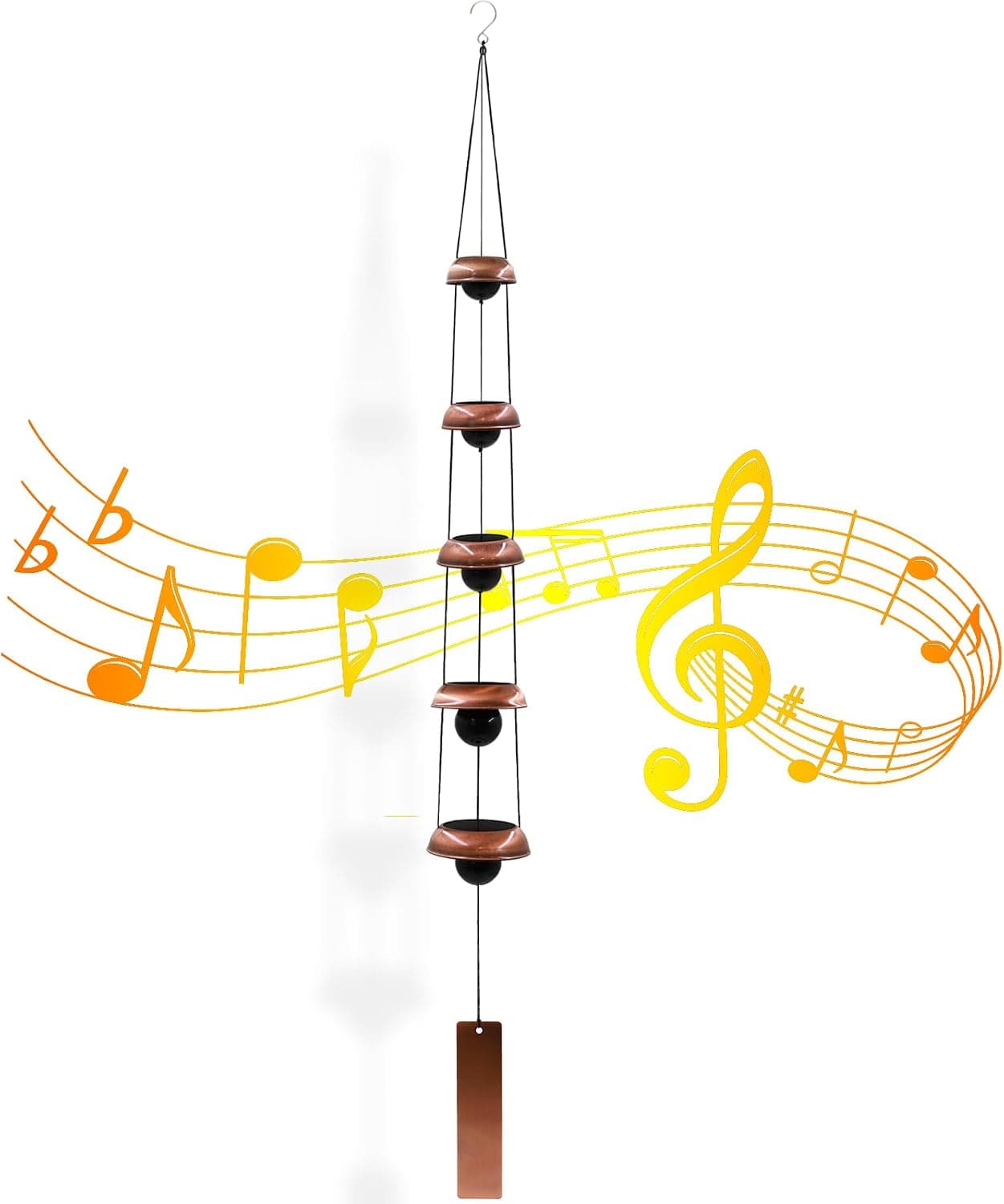
-19%Wind Chimes for Outside with 5 Bell Unique Copper Musical Chimes Feng Shui Wi...
 -5%
-5%YU FENG Evil Eye Money Tree, Blue Feng Shui Decor with Golden Buddha
 -29%
-29%Karma and Luck March Birthstone Crystal Tree of Life, Aquamarine Gemstone Fen...
 -29%
-29%Karma and Luck July Birthstone Crystal Tree of Life, Ruby Gemstone Feng Shui ...
As an Amazon Associate, we earn from qualifying purchases. We only recommend items our practitioners have personally tested.
Continue Your Journey
Explore these related guides to deepen your understanding:


Ready for Deeper Guidance?
Try our free I Ching reading for personalized wisdom, or explore our curated Feng Shui essentials.