The room can look “correct” on paper and still fail the second you open the front door.
Beyond the Surface of Feng Shui House Map
Examining Feng Shui House Map more carefully uncovers details that standard references skip. I walked into a narrow townhouse in Portland and felt it before I could name it: the front door opened straight onto a beige wall, a black umbrella stand, and a sliver of the dining table with two hard-backed chairs pointed like arrows toward the hall. The owner had followed every diagram she found online. Her wealth corner held a jade plant. Her bedroom had a crystal. Her kitchen was tidy enough to pass a showroom test. Still, she was sleeping badly and saying yes to work she hated.
The problem was not the map. It was the first view.
People love overlays, grids, and neat compass readings because they feel precise. A rectangle divided into nine boxes looks like control. A doorway view is messier, and messier things usually tell the truth. Stand at the threshold and look in. What catches your eye first? A mirror? A hallway that shoots energy away? A staircase? A sharp cabinet corner? That first image sets the tone for everything that follows, which is why a home can be “correct” and still feel wrong.
I've seen this in apartments, suburban houses, and one especially stubborn loft where the owner kept asking why the budget improved only after she moved a bar cart. She had spent weeks studying how to map energy in your home without overthinking it, but she never checked the entry sightline. Once she did, the issue was obvious: the front door faced the dining room table, and the table was piled with unopened mail, a red candle, and a ceramic bowl of keys. The eye landed there every time. So did the mind. The house kept announcing clutter before it could offer rest.
That is why the old obsession with floor plans can mislead you. A plan shows location. The doorway shows sequence. Sequence matters. The body reads a room in motion, not as a still image. First the door. Then the landing point. Then the escape path. Then the place where attention gets trapped. Big difference. Not even close.
Why the threshold matters more than the diagram
A home begins at the point where your gaze enters it. That sounds simple, but it changes the work completely. The threshold is where qi either gathers or scatters, and you can see the pattern with your own eyes. If the view stops on a blank wall, energy slows and feels contained. If it shoots toward a back door or long corridor, everything feels as if it is leaving before it has settled. If it crashes into a mirror, the room starts arguing with itself.
This is why doorway analysis often predicts whether a house supports sleep, savings, or constant busyness better than a color chart ever will. The mind follows sight. The nervous system follows the mind. When the entrance shows chaos, your body starts scanning for unfinished work before you have even taken your shoes off. You may not call it stress, but you will feel the tight shoulders, the shallow breath, the habit of dropping your bag anywhere because the room never handed you a clear resting point.
The classical logic behind this is plain enough: qi prefers soft arrival, then containment, then circulation. A view that opens too fast creates leakage. A view that hits a barrier too abruptly creates stagnation. Neither feels balanced in lived space. The old masters did not walk into a house and admire abstract symmetry. They watched where attention fell, where movement paused, and where it rushed onward.
Reading a feng shui compass wrong is more common than you'd think, but even a perfect bearing cannot save a home whose entrance tells the wrong story. Direction matters. So does what the doorway frames. A north-facing house with a harsh first sightline can feel harsher than a south-facing one with a gentle, layered entry. The eye decides before the numbers do.
One sentence can change the whole evaluation: the first thing you see from the door is often the real diagnosis.
How to read the entry view like a practitioner
Begin at the outside of the door and stand still for a moment. Don't rush. Let your eyes take the same route a guest, a delivery person, or your own exhausted self would take after a long day. What sits dead center in the opening? What hugs the right side? What is visible if the door swings inward? You are not looking for beauty alone. You are looking for a sequence that either invites the body in or pushes it back out.
A good entry usually gives you a landing zone. That can be a console table set a few feet inside, a piece of art with depth, a plant with upright leaves, or even a soft runner that guides the eye toward a calmer area. The point is not decoration. It is orientation. A visitor should know where to go without hunting for it. The house should appear to welcome, then hold, then reveal.
Bad entries often do the opposite. The eye catches a staircase directly across the door and starts climbing before the body has landed. Or it grabs a mirror and bounces back. Or it locks onto a pile of shoes, dog leashes, and grocery bags because that is where life has been shoved. Then people wonder why they keep feeling scattered. Because the room taught them to scatter.
Try this in real time. Stand at your own front door at dusk with the hall light on and notice where your gaze goes first. If you can see the kitchen sink, the TV, and the recycling bin all at once, the home is exposing too many competing tasks. If you see a single framed print, a lamp, and a clear path toward the living room, the house is giving your attention somewhere to rest. That difference is subtle on paper and huge in daily life.
The center rules the room. Corners only pretend to matter. Once the doorway sends you inward with a clear line of sight, the rest of the layout has a chance to work. Without that first cue, the center never gets a fair hearing.
Wrong.
Why the old advice persists
So why do people keep obsessing over sector cures, lucky objects, and perfect overlays? Because those things are easier to sell and easier to measure. You can place a crystal. You can check a compass. You can draw a grid. A line of sight is harder to package, and it requires honest observation. That is exactly why it gets ignored.
There is also a psychological reason. People want a solution that feels active but not invasive. Moving a bowl of coins seems safer than admitting the front hall faces a utility closet and the house feels like a corridor. I get it. I've watched homeowners rearrange three shelves of objects rather than move a mirror two feet to the left. The mirror would have worked. The shelf styling was theater.
Conventional advice persists because it contains a sliver of truth. Bagua areas matter. Directions matter. Elements matter. But those are support beams, not the front door. A house can have a strong wealth sector and still leak focus if the first view lands on bills, wires, and a router blinking red on a side table. The classical model is not wrong. It is incomplete when used without sightline analysis.
That is also why some people follow every rule and still feel disappointed. They study the map, arrange the room, light the candles, and nothing settles. Then a small change near the entry fixes the whole mood. I once worked with a retired teacher in Tucson who moved a tall navy umbrella stand away from her foyer and replaced it with a low oak bench and one round brass lamp. Same house. Same furniture budget. Within two weeks she stopped dropping her mail on the dining table and started answering it at the kitchen desk. Not mystical. Just clearer sight, clearer behavior.
There is a deeper surprise here. Many homes fail not because they lack cures, but because they create a visual argument the moment the door opens. Your body notices discord before your mind labels it. The old method survives because it can still be useful. It just should not be worshiped.
Turning a bedroom into a sanctuary requires less than you'd think, but the bedroom only gets a chance if the entry has already told the nervous system that the house knows how to land.
When conventional mapping still helps
Use the map when you need structure. Use the doorway when you need truth.
If a home has a missing corner, a tricky extension, or a long hallway, the plan helps you understand where support is thin. If a room already feels off, the first view tells you whether the issue is scattering, blockage, exposure, or overload. Those are not the same problem. A bathroom at the end of a hall and a front door facing a staircase can both drain a space, but they do it differently.
Consider a small condo I visited in Seattle. The owner had a gorgeous east-sector bookshelf, a plant by the window, and a blue rug chosen for water balance. Nice theory. Yet every time the front door opened, the eye hit a row of bright red running shoes, a coat rack stuffed with winter gear, and a giant mirror angled toward the hall. The map was tidy. The threshold was a circus. Once she moved the mirror, tucked the shoes into a closed cabinet, and hung one calm landscape at eye level, her guests started walking deeper into the living area instead of stopping at the entry like they had hit a wall.
That is the integration point. The map gives you the broad terrain. The doorway tells you how the terrain is experienced. Put them together and you stop treating the home like a worksheet.
And no, you do not need a full renovation. A few inches can matter more than a new object. Shift the bench so it no longer blocks the sightline. Turn the lamp so it lights the wall instead of the door. Move the loudest item out of view when the door opens. Those are small acts, but they change the first sentence the house speaks.
Bedroom rules that affect both sleep and relationships become far easier to follow once the entry stops flooding the home with visual noise. The bedroom is where the body recovers. The doorway is where it decides whether recovery is possible.
What to change first in a real home
Start with the line of sight from outside the front door. Ask three blunt questions. What is the first object the eye hits? Where does the gaze go after that? Does the view invite movement or create resistance? Do not answer with theory. Answer with your body. Notice whether your shoulders lift, whether you hold your breath, whether your feet want to keep moving or stop.
Then remove the most aggressive thing in that view. Not the prettiest thing. The most aggressive. Maybe it is a mirror reflecting the opposite wall. Maybe it is a cluttered coat hook. Maybe it is a sharp black console with too much contrast. Replace it with something that gives the eye a place to rest: a soft-edged lamp, a framed image with depth, a plant that rises gently rather than spiking outward.
Finally, check what the entry reveals beyond itself. A straight shot to the back door? A better screen or a visual pause may help. A staircase directly opposite the front entrance? Soften it with art, lighting, or a small change in the landing. A utility closet? Make the door less prominent. The goal is not to hide reality. The goal is to stop the house from shouting the wrong information first.
Here is a detail people ignore: sound follows sight. When the entry looks tangled, people drop keys harder, speak faster, and move through the space as if they are late. A calm threshold reduces that reflex. I have watched families in open-plan homes eat more slowly after one change to the foyer because the whole place stopped feeling like a hallway with furniture. The effect is practical, not poetic.
Money corner mistakes that quietly undo the setup matter most when the entry already leaks attention. Fix the doorway first, and the rest stops fighting uphill.
Big mistake.
Common traps that look harmless
One trap is overfilling the entry with symbolic objects. People love dragons, coins, crystals, and lucky knots in the foyer. Fine, if the sightline is already clean. If not, you are stacking symbols on top of confusion. The room does not become smarter because it contains more meaning. It just becomes louder.
Another trap is hiding the entrance behind practical clutter. Shoes, parcels, umbrellas, pet supplies, Amazon boxes, school bags. All normal. All capable of poisoning the first impression. The home begins to feel unfinished, and unfinished spaces encourage unfinished behavior. You postpone the laundry. You ignore the invoice. You leave the cup in the sink.
A third mistake is treating mirrors as automatic cures. A mirror can expand light or correct a cramped hall, but it can also fling the view back at the door and create a sharp rebound. Put one at the wrong angle and you will feel it the moment you walk in. The body flinches. The room loses its welcome.
Don't forget the quiet offender: a too-bright security light blasting through glass at night. It can make the threshold feel exposed, like the house has no skin. People sleep lighter in those homes. They wake easier. They hear every car door. The brain hates feeling on display.
If you want a better reading, spend five minutes at the doorway with the front door open and the lights on. That is where the real diagnosis lives. The map can wait until the threshold stops arguing.
Kitchen knives carry more energy than you'd think — here's why placement matters, and the same principle applies to the entry: objects that cut, reflect, or clutter shape the mood before anyone sits down.
What the doorway says about the rest of the house
A clear entry usually means the household can prioritize. A chaotic one often means decisions are happening too late, after the energy has already spilled everywhere. The threshold acts like a preview of how the home handles order, privacy, and boundaries. That is why the first glance matters so much. It is not symbolic fluff. It is behavioral architecture.
Look at the doorway and you will often know whether the family uses the space, or the space uses the family. In one Brooklyn brownstone, I saw a front hall with a pale green runner, a single walnut shelf, and a bowl for keys placed just far enough from the door to create a pause. The owner, a nurse with two teenagers, said people stopped barging in and started hanging up their coats. That tiny pause changed how the whole household entered itself.
Use the map, yes. Check the sectors. Pay attention to the five elements. But if the first thing you see from the door is a visual pileup, the rest of the analysis becomes secondary. The house is telling you where the friction lives. Listen there first.
And if your current setup looks “fine” but still makes you tired, trust the unease. Homes rarely lie at the threshold. They whisper everything in the first three seconds.
What, exactly, does yours say?
FAQ
Is conventional Feng Shui House Map advice reliable?
Sometimes, but not on its own. A sector can be technically correct and still fail if the front door points the eye straight into clutter, glare, or a hard stop. The map explains placement; the doorway explains experience.
How do I know if my entrance view is the real problem?
Stand outside, open the door, and notice the first object that grabs attention. If it is a mirror, a staircase, a pile of shoes, or a hallway that vanishes too fast, your body will usually tell you before your mind does. Tight shoulders are a clue. So is the urge to fix something immediately.
Should I change the bagua layout before I fix the entrance?
Start with the entrance. If the threshold is messy, every other adjustment has to work harder. Once the first view is calm, the bagua becomes much easier to use because the house stops fighting the setup.
Can a small apartment still benefit from this approach?
Absolutely, and small spaces often show the effect faster. In a studio, the front door can reveal the bed, the kitchen, and the work desk in one glance, so the first sightline shapes the whole day. One lamp, one screen, or one cleared landing zone can change the feeling of the entire place.
Mei Chen
Traditionally informed guidance • Cross-referenced with classical Chinese source texts
Content draws from both Compass (Luopan) and Form (Xingshi) school traditions. Illustrative examples are composites based on consultation experiences.
Practitioner-Selected Tools for This Topic
Items our team has tested and found effective for the principles discussed above. Individual results may vary.
 -19%
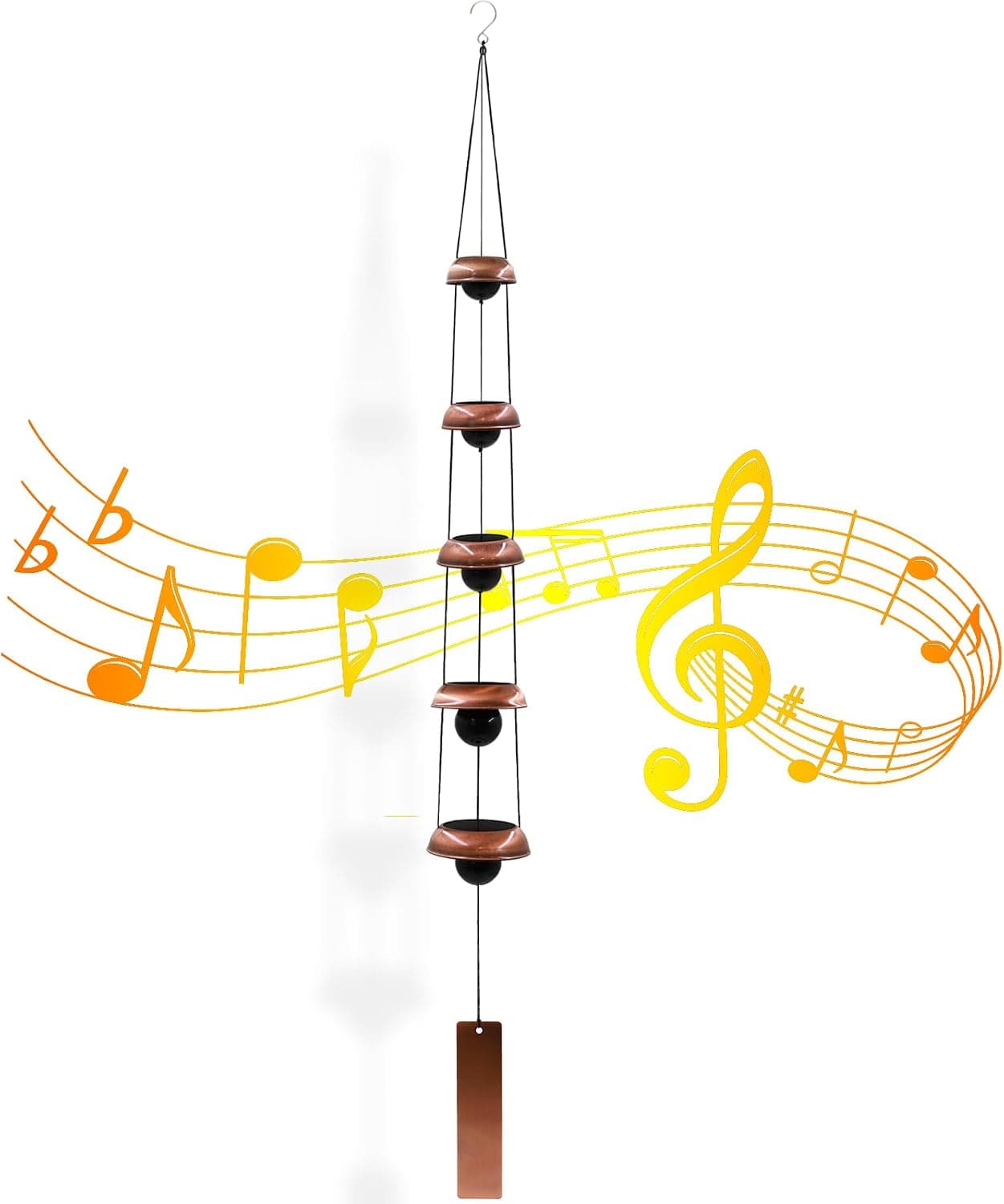
-19%Wind Chimes for Outside with 5 Bell Unique Copper Musical Chimes Feng Shui Wi...
 -5%
-5%YU FENG Evil Eye Money Tree, Blue Feng Shui Decor with Golden Buddha
 -29%
-29%Karma and Luck March Birthstone Crystal Tree of Life, Aquamarine Gemstone Fen...
 -29%
-29%Karma and Luck July Birthstone Crystal Tree of Life, Ruby Gemstone Feng Shui ...
As an Amazon Associate, we earn from qualifying purchases. We only recommend items our practitioners have personally tested.
Continue Your Journey
Explore these related guides to deepen your understanding:


Ready for Deeper Guidance?
Try our free I Ching reading for personalized wisdom, or explore our curated Feng Shui essentials.