A home can check every box and still feel off once the stairs start pulling attention upward.
Beyond the Surface of Feng Shui Guide
A gap exists between theory and practice when it comes to Feng Shui Guide is typically understood. I walked into a narrow townhouse in Portland last spring and saw the problem immediately: a red runner climbing a staircase straight from the front hall, a black console table under the landing, and a bedroom door opening only four steps from the first riser. The homeowner had followed every bit of advice she found online. She placed a plant by the entry, kept the floors clear, and even moved her desk to a “lucky” direction. Then her sleep got lighter, her shoulders tightened by midafternoon, and the money she meant to save kept leaking out in small, annoying purchases. Not a curse. A circulation problem.
Vertical movement changes the way qi behaves. Stairs pull the eye, the body, and the nervous system upward, and that upward pull can leave the lower level feeling hollow while the upper floor becomes overstimulated. People usually talk about the bagua as if a house is a flat diagram, which is useful only until the staircase starts cutting through the center like a wind tunnel. If you want the map itself to make sense, start with how to map energy in your home without overthinking it, because a staircase can distort the whole reading.
Here’s the part most advice skips: movement is not neutral. A steep stairwell, especially one painted white and lit by a bare bulb, encourages speed. Speed is useful in a hallway. It is terrible near a bedroom, a reading chair, or a dining table where people need to slow down and land. I’ve seen a family in a split-level house in Denver keep arguing in the kitchen simply because the back stair landed beside the refrigerator; every trip up or down split their attention before a sentence could finish.
Common fixes fail when they treat the stairs like decoration instead of circulation. People buy crystals, hang a mirror, or place a rug at the bottom and expect balance to return on command. That rarely works if the stair itself is acting like a conduit. The better question is not, “What object do I add?” It is, “What is this vertical route doing to the rooms it touches?”
Wrong.
Case Notes From the Landing
The clearest example came from a teacher named Marisol, who lived on the second floor of a brownstone with a tight stairwell and a cobalt-blue front door below. She had a habit of dropping her bag on the third stair while she unlocked the apartment, then climbing past a gallery wall of family photos into a hallway that ended at her bedroom. Within two months, she was waking at 3:40 a.m. almost every night. Not because the bedroom was “bad” in a generic way, but because the stair landing sat directly across from her door, and every movement in the house seemed to rush toward that threshold.
That pattern matters. A staircase can behave like a vertical channel for unfinished business: noise from the entry rises, dust gathers on the treads, and the mind starts treating the whole route as a place to hurry through rather than inhabit. In classical terms, the issue is not just direction; it is pressure. The body reads rapid upward motion as alertness, and alertness is the enemy of rest. For people trying to stabilize a bedroom that sits too close to that traffic, the details in turning a bedroom into a sanctuary become more than styling advice.
The homeowner had also placed a tall mirror at the bottom of the stairs because she had heard it would “expand the space.” It did expand something: restlessness. Every person passing by caught a flash of movement and a split-second sense of being in transit, not at home. After she removed the mirror and swapped the bright runner for a muted wool one in warm gray, the entry stopped snapping attention upward. She noticed the first change in three days. Her shoulders dropped when she came in from work. Her daughter stopped racing up the stairs after dinner. Small signals. Very real.
One more surprise: a staircase can affect wealth behavior without touching a wallet. When the route from front door to upper floor is too exposed, people tend to move through the home without pausing. They set mail down anywhere. They forget receipts. They buy replacements for things they already own. The habit looks like clutter, but the cause is often vertical agitation. For homes where money seems to vanish in fragments, I always check the entry, then the stair. If the pattern includes a wealth corner near that route, money corner mistakes that quietly undo the setup may be part of the story, but the staircase is usually the louder culprit.
Where the Staircase Starts to Distort the House
Do the stairs begin right opposite the front door? That setup creates a fast line that can feel like a draft even when the windows are shut. The eye shoots upward, guests do not settle, and the lower hall turns into a waiting area instead of an arrival point. I have watched this happen in a condo in San Francisco where the owners wondered why conversations never lasted longer than five minutes near the entrance. The fix was not mystical. They added a round table, a low lamp, and a piece of art that held attention at chest height, not ceiling height.
Stair width matters too. A wide staircase with open risers can feel airy, but if it sits beside a slick tile floor and a glass railing, the energy becomes too quick for some homes. Narrow stairs do the opposite: they compress the body and can trigger a sense of holding back, especially when the walls are dark and the turns are abrupt. Either extreme can disturb the daily rhythm. A home should not make people feel like they are boarding a train or climbing out of a cellar.
Landing spaces deserve scrutiny. They are not dead zones. They are decision points. When a landing is cluttered with boxes, shoes, or an unused exercise bike, the body registers delay each time it passes. Delay is not always bad, but in a stair sequence it creates friction right where movement needs to be smooth. If your stair landing opens toward an office or study, the pressure can spill straight into focus. That is one reason a lot of people blame poor concentration on the desk when the real issue is the route to the desk.
Heard enough about color to be suspicious of it? Good. A staircase painted all white can feel clinical and exposed, while one painted deep red or orange may push the movement too hard. The best tone depends on what the stair is doing in the house. I once recommended a muted olive wall to a retiree in Atlanta because her stairwell faced north and her lower hall felt windy all winter. The softer color did not “cure” anything. It made the passage feel less like a tunnel.
Start by observing the motion. Walk up once in the morning, once at dusk, and once after dinner. Notice where you speed up, where you slow down, and whether your hand reaches for the banister before your foot has fully landed. Those tiny reactions tell you more than a shelf full of lucky objects. Tiny reactions matter.
What Actually Helps a Vertical Route Behave
First, calm the first sightline. If the staircase is the first thing a visitor sees, soften the view with a console, a plant that actually stays alive, or a piece of art that holds the eye at human height. The goal is not to block movement. The goal is to let the house exhale before it climbs.
Second, match the stair treatment to the room below and the room above. A stair that connects a busy entry to a sleeping floor should feel quieter than one that leads to a family room or home office. In one Chicago apartment, a brass pendant at the top of the stair made the upper hall feel too sharp at night. After they replaced it with a fabric shade, the space stopped feeling like an interrogation room. The change was subtle, yet the daughter who had been afraid of the hallway quit asking to leave every light on.
Third, keep the stair route clean in the literal sense. Dust on treads, scuffed corners, and objects left on the landing tell the body that movement is interrupted. If the route is interrupted, the mind starts rehearsing interruptions elsewhere. You see this in procrastination, in messy emails, in a pantry full of half-open packages. The stair is not the only cause, but it often announces the pattern first.
And yes, mirrors deserve caution. They can widen a cramped stairwell, but if they reflect the wrong thing — a sharp angle, the front door, a dark landing — they multiply agitation rather than space. One homeowner in Tucson placed a round mirror halfway up the steps because it looked elegant. At night, it reflected the hallway behind her, and every ascent felt like someone was behind her. She slept better after moving it to a side wall where it caught daylight instead of shadows.
Another useful check: does the stair force people to turn sharply before they reach a room? Sharp turns interrupt intention. The same principle explains why some homes make you pause at the top, glance back, and forget why you came upstairs in the first place. That is not just distraction. It is an architectural cue that scatters focus. For deeper placement work around materials and textures, five elements theory explains why good feng shui still feels wrong better than any one-item cure.
Short sentence. The stair should guide, not yank.
Common Mistakes People Make Around Stairs
One mistake is treating the staircase like a gallery wall. The frames look tidy, and the style feels intentional, so people assume it must be helping. Then the family rushes up and down every day, never pausing to notice that the images are all vertical, all moving the eye higher, higher, higher. That can intensify the very upward pull they are trying to avoid, especially if the stair is already near the front door.
Another is loading the landing with storage. It feels practical. Boxes are “temporary,” shoes are “just there for now,” and the printer fits “perfectly” by the top step. What actually happens is less poetic: the landing becomes a choke point, and the house starts teaching everyone that movement is always provisional. People stop lingering there. They stop noticing what needs attention.
Some homeowners overcorrect with heavy objects. A giant stone sculpture at the foot of the stairs may look grounding, but if it blocks flow or makes the entry feel like a checkpoint, the cure becomes its own problem. The same goes for oversized rugs with aggressive patterns. They can make the route feel busy instead of anchored.
Leaving a stairwell unlit is another classic error. Darkness seems calm to some people until they notice the slight tightening in the chest every time they climb after sunset. The nervous system hates uncertainty on steps. Give the path enough light to feel safe, but not so much glare that it turns clinical. A shaded lamp or warm wall sconce usually does more than a bright overhead bulb.
And then there is the habit of ignoring the room the stairs feed into. A stair that empties directly into a bedroom with bright bedding and a glossy dresser is still acting like a transmitter if the bedroom keeps amplifying the motion. For rooms where sleep and partnership are at stake, bedroom rules that affect both sleep and relationships are not optional extras.
Last mistake: assuming a staircase only matters if it looks dramatic. Not even close. A plain pine stair can disrupt a house more than a showpiece spiral if it lands in the wrong place and points the whole home toward haste.
How to Read the Staircase in Your Own Home
Stand at the front door and look where your attention goes first. Then notice whether the stair dominates the field of view or sits quietly to one side. If it dominates, ask whether guests seem to arrive, leave, and never quite settle. That pattern tells you a lot about whether the house is functioning as a place of pause or a place of transit.
Next, walk the route with your hand on the banister. Feel the speed of your own body. Do you want to climb fast? Do you lean forward? Do you glance over your shoulder at the top? These reactions sound minor, but they are the body’s honest review. A home should not make everyone behave like they are late.
Then look at what the staircase faces. A kitchen? A bedroom? A bathroom? The destination changes the meaning of the climb. When the stair ends at a kitchen, movement may energize food prep and family conversation. When it ends at a bedroom, the same movement can rob sleep by keeping the mind switched on. That is why the staircase effect is never one-size-fits-all.
In some homes, the right move is to quiet the stair. In others, it is to connect it more gently with the floor above. I have seen a simple runner, a softer bulb, and one rounded table shift the entire feel of a house within a week. No drama. Just better flow.
For a broader reference on layout and room-to-room movement, the center rules the room article is useful, because circulation through the middle of a home often reveals the same pattern the stairs do: attention either gathers or scatters, and the whole house follows.
One sentence can save hours. Watch the path, not the decoration.
FAQ
Is conventional Feng Shui Guide advice reliable?
Sometimes, but only when it matches the actual behavior of the space. A tip that works in a flat apartment may fail in a split-level home because the vertical route changes everything. I trust observation more than slogans.
Do stairs always create bad energy?
No. That belief is too blunt to be useful. A staircase can support a lively entry, help a family move between floors smoothly, or ruin a bedroom nearby depending on its angle, light, and landing.
What if my staircase is already built and cannot be moved?
Then work with the signals it sends. Soften the sightline, reduce clutter, change the lighting, and stop pointing the eye straight up if you can help it. Small corrections often make the house feel less rushed within days.
Could a staircase affect sleep even if the bedroom is upstairs?
Absolutely. A stair landing near the bedroom can keep the nervous system on alert, especially if the route is bright, exposed, or noisy. The body may not know why it stays awake, but it knows the pattern.
Should I use mirrors near the stairs?
Only if the reflection is calm and useful. A mirror that throws back the front door, a dark landing, or constant motion can create more agitation than spaciousness. Place it with care, not optimism.
How do I know whether the stair is the real problem?
Start with your own behavior. If people speed through the entry, forget things on the landing, or feel oddly keyed up near the steps, that is a clue. Architecture leaves fingerprints, and stairs leave theirs quickly.
The homeowner in Portland finally stood at the bottom step one rainy evening and said the house felt quieter without changing its size at all. Outside, headlights moved past the window; inside, the stair no longer pulled her gaze like a hook. That kind of shift is easy to miss until you notice you have stopped hurrying to the next floor.
Mei Chen
Traditionally informed guidance • Cross-referenced with classical Chinese source texts
Content draws from both Compass (Luopan) and Form (Xingshi) school traditions. Illustrative examples are composites based on consultation experiences.
Practitioner-Selected Tools for This Topic
Items our team has tested and found effective for the principles discussed above. Individual results may vary.
 -19%
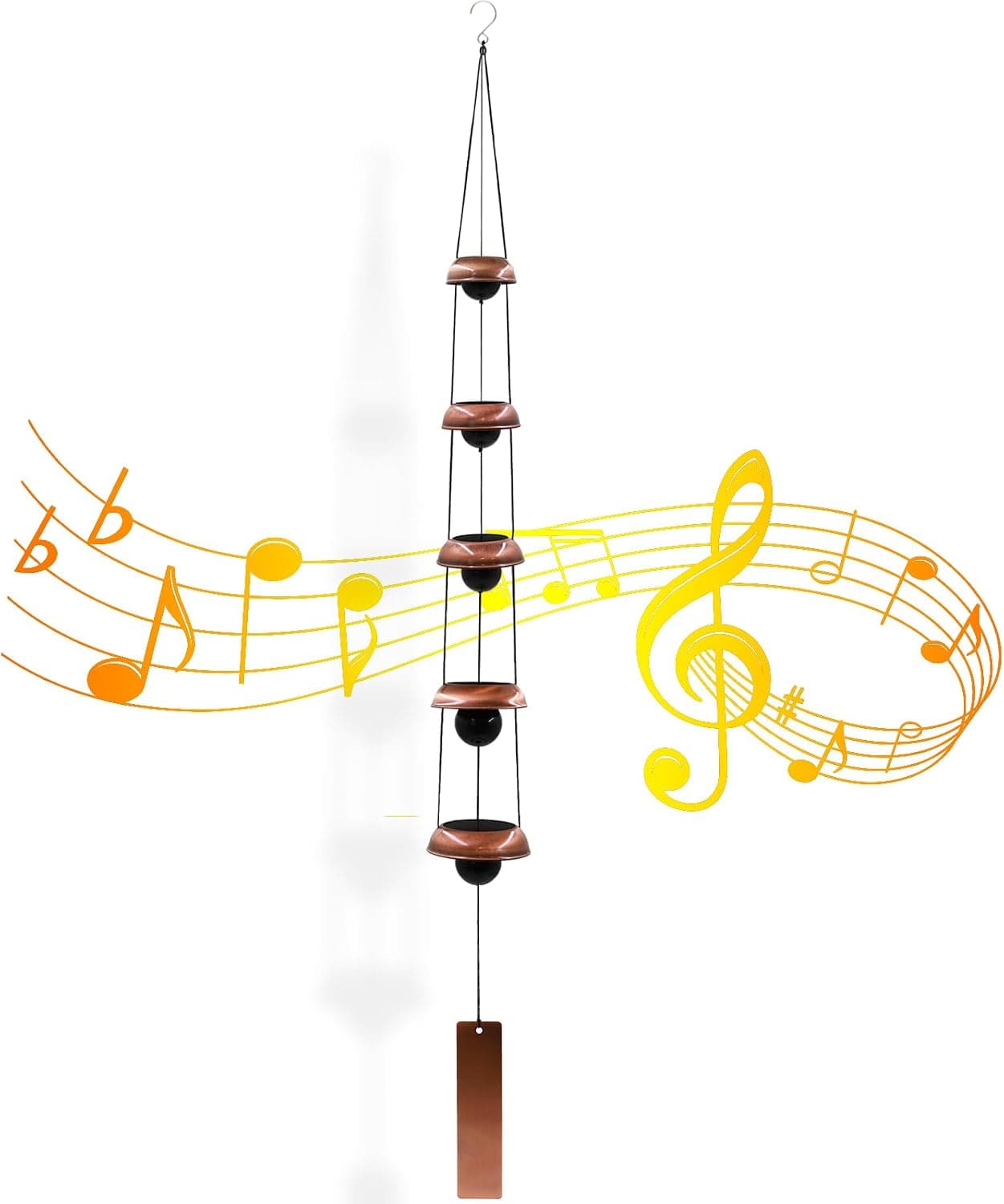
-19%Wind Chimes for Outside with 5 Bell Unique Copper Musical Chimes Feng Shui Wi...
 -5%
-5%YU FENG Evil Eye Money Tree, Blue Feng Shui Decor with Golden Buddha
 -29%
-29%Karma and Luck March Birthstone Crystal Tree of Life, Aquamarine Gemstone Fen...
 -29%
-29%Karma and Luck July Birthstone Crystal Tree of Life, Ruby Gemstone Feng Shui ...
As an Amazon Associate, we earn from qualifying purchases. We only recommend items our practitioners have personally tested.
Continue Your Journey
Explore these related guides to deepen your understanding:


Ready for Deeper Guidance?
Try our free I Ching reading for personalized wisdom, or explore our curated Feng Shui essentials.