Two people can stand in the same garage and give opposite reports. The rule list isn't the problem — the filter you carried in is.
Two People Standing in the Same Garage
The garage was attached to a 1970s split-level on the northeast corner of the lot, and it had two doors: the wide one facing the street, and a narrow one that opened into a mudroom the width of a coat closet. The husband stood in the driveway and said the house felt fine. His wife stood in the same spot and said the house felt like it was exhaling on her.
Same concrete. Same wind. Same garage. Two completely honest reports.
That gap is the whole subject here — not because one of them was wrong, but because the space is never the only thing being read.
What each of them had done, without knowing it, was collect evidence. She remembered the January mornings when the mudroom door stuck and the cold came in around her ankles. He remembered that the car started every time, that the roof had never leaked, that he had built the shelving himself and it was still level after nine years. Both sets of facts were true. Neither was a full inventory. And each of them had quietly assembled a case for a verdict they reached in the first week.
This is where most conversations about a garage go wrong, and it is why the standard rule lists never quite land. The rules hand you a verdict. A verdict tells your brain what to look for.
The Rules You Have Already Heard
By the time someone searches for guidance on feng shui garage placement, they usually arrive with three or four rules already in hand. The garage should not sit directly under a bedroom. The garage door should not line up with the front door. A garage in the wealth sector drains money. The left side of the house is preferable to the right.
Some of these carry real spatial logic. A garage under a bedroom means a cold floor, engine vibration through the joists, and an exhaust risk worth taking seriously. A garage door aligned with the front door creates a straight shot of air and noise through the center of the house — a circulation problem before it is a metaphysical one.
But notice what these rules are not. They are not old.
The classical material describes gates, courtyards, wells, stoves, and the orientation of a main hall. It describes a world without cars, without attached garages, without a four-hundred-square-foot concrete box sharing a wall with the kitchen. When a modern practitioner applies compass-school logic to a garage, they are doing something the source texts never attempted — retrofitting a twentieth-century object into a framework built for courtyards. That retrofit is not illegitimate. But it is interpretation, and interpretation is precisely the soil where confirmation bias grows.
The left-right rule shows how quickly ambiguity becomes evidence. Does "left" mean left as you face the house from the street, or left as you stand at the door looking out? Those are opposite sides of the building. Practitioners disagree, both camps cite a lineage, and the homeowner quietly selects whichever version confirms what they already suspect. Then they report the reading as confirmation.
Which is why two competent practitioners can stand in your driveway and disagree, and why neither of them will change their mind while standing there.
What Is Actually Happening at the Door
Here is the part that rarely makes it into the rule lists: in a car-dependent house, the garage-to-kitchen door is the real front door. More feet cross it in a week than cross the formal entry in a year. Architects call this the working threshold, and it shapes how a home feels far more than the ceremonial one, because it is the door you pass through in a bad mood, in the rain, carrying groceries, with your shoulders already up around your ears.
Stand in that mudroom at seven in the evening in February. The garage side is somewhere between forty and fifty-five degrees. The house side is seventy. The slab steps up four inches, sometimes six. The light on the garage side is a single bare fixture; the kitchen beyond is warm and low. Your eyes need roughly twenty minutes to fully adapt between those two light levels, which means for the first thirty seconds inside you are navigating by contrast, squinting, and reading the room wrong.
Then there is proportion. A two-car garage is often twenty feet by twenty feet or larger — bigger than most living rooms in the same house — and the door from it into the mudroom is comically small relative to that volume. Architects describe this as compression and release: a large, cold, echoing box discharging you through a narrow slot into a warm, low-ceilinged room. Handled well, it is a pleasant decompression. Handled badly, it is a squeeze, and the body remembers squeezes.
A threshold that asks the body to do too much work in too short a distance registers as tension. Not evil energy. Tension. And tension is what people later describe as a house that feels heavy.
There is a social layer too. The garage is usually the most negotiated square footage in a household — who parks inside, who parks in the driveway, where the bikes live, whether the weight bench gets to stay. Whoever loses that negotiation tends to carry a low-grade resentment about the space, and that resentment gets filed under the house. I have watched a couple argue about a bagua sector for twenty minutes when the actual dispute was about whose car was sleeping outside.
Fix the negotiation and the sector reading often changes on its own.
The Hidden Pattern
Confirmation bias is usually described as a failure of reasoning. In spatial terms it is something more specific: the tendency to let a label decide which sensations you register.
Once you have read that a garage in the wealth corner drains money, every invoice that arrives gets filed there. The furnace repair. The dental bill. The brakes. Meanwhile the raise in March, the side work that came through in summer, the refund that showed up unexpectedly — those get filed nowhere, because they do not fit the story. The story is now running the filing system.
The mechanism runs in reverse just as easily. Someone who spent eleven thousand dollars building the garage needs it to be fine, so the draft at the mudroom door becomes "just how it is," and the smell of exhaust in the hallway becomes "probably the filter."
Two people, one space, opposite reports. Not because the space is ambiguous, but because a belief about the space is a filter, and filters are invisible from the inside.
There is a cultural reason this particular topic attracts so much filtering. The popular rule lists circulate as content — copied, shortened, reposted without the diagnostic step that originally justified them. A rule that once came with an instruction ("look at the door swing, look at the light, then decide") gets stripped down to a verdict ("garages on the left are better"). Verdicts travel faster than diagnostics. That is a media fact, not a metaphysical one, and it explains a great deal about why garage advice online feels confident and unhelpful at the same time.
The honest position is a two-part one. The physical facts of a garage — its light, its temperature, its sound, its proportion, the length and difficulty of the path from car to kitchen — exert a real and measurable influence on how a household feels. And separately, the symbolic overlay you place on top of it, whether from the compass school or the bagua map, gives you a language for talking about that influence. Neither is the problem. The problem is collapsing one into the other and then defending the collapse.
When Following the Advice Makes It Worse
A garage on the west side of a house, door facing the street, mudroom opening into the kitchen. The owner had read that a garage in that position needed grounding, so he painted the inside of the garage door a deep red, hung a small mirror above the interior door, and set a jade plant on the step. Six months later he told me nothing had changed.
Of course nothing had changed. He had spent about ninety dollars and several weekends on remedies for a problem he had never diagnosed. His actual complaint, once we walked the route, was that he arrived home at seven, crossed a dark garage, and entered the kitchen already braced — and then had his first real conversation of the evening with his partner in that braced state. The fix cost forty dollars: a motion-sensor light at the top of the step, a bench moved two feet so the door could open all the way, and a hook for the bag that had been dropped on the floor and stepped over for three years.
The red door did nothing because the red door was never the issue.
The opposite failure is more dangerous. A homeowner told me with real relief that his garage's position was very auspicious, and so he had stopped worrying about the exhaust smell creeping into the hallway. That is a failed seal or a blocked return, and no sector reading makes it safe. When physical evidence and symbolic reading disagree, the physical evidence gets priority every time. A reading cannot vent carbon monoxide.
The Real Fix
Start by walking the route. Not the house — the route. From the driver's seat to the kitchen counter, on a normal evening, carrying what you normally carry. Count the steps. Notice where the light changes and how abruptly. Notice where you turn sideways, where you set things down, where you hesitate.
That hesitation is your data. It is the body reporting a threshold it does not like.
Then work the physical layer, in this order: the door that has to latch cleanly, the light that has to arrive before you need it, the step that has to be visible, the path that has to be clear, the air that has to move out rather than in. A garage is a pressure zone, sitting at a different temperature and often a different air pressure than the house, and every gap in the envelope is a small negotiation happening four times a day.
Only after that do you overlay the compass. If the garage occupies a sector you care about, you do not get to delete it; you manage the transition. Metal-heavy spaces — car, concrete, steel shelving — read as metal in the five elements cycle, which cuts wood and drains earth, so a little wood and warmth at the mudroom threshold is a sensible correction whether or not you accept the cosmology. It is also simply a better room.
And have the conversation. Who parks inside. Whose equipment lives there. What the garage is for. Say it out loud, write it down, and stop litigating it in compass degrees.
One more thing, and this one surprises people: the front door receives an enormous amount of attention in Western practice, and in a house where everyone arrives by car it is often the least-used opening in the building. If you have limited attention to spend, spend it on the door that actually gets crossed.
Reading It Twice
Go back and stand in the driveway. Read the garage once for the body: light, temperature, sound, the length of the walk, the swing of the door, the smell of the air. Those are facts, and they will not change because you believe something about them.
Then read it once for the story you have been telling about it. Notice which sensations you listed first. Notice what you did not mention at all.
That second reading is where feng shui garage placement actually earns its keep — not as a verdict handed down from a rule list, but as a discipline of noticing what you filtered out. The two people in that driveway were both telling the truth. The useful question was never which of them was right. It was what each of them had stopped seeing.
Mei Chen
Traditionally informed guidance • Cross-referenced with classical Chinese source texts
Content draws from both Compass (Luopan) and Form (Xingshi) school traditions. Illustrative examples are composites based on consultation experiences.
Practitioner-Selected Tools for This Topic
Items our team has tested and found effective for the principles discussed above. Individual results may vary.
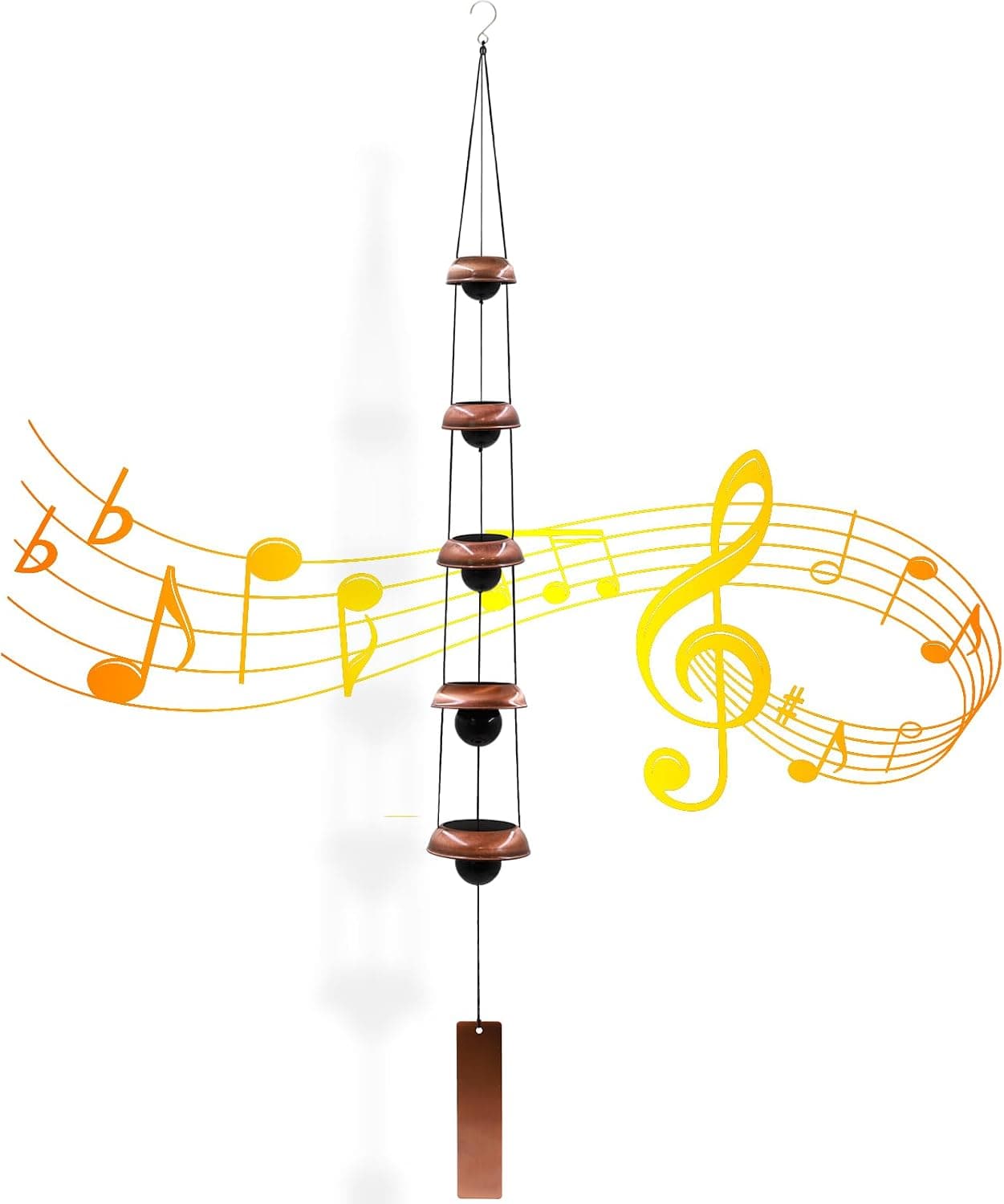 -19%
Wind Chimes for Outside with 5 Bell Unique Copper Musical Chimes Feng Shui Wi...
 -5%
YU FENG Evil Eye Money Tree, Blue Feng Shui Decor with Golden Buddha
 -29%
Karma and Luck March Birthstone Crystal Tree of Life, Aquamarine Gemstone Fen...
 -29%
Karma and Luck July Birthstone Crystal Tree of Life, Ruby Gemstone Feng Shui ...
As an Amazon Associate, we earn from qualifying purchases. We only recommend items our practitioners have personally tested.
Continue Your Journey
Explore these related guides to deepen your understanding:


Ready for Deeper Guidance?
Try our free I Ching reading for personalized wisdom, or explore our curated Feng Shui essentials.