Your desk may look organized while quietly sabotaging your focus, authority, and follow-through.
The chair, the screen, and the feeling you get by 2 p.m.
I walked into a small accounting office once and saw a perfectly neat desk with one ugly problem: the chair faced a blank wall, the monitor sat too high, and a red file tower leaned like it was ready to collapse. The manager told me her team was “mysteriously tired” by midafternoon. I wasn’t surprised. A space can look clean and still feel like a fight.
That is the part people miss about office feng shui. It is not about sprinkling lucky objects around your workspace and hoping the universe notices. It is about how the room makes you sit, move, decide, and recover your attention. If you keep losing momentum at work, start there.
In practice, feng shui for office works best when you treat the room like a system rather than a decoration problem. Your seat, sightlines, storage, light, and the objects closest to your hands all send a signal. Some of that signal steadies you. Some of it drains you fast.
And no, you do not need a perfect office to feel the difference. You need fewer interference points.
What actually changes the energy in an office
The first thing I check is command position. You want to see the door without sitting directly in its path. That does not mean you need a dramatic throne in the middle of the room. It means your nervous system should not feel ambushed every time someone walks in. If you face a wall or have your back exposed to the room, work feels harder because your body stays half-alert.
Next comes the desk surface itself. A crowded desk creates fragmented attention. A completely bare desk can feel cold and avoidant. The sweet spot is a surface with purpose: the tools you use daily, a lamp that supports the work, and a little open space for thought. I have seen people blame their lack of focus on discipline when the real issue was a desk buried under cables, invoices, and three half-dead pens.
Color matters more than most Western offices admit. Too much gray, black, and white can turn a space sterile. Too much red can make the room aggressive. In one marketing suite I visited, the conference room had red accent chairs, a bright crimson print, and a glossy red stapler on the main desk. The team joked constantly, interrupted each other, and could not finish one agenda without spiraling into another. After they removed two red accents and added softer wood tones, the tone shifted within a week.
Your office also needs a proper balance between support and movement. That is where many people get tripped up. They focus on lucky objects and ignore the basic layout. Before you think about symbolic cures, learn the room through the bagua map and its room zones. That framework helps you see where work, reputation, collaboration, and resources are being activated—or crowded out.
How I set up an office when I want steadier output
Start with your chair. Your back should feel supported, and your line of sight should include the entrance or at least a reflected view of it. If the desk cannot move, use a mirror only if it is small and placed carefully; I am not a fan of giant mirrors in workspaces because they multiply movement and distraction. A small shift of the chair angle is often better than any cure object. Less drama. More control.
Then look at what is directly in front of you. If the first thing you see is clutter, your brain inherits clutter. If the first thing you see is a calm wall, a useful calendar, or a clear task board, your mind settles faster. One engineer I advised kept a blue sticky-note wall beside his monitor and a stack of unopened packages under his desk. He changed both in one afternoon, and by the end of the week he said he was finishing code reviews without the usual mental resistance. That is not magic. That is environment doing its job.
Light should be clean and even, not harsh enough to make the room feel like a clinic. Natural light is excellent when it is not blasting directly onto the screen. If sunlight hits your monitor or your eyes at the wrong angle, you will unconsciously tense up. Add a desk lamp if the room feels dim, but avoid a single weak bulb that turns the office sleepy and vague.
Storage deserves more respect than it gets. Closed storage calms the visual field. Open shelves can work, but only if they are edited with discipline. A shelf full of mixed paperbacks, old awards, and random tech packaging creates static. A shelf with a few books, a plant, and one meaningful object feels intentional. If you need a deeper sense of how symbolic objects affect the room, the best crystals for a workspace article can help you choose with restraint instead of superstition.
And yes, plants can help. Not because every desk must become a jungle, but because living green softens the hard edges of office life. One healthy plant in the right spot does more than five tiny dying succulents scattered around a room. If you want practical placement ideas, read the office plants placement basics before buying anything else.
Simple adjustments that usually matter most
If your office door opens straight into your desk, you need a buffer. A low cabinet, a plant, or a screen can slow the line of rush and reduce the feeling that work is constantly being interrupted. Do not block the door fully. That creates its own problem. You want gentle deflection, not obstruction.
If your desk faces a wall with no depth, give the eye something that suggests distance. A framed landscape, a horizon line, or even a neat arrangement of books can help. The human mind wants a sense of forward movement. Walls that feel too close can make work feel like push-push-push with nowhere to land.
Keep power cords, chargers, and tangled tech under control. Messy wiring is one of the ugliest forms of subtle stress. It is not glamorous, but it matters. I have seen immaculate offices sabotage themselves with one black nest of cables under the desk, and the owner could never explain why she felt oddly frazzled in the room. She was sitting over visual chaos every day.
Do not overload the room with symbols of ambition either. Too many certificates, vision boards, trophies, and motivational slogans can make the office feel like a performance stage. One framed award is fine. A wall of self-congratulation is not. Work rooms need support, not pressure.
There are two mistakes I see over and over again. The first is treating the office like a display shelf instead of a workspace. The second is trying to fix everything with one decorative item while the room layout still works against you. For the first problem, see the common office feng shui mistakes people make. For the second, remember that placement beats purchase almost every time.
When the office is shared, the rules change a little
Shared offices need a calmer strategy because you cannot control everything. You can, however, control your immediate zone. Define your perimeter with the tools you use most, keep your chair position stable, and reduce anything that loudly announces itself to the whole room. If your desk is in a high-traffic area, the goal is to create a pocket of stability inside the movement.
Meeting rooms are different again. People think the only job of a meeting room is to hold a table. That is a low standard. A good meeting room helps conversation stay focused without becoming rigid. Round or softened edges work better than aggressive rectangular arrangements when people regularly disagree there. If your team argues in the same room every week, the room may be helping the argument along.
One practical trick: pay attention to what happens after a meeting ends. If people leave more scattered than they arrived, the room is overstimulating them. If they leave sluggish and flat, the room may be too dull. The feedback is in the behavior. Always.
You can also borrow support from the rest of the building. The route from the elevator, the hallway clutter, and the front entry all shape how work energy arrives. That is why a well-set office can still feel off if the building entry is chaotic. The path matters more than people think, which is exactly why I often send clients to read about the front door and incoming energy before they start rearranging furniture inside.
What to do this week if you want a real shift
Move your chair first. If you make only one change, make it that one. Test the angle, the door view, and how your shoulders feel after thirty minutes of work. Then clear one surface completely and return only what supports your current tasks. Not someday tasks. Current tasks.
Next, remove one noisy object, one broken item, and one visual distraction. Broken things signal unfinished business. Loud patterns steal attention. Objects that belong to a different season of your life keep the room stuck in old momentum. People are often shocked by how much lighter the room feels after removing less, not adding more.
If you want to amplify the office after the layout is stable, choose a meaningful but restrained enhancement. A stone with a grounded presence, a healthy plant, or a single wood element can support steady growth. If you are drawn to a small symbolic object rather than a full redesign, the use of amethyst in work settings can be useful, but only when the rest of the room is not already overloaded.
And if money flow or project growth is the main concern, do not jump straight to decorative fixes without checking placement first. A misplaced prosperity symbol can become office clutter with a better story attached. I have seen that happen in more conference rooms than I care to admit.
The right office does not shout. It helps.
FAQ
Should my desk face the door at all times?
Usually, yes in some form. You want awareness of entry without being directly in the blast of the opening door. A slight angle is often better than a perfect straight-on position because it gives you control without feeling exposed.
Can I use a mirror in my office?
A small mirror can help if the room is cramped or if you need a better sightline to the door. A large mirror, however, can create constant motion and make focus harder. Use mirrors as tools, not decorations.
What is the fastest feng shui fix for a stressed office?
Clear the surface nearest your hands and fix the chair position. That alone changes the way your body experiences the room. After that, remove one broken item and improve the light.
Do I need special objects to make the office work better?
Surprisingly, no. A well-arranged desk, good light, and reduced clutter usually do more than a drawer full of cures. Objects can support the room, but they cannot rescue a bad layout.
Mei Chen
Traditionally informed guidance • Cross-referenced with classical Chinese source texts
Content draws from both Compass (Luopan) and Form (Xingshi) school traditions. Illustrative examples are composites based on consultation experiences.
Practitioner-Selected Tools for This Topic
Items our team has tested and found effective for the principles discussed above. Individual results may vary.
 -19%
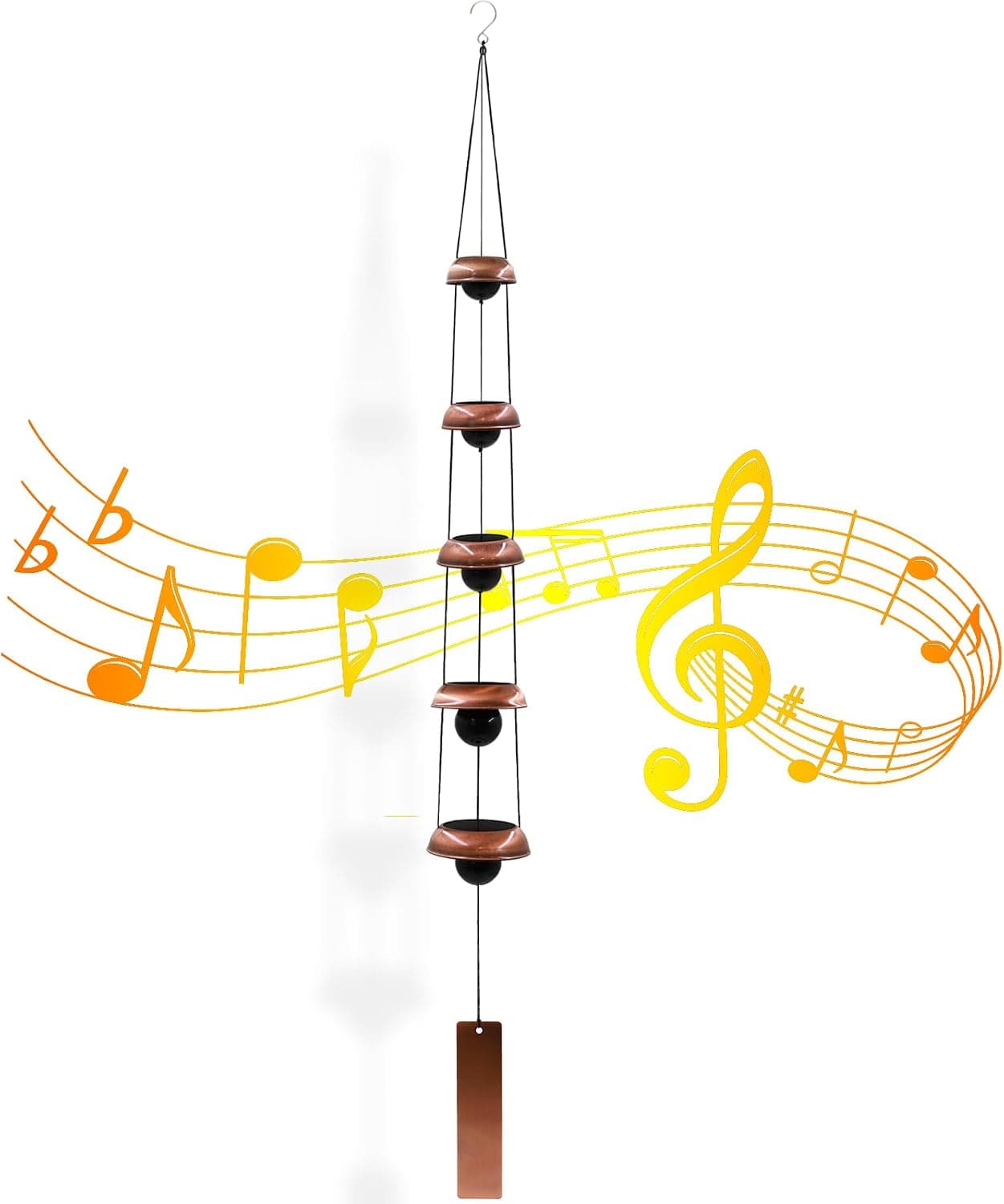
-19%Wind Chimes for Outside with 5 Bell Unique Copper Musical Chimes Feng Shui Wi...
 -5%
-5%YU FENG Evil Eye Money Tree, Blue Feng Shui Decor with Golden Buddha
 -29%
-29%Karma and Luck March Birthstone Crystal Tree of Life, Aquamarine Gemstone Fen...
 -29%
-29%Karma and Luck July Birthstone Crystal Tree of Life, Ruby Gemstone Feng Shui ...
As an Amazon Associate, we earn from qualifying purchases. We only recommend items our practitioners have personally tested.
Continue Your Journey
Explore these related guides to deepen your understanding:


Ready for Deeper Guidance?
Try our free I Ching reading for personalized wisdom, or explore our curated Feng Shui essentials.