The annual star is a calendar, not a floor plan. Rearranging your rooms every February resets the mental map that makes a home restful.
What Flying Stars Actually Measure
Flying stars are a timing system. Each number identifies which energy dominates a sector during a given period, a year, or a month, and nothing in that definition asks you to move a sofa. The building's own base chart, set by its facing direction and construction period, carries most of what you actually feel standing in a room. The yearly star is an overlay on top of that, and it leaves again in twelve months.
Two charts stack. Only one of them rotates.
A Bedroom That Gets Rearranged Every Spring
I followed one north-facing bedroom through three consecutive years of this. The bed went southwest for one annual star, east for the next, then back again. Nothing in the room was broken. The person sleeping there simply stopped sleeping well.
Each reading had been done correctly. Each remedy sat in the right place. The room still got worse.
That is the failure nobody warns you about, and it comes from treating a calendar as a floor plan. Act on the number as an instruction and you produce a space that never holds still long enough to become restful. You pay for it in attention, in sleep, and in the low background sense that your home is quietly arguing with you.
The Short Version
- The stars are a time layer. They describe which energy dominates a sector during a period, a year, a month. That is the whole job.
- Your building carries a fixed layer too: base chart, facing direction, front door. It shifts about once every twenty years, not once every February.
- Stable rooms are cheap for your brain to run. Rearrange one and you delete the mental map you use to find the light switch in the dark.
- Repair the fixed layer when it is wrong. Nudge the time layer with small reversible moves: colour, textile, a single metal object, sound.
- One logged change a year beats twelve you cannot remember making.
Why Your Brain Cares Where the Bed Sits
Habituation is the mechanism, and it runs in three steps. You walk into a room and your visual system photographs the fixed landmarks: door, window, the corner where wall meets ceiling. Your brain checks that snapshot against a map it has been building for weeks. When the two match, navigation drops to autopilot and conscious attention is released for other work. The room feels easy, and you stop noticing it.
That handoff depends on repetition. Change the cue and the stored map is invalidated. For several nights you wake at 3 a.m., reach for a lamp that has moved, and step around furniture that is no longer there.
One rearrangement is nothing. Twelve is a tax.
Chinese cosmology says the same thing with fewer words. Yin is stillness, structure, the container. Yang is movement, timing, the event. A house needs both.
Flying stars are explicitly the yang layer, which means that if every adjustment you make is driven by them, you end up with a building that has no yin left in it: a hotel lobby that happens to have your toothbrush in the bathroom.
Hexagram 52, Gen, is the classical counterweight. Mountain over mountain, nothing moving, and that stillness being the entire point. Practitioners who take the annual chart seriously often keep one room in the house that no chart, no star and no rearrangement is allowed to touch. It is a baseline rather than a superstition. You cannot judge whether a change helped if nothing in the house ever stays the same.
Three Ways a Correct Remedy Still Fails
Metal in a room too small to hold it. The 5 Yellow is earth, and the standard counter is metal, the element earth produces and is drained by. So a brass bowl goes into the sector. Correct on paper. If that sector happens to be a nine-square-metre bedroom, you have now parked a kilogram of cold metal beside the pillow and the room reads as a workshop. The star got addressed. The sleeper's nervous system did not.
A bed pulled out of command. A difficult star lands where the bed sits, so the bed gets moved to a supposedly better sector, often into line with the door, under a window, or with the headboard against a bathroom wall. The command position matters because a sleeper who cannot see the door from a relaxed posture stays faintly vigilant all night. Trading a sleep constant for a yearly variable is a bad trade, and it is the one I see most often. The same pattern turns up in a living room, where a sofa gets hauled off the wall each year to chase a number and the seating quietly stops working as a place to talk.
The flat with nowhere to put anything. One window, a fixed kitchen, a floor plan that will not budge. The annual chart generates advice that is physically impossible to follow, the reader concludes the system is nonsense, and what actually happened is that a time layer was applied to a space with no slack in its fixed layer. Renters do best working almost entirely in the base: daylight, clutter, the entry, sleeping direction. For them the annual stars are information, not homework.
Notice the common thread. Every piece of advice was technically right, and every room became less consistent.
Correctness is not the same thing as fit.
Working Order
Fix the fixed layer first. Orientation, the front door and whatever it opens onto, bed against a solid wall with a view of the door, desk where you can see who enters, walking lines clear. A bad base cannot be rescued by an annual remedy. A bedroom that already works at the level of light, air and sightlines will absorb a rough star without anyone noticing. That is what a base is for: it buffers.
Read the annual chart as maintenance, not renovation. When the 2 arrives in a sector, that sector gets a metal note: a brass object, a grey textile, a wind chime if you like the sound. When the 9 arrives, the sector gets less fire rather than more, so fewer reds, fewer candles, fewer screens. These are reversible adjustments measured in centimetres. Furniture moves are measured in hours and in lost sleep.
Let the elements argue it out. The visiting star's element meets the sector's fixed element and the room's actual use. Fire in the south meets fire in the south and doubles. Earth dropping into an east sector meets wood and gets drained. This is the five elements cycle doing the diagnosis, and it explains why two rooms carrying the identical annual star can need opposite treatments. The number by itself is never the diagnosis.
Change one thing and write it down. Date, sector, what moved, what you noticed over the following three weeks. That notebook is what separates people who get somewhere with flying stars from people who rearrange the furniture every February. A chart you cannot compare against anything is decoration.
Leave the monthly and daily layers alone unless you have a reason. They are real, and they rotate fast enough that following them turns a home into a machine you have to operate. A shop with a till, or a room where negotiations happen, earns the monthly chart. A bedroom does not.
Where the Modern Version Went Sideways
The annual star system is genuinely old. The idea that it should dictate furniture placement is recent, and mostly commercial. Classical practice weights the building's base heavily, treats the year as a modifier, and assumes a practitioner making small corrections to a space that already functions. The popular version inverts all three: it leads with the year, sells a remedy per number, and implies that anyone who does not act is in danger.
Here is the result. A brass bowl in the hallway. A red runner in a room that was already warm. A wind chime over a bed. Each object defensible on its own, and together a space with no coherent signal, as though five people who never met had each furnished one corner. The search results for feng shui flying stars explained hand you a chart, a remedy list, and silence about the layer underneath.
My test is blunt. Strip out every annual remedy tomorrow. Is it still a good place to live? If no, the base was the problem and the stars were a distraction. If yes, the remedies are doing exactly what they were meant to do, which is nudging rather than rebuilding.
Questions People Actually Ask
Do flying stars really change every single year?
Yes, and it is the least useful thing about them. The annual layer rotates. The building's base chart does not. Most of what you feel standing in a room comes from the base, so treat the yearly turn as weather rather than climate.
Which matters more, the house chart or the yearly star?
The house chart, almost every time. It is calculated from facing direction and construction period, and it stays put until the building is substantially rebuilt. The annual star is a rotating overlay. When the two disagree, follow the base.
Should I move my bed if a bad star lands in the bedroom?
Not unless the bed was already badly placed, for instance in line with the door. Bed position is a sleep constant; the star is a variable that walks out in twelve months. Put a small metal or colour adjustment in the affected corner and leave the frame where it is.
I rent a small flat. Does any of this apply to me?
Plenty of it, just not the furniture part. Renters get the most from the base layer: the entry, daylight, sleeping direction, the sightline from bed to door. For you the annual chart is something to know, not something to act on.
Is the 5 Yellow really as bad as people say?
It is the one number worth taking seriously, though dangerous is doing a lot of work in that sentence. Classical practice reads it as a caution about disruption and illness in a sector, not a curse. A metal object and a bit less noise in that corner covers most cases.
How do I mark out sectors in a weird, L-shaped floor plan?
Overlay the eight sectors on the building's centre, not on each individual room, and accept that parts of an L will fall outside the walls. Get the centre and the facing direction right first. Everything after that is a rounding error.
Mei Chen
Traditionally informed guidance • Cross-referenced with classical Chinese source texts
Content draws from both Compass (Luopan) and Form (Xingshi) school traditions. Illustrative examples are composites based on consultation experiences.
Practitioner-Selected Tools for This Topic
Items our team has tested and found effective for the principles discussed above. Individual results may vary.
 -19%
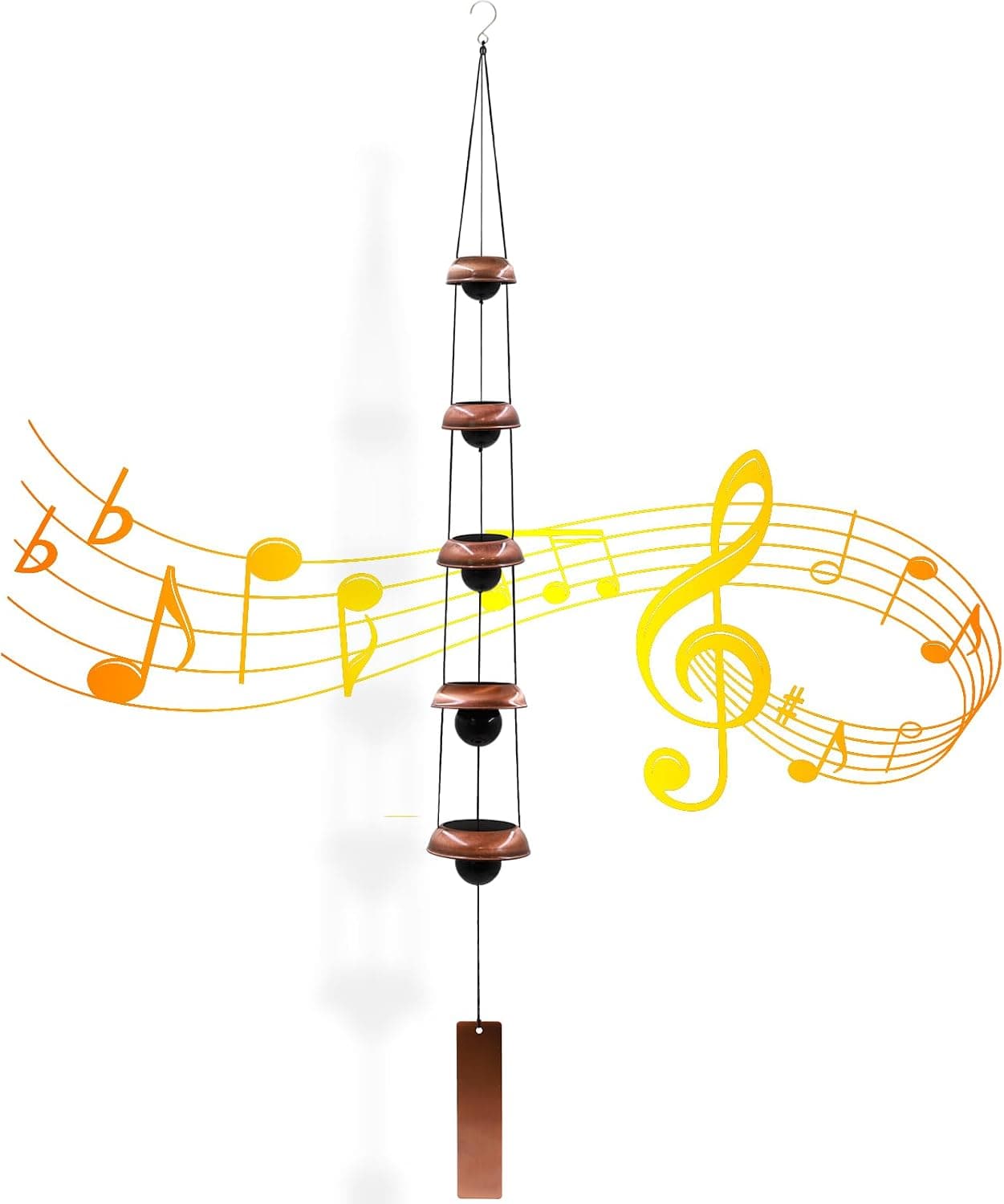
Wind Chimes for Outside with 5 Bell Unique Copper Musical Chimes Feng Shui Wi...
 -5%
YU FENG Evil Eye Money Tree, Blue Feng Shui Decor with Golden Buddha
 -29%
Karma and Luck March Birthstone Crystal Tree of Life, Aquamarine Gemstone Fen...
 -29%
Karma and Luck July Birthstone Crystal Tree of Life, Ruby Gemstone Feng Shui ...
As an Amazon Associate, we earn from qualifying purchases. We only recommend items our practitioners have personally tested.
Continue Your Journey
Explore these related guides to deepen your understanding:


Ready for Deeper Guidance?
Try our free I Ching reading for personalized wisdom, or explore our curated Feng Shui essentials.