The problem often isn't the room itself. It's how you move through it, and what your body learns on the way.
The Real Story Behind Feng Shui Examples
The conventional thinking on Feng Shui Examples has a fundamental flaw. I saw it in a narrow townhouse in Portland, where the owner had placed a brass money frog on a glass shelf, planted three lucky bamboo stalks in the east corner, and still felt drained by 3 p.m. every day. The strange part was the staircase. It rose straight from the front entry to the second floor, white-painted treads flashing under a skylight, and every time she came home her shoulders lifted before she had even taken off her coat. People blame the frog, the plant, the mirror. Wrong. Sometimes the real issue is the vertical route your body takes through a house.
That house taught me a lesson I keep seeing: movement matters more than decoration when the stair becomes the main channel of qi. A staircase can feel like a funnel, a ladder, a break in rhythm, or a quiet lift, and each version changes how a person settles, sleeps, and spends money. The usual advice talks as if every room sits flat and still. Homes do not behave that way.
One client followed every familiar recommendation she could find and it backfired. She lined the stair landing with red art, hung a crystal above the first turn, and kept the hallway bright because someone online said dark corners invite stuck energy. Within two weeks she was waking at 4:20 a.m., her teenage son started arguing in the upstairs hallway, and the mailbox near the front door filled with unopened bills. The staircase had become an overactive conduit, not a blessing.
That is why a good reading starts with the path, not the trinket. For broader room mapping, I send people to how to map energy in your home without overthinking it, because the stair often sits at the edge of several sectors at once. Miss the layout and you end up decorating symptoms. The body notices the slope before the mind notices the style.
My first question is always plain: where does the stair begin, and what does it force you to do? A tight run beside the front door creates a different pressure than a broad staircase in the center of the house. One feels like you are being pulled upward before you can arrive. The other can feel ceremonial, even calming, if the landings give you a moment to breathe.
Look at the landing, not just the risers. If the landing opens to a bedroom door, the climb does not end; it keeps pressing into sleep. If it opens to a bathroom, the movement seems to leak away before it settles. I have watched families blame noise, pets, or stress, then discover the staircase was landing directly on the most private room in the house.
turning a bedroom into a sanctuary requires less than you'd think matters here because stairs often dump motion into a room that needs the opposite. A bedroom at the top of a busy stair can feel like a train platform at night. If the bed shares a wall with the stair run, the body stays alert, even when the room looks peaceful.
The best correction is rarely dramatic. Sometimes I move the visual line: a runner with a softer texture, a landing lamp with a lower glow, a closed door instead of a flashing view up the stair. In one brownstone, the owner swapped a bright silver pendant for a paper shade and painted the lower wall a muted olive. Sleep deepened within a week. Not magic. Relief.
Stairs also reveal something most people miss about vertical movement: they change pace. A flat hall lets you drift. A stair makes your body commit. That commitment can sharpen focus if the house needs more lift, but it can also spike nervous energy if the home already feels restless. In a compact apartment with a narrow staircase and three mirrors facing each other, I have seen people talk faster, eat faster, and spend faster. The house was teaching haste.
When the Staircase Starts Running the House
Common advice says to fix the entrance first, then the living room, then the bedroom. Good order, but incomplete. If the staircase dominates the circulation, it can override the rest. A home with strong vertical movement behaves differently from a one-level space, and that difference shows up in attention span, sleep quality, and even how long mail sits untouched on the counter. A house can look orderly and still feel like it is pushing you.
One afternoon I walked into a suburban home with cream carpet, a cherrywood banister, and a blue umbrella stand by the front door. The owner, a retired architect, had spent months making the entry look elegant. Yet every visitor went straight upstairs without pausing, and the household felt oddly unfinished. The stair opened too quickly from the threshold, so the energy never gathered at the center. We added a console table with rounded edges, moved the umbrella stand aside, and hung a modest landscape low on the wall. The entry began to exhale.
Stair direction matters too. A stair that climbs immediately after the front door can pull qi upward before it has time to settle into the first floor. That tends to show up as scatter: keys misplaced, conversations cut short, guests never staying long. A stair tucked farther back allows the entry to hold. You feel the house meet you.
Then there is the line of sight. If you can stand at the door and see the staircase racing up in a straight shot, the house can feel like it has no pause button. The cure is often modest: a screen, a plant with actual weight, a piece of furniture that interrupts the sprint without blocking movement. A staircase should not behave like a slide.
Here is where the center rules the room. corners only pretend to matter. becomes relevant. In homes with strong vertical traffic, the most important space is often the pause point between levels, not the decorative corners. The landing, the entry, the transition between floors — that is where the house either collects itself or keeps scattering.
People love symbolic cures because they are easy to buy. That is the trap. A red ribbon on the railing will not fix a stair that slams energy into the upstairs hallway. A crystal hanging above the turn may glitter beautifully while the household keeps feeling edgy. The eye is satisfied. The body is not.
I watched this play out in a Seattle duplex with navy walls in the stairwell and a brass sconce at knee level. The family had placed framed certificates all the way up the run, as if achievement itself could smooth the climb. Instead, every morning became a race. The children dashed downstairs, the father forgot his laptop twice a week, and the mother started lingering in the kitchen just to avoid the rush. We removed half the frames, softened the stair light, and left one calm ink landscape at the landing. The whole corridor stopped shouting.
What changed? The stair no longer demanded performance. That is the part most people miss when they chase Feng Shui Examples from the internet. The house is not impressed by good intentions. It responds to rhythm, sight lines, and the nervous system's need to slow down.
Reading the Stair by Feel, Not Just by Formula
Some stairs lift the mood. Some stairs pick at the nerves. You can usually tell within ten seconds, before anyone says a word. Stand at the base and notice your breath. If your chest rises and your eyes dart upward, the stair may be overcharging the space. If your body naturally softens and the view feels contained, the stair is doing a better job of transition.
This is where the five elements help, but only if you stop using them like stickers. Wood works differently on a staircase than Fire or Metal does. A stair with exposed timber treads, a handrail that feels warm in the hand, and a plant at the base can create a steadier rise. Add too much red, too many angular frames, or a row of bright bulbs, and the movement can turn jumpy fast. For a deeper lens on this, see five elements theory explains why good feng shui still feels wrong.
Concrete details matter. In a Victorian house, I once replaced a mirrored stair riser treatment with matte cream paint because the reflections were making the climb feel endless. In a condo, I moved a black umbrella basket three feet away from the bottom step so the opening no longer felt like a hole. In another home, a narrow skylight at the stair top was throwing a hard beam onto the landing at 6 a.m., and the owner kept waking with a jaw clenched tight enough to ache. Small things. Very specific things. They change the whole tempo.
The psychology is straightforward. Repetition trains the body. If you climb a stair that is chaotic, overly bright, or visually aggressive ten times a day, your system learns to stay ready. Over weeks, that readiness leaks into the rest of life. You answer emails too quickly. You snap at the people in the kitchen. You lie down at night and still feel the staircase in your legs.
Quiet corrections work because they give the nervous system a different script. A runner with a muted pattern can slow the eye. A landing table with a shallow bowl can tell the body there is a place to stop. A wall color that absorbs light instead of bouncing it can make the upper floor feel less like a command post. None of this is flashy. It is effective.
One more thing. Stairs near money areas are often blamed for financial leaks, but that is too crude. The real issue is whether the stair keeps moving wealth out of the house before it can gather. A stair adjacent to the front door, exposed to clutter, and lit like a hallway in a hospital creates a habit of hurry. Hurry makes people pay bills late, buy duplicates, and skip the small tasks that protect cash. If you want to see the kinds of placements that undo a setup, look at money corner mistakes that quietly undo the setup.
Not every staircase is a problem. Some are the spine of the home. But the moment you pretend the stair is neutral, you lose the thread. Vertical movement is a design choice with consequences. The house knows it. Your body knows it first.
Practical Fixes for a Stair That Feels Too Fast
Start with the base. If the stair opens directly to the front door, create a pause: a bench, a plant with broad leaves, or a table that gives the eye somewhere to land before it shoots upward. Do not clutter the area with six objects because some blog told you abundance looks auspicious. One or two grounded pieces work better than a crowded display.
Then check the first turn. A staircase that bends needs a softer visual cue there, not a shouting gallery wall. I like one low-contrast painting, a lamp with warm light, or a textured runner that absorbs footfall. The goal is not to decorate every inch. It is to slow the climb enough that the house can collect itself.
Landing spaces deserve respect. They are not leftover square footage. On a second-floor landing outside bedrooms, I prefer a calm image, a closed basket for spare blankets, or nothing at all if the area is already tight. A landing packed with storage boxes, exercise equipment, and old frames becomes a holding pen for unfinished life. People feel that unfinishedness every time they pass it.
One family in Austin had a stair painted bright white, with cobalt blue treads and a gold-framed mirror at the top. It looked dramatic. It also made every evening feel like the house was calling everyone upstairs and nowhere else. We muted the blue with a runner, rotated the mirror so it faced a wall, and added a small wood side table at the midpoint with a ceramic bowl. Dinner conversations lengthened. The father stopped pacing after dark.
Window placement can help or hurt. A stairwell window that floods the steps with noon glare may feel lively in daylight and harsh at dawn. Sheer curtains, a bamboo shade, or even a small adjustment to hanging height can change the whole tone. The point is to shape the vertical route so it supports movement without agitating it.
And yes, some people should also think about the bedroom layout above the stair. If a bed sits directly over the staircase, the sleeper may feel lifted and ungrounded, especially if the stair is steep or the banister rattles. That is one reason I often point readers toward bedroom rules that affect both sleep and relationships before they start buying more objects. A stair can disturb intimacy long before anyone notices the design flaw.
Big mistake: treating every stair the same. A grand central stair in a tall house, a cramped service stair by the kitchen, and an open stair in a loft each behave differently. Apply one formula and you will miss the actual pressure point. The solution should fit the path the body takes, not a slogan.
And if knives are stored in the kitchen directly below a stair landing, pay attention. That combination can make a home feel sharper than it needs to be. For a very specific example, kitchen knives carry more energy than you'd think — here's why placement matters. Sometimes the friction is not mystical at all. It is a sharp object, a fast stair, and a household that never quite lands.
FAQ
Is conventional Feng Shui Examples advice reliable? Often not on its own. It can point you toward obvious problems, but it usually ignores how a staircase moves people through the house, which is where many of the real symptoms begin.
Should I always try to hide a staircase? No. Hiding it can make the house feel awkward or blocked. A better move is to tame its pace so it feels integrated instead of dominant.
What if my stairs are already beautiful? Beauty helps, but it does not cancel a harsh circulation pattern. I have seen elegant marble stairs create more tension than plain wooden ones because the surface was slippery, bright, and visually loud.
Can a staircase affect sleep? Absolutely. A stair that lands beside bedrooms, reflects light into hallways, or carries noise upward can keep the body alert long after bedtime. The room may be quiet, yet the nervous system keeps climbing.
Do I need a full renovation to fix it? Usually not. A landing lamp, a calmer runner, a better placement at the base, or a softer visual break at the first turn can shift the whole feel. The house often needs a pause more than a rebuild.
What should I notice first when I walk in? Watch your body, not the décor. Do your shoulders rise, do your eyes race upward, do you slow down near the landing, or does the stair keep pulling you forward? That reaction tells you more than a catalog ever will.
Some houses feel like they are inviting you upward. Others feel like they are pushing. The difference can be a white stairwell, a hard landing light, and a hallway that never lets your breath catch.
Mei Chen
Traditionally informed guidance • Cross-referenced with classical Chinese source texts
Content draws from both Compass (Luopan) and Form (Xingshi) school traditions. Illustrative examples are composites based on consultation experiences.
Practitioner-Selected Tools for This Topic
Items our team has tested and found effective for the principles discussed above. Individual results may vary.
 -19%
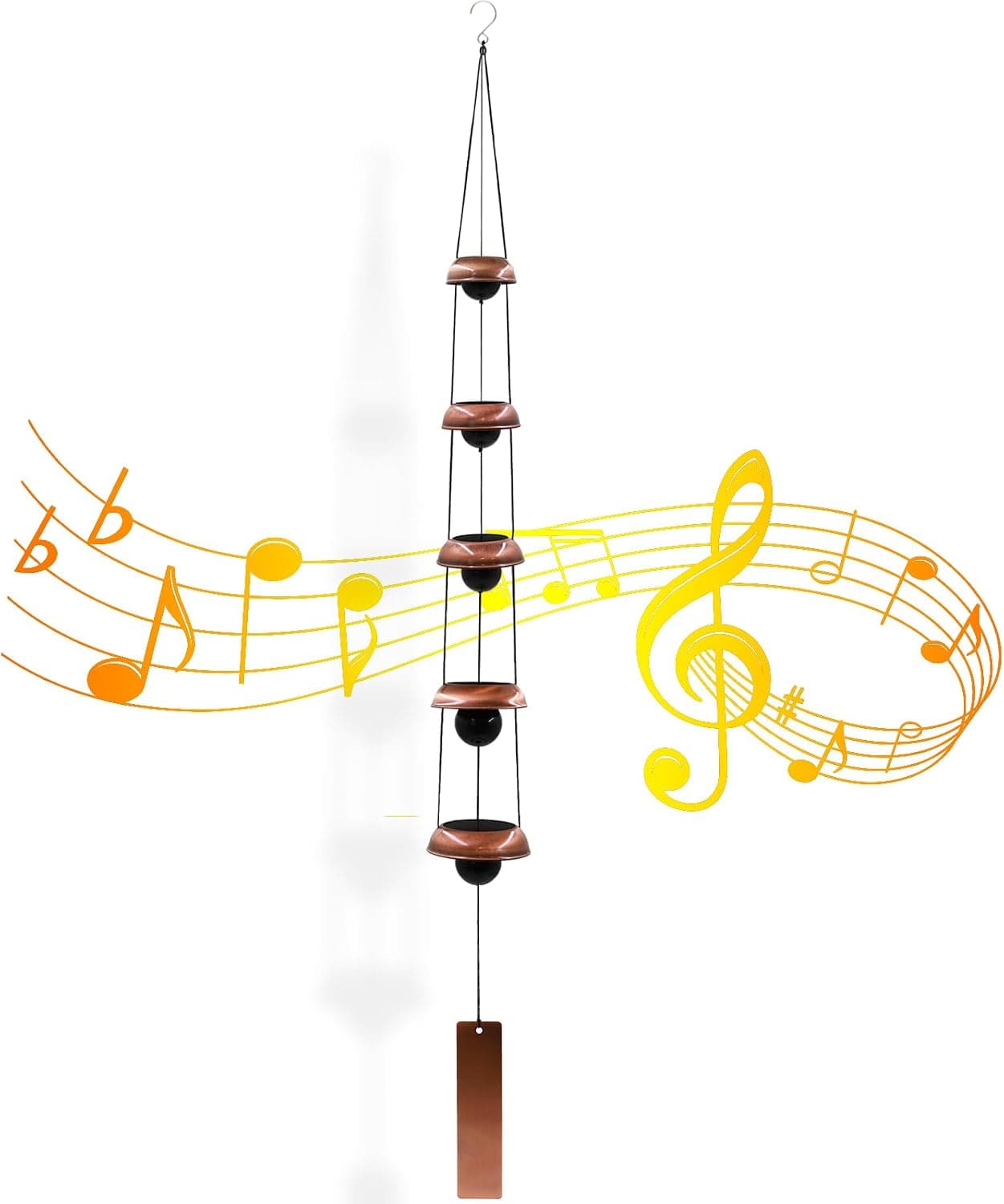
-19%Wind Chimes for Outside with 5 Bell Unique Copper Musical Chimes Feng Shui Wi...
 -5%
-5%YU FENG Evil Eye Money Tree, Blue Feng Shui Decor with Golden Buddha
 -29%
-29%Karma and Luck March Birthstone Crystal Tree of Life, Aquamarine Gemstone Fen...
 -29%
-29%Karma and Luck July Birthstone Crystal Tree of Life, Ruby Gemstone Feng Shui ...
As an Amazon Associate, we earn from qualifying purchases. We only recommend items our practitioners have personally tested.
Continue Your Journey
Explore these related guides to deepen your understanding:


Ready for Deeper Guidance?
Try our free I Ching reading for personalized wisdom, or explore our curated Feng Shui essentials.