A few small shifts at your desk can reduce friction, sharpen focus, and stop the daily drain that looks like “just working from home.”
The desk that looks fine but drains your day
You know the feeling: the laptop is open, the coffee is warm, and somehow your shoulders are already tight before the first email. I walked into a small guest room office last spring where a teacher had a pale gray desk pushed under a window, a black monitor reflecting glare, and a stack of unpaid bills pinned under a blue pen cup. She said she was “just unfocused.” She was not unfocused. Her workspace was broadcasting pressure from every angle.
That is the part people miss. A home office does not need to be dramatic to work against you. A chair with its back to the door. A monitor aimed at a wall. A printer humming beside your elbow. These little things add up, and they matter more than decorative objects or trendy accessories.
If you want a clearer way to read the room layout, start by noticing where your body relaxes and where it braces. The desk should support attention, not demand constant defense. That is the real job of a feng shui desk setup work from home: to make focus feel easier than distraction.
And no, you do not need a perfect room, a rare compass, or a shopping spree. You need a sensible command position, clean sight lines, and a surface that tells your nervous system, “You can settle here.”
What actually changes the energy at a desk
In practical terms, the desk is a control point. It is where intention becomes action, where scattered thoughts become a finished report or a booked client call. In feng shui, that means the desk should give you visibility, support, and a sense of command. You want to see the room without sitting in the path of every disruption.
The best position is usually one where you can face into the room with a solid wall behind you. That wall matters. It creates psychological and energetic backing, which is why people often feel calmer there without knowing why. If your desk is floating in the middle of the room, shoved into a corner, or pressed directly against a blank wall, the body notices. It may not say anything, but it reacts.
For deeper context on how home energy flows through larger rooms, look at the way a living space carries movement and rest. The same principle applies here: too much open exposure feels unstable, while too much blockage feels heavy. A desk needs balanced access, not isolation.
There is a surprise in this for many Western readers. The “best” desk setup is not the one with the prettiest background for video calls. It is the one that lets you work without bracing against the room. A calm seat beats a photogenic one every time.
Set the desk first, then worry about the details
Start with the chair and the wall behind you. Sit where you can see the door or most of the room without being directly in the doorway line. If that is impossible, use a mirror carefully so you can sense what is behind you without turning every minute. I say carefully because mirrors can help or irritate, and people often overuse them. One mirror is a tool. Three mirrors is a nervous system problem.
Next, clear the immediate field around the desk. I mean the first arm’s reach, not the entire house. The surface should hold only what supports your work today: laptop, notebook, water, lamp, perhaps one organizing tray. Piles create static. Random cords create friction. Even a beautiful desk can become mentally noisy if it collects every loose receipt, charger, and sticky note in the apartment.
Then look at what is in front of your eyes. If the view is a wall, make it intentional: a clean pinboard, a framed image, or a single item that signals direction. If the view is a window, keep the glass uncluttered and avoid sitting with harsh light hitting your screen. Natural light is good. Blinding glare is not. The body knows the difference, even if the design blog does not mention it.
Color matters, but not in the cartoonish way people expect. A calm wood tone, soft green, muted blue, or grounded neutral can help a workspace feel less aggressive. A desk coated in harsh red, bright orange, or shiny black accents may feel stimulating for an hour and exhausting by afternoon. Use color to support your task, not to stage a mood board.
And please keep the chair honest. If you sink, wobble, or lean sideways, the whole setup loses authority. A strong chair with a straight line behind you does more for productivity than a luxury candle ever will. That is not anti-aesthetic. It is just practical feng shui.
What to place on the desk, and what to keep away
Your desk should have a purpose, not a personality crisis. Put the items you use daily within easy reach and remove the rest. A lamp on the left can support active, task-based work for many people; a small organized stack on the right can keep practical matters contained. Keep cables tucked down and out of sight as much as possible, because tangled cords are tiny visual arguments.
If you like symbolic support, choose one object with restraint. A simple plant can work well if it is healthy and not crowding the screen, though I would not load the desk with five decorative items and call it balance. For plant placement ideas beyond the desk, see how to use greenery without cluttering the room. The rule is simple: one living element is grounding; too many become maintenance.
Some people like a crystal on the desk. Fine, if it feels calm and not performative. But the crystal is not doing the heavy lifting if the desk faces a wall of paperwork and a dead laptop battery. Energy follows structure. Structure comes first.
I once advised an architect named Lena who worked from a narrow desk in a charcoal-painted den. Her desk was beautiful, but it sat with her back to the door and a bookshelf crammed with model samples on the right side. She kept saying she felt “mildly hunted” during client revisions. We turned the desk toward the room, removed three visual distractions, replaced a harsh overhead bulb with a warm lamp, and within two weeks she said the room felt quieter even before she opened her inbox. Same desk. Better signal.
Common mistakes that quietly sabotage focus
The first mistake is treating the desk like a storage shelf. If your morning starts by moving yesterday’s life off the work surface, the desk has already lost its authority. This is one of the most common energy-flow problems people create with cluttered thresholds and transitions, and the same logic applies to a workspace. Transitions should be clean. That includes the space where work begins.
The second mistake is sitting with your back exposed to the room. I know, people do this all the time because the room “looks nicer” from that angle. It may look nice, but it rarely feels stable for long stretches of work. If you cannot move the desk, at least create a stronger back support with a solid chair, a modest cabinet behind you, or a visual anchor that reduces the sense of being unprotected.
There is also a hidden error that deserves mention: trying to force a bedroom corner into a full office and expecting office results. Sometimes that works for a season. Often it does not. If you are working in a sleeping space, use the same discipline you would use in a rest-oriented room that must stay calm after work hours. Separate work cues from sleep cues as much as possible. Your brain is not confused. It is reading the room correctly.
How to tell if the setup is working
Give the arrangement a few days, not five minutes. A decent setup tends to produce small signs first: less seat-shifting, fewer eye rubs, fewer excuses to wander away from the desk. You may also notice you finish tasks in cleaner stretches instead of starting and stopping every ten minutes. That is the real test.
If the room feels better but your attention still scatters, check the screen height, chair height, and the amount of visible mess at knee level. People obsess over the “big feng shui fix” and ignore the obvious discomfort in their own bodies. Yet a crooked neck or cramped legs will ruin focus faster than any symbolic issue.
A remote worker I met in a compact condo had set up a white desk directly beside a bookshelf packed with neon folders and a noisy printer. She said she wanted “creative chaos.” What she actually got was fatigue by noon and a strange dread every time she sat down. We simplified the scene, moved the printer into a closet, and placed the desk so she could see the doorway. Her first comment after three days was, “It feels less rude to work here now.” That is a better outcome than any vague promise of luck.
If you want to think in terms of home direction as well as room position, related house-facing patterns can help you notice how the wider environment supports or resists your work rhythm. For some homes, the broader orientation matters more than people expect; for others, the desk position is the main lever. If you are curious, compare your setup with work habits in a west-facing home or other directional patterns, but do not get lost there before fixing the desk itself.
The point is simple. Your workspace should make it easier to begin, easier to continue, and easier to stop without carrying tension into the rest of the house. That is the standard. Not perfection. Not luck theater. Just a setup that stops fighting you.
FAQ
Should I face a wall if that is the only available spot?
Facing a wall is not automatically bad. A wall can feel supportive if you add one meaningful focal point, such as a clean board, a framed image, or a lamp that softens the line of sight. What matters most is whether the space feels contained or trapped.
Can I use a standing desk for feng shui?
Absolutely, if it is stable and not placed in a stressful spot. The same principles apply: clear sight lines, no cluttered perimeter, and enough room behind or around you to avoid feeling boxed in. Standing does not cancel out poor placement.
Do plants help a home office?
They can, but only when they are healthy and proportional. A small plant near the desk can soften the atmosphere and reduce the hard edge of screens and electronics. A crowded jungle of leaves on a tiny surface usually adds maintenance, not calm.
What if my desk has to stay in a bedroom?
That is workable, but you need firmer boundaries than most people use. Keep the desk visually separate from the bed, close the laptop at the end of the day, and remove work items from immediate view if possible. The room must be allowed to change roles.
Mei Chen
Traditionally informed guidance • Cross-referenced with classical Chinese source texts
Content draws from both Compass (Luopan) and Form (Xingshi) school traditions. Illustrative examples are composites based on consultation experiences.
Practitioner-Selected Tools for This Topic
Items our team has tested and found effective for the principles discussed above. Individual results may vary.
 -19%
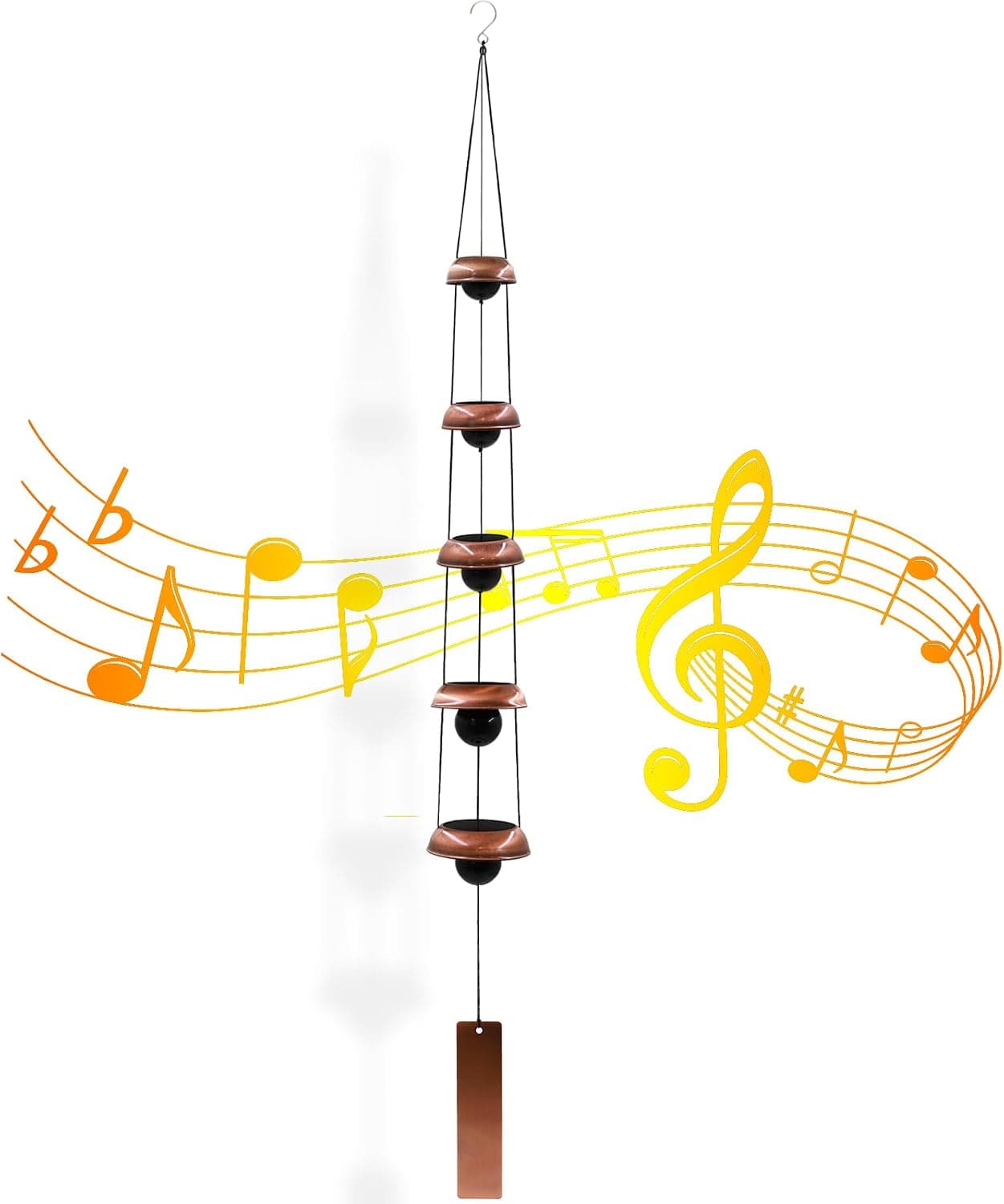
-19%Wind Chimes for Outside with 5 Bell Unique Copper Musical Chimes Feng Shui Wi...
 -5%
-5%YU FENG Evil Eye Money Tree, Blue Feng Shui Decor with Golden Buddha
 -29%
-29%Karma and Luck March Birthstone Crystal Tree of Life, Aquamarine Gemstone Fen...
 -29%
-29%Karma and Luck July Birthstone Crystal Tree of Life, Ruby Gemstone Feng Shui ...
As an Amazon Associate, we earn from qualifying purchases. We only recommend items our practitioners have personally tested.
Continue Your Journey
Explore these related guides to deepen your understanding:


Ready for Deeper Guidance?
Try our free I Ching reading for personalized wisdom, or explore our curated Feng Shui essentials.