The bedroom crystal arrived from tombs and temple courtyards, not nightstands. That history explains why correct placement still fails.
A Quartz Point Three Feet From the Pillow
A quartz cluster sat on the nightstand, three feet from the pillow, its termination aimed at the sleeper's head like a small, patient arrow. The walls were soft gray. The bed ran on the diagonal, door visible, headboard against a solid wall. By nearly every checklist circulating online, that bedroom was correct. And the person sleeping in it had not gone a full night without waking since the previous spring.
Nothing in that room was obviously wrong. That is what made it worth studying.
I have walked into dozens of bedrooms where the stone was doing exactly what the article said and the room was still failing. The crystal was never the problem. The crystal was the object standing in front of the problem, blocking the view of it.
Where the Bedroom Crystal Actually Came From
Here is a piece of history that tends to rearrange people's thinking. In classical Chinese practice, mineral objects were rarely personal sleep aids. Jade went into tombs, onto belt hooks, and into the mouths of the dead. Stones marked thresholds, guarded graves, anchored temple courtyards, and shaped the geomancy of a hillside. The unit of concern was the land and the lineage — not the eight inches of shelf beside a bed.
The idea that a specific stone belongs beside a specific sleeper is a modern synthesis. It was assembled largely in the nineteenth and twentieth centuries from three streams: Victorian lapidary enthusiasm and mineral collecting, New Age mineral lore, and popular feng shui books that reinterpreted five-element theory in ways classical texts would not recognize. Each stream supplied a different assumption — that stones are collectible, that they carry personal spiritual properties, and that those properties can be assigned by color, shape, or chemical composition. That does not make the practice worthless. It makes it recent. And recent things tend to inherit assumptions nobody bothered to examine.
The clearest symptom is the element problem. Ask three practitioners which element clear quartz belongs to. One says metal, because it is hard, white, and mined. One says water, because it is clear and light moves through it. One says earth, because it comes out of the ground. The disagreement is not a sign of depth. It is a sign that the assignment was invented after the fact, by people working backward from a stone they already liked. Classical five-element theory mapped qualities and processes — direction, season, transformation — not mineral species; when a stone is forced into that system, the author has to choose which visible property to treat as the governing one.
Search for feng shui crystals for bedroom use today and you will find grids, charts, and placement diagrams that treat this recent synthesis as ancient law. Almost none of them mention where the practice came from, because the origin story weakens the sales pitch: a stone chosen for a bedroom is not an inherited rule so much as a modern object with a modern job.
What You're Actually Dealing With
Strip away the labels and a bedroom has one job: to let the nervous system stand down. In the older Chinese framing, a house contains active and receptive zones, and the sleeping room is the most receptive room in the building — where a household's energy is stored rather than spent. Daoist thought treats stillness as a practice rather than an absence, something deliberately cultivated. A bedroom that cannot be still is failing at its only task.
So when a crystal sits in that room, do not ask what it means first. Ask what it does. In practice, a bedroom stone affects three variables: visual salience, maintenance load, and spatial friction. Most of the trouble comes from those, not from the mineral's reputation.
Visual salience is the strongest. A faceted or pointed object near the head is a visual event: the human visual system detects edges, vertices, and glints in peripheral vision before conscious recognition arrives. In a low-light room, a sharp reflective form keeps a small part of the brain on watch. This is the same principle behind the old warning about poison arrows, scaled down to domestic size. A crystal aimed at the bed is a very small poison arrow, and it points at the one place you cannot look away from because you are asleep there. The effect is not mystical. It is vigilance, and vigilance is the opposite of rest.
Maintenance load is quieter. A cluster on the nightstand collects dust in its crevices, so it gets handled, rearranged, and worried over. A grid under the bed raises the mattress half an inch and adds something to trip over at three in the morning. Six stones on a dresser become six objects requiring attention, and that low, continuous friction never quite surfaces into awareness. I have watched a room get measurably calmer after a single amethyst tower was removed than after three new cures were added in its place.
Spatial friction is the third variable. A stone on a crowded nightstand steals clearance from the lamp, the book, the glass of water, and the phone. The result is not a dramatic blockage; it is a dozen tiny adjustments every night — reaching around, setting down, rearranging — and each one keeps the room slightly more conscious than it needs to be. The crystal is rarely the whole problem. It is the object that makes an already narrow margin narrower.
The Hidden Pattern
Two failures repeat more than any other.
The first is element loading. A bedroom that is already heavy — beige walls, ceramic tile, thick curtains, a south-facing window that never gets morning light — is a room with very little movement in it. Adding more earth-coded objects does not balance that room. It finishes it off. The person sleeping there describes the space as stuffy, flat, or "like a hotel I don't like," and cannot say why. The answer is usually that the room has been pushed further in a direction it was already leaning, and the stone was the final increment.
The second is substitution, and it is the one nobody admits to. The crystal becomes the action taken instead of the action that was needed. The bed sits in line with the door, so a stone goes on the frame. The window faces a brick wall, so a stone goes on the sill. The room has one weak lamp and no overhead light, so a stone goes on the nightstand and the lighting never gets touched. A cure placed on top of an unresolved layout is not a cure. It is a receipt for having tried.
Which brings up something worth saying plainly: if the room's basic geometry is off, no mineral on earth will correct it. The bedroom arrangement itself has to be settled first — bed position, door sightline, light, air, clutter — before any object on a shelf has anything to work with.
When It Goes Wrong
A north-facing bedroom I was asked about held four separate stones, all recommended by different sources, all placed with good intentions. Clear quartz by the pillow for mental clarity. Rose quartz on the dresser for relationships. Black tourmaline at the door for protection. Amethyst on the windowsill for calm. The occupant had followed every instruction correctly and was sleeping worse than before she started.
The diagnosis took about ninety seconds. The bed was pushed into the corner so the headboard touched two walls, and the door opened directly onto the foot of the mattress. Every stone in the room had been positioned relative to the bed. None of them had been positioned relative to the door.
That is the pattern in miniature. The bagua map gets consulted, the crystal gets chosen, the crystal gets placed — and the actual spatial relationship governing how the room feels is never examined, because it is boring and it is not a purchase.
The shar chi problem in that room was never the door. It was corner compression plus a hard wardrobe edge running parallel to the mattress, and the stones were simply noise layered on top of it. Nobody could feel the difference because there was too much in the way to feel anything.
We moved the bed off both walls, rotated it so the sleeper could see the door without facing it straight on, removed three of the four stones, and left one small rounded piece of rose quartz on a shelf across from the bed, below eye level. She reported a full night's sleep within a week. I do not think the rose quartz did that. I think the room finally had a shape, and the shape is what she was responding to.
The Real Fix
Start with the room's character, not with a chart. Is the space dark, enclosed, and quiet, or bright, exposed, and busy? A bedroom should lean receptive. If it already leans that way, it probably needs nothing added. If it is over-lit, over-busy, or over-full, the correction is subtraction — heavier curtains, warmer bulbs, fewer flat surfaces, one fewer object per week until the room exhales.
Then check the three things that actually govern sleep quality in a space: the bed's relationship to the door, the quality of light in the hour before sleep, and the amount of visual clutter in the peripheral field. Those three account for more tossing and turning than any mineral ever will.
If you still want a stone in the room — and there is nothing wrong with wanting one — apply four rules. Keep it rounded rather than pointed. Keep it matte rather than faceted. Keep it below eye level and away from the head of the bed, ideally across the room. And keep the count to one. A single object reads as intentional. Five objects read as unresolved.
Choose by deficit, not by reputation. A cold, bright, north-facing room with hard floors and white walls has a warmth problem, and a warm-toned stone on a wooden shelf makes sense there. A heavy, dark, carpeted room with beige everything does not need another earth object no matter what the chart says. If you want a fuller reference for which stones carry which qualities, the crystal selection guide covers the assignments — read it after you have diagnosed the room, not before.
There is a reason this reads as both a history lesson and a spatial one. The balance of yin and yang in a home is a relational idea: nothing is good or bad in itself, only appropriate or inappropriate to the room it occupies. A stone that would be exactly right in a busy entry hall can be a small act of aggression in a bedroom. Same object. Different room. Different verdict.
What the Belief Change Tells You
The interesting thing about the modern bedroom crystal is not that it is fake. It is that it is a belief that migrated. It began as a way of reading land and honoring the dead, passed through a century of Western reinterpretation, and arrived on a nightstand as a personal optimization tool — a very different job from the one it originally had.
Beliefs do that. They move into new rooms and keep the old vocabulary.
If the stone helps you slow down, breathe, and treat the bedroom as a place with rules, that is real and I would not talk you out of it. Ritual has function, and a small deliberate object can mark a boundary between the working day and the sleeping one. But if the crystal is standing in for a bed that needs moving, a window that needs covering, or a room that needs emptying, it will not hold the weight. Take it off the nightstand for two weeks and change nothing else. If nothing happens, you have learned something about the stone. If everything changes, you have learned something about the nightstand.
Questions I Get Asked
Which stones are actually safe to keep in a bedroom?
The safer question is which shapes. A rounded, matte stone sitting on a shelf across the room is a different object than a faceted point beside your pillow, even when it is the same mineral. Rose quartz, jade, and smooth river stones tend to work because they are quiet; clusters and towers tend to cause trouble because they are not.
Can a crystal under the pillow really disturb sleep?
Physically, yes, and for reasons that have nothing to do with energy. A hard object under a pillow creates a pressure irregularity that the body registers all night, and most people who try it end up shifting position more, not less. If you want a stone near the bed, the nightstand or a shelf is a better host than the pillowcase.
Do I need to cleanse or recharge it?
Cleansing rituals matter far less than placement does, and I would rather see someone move a stone across the room than smudge it weekly. That said, the habit of handling an object deliberately once a month is a decent way of noticing whether it still belongs there. Use the ritual as a review, not a substitute for one.
What if the bedroom is small and the bed cannot move?
Then work with what the room gives you, which usually means light and clutter rather than furniture. Cover the window properly, get the laundry off the chair, and put the one stone you keep as far from the pillow as the walls allow. Small rooms respond fastest to subtraction, which is the one remedy that costs nothing.
Mei Chen
Traditionally informed guidance • Cross-referenced with classical Chinese source texts
Content draws from both Compass (Luopan) and Form (Xingshi) school traditions. Illustrative examples are composites based on consultation experiences.
Practitioner-Selected Tools for This Topic
Items our team has tested and found effective for the principles discussed above. Individual results may vary.
 -19%
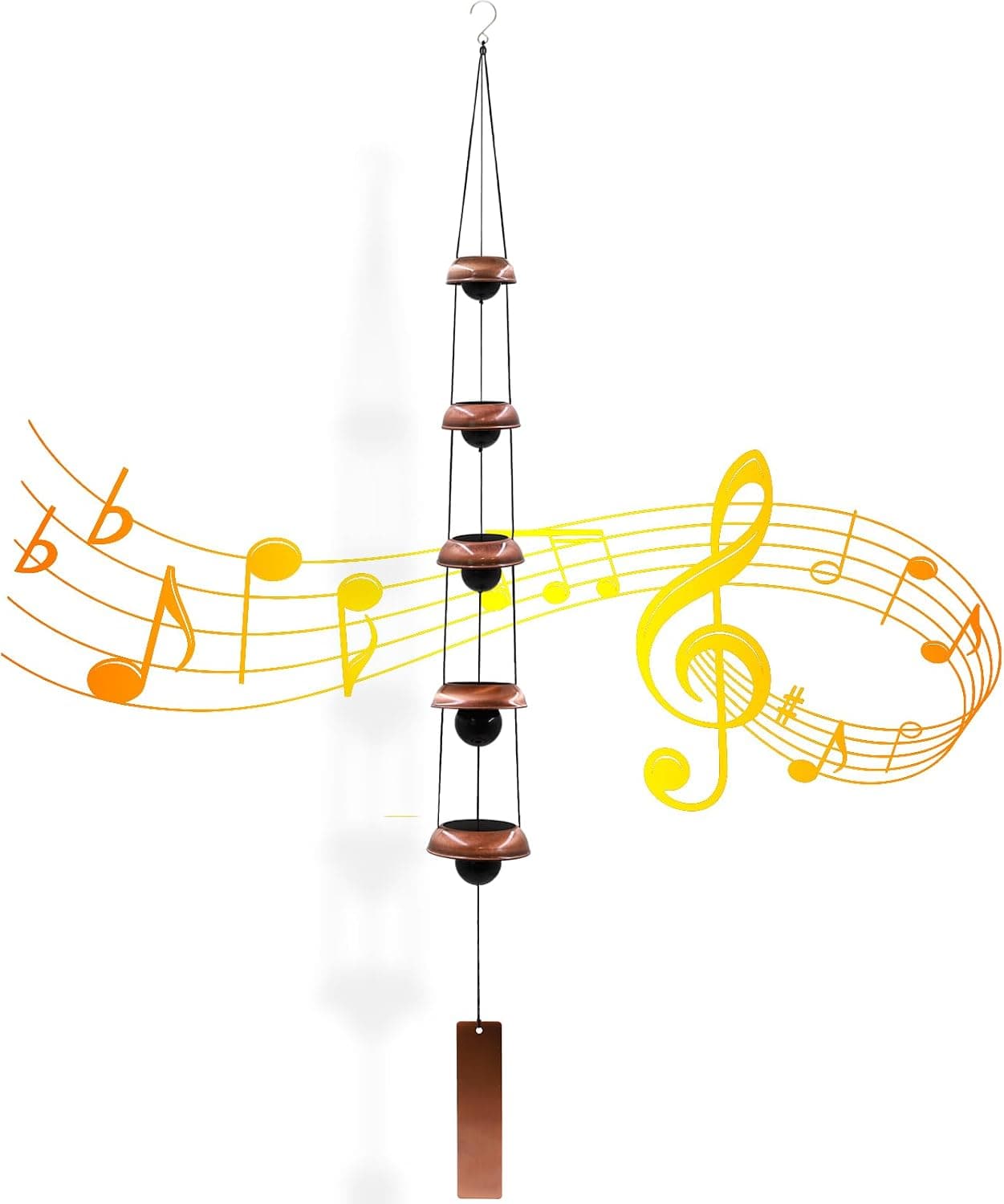
Wind Chimes for Outside with 5 Bell Unique Copper Musical Chimes Feng Shui Wi...
 -5%
YU FENG Evil Eye Money Tree, Blue Feng Shui Decor with Golden Buddha
 -29%
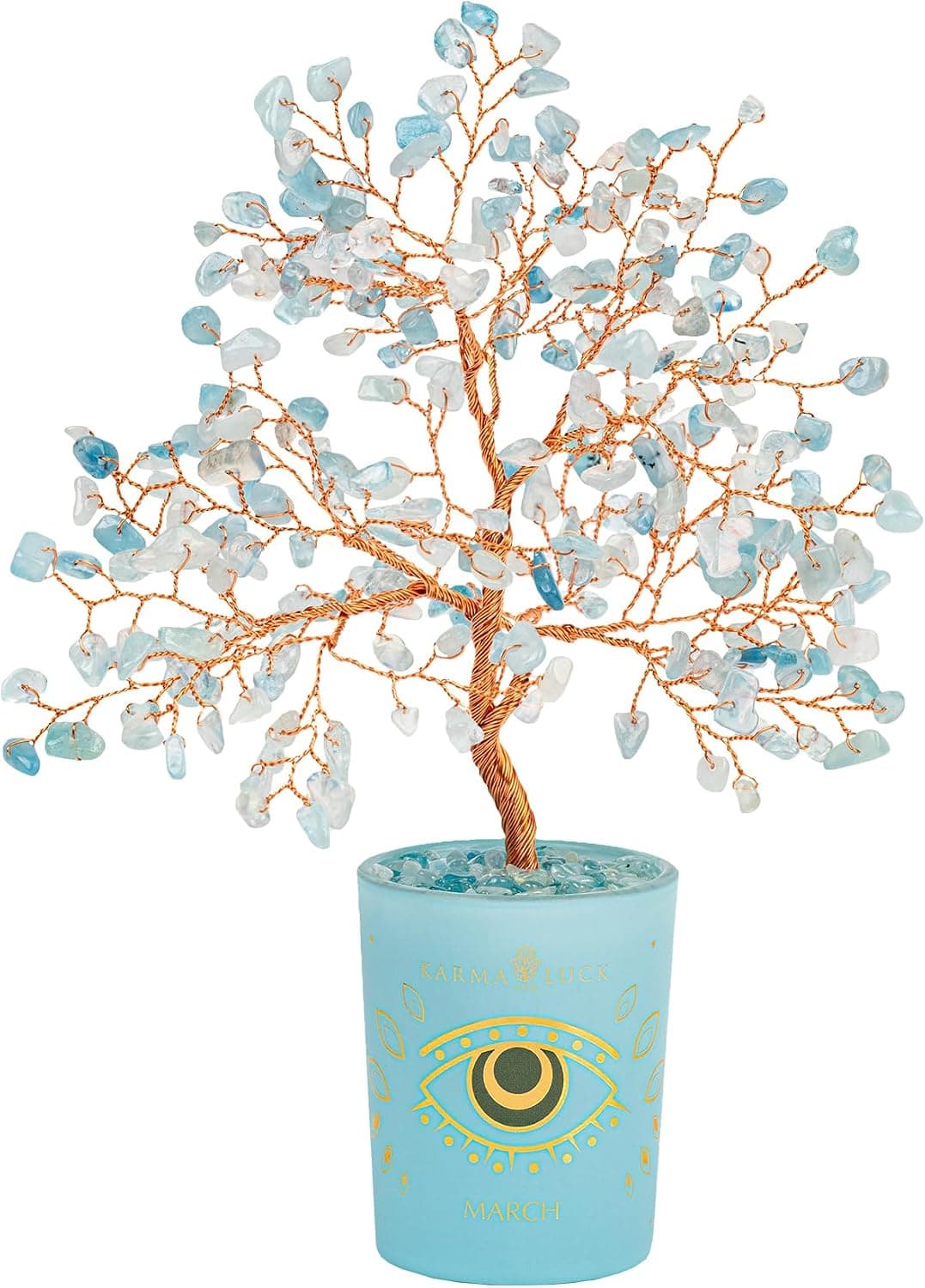
Karma and Luck March Birthstone Crystal Tree of Life, Aquamarine Gemstone Fen...
 -29%
Karma and Luck July Birthstone Crystal Tree of Life, Ruby Gemstone Feng Shui ...
As an Amazon Associate, we earn from qualifying purchases. We only recommend items our practitioners have personally tested.
Continue Your Journey
Explore these related guides to deepen your understanding:


Ready for Deeper Guidance?
Try our free I Ching reading for personalized wisdom, or explore our curated Feng Shui essentials.