The wrong color at your front door can weaken the whole house before anyone steps inside.
The door looks fine. The energy doesn’t.
I once walked into a narrow terrace house in Bristol where the owner had painted the front door a glossy fire-engine red because a neighbor swore it would bring luck. The hallway was tidy, the brass knocker gleamed, and still the place felt oddly twitchy. She worked from the kitchen table, slept badly, and said arguments started for no clear reason. The door was doing too much of the wrong thing.
That is the part people miss when they ask about feng shui colors for front door by direction. Color is not decoration here. It is a filter, a signal, and a way of feeding the entrance with the right quality of qi. Get the direction wrong and the color can feel pushy, flat, or strangely draining.
If you want the short version, the door should support the direction it faces, not fight it. That simple idea solves more homes than any expensive cure. And yes, it also means the bright color you love may be the wrong one for your house.
Start with the facing direction, not your favorite paint sample
The first job is to stand outside your home and face outward from the front door. That is the facing direction. East, south, west, north, and the in-between sectors all relate to different elements, and each element has colors that nourish it or exhaust it. This is the framework behind feng shui colors for front door by direction, and it is far more useful than choosing by taste alone.
East and southeast belong to Wood. Green is the clearest match, and brown can also work because it supports the grounded, living quality of Wood. South belongs to Fire, so red, strong orange, and deep pink can be appropriate if the rest of the facade can carry that intensity. West and northwest belong to Metal, which likes white, silver, gray, and soft metallic tones. North belongs to Water, so black, charcoal, deep navy, and very dark blue are the classic choices.
Then there are the Earth directions: northeast and southwest. These prefer beige, sand, ochre, warm cream, and other muted earth tones. If you have ever seen a door that looked beautiful in the paint shop but somehow harsh at the house, this is often the reason. The color may be lovely on its own and still be wrong for the direction.
For a deeper look at how the entrance works before you even choose a shade, this front-door feng shui guide is worth reading alongside this article.
What the colors are really doing
People love to talk about “lucky colors,” as if luck were a sticker you could paste onto a front door. It is not that simple. A door color can amplify the direction’s element, calm an overactive sector, or create friction that shows up later as restlessness, stalled plans, or a house that never quite settles.
Think of a north-facing door painted bright red. Fire and Water do not naturally cooperate. The result may not be dramatic on day one, but the entrance can feel visually hot, emotionally unsettled, and slightly incompatible with the house’s main flow. I have seen homeowners notice it as insomnia, a louder home, or a strange habit of leaving the door ajar because nobody enjoys approaching it.
On the other hand, a west-facing door painted soft white or pearl gray often looks clean, calm, and expensive without trying too hard. That is Metal in its proper lane. The feeling is crisp, not sterile. It welcomes without shouting.
If you want to check how the directions are interpreted in a wider home map, the bagua map explanation helps you place the door in context rather than treating it as an isolated object.
How to choose the right shade without overcomplicating it
Start with the direction. Then look at the building itself. A color that fits the element but clashes with the stone, brick, trim, or neighborhood can still feel wrong. Feng shui is practical. It does not ask you to ignore architecture and pretend the house lives in a vacuum.
If your east-facing door is surrounded by pale brick and black ironwork, a deep forest green may feel richer than a neon green. If your southwest-facing door sits under a shaded porch, a sandy beige with a little warmth will often read better than a cool taupe. The goal is resonance, not novelty. You want the color to feel like it belongs to the house’s breath.
One client, a retired teacher named Elaine, had a northwest-facing door painted dull mustard. The entry hall was dark, her metal mailbox looked tired, and the whole front of the house felt apologetic. We changed the door to a clean off-white with a brushed silver handle. Within two weeks she told me the place felt “less grumpy” and she stopped avoiding the front entrance after sunset. That is what a good color choice does. It changes behavior.
For more on the supporting details that make a door feel strong instead of merely painted, see how energy should move through the home once it enters.
Direction by direction, without the clutter
East-facing doors do best with greens, blue-greens, and wood tones that look alive rather than muddy. This sector likes growth, planning, and steady movement. If the door is already very dark, adding a green accent may be enough instead of repainting the whole thing.
Southeast also belongs to Wood, but it tends to prefer a more refined, prosperous feel. Emerald, soft jade, and elegant teal can work well. I would avoid anything too severe or too gray here unless the house is already visually very busy.
South-facing doors can take stronger colors, but they need balance. Red can be excellent, yet it must suit the house and the climate. In bright sun, an aggressive red can become exhausting. A restrained burgundy or warm terracotta often lands better than a screaming scarlet.
West and northwest like a cleaner, more polished expression. White is not boring in these sectors; it is precise. Silver, pale gray, and even a light stone tone can make the entrance feel organized. If you keep hearing that white is “too plain,” that is usually someone projecting their taste onto the house’s element.
North-facing doors need Water colors, but they do not all have to look cold. Deep navy, ink blue, and smoky charcoal can feel sophisticated and protective. I would be cautious with pure black if the doorway is already dim, because too much darkness can make the entrance recede visually. A slightly softened blue-black is often better.
Northeast and southwest are Earth. These directions are helped by warm neutrals, not sharp white or icy gray. Think oat, clay, mushroom, tan, and warm cream. These are steady colors. They make the doorway feel rooted.
If you are also thinking about annual movement and timing, the 2026 auspicious directions article is useful for seeing which sectors are easier to support that year.
Use the entrance, not just the door
The best door color can be weakened by a neglected threshold. Flaking paint on the frame, dirty sidelights, a broken porch bulb, or a mat that looks like it came from a gas station all dilute the effect. The front door is not a solo performer. It works with the landing, the path, the hardware, and the visibility of the approach.
Keep the area clear. Trim anything that blocks the door’s line of sight. Make sure the handle works easily and the lock does not stick. If the door is the mouth of the house, do not feed it with clutter and expect dignity in return.
One thing surprises people: sometimes the “wrong” color is not the real problem. A north-facing door can be correctly painted dark blue and still feel weak if the porch light is broken or the walkway is cracked. Fix the physical welcome first. Feng shui respects reality.
Common mistakes I see all the time
The first mistake is choosing a color because it is trendy, not because it fits the direction. I have seen more charcoal-gray doors on south-facing houses than I can count, and they often look heavy rather than stylish. Trend is not the same as harmony.
The second mistake is using the exact same logic for every home. A color that works on a townhouse with a sheltered entry may feel wrong on a detached house with strong sun, a long drive, or a bold facade. If you want a quick check on broader front-door principles, the front entrance basics article will save you from overthinking the wrong details.
FAQ
Can I use a color I love even if it doesn’t match the direction?
You can, but you should expect a compromise. In practice, the more the color clashes with the direction, the more you may feel it in the house’s mood. If you love the shade, try using it on the interior side of the door or in a smaller accent rather than forcing it on the whole exterior.
What if my front door faces between two directions?
That happens more often than people think, especially with older homes and angled streets. In that case, I look at the dominant facing plus the architecture and surrounding materials. A slightly blended color is usually safer than an extreme one, because it can speak to both sectors without creating tension.
Is black a bad choice for every door?
No, and that misconception causes a lot of unnecessary fear. Black can be excellent for north-facing doors, and even a softened charcoal can work in other settings if the house needs grounding. The real issue is whether the color helps the doorway feel open, clear, and appropriately supported.
Do I need to repaint the whole door to get results?
Not always. Sometimes the frame, hardware, and a fresh, clean finish are enough to change the feel. If the current color is strongly incompatible, a full repaint is better, but I never rush people into a bigger job than the house actually needs.
Choose the direction first, then let the color follow. That order matters more than most people realize. The door should not just look nice from the street; it should know what kind of energy it is inviting home.
Mei Chen
Traditionally informed guidance • Cross-referenced with classical Chinese source texts
Content draws from both Compass (Luopan) and Form (Xingshi) school traditions. Illustrative examples are composites based on consultation experiences.
Practitioner-Selected Tools for This Topic
Items our team has tested and found effective for the principles discussed above. Individual results may vary.
 -19%
-19%Wind Chimes for Outside with 5 Bell Unique Copper Musical Chimes Feng Shui Wi...
 -5%
-5%YU FENG Evil Eye Money Tree, Blue Feng Shui Decor with Golden Buddha
 -29%
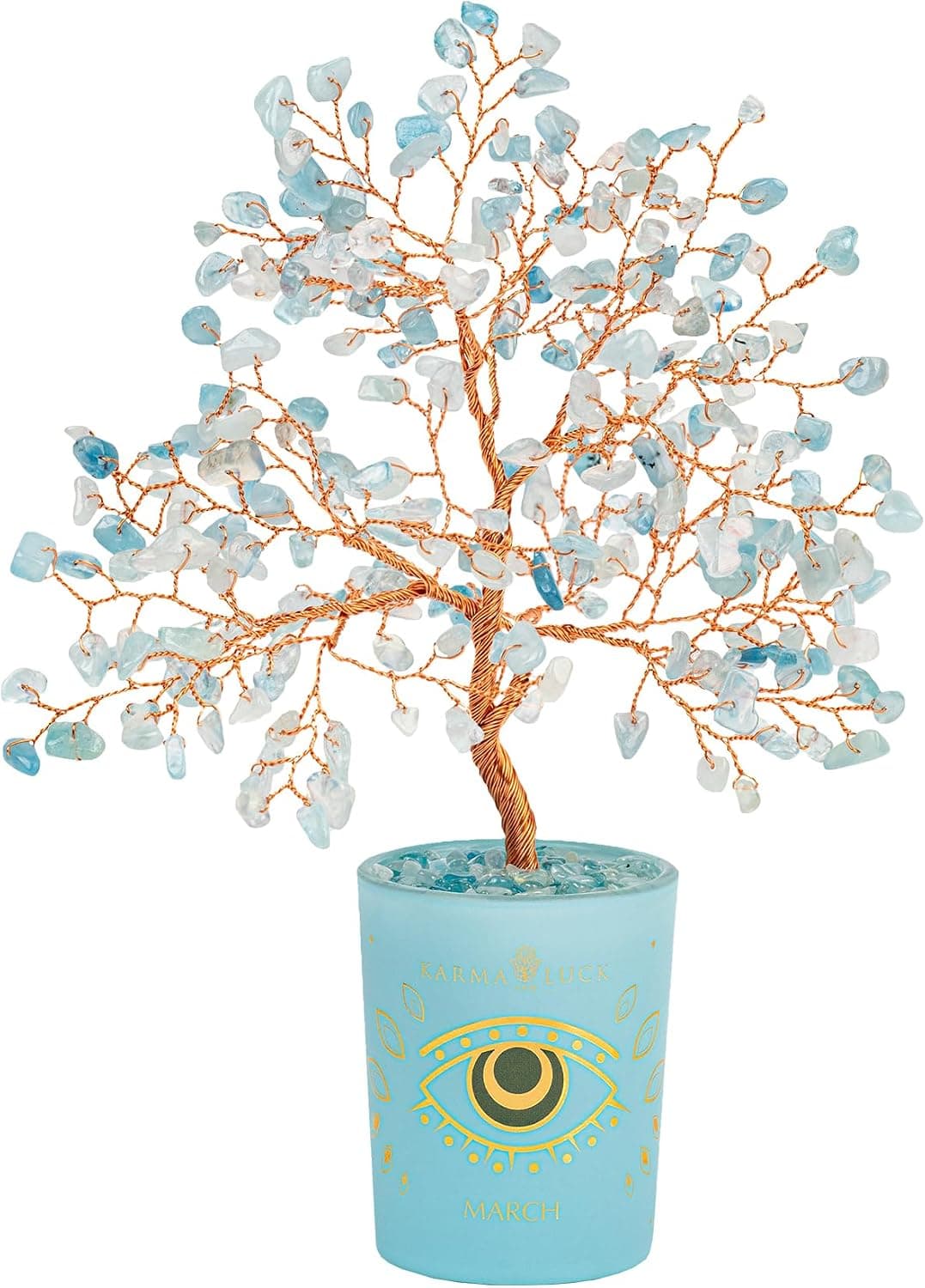
-29%Karma and Luck March Birthstone Crystal Tree of Life, Aquamarine Gemstone Fen...
 -29%
-29%Karma and Luck July Birthstone Crystal Tree of Life, Ruby Gemstone Feng Shui ...
As an Amazon Associate, we earn from qualifying purchases. We only recommend items our practitioners have personally tested.
Continue Your Journey
Explore these related guides to deepen your understanding:


Ready for Deeper Guidance?
Try our free I Ching reading for personalized wisdom, or explore our curated Feng Shui essentials.