Follow every rule blindly and a room can still feel wrong; behavior changes the result before decor ever does.
The Hidden Truth About chinese feng shui
I have seen apartments dressed with red ribbons, brass coins, crystal clusters, and a perfectly centered bed, yet the owner still slept lightly, snapped at people by noon, and avoided the living room after dark. The room looked obedient. The behavior inside it was not. That is the part most advice skips, and it is why a tidy setup can still produce a tense life.
Here's the mechanism: a space does not act on its own. It offers cues, and people respond to those cues before they ever notice it. A narrow entry with shoes, a dark hall, and a mirror aimed at the front door creates a quick, scattered entrance because your body reads speed and friction at the same time. Add a desk facing a wall and you get a different response; shoulders tighten, papers spread, and decisions stall. mapping a home's sectors without overthinking it helps, but the map only matters after you ask what the room is making people do.
One client-style scene sticks with me. In a small west-facing bedroom, a navy duvet, a black lacquer nightstand, and a large mirror across from the bed made the room look elegant at 9 p.m. The owner kept waking at 3:40 a.m., checking the phone, and feeling as if the air had turned metallic. We moved the mirror to the hallway, swapped the duvet for stone gray, and left a lamp on the far side of the dresser so the room stopped collapsing into one hard block of darkness. Sleep returned first. Then the arguments about money got shorter. That was not magic. It was pattern interruption.
Common advice says, “Put the cure in the corner.” That can work, or it can fail in a room where the real problem is behavior, not missing objects. A wealth corner packed with unopened mail, an exercise bike, and three empty mugs does not need more symbolism; it needs the habit of clearing, sorting, and using that space differently. the wealth corner framework is useful, but only after you stop letting storage habits smother the signal. Quiet room. Loud habits. That mismatch explains a lot.
Input Conditions: What the Room Receives First
Start with the inputs, because the body reads them before the mind can narrate them. Light, path width, object height, and the first thing you see after opening the door all shape pace. A long corridor with a bright window at the end pulls attention forward; a cluttered entry with a leaning umbrella stand and a bright red package on the floor pulls attention into hesitation. Different cues. Different responses.
Many readers try to fix the room with symbols alone. That habit feels smart because it keeps the work visible, but visible is not the same as effective. Move the trash can away from the stove, and you change how often people leave wrappers on the counter. Shift the chair one foot away from the bedroom door, and the room stops feeling like a drafty checkpoint. bedroom layout changes that reduce nightly friction matter because the room now supports the action you want instead of fighting it.
Open a window, and the whole calculation changes.
That single sentence catches the engine underneath the folklore. Air movement, temperature change, and smell all alter vigilance. A stale room with closed curtains and a stack of laundry by the bed keeps the nervous system on watch, because the space never gives a clean signal that the day has ended. Once the window cracks open and the laundry leaves, the room no longer asks the same question every night.
Step One: Attention Follows the First Friction
The first friction is often tiny. A front mat curled at one corner. A cabinet door that sticks. A pair of shoes left dead center in the path. People learn to step around these things, and then they step around bigger things too: conversations, bills, repairs, even their own intentions.
That is why I pay attention to repeated detours. If someone always walks through the kitchen by the same narrow gap between the island and the refrigerator, that gap becomes a psychological tunnel. The room says hurry. The person obeys. After a few weeks, the whole house can feel like a place where nobody fully lands anywhere.
Try this instead: remove one repeated obstacle from each major path. Not ten. One. Let the hallway breathe. Let the bedside floor stay visible. The effect is subtle at first, then obvious, because the mind stops preparing for the next dodge.
front door layout and threshold flow works the same way. You are not decorating an entrance; you are training the body to arrive without bracing.
Step Two: The Five-Element Balance Is Behavioral Before It Is Decorative
People love to treat the five elements like a color palette, but that misses the living part. Wood does not only mean green. It also means growth habits, unfinished projects, and the urge to keep adding one more thing to the shelf. Metal is not only silver. It shows up as edits, boundaries, and the ability to cut what no longer belongs.
So if a room feels stuck, ask what behavior is overgrown. A desk buried under notebooks and charger cables usually has too much Wood expression: expansion without pruning. A kitchen with too many shiny surfaces, hard reflections, and no soft texture can lean into Metal so strongly that the room feels clipped and restless. The point is not to label the room and move on. The point is to see which actions the room keeps rewarding.
five elements theory explained through daily behavior is better than a decor chart because it asks what your habits are doing to the space. A room can be “balanced” on paper and still provoke bad timing, because the user keeps feeding it the same patterns.
Clay bowls help one person. Open shelving helps another. The difference is not taste alone.
Step Three: Habit Loops Create the Actual Qi Pattern
This is where chinese feng shui gets interesting. A room is not just a container; it becomes a loop. You leave keys on the same sideboard, then you miss them once, then you add a basket, then the basket overflows, then the sideboard stops being a surface and becomes a dumping ground. The room trained you, and you trained the room back.
Break the loop at the smallest repeat point. If the mail lands on the counter, put a tray at the point of entry and empty it every evening. If the dining table becomes a laptop station, create a charging shelf elsewhere and make the table inconvenient for work. If the same corner collects laundry, change the route so the hamper sits where the clothes actually come off. These are mechanical fixes, but they alter mood fast because they alter repetition.
I have seen this with a narrow studio that had one pale green chair near the only window. The chair became the place for coats, then bags, then packages. Within a month the owner was eating on the bed and leaving dishes in the sink for days. We moved the chair to the opposite wall, added a small hook near the entry, and cleared the window ledge. The apartment felt less compressed within a week because the loop had nowhere left to hide.
the l-shaped apartment problem often behaves this way, too. An awkward layout magnifies whatever habit already dominates the household.
Step Four: Symbolic Cures Only Work When the Body Agrees
People ask me about cures as if the object carries the whole load. It doesn't. A crystal in a corner will not rescue a room where the occupant keeps walking past the same pile of unopened envelopes and pretending not to see it. A brass cure at the front door cannot compensate for a habit of leaving deliveries in the hallway for two days. The symbol matters, but only after the behavior changes enough to let it speak.
That is the reason some classical methods seem to “fail.” They were installed in a room whose daily rhythm contradicted them. A red cure in a bedroom where the owner scrolls on the bed until 1 a.m. tends to intensify stimulation, not calm it. A water feature in a narrow entry can work beautifully, yet if it is placed beside a cluttered shoe rack and a broken umbrella, the whole effect turns muddy. Context wins.
many crystal placements look prettier than they function because the surrounding habits are unchanged. A room can handle symbolism only after the body stops rehearsing the old pattern.
Small objects. Big expectations.
Step Five: Timing Matters Because Habits Have Momentum
A room changes faster when you intervene during a real transition: before bed, after breakfast, when a workday ends, or after a delivery arrives. Those are decision points. They are easier to redirect than random moments because the person is already shifting state. Move the shoes then, wipe the counter then, shut the laptop then. The space learns from the sequence.
That is why lunar dates, annual stars, and seasonal shifts should be treated as timing tools, not as theater. A room near the northeast can feel different in winter than in summer because people use it differently when the light changes. If a corner receives more evening use in December, you may need a lamp there long before you need another cure. 2026 timing patterns for deeper rooms matter most when they line up with actual routines.
Behavior first. Ornament second. Always.
Where Conventional Advice Still Helps, and Where It Stops
Advice about beds, mirrors, knives, coins, plants, and colors is not wrong. It is incomplete. A mirror aimed at the bed can produce restlessness because it keeps doubling movement in a place that should settle down. Kitchen knives left exposed can sharpen the mood of the room because the eye keeps registering edges. Coins arranged neatly in a drawer can reinforce a money intention, but only if the drawer is not also where receipts, old batteries, and expired coupons breed.
That is why I keep sending readers to deeper pieces in the cluster. kitchen knife placement and household tension explains why sharp objects near daily circulation matter so much. coin placements for steadier money habits shows how a small cure can support a better routine rather than replace it. And bedroom rules that shape sleep and connection helps you see why one bad placement can undo three good intentions.
People want a fixed answer. Rooms rarely offer one.
They respond to use, and use changes every day.
Practical Adjustment Points
Begin with the entry, because every home rehearses itself there. Clear the first three feet inside the door. If you keep a basket there, make it a true landing zone, not a storage graveyard. Then check the main sightline from the door: the first object should feel intentional, not accidental. A lamp, a framed print, or a healthy plant works far better than a pile of packages.
Next, test the bedroom. Stand at the doorway and look at what demands your eye first. A mirror, a TV, a laundry chair, or a stack of books can all keep the room mentally open. Move one of them out. Sleep often improves simply because the room stops asking for decisions at the wrong hour.
After that, inspect one work surface. The desk, the dining table, or the kitchen counter will do. Do not rearrange the whole house; that turns into performance. Change the item that creates the first daily delay. For one person it is the inbox tray. For another it is the bright red folder that keeps collecting papers beside the coffee machine. For another it is the charger pile under the lamp. Remove the friction point and see what behavior follows.
front door color choices that shift the tone on arrival can help, but only after the route inside the home is no longer fighting the body. Color is a signal, not a substitute for order.
FAQ
Is conventional chinese feng shui advice reliable?
Often, no—not by itself. It tends to skip the part where habits create the real pattern, so people install a cure and keep repeating the behavior that caused the problem. The advice becomes decorative when it should be operational.
Do I need to throw everything out before anything changes?
Not at all. Start with the object that blocks the daily loop, such as the chair that catches clothes or the pile that always lands by the door. Once that one point shifts, the room usually gives you a cleaner read on what comes next.
What if my home already has all the correct placements?
Then look at timing and use. A correct arrangement can still feel off if the room is being used in a way that contradicts its purpose, such as eating in bed, storing work files in the bedroom, or letting the entry become a warehouse.
Can one small change really alter the atmosphere?
Surprisingly, yes. A single lamp, a cleared threshold, or a moved mirror can change how people move through a room, and movement is where mood begins. The effect shows up first in pace, then in sleep, then in the way people speak to each other.
Where should I start if I only have twenty minutes?
Start at the front door and the bedroom doorway. Clear one obstacle from each, because those two spots set the tone for entering and leaving. After that, watch which habit tries to refill the space first; that reaction tells you more than any decorative rule ever will.
The strange part is how quickly a room reveals the lie people tell themselves about it. You can stand in a tidy apartment, hear the refrigerator hum, see the blue runner in the hall, and still notice that nobody wants to sit in the chair by the window. Why that chair? Why that corner? Those are the questions the house keeps asking when the cure looks right but the behavior still does not.
Mei Chen
Traditionally informed guidance • Cross-referenced with classical Chinese source texts
Content draws from both Compass (Luopan) and Form (Xingshi) school traditions. Illustrative examples are composites based on consultation experiences.
Practitioner-Selected Tools for This Topic
Items our team has tested and found effective for the principles discussed above. Individual results may vary.
 -19%
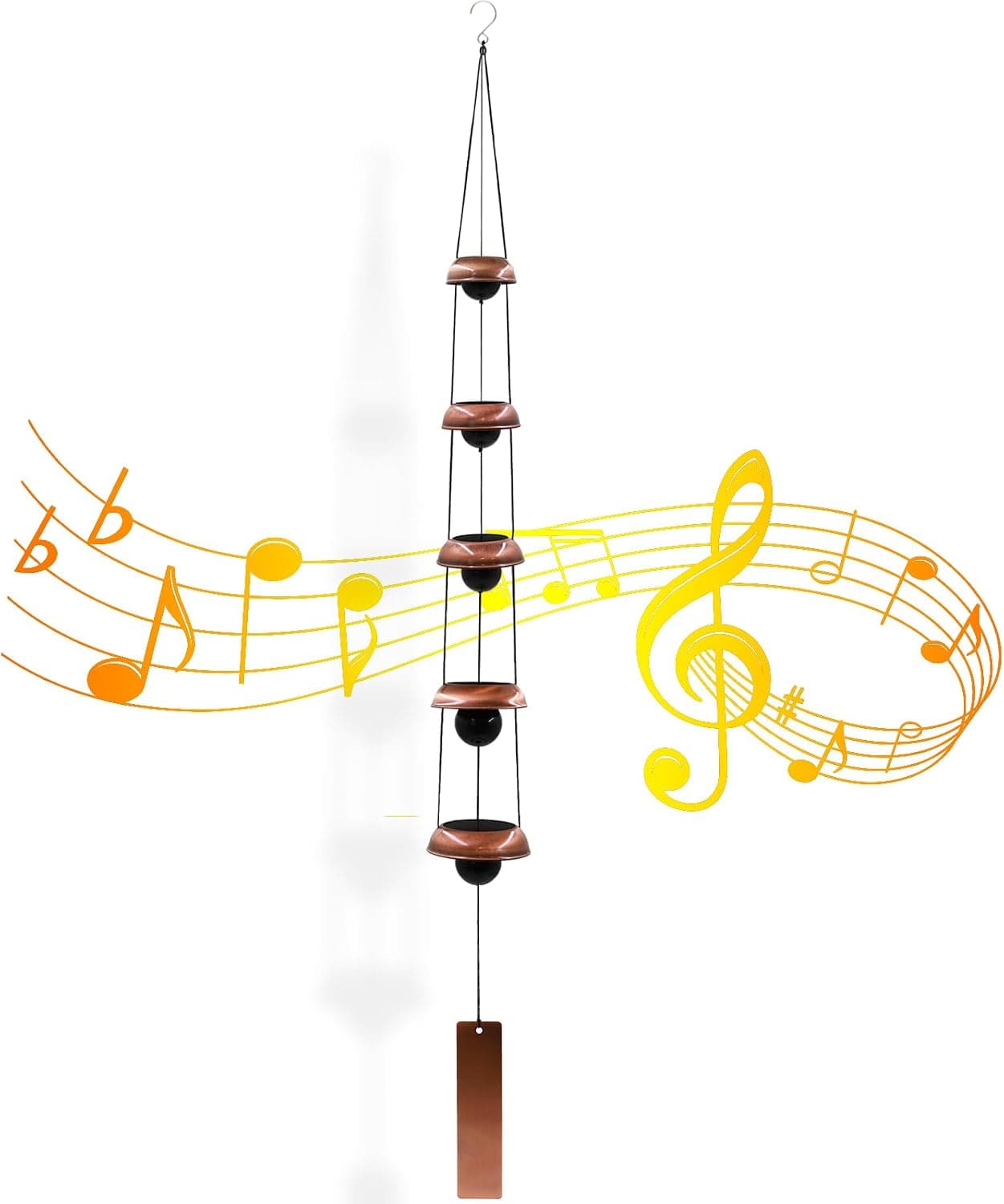
-19%Wind Chimes for Outside with 5 Bell Unique Copper Musical Chimes Feng Shui Wi...
 -5%
-5%YU FENG Evil Eye Money Tree, Blue Feng Shui Decor with Golden Buddha
 -29%
-29%Karma and Luck March Birthstone Crystal Tree of Life, Aquamarine Gemstone Fen...
 -29%
-29%Karma and Luck July Birthstone Crystal Tree of Life, Ruby Gemstone Feng Shui ...
As an Amazon Associate, we earn from qualifying purchases. We only recommend items our practitioners have personally tested.
Continue Your Journey
Explore these related guides to deepen your understanding:


Ready for Deeper Guidance?
Try our free I Ching reading for personalized wisdom, or explore our curated Feng Shui essentials.