Three traditions put citrine in three different spots — and the one you were taught may be quietly working against your room.
The Argument That Never Got Settled
A citrine cluster sits on a glass shelf in the southeast corner of a living room, six inches from a Wi-Fi router and about a foot below a framed wedding photo. The owner placed it there because every article she read said the southeast is the wealth corner and citrine is the wealth stone. She followed the instructions exactly. Eight months later the shelf is a drop zone for unopened mail, the corner still feels dead, and the stone has faded from amber to the color of weak tea because it sat in direct afternoon sun.
I have walked into that room, or its cousin, more times than I can count. The diagnosis is almost never the stone. It is that she was handed one answer from one tradition and never told that three others exist — each of which would have put the citrine somewhere else entirely, for reasons that are internally consistent and mutually incompatible.
That is not a scandal. It is what happens when a practice travels three thousand miles and two thousand years.
What You Are Actually Dealing With
Start with the awkward fact: citrine is barely classical. The Chinese tradition worked with 水晶 (shuǐ jīng) — crystal — and read colored stones through the five elements. Yellow belongs to earth: the center, the spleen and stomach, the element whose job is to store and hold. Natural citrine is rare and pale, usually a weak yellow to smoky gold. Most of what is sold today is amethyst that has been heat-treated to yellow, a practice that scaled up in Brazil during the twentieth century. So the object on your shelf is modern, being read by an old grammar.
That matters because the grammar — not the stone — is what the schools disagree about. A pale natural citrine and a heat-treated amethyst cluster may look similar under shop lighting, but they behave differently over time: the heat-treated stone is photosensitive and will bleach in direct sun, while the natural stone is simply rare enough that most “citrine” advice was never written with it in mind. The symbolic reading and the material facts are running on separate tracks.
Then each tradition asks a different question of the same object. Form School asks: what is the shape of this space? Compass School asks: what direction is this, in degrees? Flying Star asks: what number is sitting in that sector this year? And the Western crystal tradition most readers actually encountered asks: what does the color mean? Four questions, four placements, all defensible. The practical consequence is simple: before you move the stone, decide which question you are answering. If you want the broader landscape of which stones do what, the comparison of common feng shui crystals is a useful map before you commit.
The School That Reads the Room, Not the Compass
Form School is the oldest layer and the least interested in your birth year. It reads sightlines, proportion, light, and obstruction. Stand in the doorway and let your eye travel. Where does it snag? A low beam. A dark recess behind a sofa. The dead triangle between a bookcase and a wall. Those are the places this tradition treats, because they are the places where the room stops giving your eye somewhere to go.
In that framework a warm translucent stone has exactly one job: it gives the eye a resting point in a spot that otherwise stops it cold. The mechanism is visual, not directional. A citrine cluster catches and bends lamplight, so it reads as a small warm source in a dim corner; the eye lands on it, and the rest of that corner comes into frame with it. That is why placement follows the snag, not the compass. A north-facing living room with one window may want the citrine where the light dies at three in the afternoon. A bright south-facing room may want it off the windowsill entirely, because a stone that fades is a stone being cooked.
The test is whether the stone solves a visible problem: a dark hallway transition, a blank wall at the end of a corridor, the corner where a sofa back meets a bookshelf and the space goes dead. Put it where the eye already stalls, and the stone starts earning its place. Put it in a southeast corner you never look at and it becomes decoration for guests you never host.
Notice what this school never says: southeast.
The School That Reads Degrees
Compass School takes a luo pan reading of the building's facing direction and assigns each of the eight sectors a trigram, an element, and a family member. Southeast is Xun — wood, gentle penetration, the sector traditionally tied to accumulated resources.
Here is where the popular instruction quietly breaks. Citrine is earth. Earth sitting in a wood sector is a controlling relationship: wood drains earth. The classical remedy is not "add more earth." It is to bridge — usually with a trace of water nearby, or a wood-toned base that lets the relationship read as productive rather than extractive. Practitioners who work strictly in this system often keep yellow crystal in the earth sectors instead: northeast, southwest, and the center of the home.
So the two most repeated sentences on the internet — "southeast is the wealth corner" and "citrine is the wealth stone" — come from two systems that do not agree. Combine them without knowing that, and you get a stone sitting in a sector the classical reading calls drained.
The School That Treats the Stone as a Timer
Flying Star is where placement advice gets genuinely strange, because in Xuan Kong the sector is not fixed in meaning. The nine stars cycle; the annual star enters the center each year and the monthly stars move faster still. A crystal in a permanent corner is a fixed remedy aimed at a moving target.
Practitioners in this school will tell you to move the stone — sometimes twice a year. Not because the stone changed, but because the number in that sector did. To someone raised on color meanings, that looks like superstition stacked on superstition. To someone trained in Flying Star, a permanent southeast placement looks like setting a mousetrap in a house where the mice have already moved.
Where the Western Version Split Off
Most English-language crystal advice descends from the Black Hat Sect, which reached the United States in the 1980s and made two decisive simplifications: the bagua is laid over the floor plan from the front door rather than read by compass, and the "wealth corner" is the far left of that overlay. That is why so many articles say southeast with total confidence about a room that faces west.
You can watch the same overlay logic running through modern practice — the way the bagua map gets applied to a floor plan rather than to a compass reading is a Black Hat inheritance, not a classical one. Neither approach is wrong. They answer different questions, and the confusion begins the moment you use one system's answer to solve the other system's problem. If your goal is specifically financial, the wealth corner reading goes deeper into that particular negotiation.
The Hidden Pattern
Strip the vocabulary away and the mechanism is plain — and it is the part every tip list skips.
Input: a translucent yellow stone, roughly palm-sized, set on a flat surface. Step one is perceptual. Citrine holds and bends light rather than reflecting it flatly, so in a dim corner it reads as a small warm source. The human eye goes to the brightest, warmest, highest-contrast object in a visual field, and once it lands there, the rest of that corner comes into frame with it. Step two is attentional. Because your eye now lands there several times a day, you start noticing the corner — the dust, the coiled cable, the stack of mail. Step three is behavioral. You clear it. You stop using it as a dumping ground, because a surface that has become visible is a surface that gets maintained.
Output: a corner that reads as intentional instead of abandoned, and a household that treats that part of the room as finished space. None of this requires the stone to emit anything. It requires the stone to be seen — and it requires someone to have agreed that the corner matters.
That last clause is where sociology earns its place, and it is the part nobody writes about. In a shared home, a wealth corner is a negotiated object. One person buys the crystal. A second person's mail lands on the shelf. A third person thinks the whole thing is nonsense and says so. A stone placed without a conversation is a stone placed in contested territory, and contested territory reverts to clutter within weeks. I have watched a beautifully positioned citrine cluster lose outright to a stack of delivery boxes, because nobody had agreed the shelf was off-limits. The stone did not fail. The negotiation did.
When It Goes Wrong
The most frequent failure I see is the bedroom. Citrine is bright, warm, and activating, and the bedroom is the one room where the tradition consistently asks for less — less light, less movement, less stimulation. A cluster on the nightstand because it "feels cheerful" is a mismatch, and it is unpacked in detail in the guide to bedroom crystal placement. If you want a stone near the bed, choose something quieter.
The second failure is the elemental one described above: citrine in a wood sector with nothing to bridge it, or citrine in a metal sector where earth buries metal. Not a catastrophe. But it explains why a placement that "should" work produces nothing you can point to six months later.
The Real Fix
Do the diagnosis before you do the placement. Stand in the doorway with the lights on as they normally are at the hour you actually use the room, and find the spot where your attention dies. That is your first candidate, and it outranks any compass sector — because a stone in a corner you never look at is decoration for guests you never host.
Then decide which question you are answering. Working from light and sightline? Place for visibility and accept that the stone may move with the seasons. Working from the compass? Check the sector's element before you commit and bridge accordingly. Working from Flying Star? Accept the maintenance burden of moving it. Pick one system and finish the sentence. Mixing all three is exactly how you end up with the shelf by the router.
Practical constraints matter more than people expect. Keep citrine out of direct afternoon sun, because heat-treated amethyst fades and a milky stone reads as neglect rather than abundance. Give it a defined base — a small dish, a wooden coaster, a tray — because an object with an edge gets maintained and an object without one gets buried. Set it where you will physically touch it once a day, and let the contact be your reminder to clear the surface.
And have the conversation. Tell the household what that shelf is for. A corner two people have agreed to keep clear will hold its shape far longer than a corner one person has decorated.
Questions I Get Asked
Does citrine have to go in the southeast corner?
Only in one of the four systems, and that one arrived in the West in the 1980s. In strict Compass School reading, citrine's earth element is often better served in the northeast, southwest, or center of the home. The southeast works fine if you bridge the elemental relationship and if the corner is somewhere your eye actually goes.
Can I keep citrine next to my bed?
A warm, bright, activating stone is the wrong tool for a room whose whole purpose is winding down. That is a mechanism question, not a superstition question: the same visual salience that makes citrine useful in a dim living-room corner makes it counterproductive twelve inches from your pillow. Move it to a room where you want alertness.
How do I choose between the schools?
Choose by the question you can actually answer. If you do not know your building's compass facing, Form School will serve you better than a guess at degrees. If you do know the facing and the year, Flying Star gives you something to work with. The one guaranteed failure is borrowing a placement from one system and a rationale from another.
Why did my citrine lose its color?
Most yellow citrine on the market is amethyst that was heat-treated, and heat-treated stones are photosensitive. Two summers on a sunny windowsill will bleach one noticeably. That is a materials fact, not a spiritual one — and it is a good argument for placing the stone where it catches lamplight rather than direct sun.
Mei Chen
Traditionally informed guidance • Cross-referenced with classical Chinese source texts
Content draws from both Compass (Luopan) and Form (Xingshi) school traditions. Illustrative examples are composites based on consultation experiences.
Practitioner-Selected Tools for This Topic
Items our team has tested and found effective for the principles discussed above. Individual results may vary.
 -19%
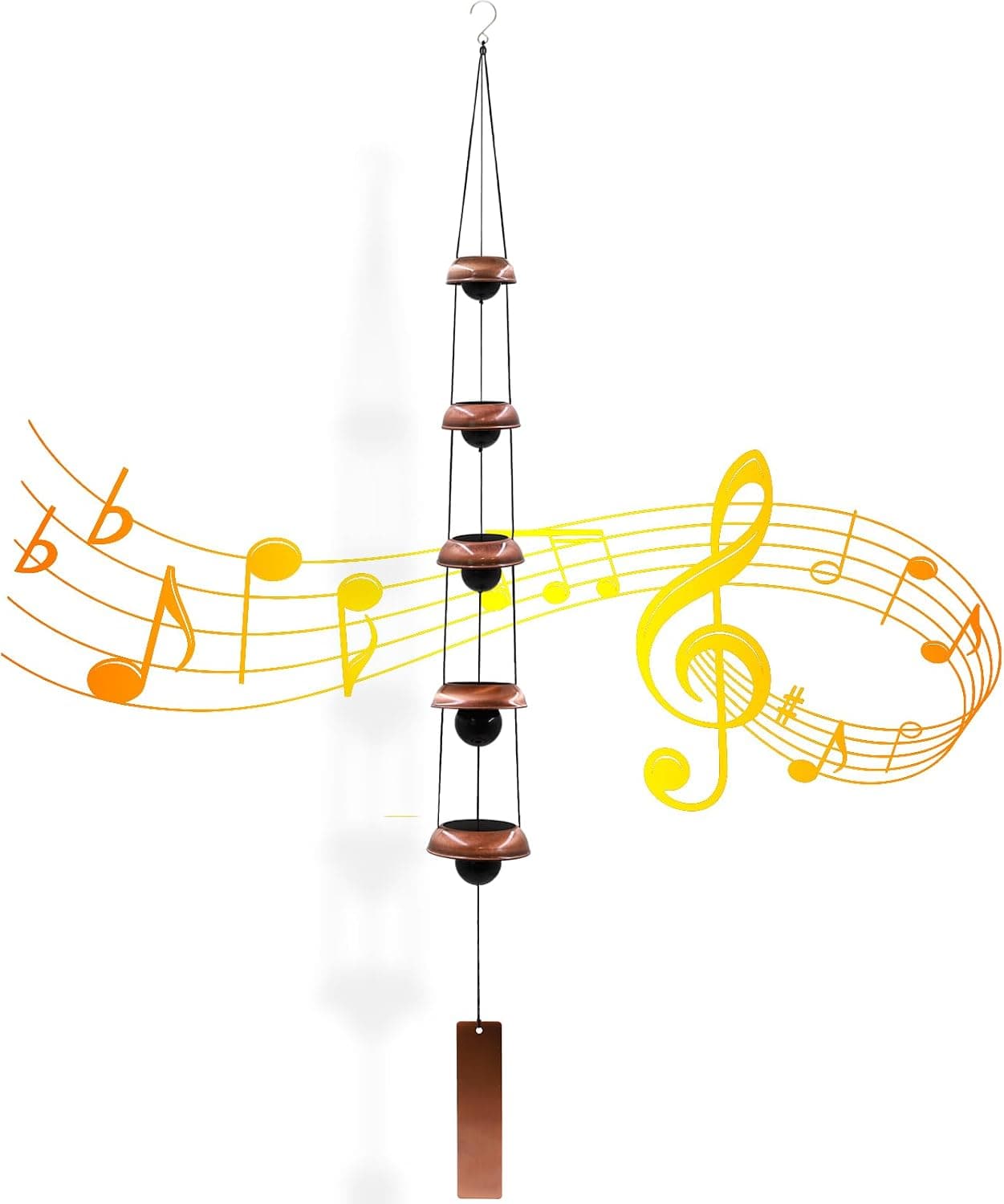
Wind Chimes for Outside with 5 Bell Unique Copper Musical Chimes Feng Shui Wi...
 -5%
YU FENG Evil Eye Money Tree, Blue Feng Shui Decor with Golden Buddha
 -29%
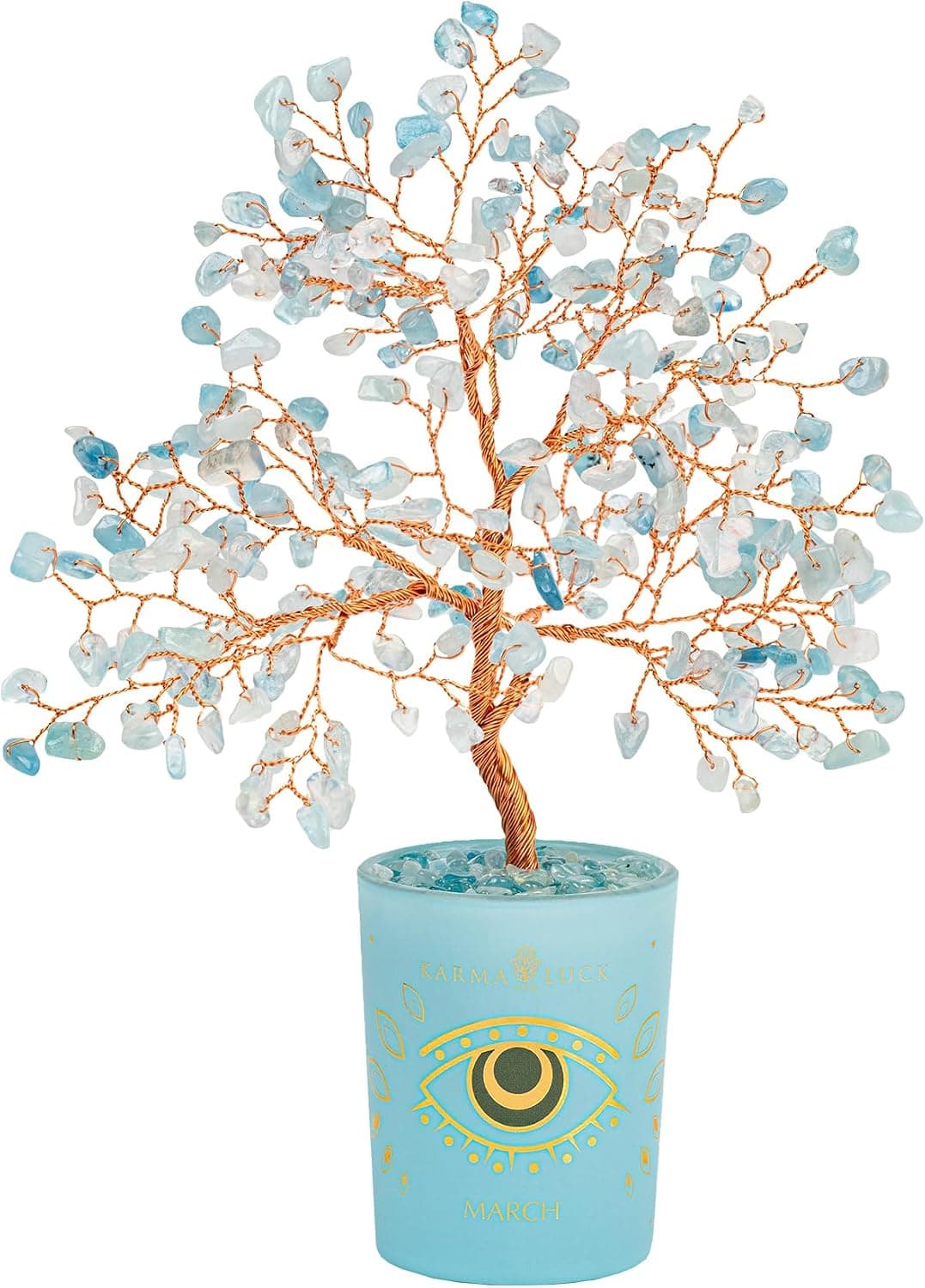
Karma and Luck March Birthstone Crystal Tree of Life, Aquamarine Gemstone Fen...
 -29%
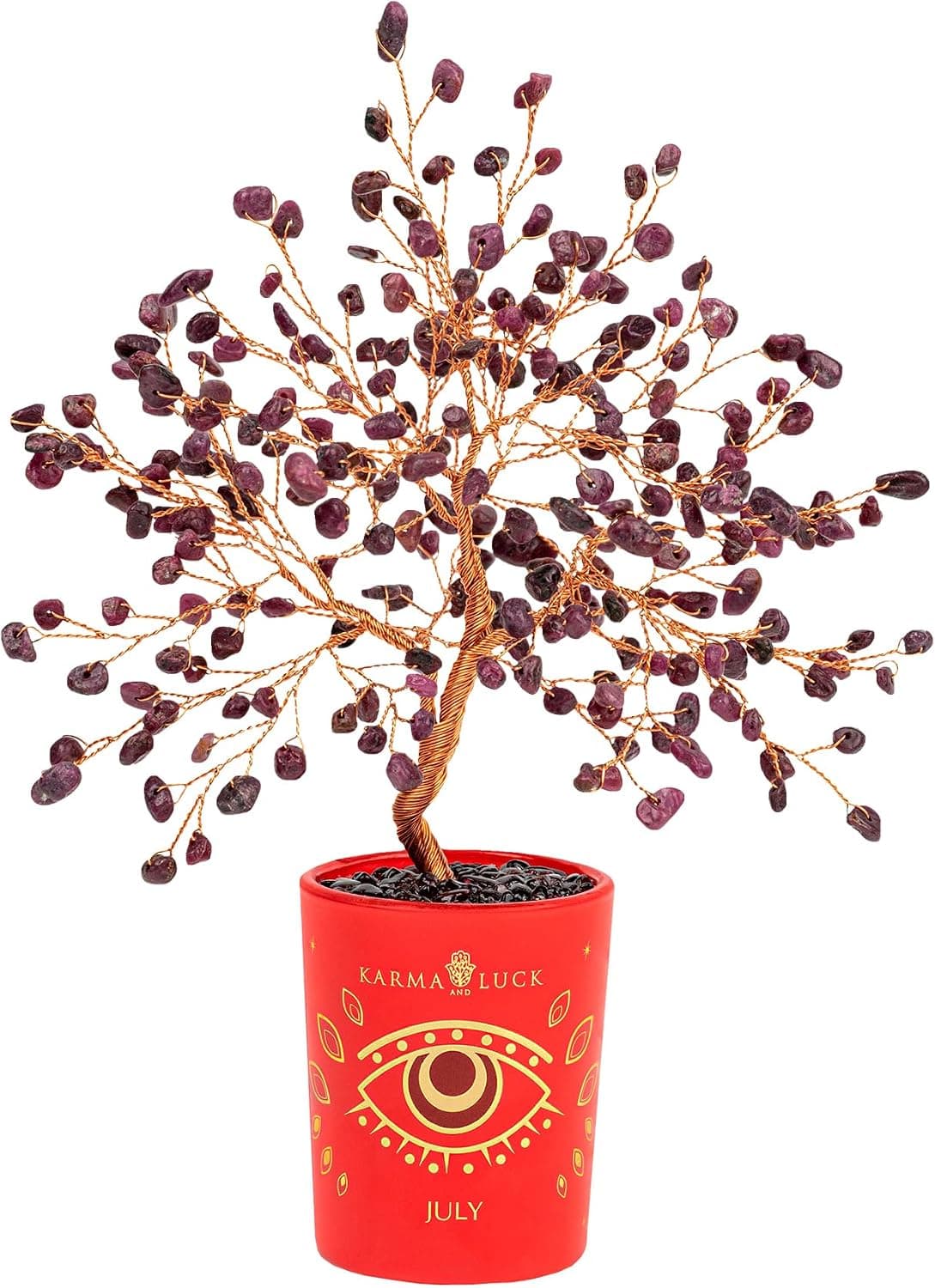
Karma and Luck July Birthstone Crystal Tree of Life, Ruby Gemstone Feng Shui ...
As an Amazon Associate, we earn from qualifying purchases. We only recommend items our practitioners have personally tested.
Continue Your Journey
Explore these related guides to deepen your understanding:


Ready for Deeper Guidance?
Try our free I Ching reading for personalized wisdom, or explore our curated Feng Shui essentials.