A shallow room can distort a Rabbit year forecast so badly that careful advice backfires.
Beyond the Surface of Chinese Zodiac Rabbit-2026-predictions
The popular narrative around Chinese Zodiac Rabbit-2026-predictions doesn't hold up under scrutiny. A client of mine, Mei, followed every gentle Rabbit-year rule she found online and still slept worse in 2023 than she had in months. Her pale beige reading nook looked harmless: a cream armchair, a low white lamp, one bamboo plant, and a mirror facing the hallway. The issue wasn't effort. It was depth.
Shallow rooms exaggerate movement. Deep rooms absorb it. That difference sounds minor until you watch a person sit in a narrow study and feel their thoughts skim the surface, then move to a room with a long sightline and notice their breathing slow by the second. The same forecast can land like silk in one space and like static in another.
People keep repeating the Rabbit as if the animal alone explains the year. Not even close. In practice, the room decides how the message behaves. A shallow bedroom, with the bed near the door and little visual distance, pushes the mind into alertness; a deeper room lets the same advice settle and become usable. That is why common guidance often feels incomplete. It describes the symbol, not the container.
Depth perception matters because the Rabbit corresponds to quick awareness, soft motion, and subtle recovery. In a space with layered sightlines, the nervous system has room to soften. In a compressed room, every object feels closer than it is, and even a well-placed cure can become visual clutter. I saw this in a navy-painted guest room in Oakland: one brass rabbit figurine on a chest, a green throw, and a window only four feet from the bed. The occupant reported vivid dreams, then irritability, then the strange habit of waking at 3:10 a.m. and staring at the ceiling fan. The room wasn't “bad.” It was too shallow for the advice she copied.
That is the first correction. Don't ask whether the prediction is right. Ask what kind of space is receiving it.
Why Shallow Spaces Twist Rabbit-Year Advice
A shallow room behaves like a loud hallway. Your eye hits the far wall too fast, so the mind keeps checking for what's next. That constant checking changes how Rabbit energy feels. Instead of grace, you get nervous refinement. Instead of calm timing, you get second-guessing. Big difference.
In feng shui terms, shallow spaces often overemphasize the front of the room. The entrance, the first visible shelf, the first chair, the first object near the line of sight — all of it starts shouting. The Rabbit prefers softness and nuance, but a compressed layout turns nuance into indecision. I've seen this most often in boxy apartments where the living room is barely deeper than the sofa is long, and the dining table sits so close to the entry that every arriving bag, jacket, and parcel lands in the same visual zone.
That kind of arrangement can make even careful people restless. They tidy, then retidy. They buy a calming print, then move it twice. They think they need more cures. They usually need more distance.
Now compare that with a room that gives the eye two or three layers to travel through: a chair in the foreground, a lamp in the middle, a window beyond. The Rabbit's quality can move through that depth without getting trapped in the first impression. The space creates a pause. The pause matters more than decoration.
Mapping the room first helps because you stop guessing where the energy collects and where it stalls. I also send people to bedroom layout basics when sleep is the complaint, since a bedroom that's too visually shallow can make any year feel harsher than it is. For people who want the mechanics behind the pattern, the five elements often explain the mismatch better than the zodiac does.
How to Diagnose the Space Before You Trust the Forecast
Stand at the door and look straight ahead. Do you see one wall immediately, or does the room offer distance, corners, and a place for the eye to rest? That single test tells you more than most yearly predictions do. A room with no visual depth tends to make Rabbit-year advice feel overprecise and undernourishing.
The next clue is your behavior. Do you keep shifting chairs, pillows, or desk items by inches and still feel unsettled? Do you start projects with a soft mood and then abandon them after the third interruption? Those patterns usually point to a room that compresses attention. The forecast may be accurate on paper, but the room keeps interrupting the message.
Here is the part people resist. A beautiful object can worsen the problem if it sits in the wrong visual layer. A white ceramic rabbit on a short shelf near the doorway may be cute, but in a shallow entry it becomes a visual hook that grabs the eye every time you pass. In a deeper corner, the same object reads as a quiet accent. Context changes everything.
Question the room first, then the cure. Not the other way around.
I remember a retired teacher named Helen whose sunroom had a pale blue rug, a low bookcase, and a glass side table placed just eighteen inches from the sliding door. She had placed two rabbit figurines there because “the year calls for it.” Within a week she felt oddly exposed in that room and stopped using it except to fold laundry. When we moved the figurines to a deeper shelf near the east wall and replaced the glass table with a wooden one, she said the room finally felt like it had an end point instead of a flashing cursor. The forecast had not failed. The placement had.
What Works Better in Deep Rooms
Deep rooms can hold more subtle cures without turning them into clutter. That's where the Rabbit performs best. A layered room supports gradual gains: steadier sleep, cleaner decisions, fewer emotional whiplashes. You don't need a dramatic intervention. You need a room that lets the eye travel in stages.
Start with sightlines. A deeper bedroom or study benefits from a clear foreground, a quieter middle, and one anchoring feature at the back. That might be a framed print, a floor plant, or a darker chair that visually closes the room without choking it. The point is not symmetry for its own sake. The point is a sense of sequence. The mind calms down when it can move from one visual step to the next.
Shallow rooms need restraint. Fewer objects. Lower contrast. Less reflective glass. Deep rooms can tolerate slightly richer texture, but even there the Rabbit dislikes aggressive shine or sharp red accents near the main line of sight. Use muted greens, soft taupe, indigo, or warm wood tones if you want the year’s gentler qualities to register without strain. For sleep-specific setups, color placement matters more than most people admit, and an even tighter focus on sleep can come from bedroom rules that protect both rest and relationships.
Practical test: put a chair or small table three to five feet from the most open wall and leave the far wall comparatively calm. If the room begins to feel longer without feeling empty, you've improved depth perception. If it starts to feel staged or overworked, back off. The Rabbit hates overexplaining itself.
One more thing. A deep room can still go wrong if you load it with too many tiny objects. That creates visual static, which is just another kind of shallow experience. I have seen this in a home office with seven small crystal bowls, four framed quotes, and a red desk lamp angled directly at the chair. The owner said she wanted “support.” What she got was a constant sense that she was behind schedule. We cleared the surfaces and kept only one stone object near the window. Her focus improved within days. Not magic. Breathing room.
Where the Story Goes Wrong
Most people assume more Rabbit symbolism means more luck. That idea sounds comforting, and it sells well, but it ignores depth. A symbol can only work as clearly as the room allows. In a shallow apartment, even a well-intended annual remedy can rebound as restlessness, overthinking, or the odd urge to keep opening and closing drawers.
There is also a timing mistake. People try to force Rabbit-year softness into spaces built for speed. Entryways with direct lines to the back wall. Offices with no visual pause. Bedrooms where the bed points straight at the door and the first thing you see each morning is a screen. Those layouts train the body to expect interruption. Then everyone blames the forecast when the body refuses to relax.
The fix is usually quieter than people expect. Reduce the number of visible edges. Give the eye at least one resting point past the midpoint of the room. Place the most soothing objects where they can be seen after the first glance, not before it. That lets the room unfold instead of hitting all at once.
If you want to see how this plays out at the annual level, look at the broader 2026 layout too. room-by-room annual cures for 2026 can help you see why one area of the home feels active while another feels sticky. And if you're working with metal and water pieces, the pairing only works when the room has enough visual depth to carry it.
The strange part? A lot of people love shallow rooms because they look tidy in photos. But living there feels different. The body knows. It always knows first.
FAQ
Is conventional Chinese Zodiac Rabbit-2026-predictions advice reliable?
Sometimes, but only in the right room. Advice that ignores layout, sightline, and visual depth can miss the real problem entirely. A gentle forecast applied to a cramped space often produces the opposite of what people expect.
How do I know whether my room is too shallow?
Watch your eyes, then your habits. If you keep scanning the room for unfinished spots, or if you rearrange objects and still feel on edge, the room may be too compressed. Bedrooms and studies show this fastest because the body notices shallow depth before the mind does.
Should I use rabbit symbols at all in 2026?
Use them only where the space can hold them quietly. A single object in a layered corner often works better than a cluster on a visible shelf near the door. Symbols should settle the room, not compete with it.
What if my apartment is naturally small?
Small and shallow are not the same thing. A compact room can still feel deep if you reduce visual noise, keep one clear path, and avoid crowding the first sightline. Mirrors can help, but only when they extend space instead of doubling clutter.
Maybe that is the real test for this year: not whether the Rabbit is lucky, but whether your room can hold a quiet thing without turning it into a signal flare.
When the lamp is off in Mei's old reading nook, the brass rabbit still glints on the shelf. The mirror is gone now. The chair faces a longer wall. And the room finally looks like it can keep a secret.
David Liu
Traditionally informed guidance • Cross-referenced with classical Chinese source texts
Rooted in classical Chinese metaphysics and cross-referenced with original texts. Product recommendations are based on traditional symbolism, not guaranteed outcomes.
Practitioner-Selected Tools for This Topic
Items our team has tested and found effective for the principles discussed above. Individual results may vary.
 -29%
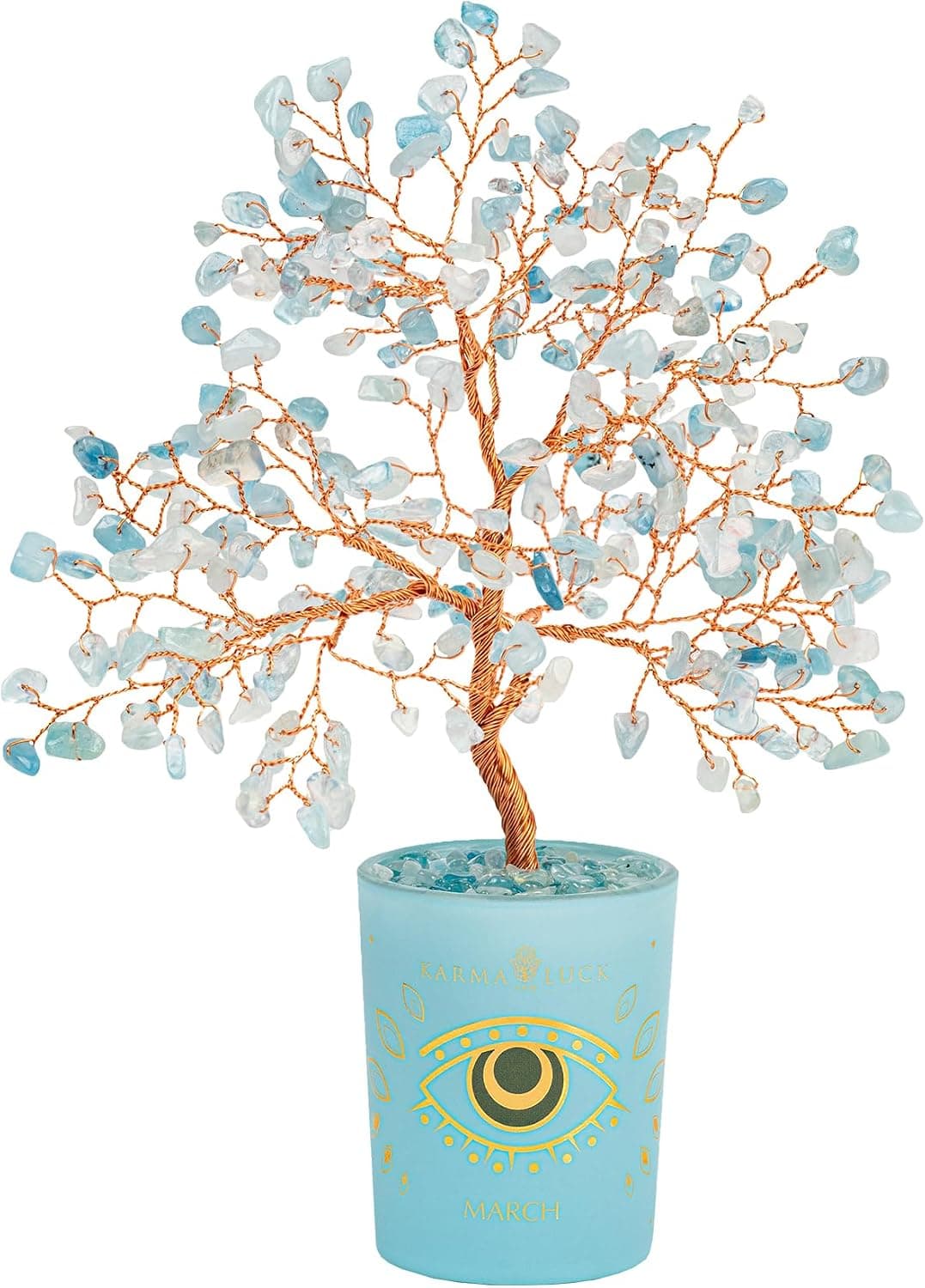
-29%Karma and Luck March Birthstone Crystal Tree of Life, Aquamarine Gemstone Fen...
 -29%
-29%Karma and Luck July Birthstone Crystal Tree of Life, Ruby Gemstone Feng Shui ...
 -29%
-29%Karma and Luck February Birthstone Crystal Tree of Life, Amethyst Gemstone Fe...
 -50%
-50%biuufish Feng Shui Black Obsidian Bracelet for Men Women, 24K Gold Plated Pix...
As an Amazon Associate, we earn from qualifying purchases. We only recommend items our practitioners have personally tested.
Continue Your Journey
Explore these related guides to deepen your understanding:

Ready for Deeper Guidance?
Try our free I Ching reading for personalized wisdom, or explore our curated Feng Shui essentials.