Common recommendations for chinese zodiac monkey 2026 predictions tend to overlook key principles. Experience reveals a clearer path.
The 7:40 a.m. Desk Test
The laptop is open. The phone is face-up, vibrating every ninety seconds. On the second screen, an inbox shows forty-three unread messages, three of which arrived in the last four minutes. A half-packed travel bag leans against the chair leg. Somewhere to the left, breakfast is going cold.
This is not a bad morning. This is a Monkey morning — and in 2026, it is also a test.
The job offer email arrived at 6:47 a.m. The freelance client followed up at 7:12. The group chat about a last-minute trip started at 7:31. Now it is 7:40, and the cursor sits in the middle of a sentence that was supposed to be finished before any of that happened. The morning light comes through the east window and hits the keyboard at a low angle. Every new notification makes the hand stop. The sentence waits.
Whether 2026 becomes a breakout year or a blur depends almost entirely on what happens in the next twenty minutes — not because the decisions are permanent, but because the pattern they establish will repeat, in different forms, until December.
I've watched this scene play out in enough homes and offices to know: the Monkey's problem in a Fire Horse year is never a shortage of options. It is the cost of keeping all of them open at once.
Why Fire Horse Years Reward Fast Recognition, Not Fancy Strategy
The Fire Horse year moves like a current. It does not wait for the elegant plan. It rewards whoever reads the room first and commits before the moment shifts.
For the Monkey, this is both a gift and a pressure point. Monkey intelligence runs on pattern detection — the ability to scan a situation, extract the useful signal, and respond before most people have finished framing the question. In a Fire Horse year, that cognitive speed is the primary asset. The year is not asking for depth. It is asking for accuracy at pace.
What the year punishes is the Monkey's other habit: keeping options warm. The half-committed project. The reply that says "let me think about it" when the gut already knew. The plan that gets refined one more time instead of launched. Fire Horse energy does not hold space for that kind of delay. By the time the Monkey finishes comparing, the current has moved.
Overthinking in 2026 is not a sign of intelligence. It is a misapplication of it.
The astrological logic here is specific: Fire amplifies Yang movement, and the Horse carries a strong directional pull toward visible, kinetic progress. When those two forces meet the Monkey's natural wiring, the result is a year that can feel exhilarating — or exhausting — depending on whether the environment supports quick, clean decisions or constantly interrupts them before they can close.
Speed without friction. That is the formula. And friction, in 2026, is mostly self-generated.
When Too Many Open Loops Start Eating the Monkey's Luck
Picture the apartment dining nook converted to a work area: round table under a ceiling beam, windows on two sides, no wall behind the chair. The desk surface holds four open notebooks, two chargers, and a stack of unpaid bills. Every time the eye moves, it lands on something unfinished. Every unfinished thing creates a small background pull.
That pull has a cost.
Unfinished items generate what psychologists call background vigilance — a low-level monitoring state where the brain keeps a thread open for each incomplete task. One open loop is manageable. Three is heavy. Six is the point where working memory starts to buckle. The Monkey, who is already processing more inputs than most, hits that ceiling faster than average.
In a Fire Horse year, the opportunity density is genuinely higher. More projects appear. More people reach out. More doors open within the same week. This looks like abundance. It can be. But for Monkey energy specifically, each new open loop competes with the existing ones for the same finite pool of attention — and the first casualty is always the original priority, the one that was closest to done.
I find this is the part that surprises people: the Monkey does not fail in 2026 because of bad luck or wrong timing. The Monkey fails because curiosity, which is a genuine strength, becomes a liability when there is no structure to contain it. Curiosity without closure is just scanning. And scanning, in a year that rewards commitment, is the slowest possible way to move.
The job offer, the freelance project, and the last-minute trip are not three opportunities. They are three open loops. Until one closes, all three are consuming resources that none of them is receiving in full.
The Office Layout That Quietly Changes the Day
Second floor, early morning. The west wall catches the first direct light after 9 a.m. Before that, the room is cool and even, and the east window sends light in from the side — not into the eyes, not onto the screen, just across the keyboard at a useful angle. This is the window position that works: desk placed perpendicular to the glass, so the light enters from the left, the right hand writes without shadow, and the screen stays readable without adjustment.
When the desk faces the window directly, the screen becomes a mirror by 8 a.m. The Monkey spends the first hour of the day fighting glare instead of thinking.
The phone belongs on the west side of the desk, 15 centimeters from the monitor base, face down. Not in another room — that creates its own anxiety — but far enough from the dominant hand that picking it up requires a deliberate reach. For Monkey energy, the issue is not weak discipline. It is high sensitivity to novelty cues. The device does not need to be silenced; it needs to be outside the automatic reach zone. Distance lowers interruption frequency without creating the low-grade dread of being completely unreachable.
The southwest corner of the room — roughly 2.4 meters from the door, 1 meter from the nearest window — is where the filing cabinet or closed storage goes. Not an open bookshelf. A closed cabinet. The distinction matters: open shelves broadcast every unfinished project at eye level, and the Monkey's attention begins sampling each spine instead of staying with the current page. Closed storage removes that broadcast. The items still exist; they just stop competing for attention.
The north wall behind the chair should be solid for at least 1.8 meters. When the back is exposed to a corridor, a glass partition, or an open doorway, the body never fully relaxes. It keeps scanning the rear field. That scanning is not paranoia — it is a normal threat-monitoring response — but it consumes the same attentional resources the Monkey needs for rapid analysis. A solid wall behind the chair frees that capacity. The body settles. The mind can move faster because it is not simultaneously guarding the perimeter.
One tray on the west zone of the desk, 60 centimeters from the wall. One active project in it at a time. Not a stack. Not a pile with a sticky note on top. One project, visible and current, with everything else stored out of sight. Visual hierarchy reduces choice fatigue. When the Monkey can see only one thing requiring action, the response is faster and more confident than when five things compete for the same glance.
One Decision, Three Doors, and the Cost of Hesitation
Back to 7:40 a.m.
The job offer has a response deadline of Friday. The freelance project starts in ten days and pays immediately. The trip leaves in four days and requires a booking decision by noon today. These are not equal choices, and treating them as equally open is the first mistake.
The trip has the hardest deadline. It closes first. That makes it the sorting question, not because travel is more important than work, but because its window is narrowest. In a Fire Horse year, the first workable choice — the one that is good enough and closeable now — outperforms the perfect choice that arrives after the moment has passed. The Monkey's instinct already knows which of these three fits the current season. The problem is that keeping all three warm feels like flexibility when it is actually delay.
Here is where the year's logic becomes precise: Fire Horse timing does not penalize wrong choices as severely as it penalizes no choice. A committed direction, even an imperfect one, generates momentum. Momentum in a Fire Horse year compounds quickly. Indecision generates none, and the absence of momentum in a fast-moving year is not neutral — it is actively costly, because opportunities that were adjacent to the original decision begin to close as well.
Sort by deadline. Decide on the tightest window first. Then move to the next. This is not a productivity hack. It is a structural match between Monkey cognition and Fire Horse timing.
The breakfast can be reheated. The noon deadline cannot.
A Surprising Advantage: The Monkey Does Better with Fewer Options
Common advice says to keep more options on the desk so you stay flexible. In 2026, for Monkey, this is exactly wrong.
Flexibility becomes indecision when the year rewards the first workable choice over an elegant plan that never launches. Multitasking to match a fast year creates collisions, not speed — the Monkey already processes multiple inputs simultaneously, and adding parallel tasks means the first dropped thread is usually the one that mattered most. Keeping the workspace visually stimulating to stay inspired turns into scanning, browsing, and re-ranking rather than completing. Each of these feels productive. None of them closes anything.
The kitchen table in the studio apartment — 90 centimeters of clear surface by the east-facing window, a tea cup, a calendar, and one to-do list — produces better Monkey days than the elaborate setup with two monitors and six open applications. Not because simplicity is virtuous, but because it preserves the cognitive resource the Monkey most needs in 2026: the speed to recognize the right pattern and act on it before the moment moves.
Fewer visible options preserve both speed and confidence. The Monkey does not need more stimulation in a Fire Horse year. The year provides that. What the Monkey needs is a surface clean enough to see the signal through the noise.
How to Build a Day That Lets the Monkey Win Before Noon
The 8:05 a.m. kitchen table setup is instructive because it forces a single priority before emails begin. That sequence — priority before inbox — is the structural key to 2026 for Monkey-born people.
The day should open with one decision already made: what is the one thing that, if finished before noon, makes the rest of the day feel like surplus? Write it on paper, not on a screen. Paper does not vibrate. Put it where it stays visible without competing with anything else.
Batch messages into two windows: one at mid-morning, one in the early afternoon. Between those windows, the phone goes face down, 15 centimeters from the monitor, west side of the desk. This is not about being unreachable. It is about matching response rhythm to the year's pace rather than to every individual ping. The Monkey's sensitivity to novelty cues means that each notification carries a small but real attentional cost. Batching collapses those costs into two contained periods instead of distributing them across the entire day.
Create decision windows — specific times when incoming requests get sorted, not responded to, just sorted. Urgent and time-bound. Opportunity worth developing. Distraction or low-return. That three-category sort takes less than two minutes per item and prevents the accumulation of open loops that degrades Monkey performance by mid-afternoon.
The conference room scene at 11:50 a.m. shows the opposite: one whiteboard, six competing ideas, marker caps scattered, and a Monkey who gets one useful insight in the first three minutes and then loses it as the group keeps adding options. The insight was real. The structure failed to catch it. The day should be built to catch insights, not to generate more options that never resolve.
The West and Southwest Zones Without the Fog
Adding activations to the west zone in 2026 is the wrong move for Monkey. The west already carries strong Metal energy in the Monkey's chart, and in a Fire Horse year, the interaction between Fire and Metal creates friction that manifests as agitation rather than motivation. The goal is not to amplify the west. It is to clear it.
West zone, 60 centimeters from the wall: one tray, one active project, nothing else on the surface. No decorative objects that require dusting or rearranging. No stacked papers that represent decisions deferred. The visual field in this zone should communicate "one thing in progress" rather than "many things possible."
Southwest sector of the home, near the entrance but not blocking it: shoes, bags, and outgoing items in a closed cabinet with a door. This is not aesthetic preference. When departure items are visible — the half-packed bag, the coat that needs returning, the package waiting to be mailed — the mind tracks each one as an incomplete departure. That tracking is subtle but continuous, and it adds to the background vigilance load that already taxes Monkey attention in a high-stimulus year. A closed door removes the broadcast. The obligation still exists; it just stops competing for real-time attention.
Avoid open bookshelves in the southwest. The common advice about showing ambition through visible books and projects backfires here: open storage means the Monkey's eye samples every spine, every folder, every half-finished thing on the shelf, and each sample is a micro-decision about whether to engage. Multiply that by twenty items and the cumulative drag is significant.
The west zone should be used for selection, not stimulation. One thing chosen, one thing visible, everything else behind a door.
If the Phone Keeps Vibrating, Which Signal Deserves First Place?
Not all vibrations are equal, and in 2026, the Monkey's ability to sort them in real time is more valuable than the ability to respond to all of them quickly.
A workable framework has three categories, applied in order:
Deadline-bound and irreversible. If the window closes today — a booking, a contract signature, a response that affects someone else's timeline — it goes to the front. Not because it is most important in the long run, but because its urgency is structural. Missing it forecloses options. This category should be genuinely small. If everything feels deadline-bound, the framework has failed and the categories need recalibration.
Opportunity with a development window. A new project inquiry, a collaboration proposal, an invitation that requires a decision within the week. These are real but not immediately closing. They go into the mid-morning decision window, not the immediate response queue. The Monkey's instinct will often know within thirty seconds whether the opportunity fits the current season. Trust that read. The longer the comparison, the more likely the answer is no.
Everything else. This includes most messages. They can wait for the afternoon batch. They feel urgent because they arrived; they are not urgent because of their content. The Monkey's novelty sensitivity makes every new message feel like it might be the important one. Statistically, it is not. The framework exists precisely to protect against that feeling.
The cubicle scene at 9:15 a.m. — chair back one meter from a glass partition, printer humming behind the left shoulder, the smell of toner and coffee — creates the restless alert state that helps quick triage but breaks deep concentration. That environment is good for sorting. It is not good for deciding. Use it for the first category. Move somewhere quieter for the second.
The Version of Monkey Success That Fits 2026
Success in a Fire Horse year does not look like the Monkey at peak performance across twelve simultaneous projects. It looks like the Monkey at 80 percent on three things that actually close.
The bedroom corner at 6:25 p.m. — laptop on a low table 40 centimeters from the bed, west-facing window with orange sunset glare, fan clicking softly — is where the day unravels if the morning did not hold. The mixed cues make every task feel unfinished. The Monkey keeps checking messages while trying to plan tomorrow, and neither activity gets the attention it needs. That scene is the cost of an unconstructed morning. It is also preventable.
When the desk is perpendicular to the east window, the phone is face down and 15 centimeters away, the southwest cabinet is closed, the north wall is solid behind the chair, and the west tray holds exactly one active project — the Monkey's cognitive speed has somewhere to go. Fast recognition lands. Pattern detection converts into action. The year's current carries the decision forward instead of scattering it.
I keep coming back to the kitchen table scene because it is the simplest version of what works: 90 centimeters of clear surface, one priority written before the inbox opens, morning light from the side. That setup does not look impressive. It does not signal ambition or complexity. It just lets the Monkey move.
In 2026, moving first — with a clear surface and a closed door behind the decisions already made — is the whole game.
David Liu
Traditionally informed guidance • Cross-referenced with classical Chinese source texts
Rooted in classical Chinese metaphysics and cross-referenced with original texts. Product recommendations are based on traditional symbolism, not guaranteed outcomes.
Practitioner-Selected Tools for This Topic
Items our team has tested and found effective for the principles discussed above. Individual results may vary.
 -29%
-29%Karma and Luck March Birthstone Crystal Tree of Life, Aquamarine Gemstone Fen...
 -29%
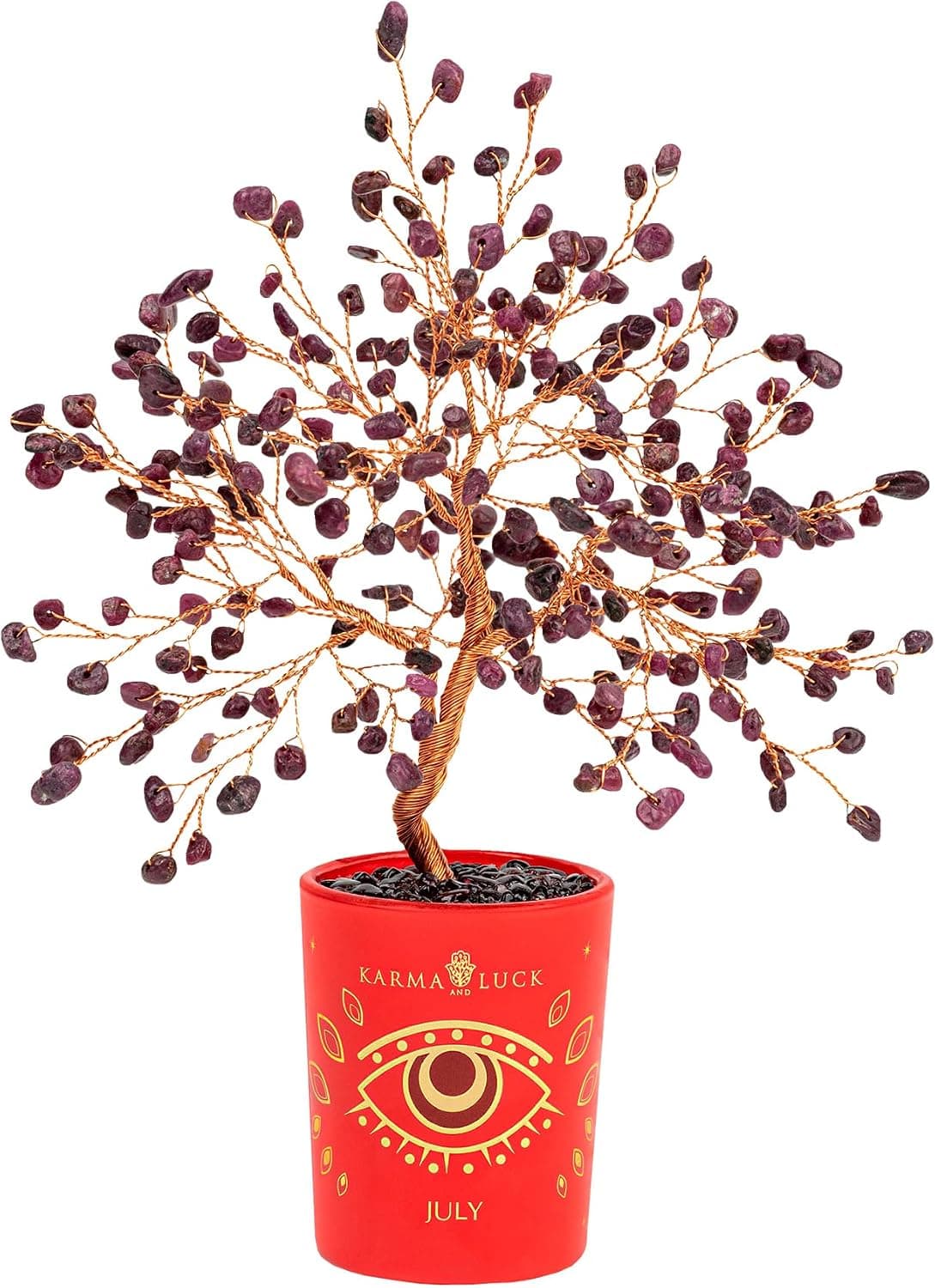
-29%Karma and Luck July Birthstone Crystal Tree of Life, Ruby Gemstone Feng Shui ...
 -29%
-29%Karma and Luck February Birthstone Crystal Tree of Life, Amethyst Gemstone Fe...
 -50%
-50%biuufish Feng Shui Black Obsidian Bracelet for Men Women, 24K Gold Plated Pix...
As an Amazon Associate, we earn from qualifying purchases. We only recommend items our practitioners have personally tested.
Continue Your Journey
Explore these related guides to deepen your understanding:

Ready for Deeper Guidance?
Try our free I Ching reading for personalized wisdom, or explore our curated Feng Shui essentials.