Common recommendations for chinese zodiac goat 2026 predictions tend to overlook key principles. Experience reveals a clearer path.
11:40 p.m. in the Bedroom With the Lamp Still On
She's sitting on the edge of a queen bed with a gray duvet, the south wall directly behind her headboard, phone held about eight inches from her face. Work messages. Still open. The lampshade throws a yellow circle onto the white closet door, the air is warm and dry, and nothing in this room is telling her body it's time to stop.
This is not a story about bad fortune. The Goat-born person in this room is not unlucky. She may, in fact, be having a strong year by most measures — more requests, more connection, more people wanting something from her. That's the part nobody flags as a problem.
But at 11:40 p.m., with the lamp still on and the south wall humming behind her, the room is not supporting her. It's extending her workday by another hour she doesn't have. And in 2026, for people born under the Goat, that quiet extension is where the real vulnerability lives — not in bad luck, but in the slow accumulation of too many yeses made in rooms that never told the body it was safe to pause.
The bedroom has a mirror mounted on the west wall, seven feet from the bed, angled directly toward the pillow. The southwest corner holds a low dresser and a stack of books, sitting eighteen inches from the bed frame and thirty inches from the closet door. The headboard is on the north wall, and there's a ceiling beam three feet above the pillow. None of these details feel dramatic in isolation. Together, they're building a room that works against everything 2026 is asking the Goat to do.
Why a Strong Fire Year Can Feel Heavier Than a Weak One
The Fire energy of 2026 raises what psychologists would call baseline arousal — the ambient level of alertness the nervous system maintains throughout the day. For most people, this reads as momentum. For Goat-born people, it reads as urgency.
There's a difference, and it matters enormously.
Goat energy is naturally absorptive. People born under this sign tend to be attuned to the emotional register of a room, a conversation, a request. In a low-activation year, that sensitivity functions as a gift — they read situations accurately, respond with care, and know when to hold back. But in a high-activation year, that same sensitivity becomes a liability. The elevated Fire doesn't give them more confidence. It gives them more signals to respond to. And because Goat-born people often read heightened arousal as a cue to act immediately, they start saying yes before they've checked whether they have the capacity to follow through.
The result looks like a good year from the outside. Busy. Connected. In demand. From the inside, it feels like running slightly too fast to think clearly, with a growing list of commitments that seemed reasonable at the moment they were made.
This is why a strong Fire year can feel heavier than a weak one. It's not that 2026 brings bad events. It's that excess activation amplifies emotional absorption instead of building genuine confidence. The Goat-born person isn't failing — they're over-responding to an environment that never quieted down enough to let them calibrate.
And most of that environment is indoors.
The South Sector: Where Attention Turns Into Static
In the main living room, four feet inside from the patio door and two feet left of the window line, there's a floor lamp and a cluster of red décor. This is the South sector of the home — the zone associated with visibility, attention, and outward reputation in classical feng shui.
In a Fire year, this sector is already energized by the season's dominant element. Adding bright lighting and red objects here isn't activating success. It's adding more signal to a frequency that's already too loud.
Here's what common advice gets wrong: the recommendation to add red in a Fire year is designed for people who need activation, not for people who are already absorbing too much. For Goat-born people, extra red in the South can amplify restlessness and emotional reactivity, making them take on more than they can finish. The room keeps sending micro-cues of urgency — the bright lamp, the warm color, the visual density — and the nervous system learns to stay externally alert instead of internally regulated. Every time someone walks through that room, the body gets a small nudge toward readiness. Over weeks, that nudge becomes a baseline. The Goat-born person stops noticing it, but they also stop resting.
At 9:15 p.m. in a living room where the floor lamp in the south zone stays on and the air smells faintly of dust and warm bulbs, the couch is angled toward the TV rather than the room's center. The room is not inviting reflection. It's inviting consumption. That's a subtle but real distinction for someone trying to figure out which opportunities actually deserve a yes.
Visual clutter and constant stimulation in the South don't create opportunity. They create the feeling that every moment is already an emergency.
The Southwest Corner Is Quietly Deciding How Much You Can Carry
The Southwest sector in classical feng shui is tied to containment and relational support — the quiet structural sense that there is enough, that relationships are stable, that the body is held. When this corner is calm and organized, it functions like a subconscious reassurance. When it's visually noisy, the mind has fewer cues for rest and boundary-setting, and emotional labor expands to fill the available space.
In the bedroom described above, the Southwest corner holds a low dresser and a stack of books. Eighteen inches from the bed frame. Thirty inches from the closet door. It's not dramatically cluttered — it's the kind of low-grade disorder that accumulates when a room is used but not maintained. A few items that don't belong. A stack that started as temporary. Objects that haven't been touched in weeks but haven't been moved either.
That's enough.
The Southwest doesn't need to be a disaster to create leakage. It just needs to be visually unsettled — enough that the brain, scanning the room during the light phases of sleep, registers unfinished business. For Goat-born people in a Fire-heavy year, this is where over-commitment often originates. Not in a single bad decision, but in accumulated nights where the Southwest corner kept the body in a state of mild alertness, so that by morning, every incoming request felt more urgent than it actually was.
In a home office converted from a guest room, the desk sits two feet from the Southwest corner, monitor facing east, a half-finished tea going cold beside a stack of unpaid invoices. The only window is on the north wall. Traffic noise leaks in every few minutes. This room has no visual anchor that says: this work is contained, this work can wait until morning. Everything in it suggests continuation.
One Mirror Facing the Pillow Changes the Entire Night
The mirror on the west wall is seven feet from the bed and angled toward the pillow area rather than the doorway. This is often recommended as a way to expand a small room visually. In practice, for a Goat-born person in 2026, it may be the single most disruptive element in the entire home.
Mirror reflection near the pillow increases sleep fragmentation. The brain, even in deep sleep, continues to process visual and spatial information. A reflective surface that catches movement — a shifting duvet, a body turning, light bouncing off a phone screen — registers as social presence. The body stays more watchful. Sleep becomes lighter. The restorative phases shorten.
What makes this particularly relevant for 2026 is that sleep debt is what converts normal demands into over-commitment. A Goat-born person who is sleeping well has the internal bandwidth to assess an opportunity before agreeing to it. A Goat-born person who is sleeping in a room with a mirror facing the pillow, a lamp still on at 11:40 p.m., and a cluttered Southwest corner is making decisions from a nervous system that has been running slightly too hot for months.
The mirror doesn't feel like a problem. It looks fine in the room. But it's quietly deciding how much recovery is available each night — and in a Fire year, recovery is the resource that matters most.
Boundaries Placed in the Right Room Beat Rituals in the Wrong One
There's a version of 2026 feng shui advice that focuses almost entirely on placement of objects: crystals in the wealth corner, lucky charms near the front door, specific colors in specific sectors. Some of this has genuine logic behind it. But for Goat-born people this year, symbolic objects do not correct a bad traffic pattern. They don't fix a doorway-to-bed sight line. They don't quiet a cluttered Southwest corner that keeps the body in alert mode.
What actually changes the year is behavior in specific rooms.
Saying no to a request made in a room that is overstimulating is genuinely harder than saying no to the same request in a room that is calm. This is not metaphorical. When the prefrontal cortex is managing sensory overload — bright light, visual clutter, ambient noise — it has less available capacity for evaluating consequences. The Goat-born person agrees not because the opportunity is right, but because the room made hesitation feel like failure.
So the boundary work of 2026 starts with the room, not the calendar. Turning the lamp off before 10:30 p.m. Clearing the Southwest corner of anything that doesn't belong in a bedroom. Choosing where to read messages and where not to. These are not spiritual practices — they're architectural decisions about which rooms get to make demands on the body and which ones don't.
Common advice says to ignore the bedroom and fix only the front door. For Goat-born people in a Fire-heavy year, that's exactly backwards. The spillover happens at night first. The front door is downstream of the bedroom. Fix the room where the nervous system resets, and the front door takes care of itself.
Adjustments That Calm Fire Without Killing Momentum
The goal is not to eliminate warmth or activity from the South and Southwest zones. Fire years do carry genuine opportunity for Goat-born people — in relationships, in creative work, in visibility. The adjustments below are about reducing overstimulation, not eliminating energy.
In the South sector of the living room: Replace the floor lamp with a lamp on a lower setting or a warmer bulb temperature (2700K or below). Move red décor to a surface where it's present but not dominant — a single object rather than a cluster. If the patio door is in this sector, keep it visually clear rather than decorated, so the zone reads as open rather than activated.
In the Southwest corner of the bedroom: Clear the stack of books from the dresser surface. Keep only two or three objects in this corner, and make sure at least one of them is stable and grounding — a small plant with rounded leaves, a smooth stone, a photograph with a simple frame. Avoid anything with sharp edges, anything that represents unfinished work, or anything that creates visual complexity after 9 p.m.
The mirror on the west wall: Either remove it from the bedroom entirely or reposition it so the angle no longer catches the pillow area. If the room needs the visual expansion, replace it with a piece of art in cool or neutral tones — something the eye can rest on rather than reflect from.
The lamp at 11:40 p.m.: Off by 10:30. Not dimmed. Off. The body's sleep cues depend on light dropping, not softening. Bright overhead light at night suppresses those cues and extends work-mode thinking, especially when the phone is still open beside it.
In the home office: If the desk sits near the Southwest corner, add one organizing element — a tray, a folder, a physical inbox — that gives the eye a clear signal that work is contained. When the southeast area of a workspace is organized, the mind begins to associate growth with sequence rather than flooding, which reduces impulsive agreement because tasks feel held in order rather than spilling into the whole day at once.
When Goat-born People Mistake Urgency for Luck
2026 will offer the Goat genuine opportunities. The Fire year's energy does create visibility, connection, and moments where the right yes can open something significant. The difficulty is that in an overstimulated environment, the Goat-born person cannot easily tell the difference between an opportunity and an emotional reflex.
An emotional reflex feels like urgency. It arrives with the sense that this moment is the only window, that hesitation means loss, that the right answer is immediate. It often comes after a night of fragmented sleep, in a room that has been running too warm and too bright for too long.
An actual opportunity has a different quality. It can wait twenty-four hours without disappearing. It still makes sense in the morning. It doesn't require the Goat-born person to abandon something already in progress. It feels like a door opening rather than a gap closing.
The way to tell the difference is not to develop better judgment in the abstract. It's to create the conditions — in the bedroom, in the office, in the South and Southwest zones of the home — where the nervous system is calm enough to notice the distinction. Discernment is not a personality trait. It's a physiological state. And in 2026, for Goat-born people, that state is built one room at a time.
The year rewards boundaries more than bravery. Not because bravery is wrong, but because for Goat energy in a Fire year, the braver act is often the pause.
Signs the Room Is Asking for a Reset Before Your Calendar Does
The body usually signals exhaustion before the schedule does. So does the room. These are things worth watching for before they compound:
The lamp is still on after 11 p.m. more nights than not, and you're not reading — you're waiting for something to feel resolved enough to sleep. That's not a habit. That's a room that hasn't been given permission to end the day.
The Southwest corner has accumulated new items in the last two weeks — things set down temporarily that haven't moved. This is the physical form of emotional leakage: the space is absorbing what the mind hasn't processed.
You're checking messages in bed before the alarm goes off. Not because something is wrong, but because the room never fully signaled that the night was separate from the day. The mirror on the west wall may be part of this. So may the phone that charges within arm's reach of the pillow.
At 6:20 a.m. in the kitchen, the counter is already crowded — laptop, vitamins, yesterday's mail, a red dish towel on the cabinet handle — and the day feels active before you've had a full breath. That kitchen counter is a map of how much the home is asking the body to manage before it's ready.
In the living room at 9:15 p.m., the floor lamp in the south zone is still on, the couch faces the TV, and the room smells faintly of warm bulbs. No one is actively using the space, but it's still running. That's the room's version of the same problem: it doesn't know how to stop.
These are not dramatic signs. They're easy to overlook, especially in a year that feels productive. But for Goat-born people in 2026, they're the early indicators — the ones that, if caught in February or March, prevent the kind of over-commitment that doesn't become visible until August.
The room knows before you do. That's worth paying attention to.
David Liu
Traditionally informed guidance • Cross-referenced with classical Chinese source texts
Rooted in classical Chinese metaphysics and cross-referenced with original texts. Product recommendations are based on traditional symbolism, not guaranteed outcomes.
Practitioner-Selected Tools for This Topic
Items our team has tested and found effective for the principles discussed above. Individual results may vary.
 -29%
-29%Karma and Luck March Birthstone Crystal Tree of Life, Aquamarine Gemstone Fen...
 -29%
-29%Karma and Luck July Birthstone Crystal Tree of Life, Ruby Gemstone Feng Shui ...
 -29%
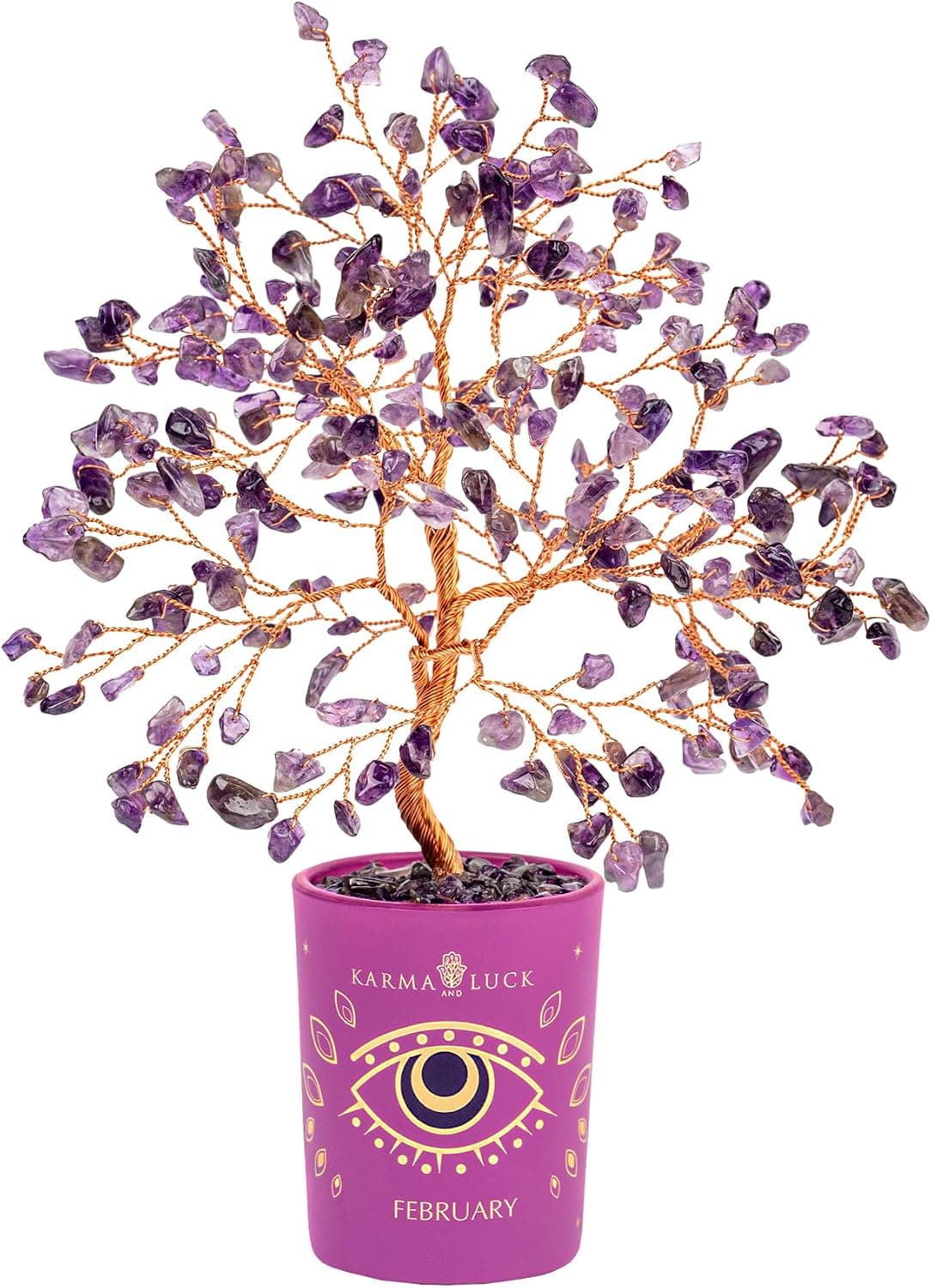
-29%Karma and Luck February Birthstone Crystal Tree of Life, Amethyst Gemstone Fe...
 -50%
-50%biuufish Feng Shui Black Obsidian Bracelet for Men Women, 24K Gold Plated Pix...
As an Amazon Associate, we earn from qualifying purchases. We only recommend items our practitioners have personally tested.
Continue Your Journey
Explore these related guides to deepen your understanding:

Ready for Deeper Guidance?
Try our free I Ching reading for personalized wisdom, or explore our curated Feng Shui essentials.